
Reviewed · FOOD & DRINK
Kathmandu Food Tour
Kathmandu’s best food often appears in small stalls and narrow market lanes, not polished restaurants. This three-hour walk takes you through Asan, Basantapur Durbar Square, and Thamel while introducing you to Bara lentil pancakes, sweet Yomari, momos, and spicy Laphing noodles.
I like the mix of food and place. You are not simply eating one dish after another: you are walking through a market, passing temples, and seeing how Kathmandu’s daily life works. I also like the modest $32 price, which makes a guided introduction to several local foods fairly easy to fit into a Nepal trip.
The main drawback is that the tour description gives only broad timing after the two-hour Asan portion, so the exact order and number of tastings may vary. Admission fees and taxes are not included, and some dishes can be hot or unfamiliar if you prefer mild, carefully explained food.
What makes this Kathmandu food walk worth considering

- Four food stops in Asan: Expect a compact tasting route built around local dishes rather than a single restaurant meal.
- Bara, Yomari, momos, and Laphing: You get a useful range of savory, sweet, steamed, and spicy foods.
- Three major Kathmandu areas: Asan, Basantapur Durbar Square, and Thamel give the walk a good sense of the city.
- A guide who adds local context: Iam is named in one account, and the guide is expected to explain monuments, food, current life, and personal perspectives.
- Small maximum group: The tour accepts no more than 15 people, a reasonable size for a walking food route.
- Flexible cancellation: You can receive a full refund if you cancel at least 24 hours before the start time.
Starting with Asan’s food stalls and market lanes
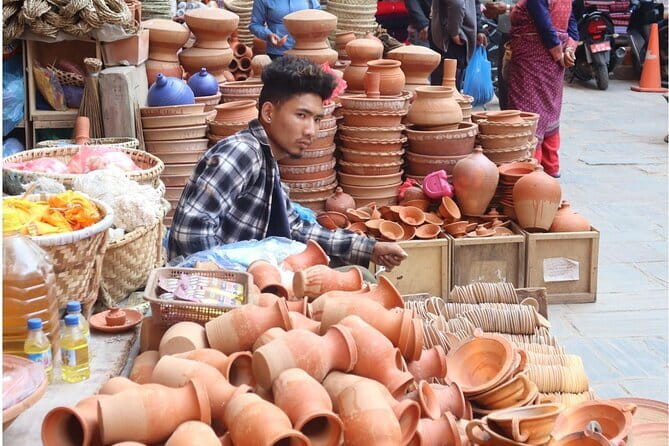
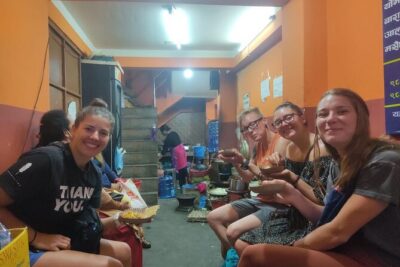
Asan is the heart of the eating portion of the tour. The route includes about four food-tasting stops and roughly two hours in this part of the city, giving you time to try several dishes instead of rushing through one quick snack.
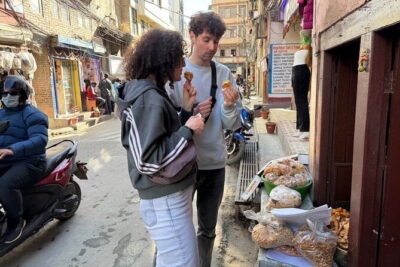
This is a good place to begin because Asan connects food with ordinary Kathmandu life. The area is known for its market activity, and the tour uses that setting to show you where local flavors fit into the city. You can expect a walk through busy lanes, with your guide pointing out food stops and explaining what you are eating.
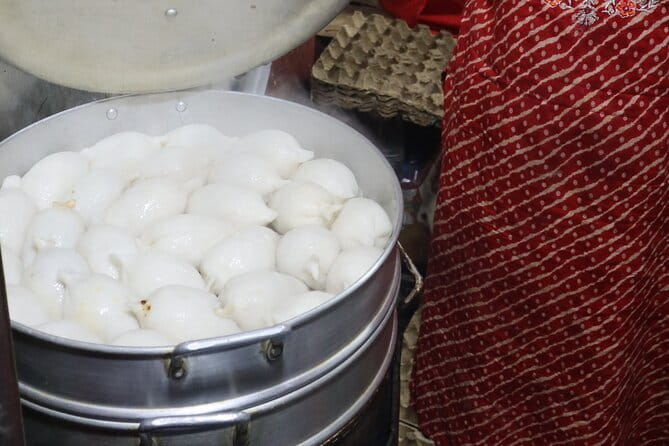
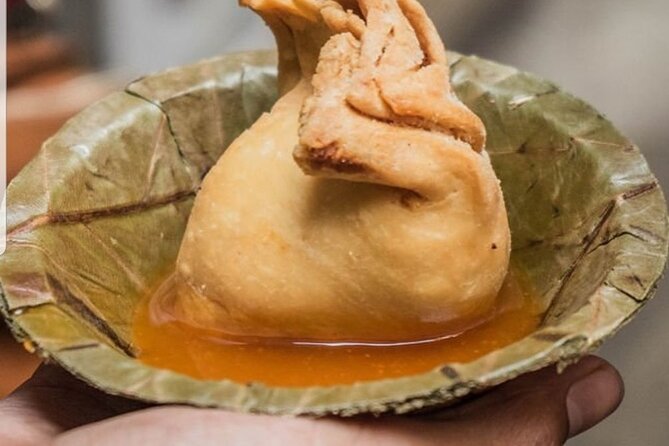
The food list is the real draw. Bara is a savory lentil pancake, usually a useful first taste for anyone new to Newari food. It is filling without being a full meal, and it gives you a sense of the earthy lentil flavors used across Nepal.
Yomari takes the tour in another direction. This fig-shaped sweet is filled with molasses, making it a pleasant contrast to the savory snacks. If you enjoy trying foods with a strong connection to local tradition, Yomari is one of the more memorable items on the route.
You may also try Laphing, Tibetan-style noodles known for their spicy kick. The dish is described as unforgettable, but that can mean very hot for some diners. Ask your guide about the spice level before taking a large bite, especially if chili is not a regular part of your diet.
Momos are another likely highlight, with chilly chicken momos singled out as a favorite. The filling and dumpling format will feel familiar to many visitors, but the seasoning and heat can make them a sharper experience than standard steamed dumplings.
The supplied details do not give a fixed menu, so you should think of these dishes as examples of the food focus rather than a guaranteed checklist. That is normal for a market walk, but it matters if you have your heart set on one specific item.
More Food Tours in Kathmandu:
- Kathmandu Food and Drink Walking Tour
★ 5.0 · 266 reviews - Kathmandu: Food and Drink Walking Tour
★ 4.9 · 119 reviews - Walking Street Food Tour in Kathmandu
★ 5.0 · 111 reviews
Basantapur Durbar Square between bites
The route continues to Basantapur Durbar Square, a UNESCO World Heritage Site in central Kathmandu. This was once connected with Nepal’s royal court and is known for Newar architecture, temples, and the Hanuman Dhoka area.
This stop gives the food tour more depth. Instead of treating eating as a separate activity, the walk places local dishes beside the city’s major monuments. Your guide can connect the buildings and public spaces with the people, traditions, and food culture you are seeing on foot.
Basantapur is also a useful pause in the tasting route. After several snacks in Asan, you get a change of setting and a chance to take in the architecture. The description does not state how long you stay here or whether an entry ticket is included, so budget time and possible admission costs separately.
The square is likely to be more rewarding if your guide explains what you are looking at. The tour includes an English-speaking guide and a Nepali-speaking guide, though the assigned guide may vary. One guide named in the supplied material is Iam, whose role includes explaining monuments, history, current life, and personal views of the city.
I would not book this as a replacement for a full Kathmandu heritage tour. The main purpose is food, and the monument visits are part of the walking route rather than a long, detailed temple tour. Still, this combination is useful if you have only a short time in the city and want your first orientation to include both eating and sightseeing.
Ending in Thamel’s shops and eateries
Thamel is the final named area. It is Kathmandu’s best-known visitor district, filled with shops, restaurants, markets, and streets where local life meets the tourist trade.
That makes Thamel a sensible ending point. After seeing the older market area and Basantapur’s monuments, you finish somewhere with plenty of places to keep exploring on your own. Your guide can help you understand the contrast between traditional food stops and the more international dining scene found in Thamel.
The strength of this stop is convenience. If you want to continue eating, shopping, or walking after the tour, you already have a central area to explore. If you are staying nearby, the ending point may also make it easy to return to your hotel.
The limitation is that Thamel is not the most purely local part of Kathmandu. It is lively and useful, but many businesses there serve visitors. The more distinctive food experience is likely to come earlier in Asan, while Thamel works better as a final city stop and orientation point.
What the three-hour format really gives you
At about three hours, this is a compact introduction rather than an all-day eating expedition. You get enough time to sample several foods and see three important areas, but you should not expect long visits at every temple or an extensive meal at each stop.
I like this length for a first day in Kathmandu. A short walk can help you learn what foods you enjoy before ordering on your own. It also gives you a sense of direction, especially if the streets around Asan and Thamel feel confusing at first.
The pace may be active. You are walking between tastings, markets, monuments, and city streets, so comfortable shoes will matter. The details do not state the walking distance, and pickup information is not fully specific, so confirm the meeting arrangement when you book if you need door-to-door transport.
Food portions are described as snacks, not a full lunch or dinner. You should eat lightly beforehand, but do not arrive expecting the tastings alone to replace a substantial meal. The number of stops is approximately four, and the final spread can depend on what is available that day.
The tour is suitable for most participants, and service animals are allowed. It is near public transportation, which gives you another way to reach the start or continue afterward.
A completely different kind of day, same corner of Nepal:
- Private Kathmandu Sightseeing Tour | UNESCO World Heritage sites
★ 5.0 · 756 reviews - Half day cooking class in Thamel kathmandu
★ 5.0 · 607 reviews - Nagarkot Sunrise View and Day Hiking from Kathmandu
★ 5.0 · 471 reviews - Kathmandu: Full Day 7 UNESCO Tour with Lunch – Private/Group
★ 5.0 · 415 reviews
How much value you get for $32
At $32 per person, the value depends on how much you want guidance as well as food. You are paying for several tastings, a walking route through major parts of Kathmandu, bottled water, and an English and Nepali-speaking guide.
If you visited the stalls alone, you might spend less on food. You would also need to choose what to try, work out where to go, and decide what each dish means. The guide adds value by finding food stops, explaining the dishes, and putting them beside the city’s monuments and daily life.
The price is especially reasonable for a first visit or for anyone nervous about ordering unfamiliar food. It reduces the guesswork and lets you sample several things without committing to a full serving at a restaurant.
Keep a little extra money available. All fees and taxes are excluded, and admission is not included for the Asan portion as listed in the tour details. The information does not state the exact amount of any extra charge, so check the final booking details rather than assuming the $32 covers every cost.
A maximum of 15 people keeps the price below what you might pay for a private guide while still limiting the group to a manageable size. If you prefer one-on-one attention, 15 may feel larger than ideal. If you enjoy meeting other people while walking, it should be a comfortable middle ground.
The guide’s role in making the food meaningful
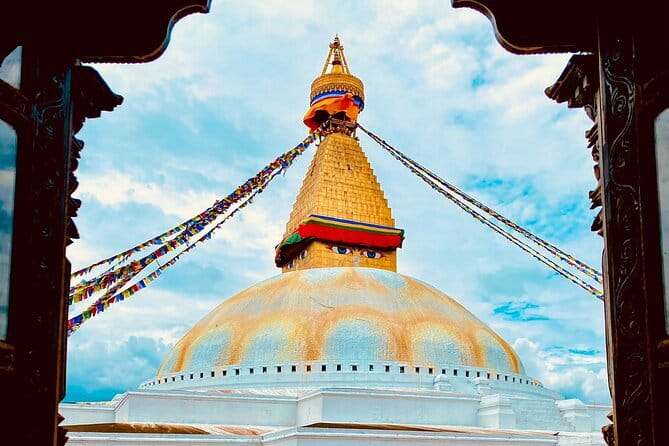
The guide is the key part of this experience. The most useful version of the tour is not one where someone simply hands you a snack and names it. You want explanations of how each food fits into Kathmandu life, plus help understanding the streets and temples around you.
Iam is named as one guide associated with the route. His approach is described as combining food stops, local history, current city life, and personal perspective. That mix can make a major difference because Kathmandu is easier to understand when you connect the dishes with the neighborhoods where people eat them.
The guide is also there to help you manage unfamiliar flavors. Bara, Yomari, Laphing, and chili chicken momos each offer a different experience. If you are unsure about spice, ingredients, or portion size, ask before tasting. The supplied information does not confirm that dietary substitutions are available, so people with allergies or strict food requirements should ask before booking.
The tour has received four five-star ratings, with praise focused on food quality, the guide’s warmth, local insight, and the sense of seeing everyday Kathmandu firsthand. Those are the areas I would value most here. The route is strongest when the guide takes you beyond a list of dishes and shows you how the food belongs to the city.
Who should book this food tour
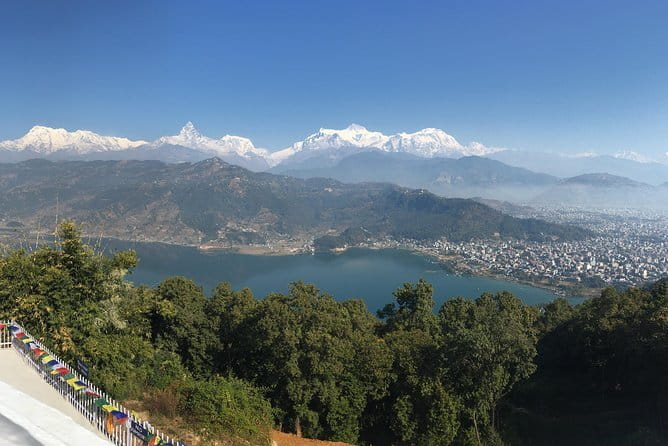
I would recommend this experience to first-time visitors who want an easy introduction to Nepali food and central Kathmandu. It suits curious eaters who like trying small portions and walking through markets rather than sitting in one restaurant for several hours.
It is also a good fit for people who want some sightseeing built into a food activity. Asan, Basantapur Durbar Square, and Thamel give you three different views of Kathmandu in one outing.
The tour may be less suitable if you want a fixed menu, a private guide, a long heritage lecture, or a full meal with plenty of time at each restaurant. It may also be a poor match for anyone who dislikes spicy food or is uncomfortable with informal market settings.
The maximum group size is 15, and the experience is listed as suitable for most participants. Pickup is offered, but the exact arrangement should be confirmed. The stated opening hours run on Mondays from 8:00 AM to 4:00 PM during the listed operating period, so check the available start time when choosing your date.
Cancellation is free up to 24 hours before the start time. A cancellation made less than 24 hours ahead, or a change made inside that window, is not refunded.
My call: a strong first taste of Kathmandu
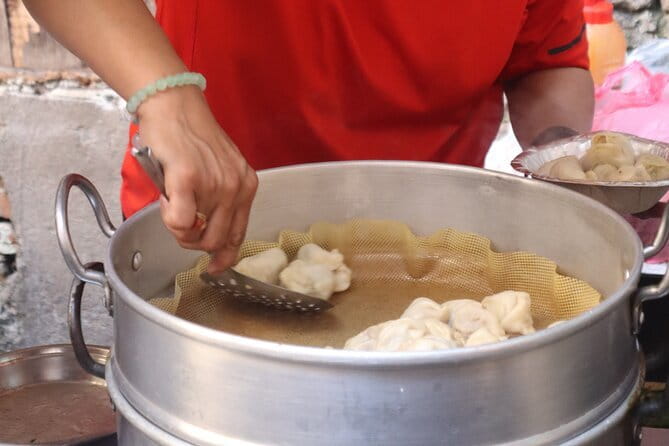
Book this tour if you want local food with city context, especially if Bara, Yomari, momos, and Laphing are new to you. The $32 cost is fair for a guided route with several tastings, bottled water, and visits to three central areas.
I would be clear about what you are buying: this is a compact food walk, not a formal cooking class or a full historical tour. The menu and exact timing may change, extra fees are possible, and the food can include serious heat.
For most visitors, those limits are easy to accept. A friendly guide, four tasting stops, Asan’s market lanes, and a walk through Basantapur and Thamel make this a practical way to begin eating your way through Kathmandu.
FAQ
How long is the Kathmandu Food Tour?
The tour lasts approximately three hours.
What food can I expect to taste?
The experience highlights Bara lentil pancakes, Yomari filled with molasses, Tibetan Laphing noodles, and chili chicken momos. The exact menu is not stated as fixed.
Which areas does the tour visit?
The route includes Asan, Basantapur Durbar Square, and Thamel in Kathmandu.
Is a guide included?
Yes. An English-speaking and Nepali-speaking tour guide is included.
How many people can join the tour?
The maximum group size is 15 travelers.
Can I cancel for a full refund?
Yes. You must cancel at least 24 hours before the experience start time for a full refund. Changes or cancellations made less than 24 hours ahead are not accepted for a refund.
Just added around Kathmandu
- Traditional Momo Making Class★ 5.0 · 10 reviews
- Women Empowerment Project(Nepali cooking class & jewelry workshop★ 5.0 · 15 reviews
- Manthali Airport (Ramechhap) To Kathmandu – Transport Service★ 4.5 · 11 reviews
- Amazing 1 Day Trekking Experience in Kathmandu Nepal★ 5.0 · 24 reviews
- Walking tour of Kathmandu with awesome local guides★ 5.0 · 4 reviews
- Walking tour of real Kathmandu through back streets.★ 5.0 · 3 reviews
- Walking Street Food Tour in Kathmandu★ 5.0 · 111 reviews
- Kathmandu Street Food Walking Tour – Eat Like a Local★ 5.0 · 3 reviews
Food & Drink, compared.
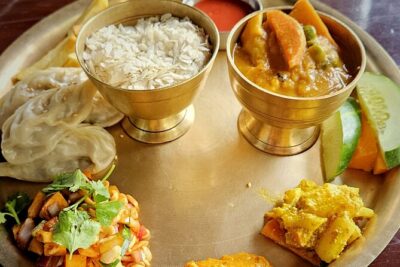
Secret Food Tour – Food Bites and Sights Kathmandu 14+ Testings
Read our review →
Kathmandu Food & Drink and Shopping Rickshaw Tour
Read our review →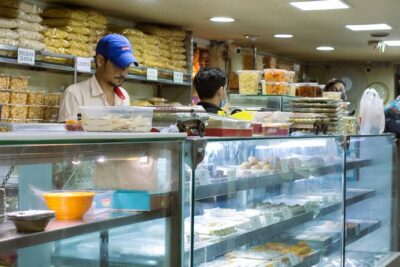
Walking Food Tour in Hidden Local Eateries of Kathmandu
Read our review →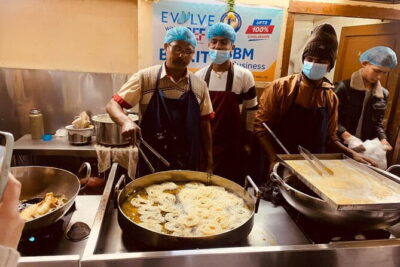
Browse the lists this tour appears in