
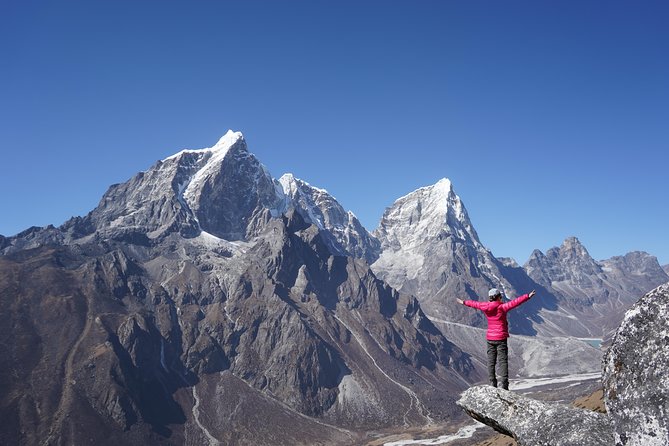
Reviewed · EVEREST BASE CAMP TREKS
Everest Base Camp Trekking
Everest Base Camp is less about reaching a single famous sign and more about the long approach through Sherpa villages, high mountain passes, monasteries, glaciers, and the thin air of the Khumbu. This 12-day trek handles the hard planning, including permits, tea-house rooms, meals, porters, and flights between Kathmandu and Lukla.
I like the practical setup: one porter for every two trekkers and a licensed English-speaking guide. I also like the human side of the route, from Namche Bazaar and Sherpa life to blessings at Tengboche Monastery. The main caution is simple: this is a serious high-altitude trek, not a casual walking holiday, and personal rescue insurance is not included.
Key points at a glance
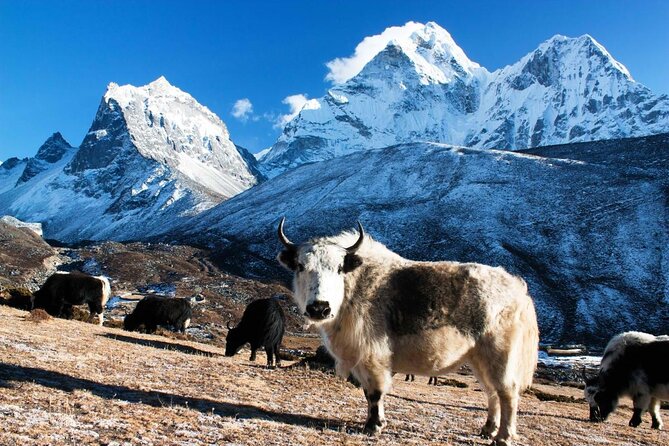
- Reach Everest Base Camp and Kala Patthar: You visit the famous base camp and climb to a viewpoint known for close views of Everest.
- See Sherpa life beyond the mountain views: Namche Bazaar, local villages, and Tengboche Monastery give the trek a cultural heart.
- Let the operator handle the main logistics: Permits, national park fees, tea-house accommodation, meals, porters, guide services, and Lukla flights are included.
- Expect basic mountain accommodation: You spend 11 nights in tea houses, with hot showers, Wi-Fi, charging, and hot water charged separately.
- Plan for a demanding physical challenge: Strong fitness is required, and your own medical, rescue, and accident insurance must be arranged.
- Join a small group: The maximum group size is 15 people, with airport pickup and drop-off in Kathmandu.
Why this Everest Base Camp trek works
The best feature here is not just the destination. It is the amount of work taken off your plate before you start walking. A trek to Everest Base Camp involves permits, flights, porters, food, accommodation, route planning, and gear decisions. This package combines those pieces into one booking.
At $1,350 per person, the price has real value if you would otherwise need to arrange each service separately. It includes 11 nights in tea houses, three meals each trekking day, domestic flights from Kathmandu or Ramechhap to Lukla and back, a guide, porter service, national park fees, VDC and TIMS fees, a trekking map, and airport transfers.
The price does not cover your Kathmandu hotel, meals in Kathmandu, personal equipment, bottled water, laundry, Wi-Fi, battery charging, hot showers, tips, or emergency evacuation. Most important, personal medical, accident, and helicopter rescue insurance are excluded. You need to treat that last point seriously.
The operator has a strong record of customer satisfaction, with a 5 out of 5 rating from 146 reviews and a 99 percent recommendation rate. Specific guides praised by name include Ram Dhakal and Dillip, while manager Nadin is noted for communication and help with arrangements. Your assigned team may be different, but those names suggest the company has experienced staff across its guide roster.
More Everest Base Camp treks:
- Everest Base Camp Trek – 14 Days
★ 5.0 · 1,499 reviews - Everest Base Camp Trekking
★ 5.0 · 485 reviews - Everest Base Camp Trekking – 13 Day
★ 5.0 · 365 reviews
From Kathmandu to the thrilling Lukla flight
You meet at 6:15 a.m. in Thamel, Kathmandu. Airport pickup and drop-off are included, though the flight information specifies Kathmandu or Ramechhap to Lukla and back. That means you should confirm the exact departure airport and transfer plan before setting out.
The Lukla flight is part of the experience, not just transport. The short domestic flight takes you from the Kathmandu Valley toward the gateway of the Everest region. The trip description calls it thrilling, and that is fair: the flight is one of the memorable transitions of the trek.
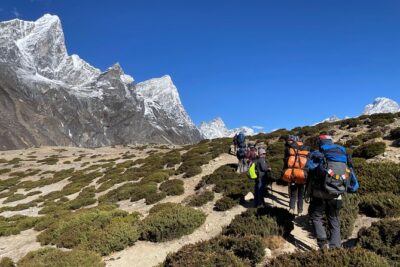
From Lukla, you begin walking under the care of your guide. A maximum group size of 15 keeps the party small enough for the guide to manage, though the pace will still depend on the whole group. If you are a solo trekker, you may join others rather than walk with a private guide alone.
The package supplies a porter at a ratio of two trekkers to one porter. That matters on a route where carrying a heavy pack can make every uphill section harder. You should still pack carefully and respect the porter limit, since porter service is support, not a way to move an unlimited amount of luggage.
Namche Bazaar, the Everest gateway
Namche Bazaar is one of the key stops on the route. It is described as the famous gateway to Everest and a high-altitude market in its own right. Here, the trek begins to feel less like a walk through rural Nepal and more like a mountain expedition route serving the Khumbu.
Namche is valuable because it gives you a close look at Sherpa culture and daily life. The route is not only a march toward Everest. It passes through communities where local trade, trekking, mountaineering, and monastery traditions meet.
The altitude also becomes a serious factor around this part of the journey. The information provided requires a strong fitness level, and that warning should guide your expectations. You may find the walking manageable at lower elevations, then notice that every climb takes more effort as the route rises.
The package includes food during the trek, but not every personal drink or comfort. Bottled drinks, mineral water, hot water, Wi-Fi, charging, and hot showers cost extra. Carry money for these services, along with tips and other personal expenses.
Mountain views above 8,000 meters
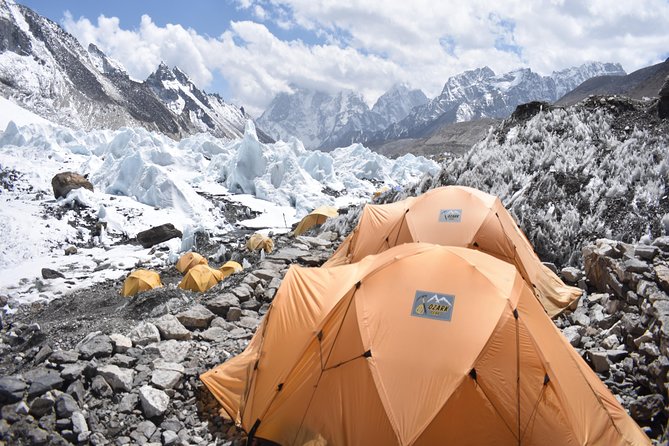
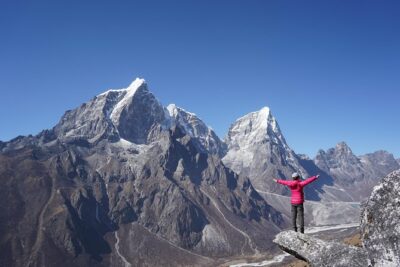
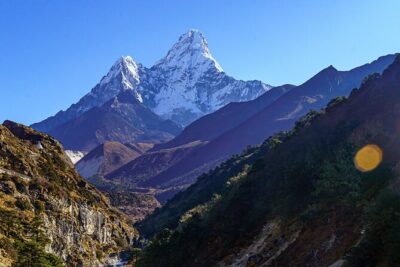
The route offers panoramic views of mountains above 8,000 meters, including Everest. These views are one of the main rewards of the trek, but they are best understood as part of a changing journey rather than one guaranteed photo stop.
You will see the high peaks from different points along the route, with villages, trails, and glacier country adding scale to the view. The sight of Everest is powerful partly because you reach it on foot, following the path associated with Sir Edmund Hillary and Tenzing Norgay Sherpa.
The trek is not a technical climbing expedition. You are walking to Everest Base Camp, not climbing Mount Everest. Even so, the altitude and length make it demanding, and a strong level of fitness is required.
A guide adds value here in practical ways. Your guide accompanies the group throughout the trip and explains the cultural and natural importance of the area. You can ask about Sherpa customs, local places, and the mountain route rather than simply following a marked trail without context.
More trekking days out of Everest Region:
- Everest Base Camp Trek -14 Days
★ 5.0 · 321 reviews - Everest Base Camp Trekking – 2025/2026
★ 5.0 · 199 reviews - Everest Base Camp Trek
★ 5.0 · 193 reviews - Everest Base Camp Trek with Helicopter Return from Gorakshep to Lukla
★ 5.0 · 161 reviews
Tengboche Monastery and Sherpa culture
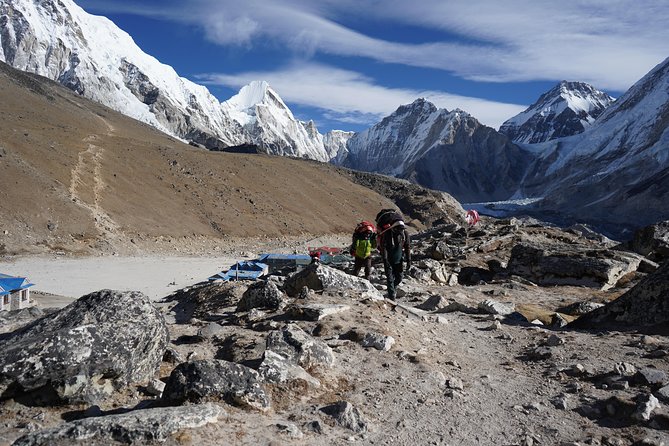
Tengboche Monastery gives the trek a different mood. You have the chance to seek blessings from a monk and explore the monastery, making this one of the most meaningful cultural stops on the route.
For me, Tengboche helps prevent the trip from becoming a checklist of mountain names. The monastery connects the high valleys with the religious life of the region. It also gives you a chance to pause and notice how much of the journey is shaped by Sherpa culture.
The program includes opportunities to see local lifestyles along the way, but it does not promise a formal cultural performance or private meeting. You should expect observation, conversation through your guide, and visits to places along the route rather than a staged cultural show.
The tea-house system supports this more personal style of travel. Your 11 nights are spent in basic tea-house accommodation, where the focus is shelter, food, and rest. Do not expect hotel comforts. Hot showers, charging, Wi-Fi, and hot water are specifically excluded, so basic conditions are part of the deal.
Khumbu Glacier and Everest Base Camp
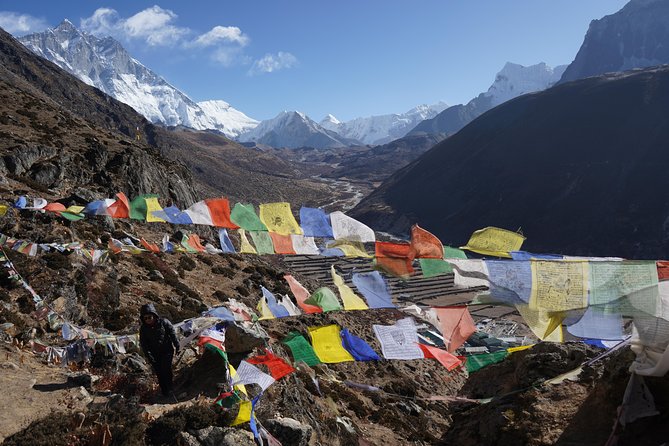
The Khumbu Glacier is another major feature of the route. Seeing it gives you a closer sense of the difficult terrain that climbers face above Base Camp. It is not simply a distant mountain backdrop. It is a working part of the Everest climbing environment.
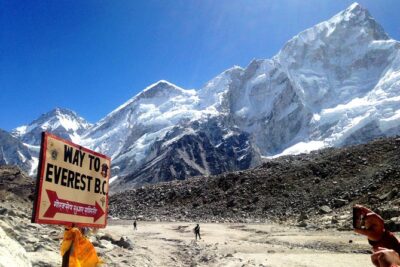
Everest Base Camp is the central goal. The guide meets you at the stated meeting point and accompanies you through the trip, explaining the natural and cultural value of the route. The included admission ticket applies to the Everest Base Camp stop.
Reaching Base Camp is an achievement, but it is worth keeping expectations realistic. The base camp experience can vary by season and activity in the area, and the package does not promise a particular climbing-season setup. What it does promise is the chance to set foot at the famous site as part of the trek.
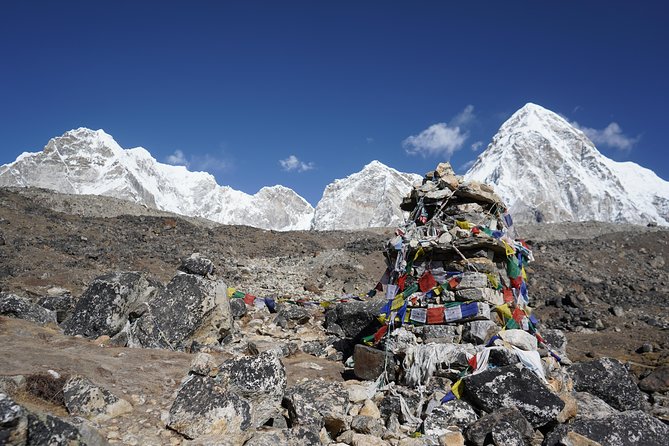
You also have a chance to see the memorial hill dedicated to climbers who died in the mountains. This adds a solemn note to the itinerary. Everest is a place of ambition and achievement, but also risk and loss. The memorial helps put the whole journey in perspective.
Kala Patthar for the close mountain view
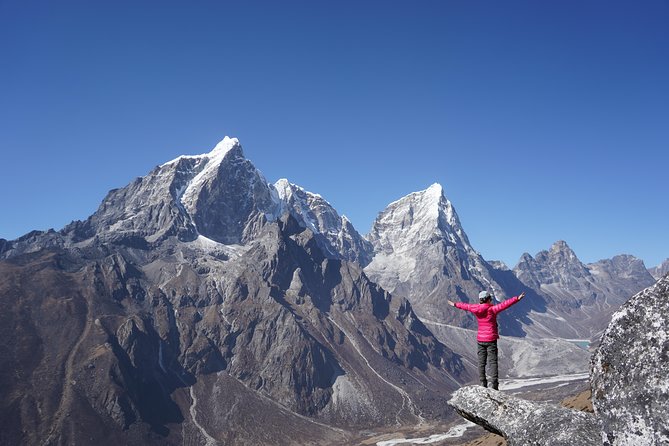
Kala Patthar is described as the famous viewpoint for a close view of Everest. For many trekkers, this is one of the visual high points of the route because it offers a broad look at the surrounding peaks and the Everest area.
The stop is valuable because Base Camp itself is not always the best place for a clear view of Everest. Kala Patthar gives you a viewpoint designed for seeing the mountain rather than simply reaching the expedition staging area.
Still, you should prepare for a demanding outing. The tour requires strong physical fitness, and high altitude can make even a short climb feel slow. Your guide will be with you, but no itinerary can remove the effort involved.
The operator provides a sleeping bag, duffel bag, and down jacket upon request. Ask for these in advance rather than assuming they will arrive automatically. You are still responsible for your personal trekking equipment, so check exactly what you need before flying to Nepal.
What is included, and what you still pay for
The inclusions cover the main framework of the trek:
- 11 nights of basic tea-house accommodation
- Breakfast, lunch, and dinner during the trekking portion
- Kathmandu or Ramechhap to Lukla flights and return flights
- A licensed English-speaking guide
- Porter support at two trekkers per porter
- Guide and porter food, salary, accommodation, and insurance
- National park, VDC, TIMS, and other applicable fees
- A trekking map for each group
- A trekking certificate after the trip
- Domestic airport pickup and drop-off
The exclusions are just as important. You arrange your own accommodation and meals in Kathmandu. You also pay for alcoholic drinks, bottled water, laundry, phone calls, tips, Wi-Fi, charging, hot showers, and hot water during the trek.
Personal rescue insurance is not part of the package. The included insurance applies to the guide and porters, not to you. Arrange personal medical, accident, and rescue cover before departure, including helicopter evacuation if your policy allows it.
The free cancellation policy permits a full refund if you cancel at least 24 hours before the local start time. Changes or cancellations within 24 hours are not accepted for a refund.
Who should book this trek
This trek suits you if you want to reach Everest Base Camp without arranging every permit, flight, meal, porter, and tea-house night yourself. It is also a good fit if you value local guiding and want a small group rather than a large organized crowd.
It suits solo trekkers as well. One person who completed the route credited the company with strong communication and a helpful guide, but you should remember that the maximum group size is 15 and the booking does not promise a private trek.
You should think twice if you want comfortable hotels, reliable hot showers, constant internet, or a flexible sightseeing holiday. The trek uses basic tea houses, and several everyday comforts cost extra.
You also need to be honest about your fitness. The operator specifically requires strong physical fitness, and the route reaches high altitude. If you have concerns about medical conditions, altitude, or evacuation cover, sort those questions out before booking.
Final verdict: a practical Everest Base Camp package
I would choose this trek if I wanted a managed route with the major costs visible from the start. The combination of Lukla flights, permits, meals, tea-house nights, guide service, and porter support makes $1,350 a useful value, provided you budget separately for Kathmandu, personal gear, drinks, tips, and insurance.
The strongest reasons to book are the organized logistics, the small maximum group size, and the range of experiences beyond Base Camp: Namche Bazaar, Sherpa culture, Tengboche Monastery, the Khumbu Glacier, the memorial hill, and Kala Patthar.
The main reason not to book is the physical demand. This is not a soft adventure, and the low price does not mean the mountain is easy. Book it if you are ready for basic accommodation, high-altitude walking, and careful preparation, and if you want a guide-led route that leaves you free to focus on the trail.
FAQ
How long is the Everest Base Camp trek?
The trek lasts approximately 12 days, including the trekking arrangements and domestic flights between Kathmandu or Ramechhap and Lukla.
Where does the trek start?
The meeting point is in Thamel, Kathmandu, Nepal. The stated start time is 6:15 a.m.
Is airport pickup included?
Yes. Domestic airport pickup and drop-off facilities in Kathmandu are included.
Are flights to Lukla included?
Yes. Round-trip airfare between Kathmandu or Ramechhap and Lukla is included.
What accommodation is provided?
The package includes 11 nights of basic tea-house accommodation during the trek. Accommodation in Kathmandu is not included.
Are meals included?
Breakfast, lunch, and dinner during the trekking portion are included. Meals in Kathmandu are not included.
Is a guide and porter included?
Yes. A licensed English-speaking guide accompanies the group, and porter support is provided at a ratio of two trekkers to one porter.
Do I need personal travel insurance?
Yes. Personal medical, accident, and rescue insurance are not included. Emergency evacuation expenses, including helicopter rescue, are also excluded.
What is the cancellation policy?
You can cancel for a full refund up to 24 hours before the experience start time. Cancellations or changes made less than 24 hours before the start time are not accepted for a refund.
Just added around Everest Region
- Day Tour to Everest Base Camp By Helicopter★ 5.0 · 16 reviews
- Kathmandu To Lukla By Helicopter Flight★ 5.0 · 6 reviews
- Luxury Everest Base Camp Trek – 11 Days★ 5.0 · 9 reviews
- Everest Base Camp Tour & View Point by Helicopter from Katmandu★ 5.0 · 3 reviews
- Everest base camp helicopter tour with Guarenteed Landing★ 4.0 · 7 reviews
- Everest base camp flight over by Helicopter from Kathmandu★ 5.0 · 10 reviews
- Everest Base Camp Helicopter Tour Stop at Hotel Everest View.★ 5.0 · 17 reviews
- Everest Base Camp Helicopter Tour★ 5.0 · 24 reviews
Everest Base Camp Treks, compared.
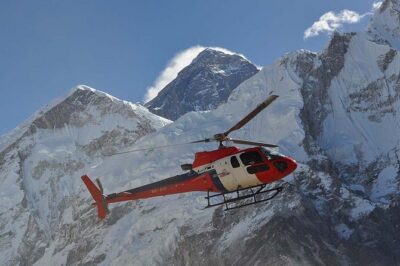
Everest Base Camp Trek with Helicopter Return from Gorakshep to Lukla
Read our review →Browse the lists this tour appears in