
Reviewed · HISTORICAL TOURS
Pick 2-Wonders of Kathmandu: A 3-Hour Heritage Hop
Kathmandu’s best sights are spread across an ancient city where every square seems to contain a palace, shrine, or sacred courtyard. This three-hour tour lets you choose two major sites, from Kathmandu Durbar Square and the Monkey Temple to Pashupatinath, Boudhanath, Patan, and Bhaktapur. The smart part is the focus: you spend real time at two places instead of racing through six.
I especially like the private hotel pickup and drop-off, which saves you from sorting out Kathmandu traffic and directions. I also like the chance to set the pace with a guide such as Nilakantha Acharya, who has adjusted tours for questions, photo stops, and tired visitors. The tradeoff is clear: three hours is enough for a strong introduction, not a full study of Kathmandu’s art and religious life. Entrance fees are extra, and some sites need more time than this tour allows.
Key points to know before booking
- Choose two major UNESCO heritage sites: Your options cover Kathmandu Durbar Square, Swayambhunath, Pashupatinath, Boudhanath, Patan, and Bhaktapur.
- The guide can shape the pace: Nilakantha Acharya has led several routes, with Prakash also named as a guide. You can ask questions and linger at the sights that matter most to you.
- Expect private transport: Pickup and return are arranged from your Kathmandu hotel, with an air-conditioned vehicle and bottled water.
- The Kumari is a possible highlight: Kathmandu Durbar Square includes the temple of Kumari, the living goddess, though a sighting cannot be guaranteed.
- Three hours favors two close-by themes: Option 1 joins royal Kathmandu with Swayambhunath, while Option 2 pairs Hindu and Buddhist sacred sites.
- Budget for admission fees: The low tour price does not include monument entrance tickets, though an entrance-fee add-on is available.
Why two sites work better than six in Kathmandu
Kathmandu Valley contains several major heritage areas, and they are not interchangeable. Each gives you a different view of Nepal: royal power at the Durbar Squares, Hindu devotion at Pashupatinath, Tibetan Buddhist practice at Boudhanath, and hilltop symbolism at Swayambhunath.
At $3.94 per person, this is priced more like a short orientation than a full sightseeing day. That makes it good value if you have just arrived, have a spare morning, or need to fit cultural sightseeing between flights and other plans. The private car, guide, and hotel transfer add useful convenience at a very low starting price.
The price does require a little care. You still pay for monument admission, meals, and personal purchases. Ask for the entrance-fee add-on if you want a simpler booking process, and carry cash as advised. You should also choose your preferred route before confirming, since the four options cover quite different parts of the valley.
More heritage days around Kathmandu:
- Private Kathmandu Sightseeing Tour | UNESCO World Heritage sites
★ 5.0 · 756 reviews - UNESCO Seven World Heritage Tour in Kathmandu
★ 5.0 · 253 reviews - Kathmandu Private Sightseeing Tour | UNESCO World Heritage Sites
★ 5.0 · 109 reviews
Option 1: Kathmandu Durbar Square and Swayambhunath
This is the most balanced choice if you want royal architecture, local religious life, and a broad city view in one outing.
Kathmandu Durbar Square and the Kumari tradition
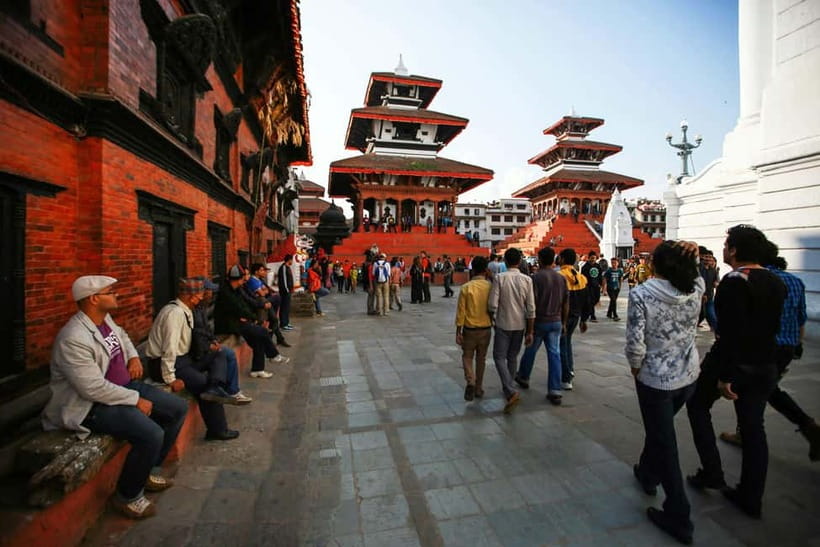
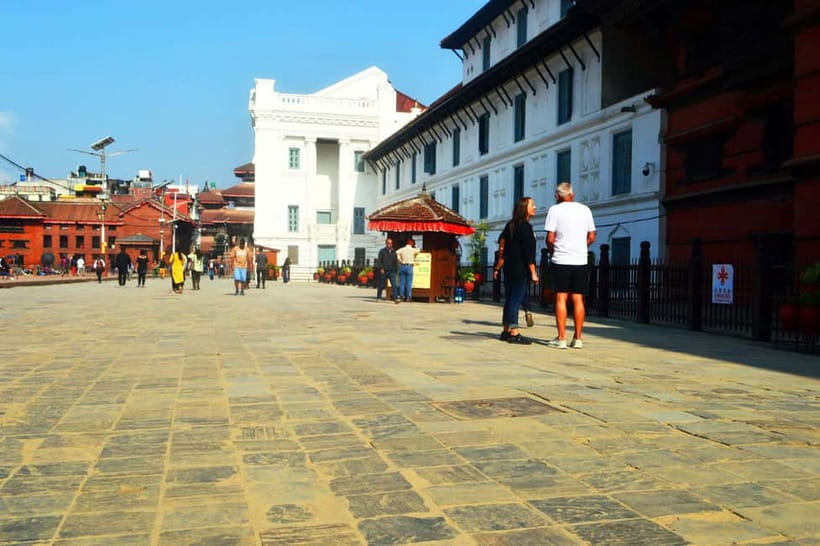
Kathmandu Durbar Square places you in the old city center, among palaces, courtyards, and temples linked with the Malla and Shah dynasties. The nine-storied Nautale Durbar is one of the major palace buildings included in the visit.
The square is not simply an open plaza filled with monuments. It is a working cultural space, and the details matter: carved timber windows, layered roofs, courtyards, and shrines packed into a relatively tight area. A guide can help you understand what you are looking at rather than leaving you to sort out one red-brick building from the next.
The Kumari temple is the unusual feature here. Kumari means a living goddess, and the tradition remains one of Kathmandu’s best-known cultural practices. You may have the rare opportunity to see her, but the timing and circumstances are not something the tour can promise. Treat the possibility as a bonus, not the central reason to book.
This stop is best for you if royal history, architecture, and local traditions interest you. It can also be the most demanding stop for photography, since there is so much detail in a small area and only limited time to take it all in.
Swayambhunath and the hilltop view
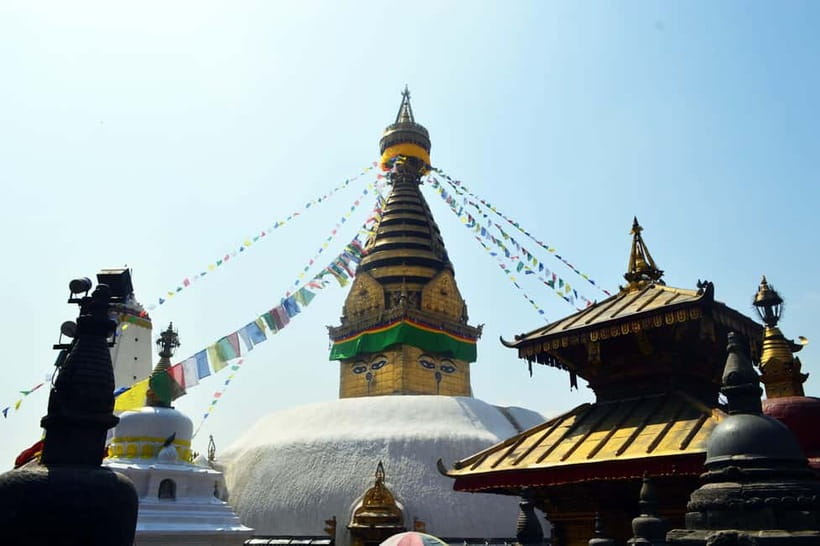
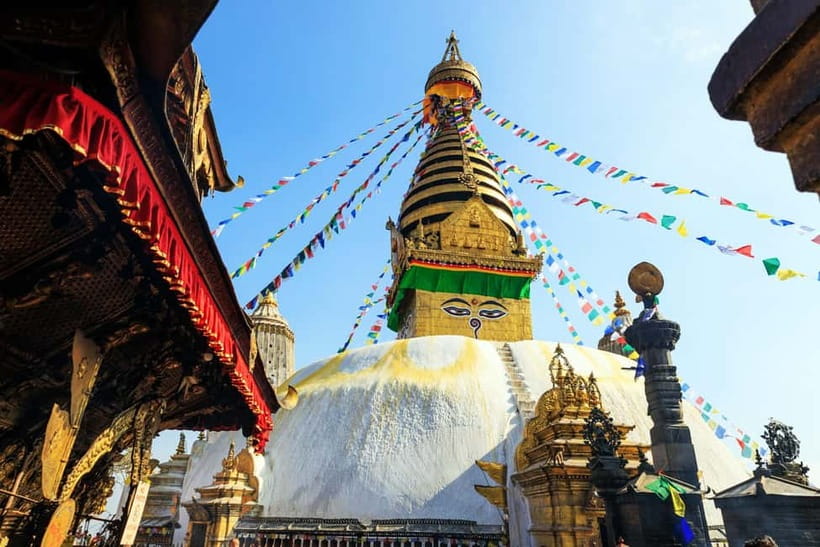
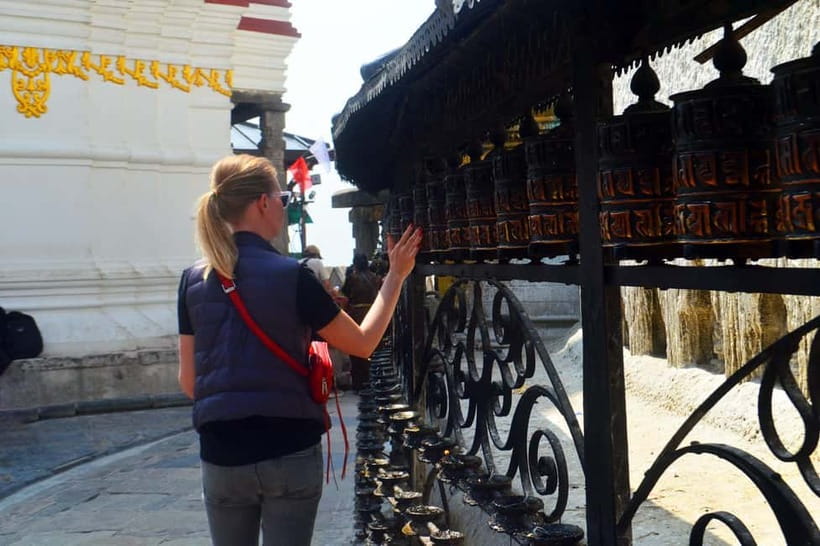
Swayambhunath, often called the Monkey Temple, sits on a hill above Kathmandu. Its main stupa, the Mahachaitya, gives this route a change of mood after the dense old-city buildings.
The site is both Hindu and Buddhist in character, which makes it useful for understanding how religious traditions share space in the Kathmandu Valley. Monkeys are part of the scene, but the main attraction is the stupa, the surrounding shrines, and the high position above the capital.
The tour includes a 360-degree view of Kathmandu Valley. This is one of the strongest reasons to choose Option 1. You can see the city’s scale and location in a way that is difficult to grasp from street level.
There is an ascent to reach the hilltop, so this option is not suitable for wheelchair users. It may also feel brisk if you want long pauses at every shrine. Still, for a short tour, the combination of Durbar Square and Swayambhunath gives you a good spread of architecture, faith, and views.
A few more Kathmandu days to weigh up
- 3 Hours Night Pashupatinath Aarati Tour
★ 4.5 · 4 reviews - Private 3-Hour Nagarkot Sunset Tour from Kathmandu
★ 3.5 · 3 reviews - Kathmandu: About 3-hour Cooking Class Experience near Thamel
★ 5.0 · 3 reviews - Everest Base Camp: 3 Hour Helicopter Sightseeing Tour
★ 4.4 · 17 reviews
Option 2: Pashupatinath and Boudhanath
Choose this route if religious sites matter more to you than royal palaces. It pairs one of Hinduism’s most important temples with one of Nepal’s major Buddhist monuments.
Pashupatinath beside the Bagmati River
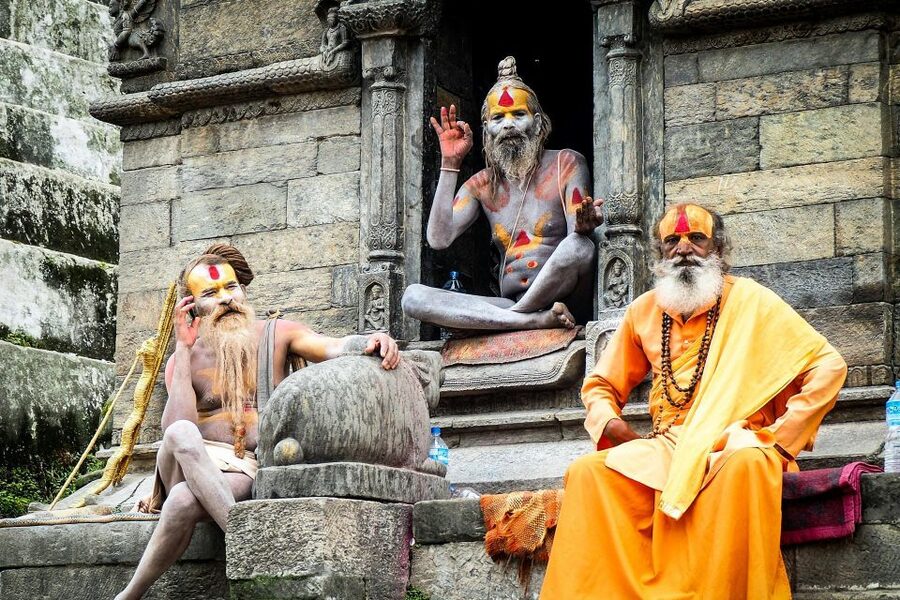
Pashupatinath Temple is dedicated to Lord Shiva and sits beside the sacred Bagmati River. The surrounding area is associated with Hindu worship and traditional cremation rituals, which can make this a serious and emotionally strong visit.
You should approach this stop with respect. The cremation areas are not a theatrical attraction, and your guide can help explain the customs and boundaries. The value of having someone such as Nilakantha explain the symbols, ceremonies, and activity is especially clear on festival days, when the temple area can be difficult to interpret on your own.
Access rules and viewing areas may vary within a religious complex, so listen carefully to the guide. The tour data does not promise entry into every part of the temple, and visitors should not assume that all areas are open to everyone.
Boudhanath Stupa and the Tibetan trade route
Boudhanath is one of the largest Buddhist stupas in Nepal and is described as the largest mandala in the country. Its round form and strong sense of order make it a very different experience from Pashupatinath.
This stupa was once an important stop on the trade route to Tibet. That detail gives the monument a wider purpose: it was not only a place of worship but also part of the movement of people and goods across the region.
This pairing gives you a useful contrast. Pashupatinath is tied to Shiva, the Bagmati River, and Hindu funeral practice. Boudhanath offers a Buddhist setting with a powerful sense of peace and historical connection to Tibet. If you want a tour that focuses on living religion rather than palace architecture, I would choose Option 2.
The downside is that the two sites can feel solemn and highly specific. If you mainly want carved palaces, city squares, and classic architecture, Option 1 or Option 3 will suit you better.
Option 3: Patan and Kathmandu’s royal squares
Option 3 is the strongest choice for architecture. It links Patan Durbar Square with Kathmandu Durbar Square, giving you two centers of royal Newari design in one outing.
Patan Durbar Square and Newari artistry
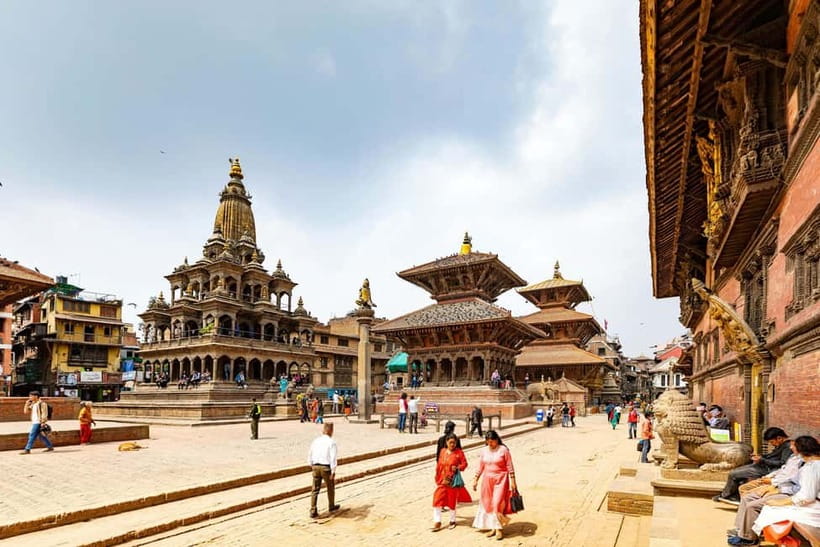
Patan, also called Lalitpur, is known as the artistic heart of the valley. Its Durbar Square has a medieval royal palace, temples, statues, and the distinctive red brick paving associated with the square.
This is where you should pay attention to workmanship. Newari architecture is not just about size. Look for the carved surfaces, temple forms, brickwork, and the way many buildings are arranged around courtyards and sacred spaces.
Patan can reward a slower visit, so three hours means you need to keep moving between the two squares. The benefit is comparison. You can see how Patan’s artistic character differs from Kathmandu’s central royal square, rather than treating every temple in the valley as the same.
Returning to Kathmandu Durbar Square
The Kathmandu stop repeats the main features described in Option 1: royal palaces, the nine-storied Nautale Durbar, temples, and the Kumari tradition.
The two-square route is a good fit if you want to compare palace cities. It is less varied in religious type than Option 2 and does not include the 360-degree hilltop view of Swayambhunath. In return, you get a tighter focus on palace design and Newari cultural expression.
Ask your guide to point out differences between Patan and Kathmandu rather than simply giving you two separate lectures. Nilakantha Acharya has been praised for answering questions and changing the pace around personal interests, which is useful on an architecture-heavy route.
Option 4: Bhaktapur’s four connected squares
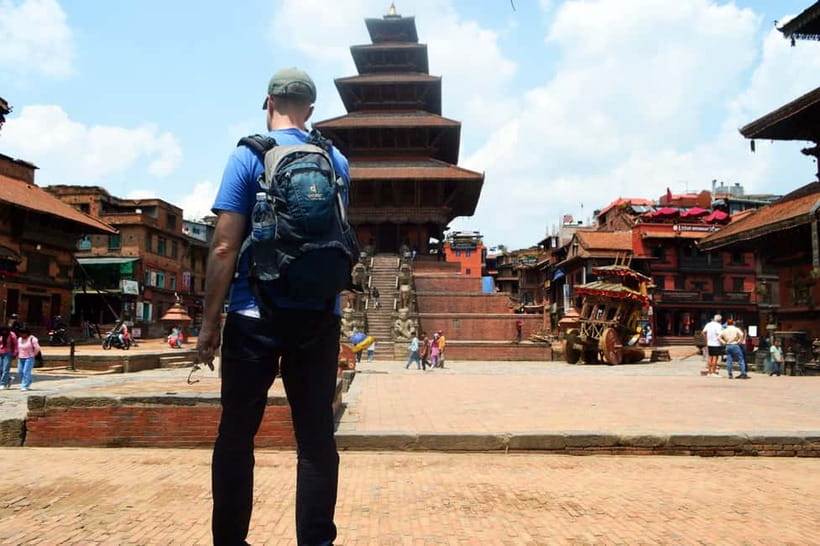
Bhaktapur is the most focused option. Instead of combining two separate headline sites, you spend the visit in one ancient city.
Bhaktapur Durbar Square is the largest Durbar Square in Nepal, even though Bhaktapur is the smallest district. The square includes four smaller squares, so the name describes a wider historic area rather than one single open space.
The star attraction is Nyatapola Temple, Nepal’s tallest temple, with five stories. Its height and layered form make it easy to pick out, but you should also allow time for the surrounding courtyards, temples, and old urban setting.
This option suits you if you prefer a single place with a strong sense of continuity. It also reduces the mental shift between two unrelated sites. The limitation is that the tour does not include a second major landmark such as Boudhanath or Swayambhunath.
Because the tour begins and ends in Thamel and lasts only three hours, your actual time in Bhaktapur depends on the day’s movement and the time spent on the road. The supplied details do not give a fixed travel time, so you should not plan another tightly timed activity immediately afterward.
The guide makes the short format work
A three-hour heritage tour succeeds or fails on explanation. Without context, you can walk through a square, take photos, and miss why the place matters.
Nilakantha Acharya is specifically associated with several highly praised outings, especially Kathmandu Durbar Square and Swayambhunath. He has been described as patient with questions, willing to adjust the pace, and helpful with photographs. He also took one visitor to a rooftop for coffee when jet lag became a problem between stops, though you should not treat that as a guaranteed part of the itinerary.
Prakash is another named guide, and Hari and Ram have driven visitors on different routes. The exact guide and driver may vary, so check your booking details if a particular guide matters to you.
The private-group format is a real advantage. You do not need to wait for a large group at every shrine, and you can tell the guide if you want more detail on architecture, religion, or local customs. You should also say at the start if you have a firm departure time or limited energy.
English and Hindi are available. Bottled water is included, and the air-conditioned private vehicle gives you a break from the street outside.
Timing, comfort, and practical limits
The tour picks you up in Thamel and returns you there. Wait in your hotel lobby or at the entrance to your apartment five to ten minutes before pickup.
Three hours sounds generous until you account for getting between sites, entering monuments, and stopping for explanation. I would choose one route based on your main interest before you arrive:
- Choose Option 1 for a broad first look at Kathmandu, including the hilltop view.
- Choose Option 2 for Hindu and Buddhist religious sites.
- Choose Option 3 for royal architecture and Newari design.
- Choose Option 4 for one concentrated visit to Bhaktapur.
Bring your passport and cash. Do not bring luggage or large bags, and alcohol and drugs are not allowed. The tour is not suitable for wheelchair users, babies under one year, or people over 95 years old.
The tour has free cancellation up to 24 hours before departure, and you can reserve now and pay later. Starting times depend on availability, so check the schedule before building the rest of your day around it.
Who gets the best value from this tour
I would recommend this experience to a first-time visitor with limited time in Kathmandu. It is also useful on a stopover, during a free afternoon, or at the beginning of a longer Nepal trip when you want a quick orientation before exploring alone.
It works well for couples, families with older children, and small private groups that prefer their own pace. The option to ask questions and linger at one building is more useful than a rigid route with many stops.
I would not choose it if you want a slow photographic study, a full tour of every monument, or a long visit to Bhaktapur. Three hours is a sharp introduction, and the low price should be understood in that light. You get access, transport, and interpretation, but not an all-day cultural program.
Should you book the Kathmandu Heritage Hop?
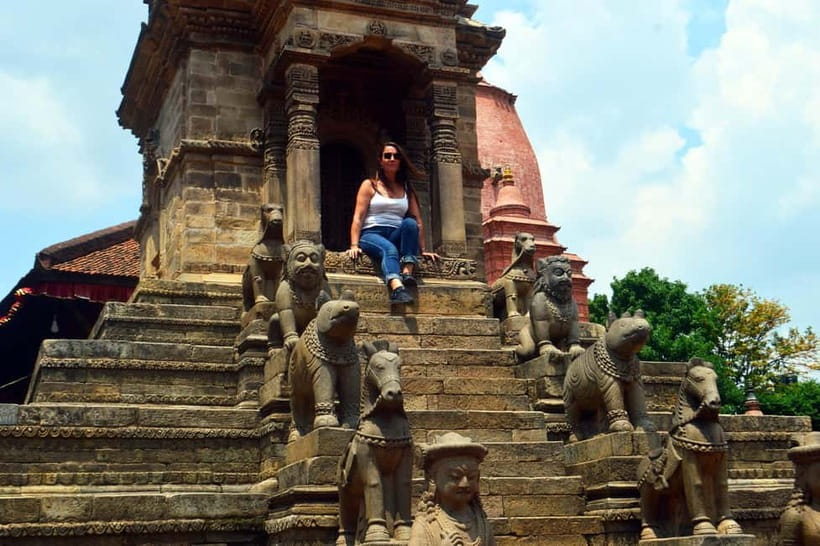
Book it if you want to see two important sites without giving up an entire day. At $3.94 per person, the value is strong even after you account for entrance fees, especially because private transport and a guide are included.
My first choice for most people would be Kathmandu Durbar Square and Swayambhunath. It gives you palace history, the Kumari tradition, Buddhist and Hindu elements, monkeys, and a sweeping view in one compact route.
Choose Pashupatinath and Boudhanath if religious life is your main interest. Choose Patan and Kathmandu for architecture. Choose Bhaktapur if you would rather spend the whole visit in one historic city. Make that choice before booking, carry cash, and leave some breathing room after the tour. This is a useful slice of Kathmandu, not the whole meal.
FAQ
How long does the tour last?
The experience lasts three hours, including pickup and return to Thamel.
Where does pickup take place?
Pickup is available from your hotel in Kathmandu. You should wait in the hotel lobby or at the entrance of your residential apartment five to ten minutes before pickup.
Which sites can I choose?
You can choose two sites from Kathmandu Durbar Square, Swayambhunath, Pashupatinath, Boudhanath, Patan Durbar Square, and Bhaktapur Durbar Square. The available combinations are presented as four tour options.
Is private transportation included?
Yes. The tour includes an air-conditioned private vehicle, hotel pickup and drop-off, and bottled drinking water.
Are entrance fees included?
No. Monument entrance fees are not included in the listed price. An entrance-fee add-on is available.
What languages does the guide speak?
Live guiding is available in English and Hindi.
Can I cancel or pay later?
You can cancel up to 24 hours in advance for a full refund. Reserve now and pay later is also available.
Just added around Kathmandu
- Traditional Momo Making Class★ 5.0 · 10 reviews
- Women Empowerment Project(Nepali cooking class & jewelry workshop★ 5.0 · 15 reviews
- Manthali Airport (Ramechhap) To Kathmandu – Transport Service★ 4.5 · 11 reviews
- Amazing 1 Day Trekking Experience in Kathmandu Nepal★ 5.0 · 24 reviews
- Walking tour of Kathmandu with awesome local guides★ 5.0 · 4 reviews
- Walking tour of real Kathmandu through back streets.★ 5.0 · 3 reviews
- Private Manaslu Circuit Trek at Himalayas★ 5.0 · 3 reviews
- Walking Street Food Tour in Kathmandu★ 5.0 · 111 reviews
Historical Tours, compared.
Private Kathmandu Sightseeing Tour | UNESCO World Heritage sites
Read our review →
Full-Day Tibetan Cultural Tour to Tibetan Settlements Pokhara
Read our review →
Kathmandu Private Sightseeing Tour | UNESCO World Heritage Sites
Read our review →
Afternoon Tibetan Cultural Tour to Tibetan Settlements Pokhara
Read our review →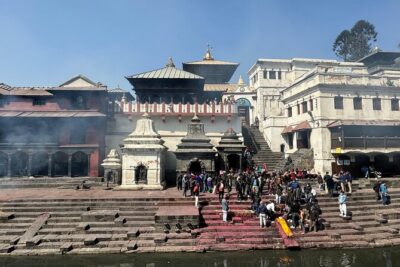
Full Day Private Top 4 UNESCO Heritage Tour W/Lunch.
Read our review →
Nagarkot Sunrise & Bhaktapur UNESCO Heritage Private Tour
Read our review →Browse the lists this tour appears in