Reviewed · TOURS
Temples and Stupas Tour in Kathmandu Valley
Kathmandu’s sacred core comes into focus on this seven-hour circuit: Hindu cremation ghats at Pashupatinath, royal Newari courtyards at Patan Durbar Square, and the prayer-filled circle around Boudhanath Stupa. You see three UNESCO-listed sites in one day without bargaining for taxis or piecing together separate rides.
I like the small maximum of 10 people, which gives you a better chance to ask questions, and I like the practical mix of history, religion, and daily life. Guides named Deepa and Kalpana have been praised for clear explanations and patient answers. The air-conditioned vehicle also matters in Kathmandu traffic.
The main caution is that the $34 price does not include entrance fees, food, drinks, taxes, or hotel transfers. One recent account put admission at about 2,000 Nepalese rupees total for two sites, though prices can change. The day can also feel like three separate visits if your guide gives little commentary between stops.
Key points to know before booking
- Three major Kathmandu Valley sights in one day: Pashupatinath, Patan Durbar Square, and Boudhanath are each allotted about two hours.
- A compact small-group format: The maximum is 10 people, with an English-speaking guide and transport matched to the group size.
- A useful religious contrast: You move from Hindu temple grounds and cremation ghats to Buddhist prayer traditions and a major stupa.
- Patan means Lalitpur: The Durbar Square stop is in the historic city of Lalitpur, also commonly called Patan.
- Extra cash is essential: Entrance fees are not included, and food, drinks, taxes, and hotel pickup are also outside the tour price.
- Simple meeting arrangements: Start at Royal Mountain Travel on Lal Durbar Marg at 9:00 am and return to the same meeting point.
Three powerful sights, one manageable day
This tour is built around contrast. Pashupatinath shows Hindu devotion at its most direct and public. Patan Durbar Square brings you into the world of royal courts, carved timber, and Newari design. Boudhanath shifts the mood again, with Buddhist worship centered on a vast white stupa.
You spend roughly two hours at each place. That is enough time to get a real sense of each site, though not enough for a slow, exhaustive study of every shrine, courtyard, and museum room. I see this as a good first-day introduction rather than a specialist architecture tour.
The transport takes care of the awkward part. Kathmandu roads can make short distances slow, and a private taxi trip to three separate sites requires negotiating fares and knowing where to get out. Here, your guide and driver handle the route while you watch the city pass by.
The pace is also fairly clear. You meet at Royal Mountain Travel at 9:00 am, visit the three main stops, and finish back at the meeting point after about seven hours. Hotel pickup and drop-off are not included, although one guide reportedly offered a hotel drop after the tour as a kindness. Do not count on that as part of the service.
More days out in Kathmandu:
- Private Kathmandu Sightseeing Tour | UNESCO World Heritage sites
★ 5.0 · 756 reviews - Half day cooking class in Thamel kathmandu
★ 5.0 · 607 reviews - Nagarkot Sunrise View and Day Hiking from Kathmandu
★ 5.0 · 471 reviews
Pashupatinath: Shiva, holy men, and the Bagmati ghats
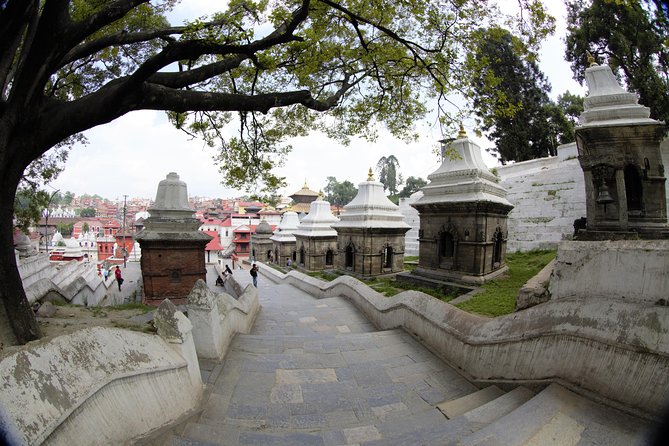
Pashupatinath Temple is dedicated to Shiva in his form as Pashupatinath, or Lord of Animals. It is one of Nepal’s most important Hindu pilgrimage sites and also a place where death is handled in public view.
The attraction here is not simply one temple building. The wider complex includes shrines, riverside platforms, holy men, and places connected with Hindu funeral rites. Depending on the day and timing, you might see a cremation taking place along the Bagmati River. That can be a powerful cultural encounter, but it is also a solemn one. You should follow your guide’s advice about respectful behavior and photography.
A guide adds real value at Pashupatinath because the rituals can be difficult to read from the outside. You will want help understanding which spaces are open to non-Hindu visitors, why the river matters, and how the temple complex fits into Hindu practice in Nepal.
The two-hour allocation gives you time to look beyond a quick photo stop. You might see Hindu holy men, known locally as sadhus, and notice the layers of worship built into the site. At the same time, this is not a staged cultural show. Funeral activity is part of a working religious place, not an attraction arranged for visitors.
There is an important practical point: entrance fees are extra. The supplied details do not state the official current amount for each site, so carry Nepalese rupees and confirm the amount locally. One past booking described paying 1,000 rupees at each of two stops, or about 2,000 rupees in total, but you should treat that only as a guide to possible cost, not a fixed rate.
Patan Durbar Square: royal courtyards in Lalitpur
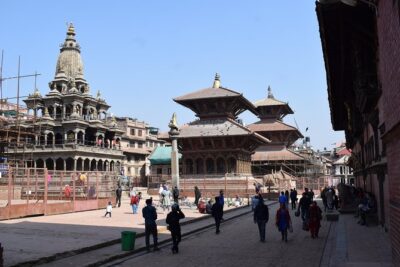
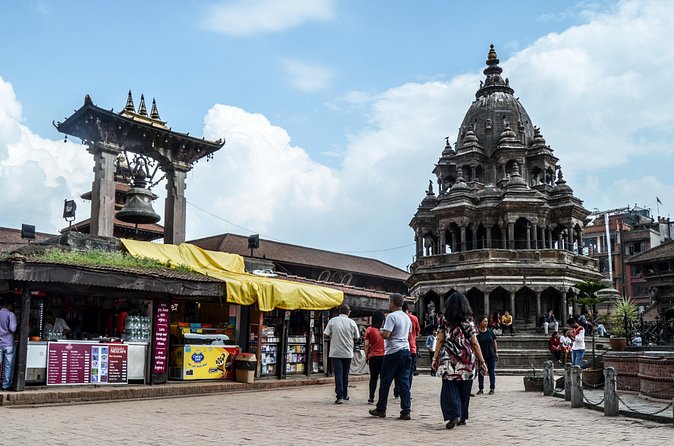
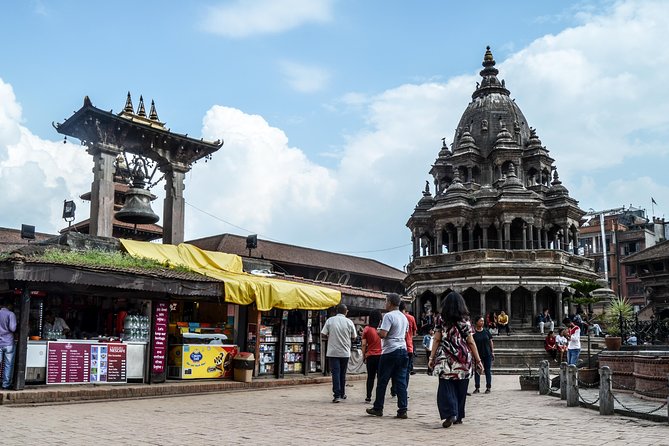
The second stop is Patan Durbar Square, also called the central Durbar Square of Lalitpur. Patan was once a royal center of the Malla kings, and its courtyards and temples show why the Kathmandu Valley is so well known for Newari architecture.
This is the stop for carved wood, brick facades, pagoda roofs, palace courtyards, and intricate religious art. The setting rewards a slow walk. Look up at the rooflines, then look down at the stone and brick details around the courtyards. Your guide should help separate royal spaces from active shrines and explain how Hindu and Buddhist traditions overlap in the valley.
I particularly like this stop for visitors who want more than a religious pilgrimage site. Pashupatinath is intensely active and devotional. Patan gives you a clearer sense of political power, craftsmanship, and the old urban structure of Kathmandu Valley society.
The site was damaged by the 2015 earthquake, and restoration has been part of the valley’s recent story. The supplied information does not promise access to every building or detail the condition of individual structures, so expect a living historic area rather than a perfectly preserved museum. Your guide can explain what you are seeing on the day.
Two hours should let you explore the principal square without racing. It may feel short if you want to enter every museum or spend time with each temple. Since the tour has three major stops, you will need to accept a broad overview rather than a long, unhurried Patan visit.
This is another place where your guide’s skill matters. The strongest accounts describe guides who kept explaining the history, answered questions, and made the visit feel more complete. Deepa and Kalpana are two names associated with particularly well-received departures, though you may be assigned someone else.
Boudhanath: a Buddhist center built for walking
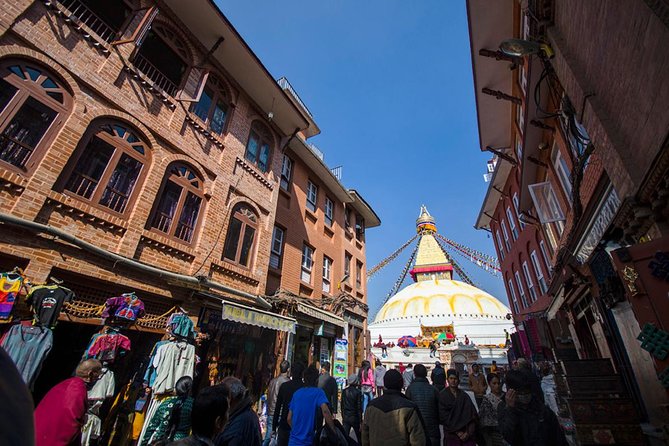
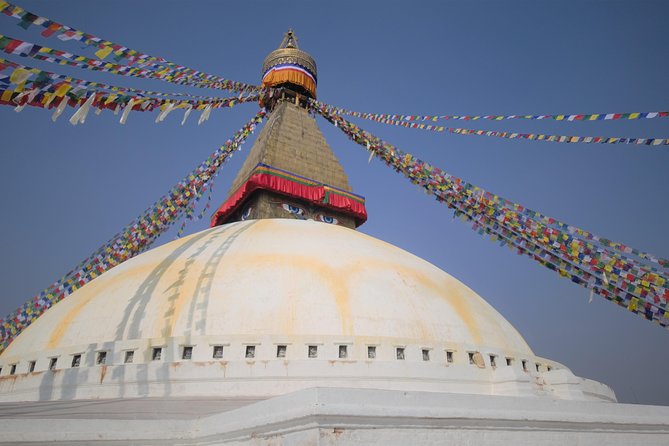
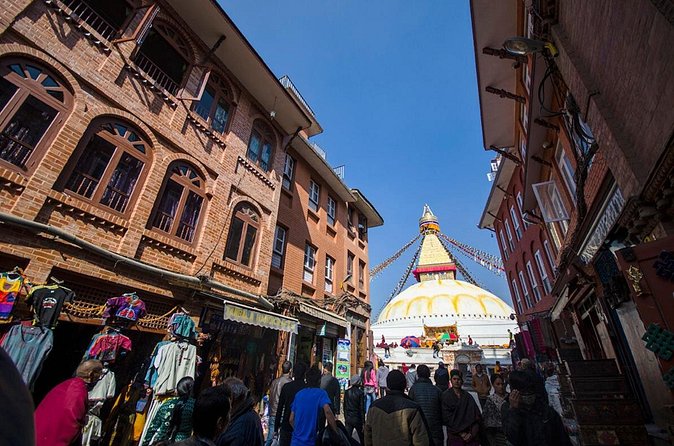
Boudhanath Stupa changes the visual and spiritual rhythm of the day. The huge Buddhist stupa is one of Nepal’s holiest sites, and it also receives respect from Hindu worshippers. Its white dome, painted eyes, prayer flags, and surrounding devotional route create a very different experience from Patan’s palace square.
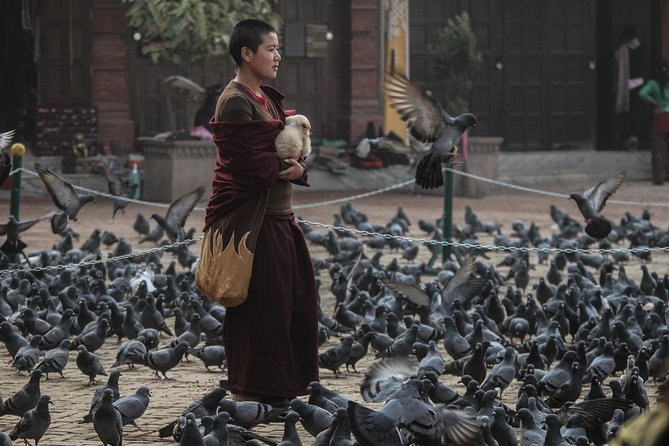
The natural way to understand Boudhanath is to walk around it. Watch worshippers move clockwise, listen for bells and chants, and notice the monasteries and shops around the central structure. The tour gives you about two hours, enough to make the circuit at an easy pace and ask your guide about Buddhist symbols and local religious practice.
The supplied details do not promise a particular ceremony, monk encounter, or monastery visit, so keep your expectations grounded. The value is in seeing an important working religious center and learning how Buddhist and Hindu traditions coexist in Nepal.
Boudhanath can also be the most visually memorable stop. The scale of the stupa helps you understand why it has such importance, while the surrounding square lets you observe ordinary worship rather than a single grand monument. I would save a little energy for this final visit, since it is best appreciated on foot and with time to look around.
As with the other major sites, admission is not included. The tour price covers the guide and vehicle, not every cost once you arrive.
A completely different kind of day, same corner of Nepal:
- Kathmandu: Full Day 7 UNESCO Tour with Lunch – Private/Group
★ 5.0 · 415 reviews - Kathmandu: Local Women-Led Nepali Cooking & Momo Class
★ 4.9 · 360 reviews - Private Bhaktapur and Nagarkot Day Tour From Kathmandu
★ 5.0 · 305 reviews - Kathmandu: Full Day Top 4 UNESCO Tour with Lunch – Private/Group
★ 5.0 · 269 reviews
What the $34 price really covers
At $34 per person, this is priced as a practical introduction, not an all-inclusive day out. You are paying for an English-speaking guide, transport in an air-conditioned vehicle, and the convenience of linking three major sights in one route.
The value is strongest if you are new to Kathmandu, short on time, or uncomfortable negotiating with taxi drivers. A seven-hour private sightseeing day would normally require more planning and could cost more, though the tour does place you with other people and follows a shared schedule.
The extra costs are easy to overlook. You pay for entrance fees yourself, and food and drinks are not included. All taxes are also listed as excluded. A sensible budget therefore includes admission money, lunch, water, and the cost of reaching Lal Durbar Marg in the morning and leaving the meeting point afterward.
One guide continued answering questions during lunch on a particularly strong departure, but lunch itself is not part of the published inclusions. Plan to buy your own meal rather than assume the group has a restaurant stop included.
The booking pattern suggests people reserve this experience around 15 days ahead on average. That does not guarantee that every date fills early, but it is a useful reason to book ahead if your Kathmandu schedule is tight.
The guide can make or break the day
A well-prepared guide is the difference between a connected cultural tour and three quick photo stops. At its best, this route gives you a thread linking Shiva worship, royal Newari culture, Buddhist devotion, and modern Kathmandu life.
Deepa and Kalpana are specifically praised by name for extensive cultural knowledge, clear teaching, and willingness to answer questions. Another strong account describes a guide who kept explaining the history throughout the day, including during lunch, and even arranged a hotel drop afterward.
You should still ask questions early. If the guide explains only at the monuments and stays quiet in the vehicle, the travel time can feel empty. One less favorable experience described the guide and driver speaking Nepali to each other between stops, with little information offered on the road. That is a useful warning: do not hesitate to ask what you are passing, how the sites connect, or what you should watch for next.
Because the group is capped at 10, there is at least a reasonable chance for conversation. The tour is not advertised as private, so the amount of personal attention depends on the group and guide assigned that day.
Timing, transport, and what to bring
The official start is 9:00 am at Royal Mountain Travel, Lal Durbar Marg, Kathmandu 44601. The tour ends at the same meeting point. Hotel pickup and drop-off are not included, so allow extra time to reach the start and arrange your onward transport.
The vehicle is air-conditioned, with the vehicle type based on group size. That is useful in Kathmandu, where traffic can turn a short transfer into a slow one. It also spares you from arranging three separate taxi rides and haggling over each fare.
Bring water, some food money, Nepalese rupees for admissions, and a phone with your mobile ticket available. Wear clothing suitable for religious sites and comfortable shoes for walking around courtyards and the stupa. The provided information says most people can participate, and children aged 10 and above pay an entrance fee.
The seven-hour duration is approximate. Traffic, the size of the group, time spent asking questions, and activity at Pashupatinath can affect the exact finish. Keep the evening lightly scheduled rather than booking something immediately afterward.
The cancellation terms are friendly if your plans change early: you can receive a full refund by canceling at least 24 hours before the local start time. Changes or cancellations inside that window are not accepted for a refund. One person who missed the tour after a flight delay was unable to transfer the booking to another departure, so flight connections and tour timing deserve careful attention.
Who should book this Kathmandu tour?
I would choose this tour if you have one free day in Kathmandu and want the valley’s main religious and royal sights explained in plain language. It suits first-time visitors, solo bookers who prefer organized transport, and anyone who wants a small group without paying for a private guide.
It is also a good fit if you want cultural context. Pashupatinath can be confusing without explanation, Patan’s details are easy to miss, and Boudhanath’s worship practices make more sense when someone points out what is happening.
I would hesitate if your main goal is slow photography, extensive museum time, or independent exploration. Two hours per site keeps the day moving, and the route gives you a survey rather than a deep study. You also need to budget beyond the advertised price and make your own way to the meeting point.
Should you book it?
Book this experience if convenience, a compact route, and cultural explanation matter more to you than total flexibility. For $34, the guide and air-conditioned transport make three major Kathmandu visits easier to manage, while the 10-person limit keeps the group from becoming unwieldy.
Before booking, accept two conditions: entrance fees and meals are extra, and the quality of the day depends heavily on the guide assigned. If you receive the same level of care associated with guides such as Deepa or Kalpana, the tour can be an excellent introduction to Kathmandu’s sacred and royal heart. If you want to linger at one site or demand a fully inclusive price, plan your own visits instead.
FAQ
How long does the Kathmandu temples and stupas tour last?
The experience lasts about seven hours, with roughly two hours allocated to each of the three main stops.
Where does the tour start?
It starts at Royal Mountain Travel on Lal Durbar Marg, Kathmandu 44601, at 9:00 am.
Where does the tour end?
The activity ends back at the meeting point at Royal Mountain Travel.
Which sights are included?
The route includes Pashupatinath Temple, Patan Durbar Square in Lalitpur, and Boudhanath Stupa.
Are entrance fees included?
No. Entrance fees are not included. Children aged 10 and above are subject to an entrance fee.
Is hotel pickup included?
No. Hotel pickup and drop-off are not included, although a guide may sometimes offer an additional drop-off as a courtesy.
What is included in the $34 price?
The price includes an English-speaking guide and transport in an air-conditioned vehicle based on group size. Food, drinks, entrance fees, taxes, and hotel transfers are not included.
Just added around Kathmandu
- Traditional Momo Making Class★ 5.0 · 10 reviews
- Women Empowerment Project(Nepali cooking class & jewelry workshop★ 5.0 · 15 reviews
- Manthali Airport (Ramechhap) To Kathmandu – Transport Service★ 4.5 · 11 reviews
- Amazing 1 Day Trekking Experience in Kathmandu Nepal★ 5.0 · 24 reviews
- Walking tour of Kathmandu with awesome local guides★ 5.0 · 4 reviews
- Walking tour of real Kathmandu through back streets.★ 5.0 · 3 reviews
- Private Manaslu Circuit Trek at Himalayas★ 5.0 · 3 reviews
- Walking Street Food Tour in Kathmandu★ 5.0 · 111 reviews
Tours, compared.
Private Kathmandu Sightseeing Tour | UNESCO World Heritage sites
Read our review →
Everest Base Camp Helicopter Tour landing at Everest View Hotel
Read our review →
Full Day 7 UNESCO Tour with Lunch – Private/Group
Read our review →
Private Bhaktapur and Nagarkot Day Tour From Kathmandu
Read our review →
Full Day Top 4 UNESCO Tour with Lunch – Private/Group
Read our review →