
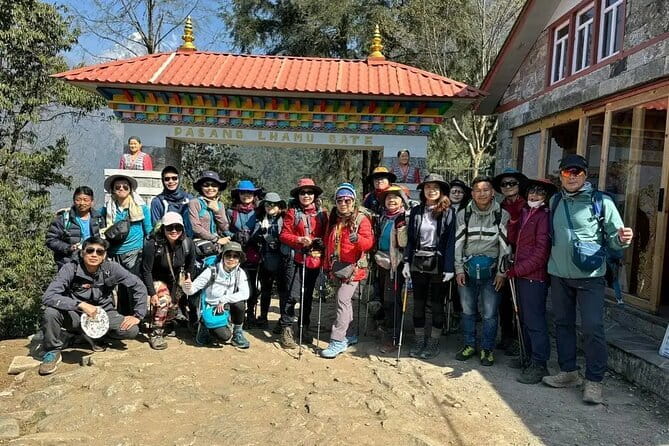
Reviewed · EVEREST BASE CAMP TREKS
14 Days Everest Base Camp Trek
The payoff here is Everest Base Camp and Kala Patthar, reached on foot through Sherpa villages, high mountain passes, glacial moraines, and valleys framed by Ama Dablam, Everest, Lhotse, and Nuptse. The route gives you time to adjust to altitude instead of rushing straight uphill.
I like the two built-in acclimatization days, especially the viewpoint walk above Namche and the climb toward Nagarjun Hill from Dingboche. I also like the practical package: airport transfers, Kathmandu hotels, meals, permits, domestic flights, a licensed guide, and a porter are covered. The main drawback is the Lukla connection, which begins with a long drive to Manthali and can be affected by weather and flight availability.
Key things to know before you book
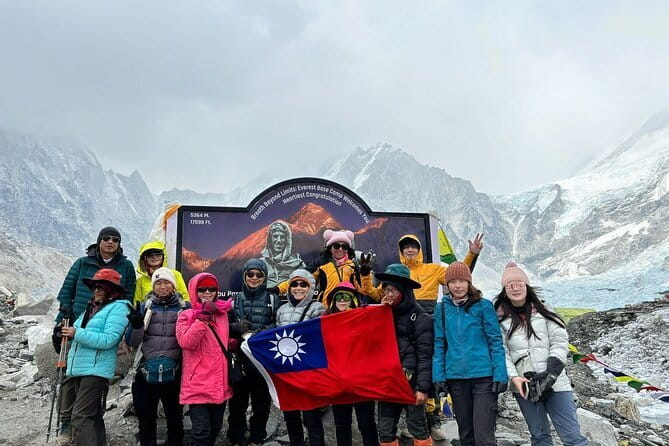
- Kala Patthar reaches 5,545 meters: This is the trek’s highest point and offers a wide view of Everest, Lhotse, Nuptse, Ama Dablam, and nearby peaks.
- Namche and Dingboche include acclimatization walks: These are active rest days, not days spent entirely in bed.
- The Lukla flight uses Manthali: You drive roughly four to five hours from Kathmandu to Ramechhap before the short flight to Lukla.
- One porter serves two clients: Pack carefully and confirm luggage arrangements before setting out.
- The $2,200 price covers many essentials: Meals, permits, domestic flights, hotel nights, guide, porter, staff costs, and airport transport are included.
- This is a private trip for at least two people: Only your group takes part, but solo booking is not supported by the stated minimum.
Why the Everest Base Camp route still earns its reputation
The Everest Base Camp trek is not a walk to a single dramatic viewpoint. Its strength is the gradual change in the world around you. You begin in Kathmandu, move into the Khumbu foothills, pass through pine and rhododendron country, and finish among rock, ice, and thin air.
You will see prayer flags, chortens, mani walls, yak pastures, and Sherpa settlements along the way. The scenery changes every day, which helps keep the long walking days from feeling repetitive.
The trip lasts about 14 days, including arrival and departure days. That length matters. A shorter schedule might look attractive on paper, but the Namche and Dingboche rest days give your body a better chance to adjust to altitude.
You should still take the physical requirement seriously. The operator asks for moderate fitness, but several days involve four to five hours of walking, steep sections, uneven ground, and high elevation. The challenge is not technical climbing. It is the repeated effort, cold, altitude, and limited comfort.
More Everest Base Camp treks:
- Everest Base Camp Trek – 14 Days
★ 5.0 · 1,499 reviews - Everest Base Camp Trekking
★ 5.0 · 485 reviews - Everest Base Camp Trekking – 13 Day
★ 5.0 · 365 reviews
Day 1: Kathmandu and a first night in Thamel
You are met at the airport and taken by private vehicle to a three-star hotel in Thamel. That neighborhood is a useful base for a Himalayan trip, with shops, restaurants, and the practical feel of a place used to serving trekkers.
The afternoon is left open. You can explore, buy last-minute supplies, or simply rest after your international flight. Since lunch and dinner in Kathmandu are not included, budget separately for both.
Two nights in Kathmandu are included in a twin-sharing room, with breakfast. That gives you a little breathing room before the trail and again after you return from the mountains.
Day 2: Manthali, Lukla, and the first walk to Phakding
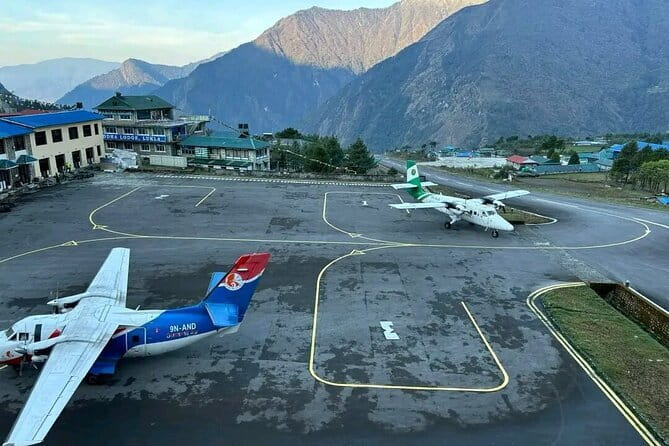
The route begins with a four to five hour drive from Kathmandu to Manthali, also called Ramechhap. From there, the domestic flight to Lukla takes about 20 minutes.
The flight is short, but it is an important part of the journey. Lukla is the gateway to the Everest region, and landing there makes the change from city travel to mountain travel feel immediate.
From Lukla, you walk to Phakding. The day is listed at about four hours of activity, including the transfer and flight arrangements. Your first walk is a useful introduction to the pace of the trek, though you should not treat it as a free pass. The next day is harder.
The Manthali transfer is worth noting before you pay. You are not simply taking a flight from Kathmandu airport. Ground transport comes first, and the overall day can feel long before the walking begins.
Day 3: The steep approach to Namche Bazaar
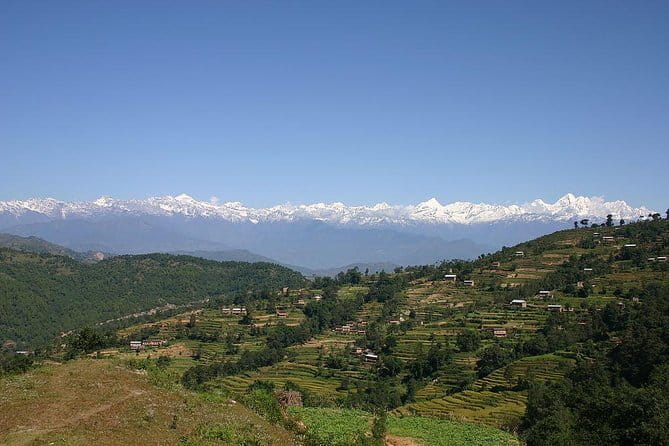
You walk from Phakding toward Namche Bazaar, passing Sherpa communities such as Benkar and Chumoa. At Monjo, you enter Sagarmatha National Park, where the trail begins to feel more serious.
The climb to Namche includes steep sections and takes about five hours. This is one of the first days when your breathing and pace become important. Walk slowly, drink regularly, and resist the urge to race ahead early in the day.
Namche is the main service center of the Everest region. It is also the first major place where altitude becomes a practical concern. The town is a good base for food, supplies, and rest before you go higher.
More trekking days out of Everest Region:
- Everest Base Camp Trek -14 Days
★ 5.0 · 321 reviews - Everest Base Camp Trekking – 2025/2026
★ 5.0 · 199 reviews - Everest Base Camp Trek
★ 5.0 · 193 reviews - Everest Base Camp Trek with Helicopter Return from Gorakshep to Lukla
★ 5.0 · 161 reviews
Day 4: Namche acclimatization and Everest View Hotel
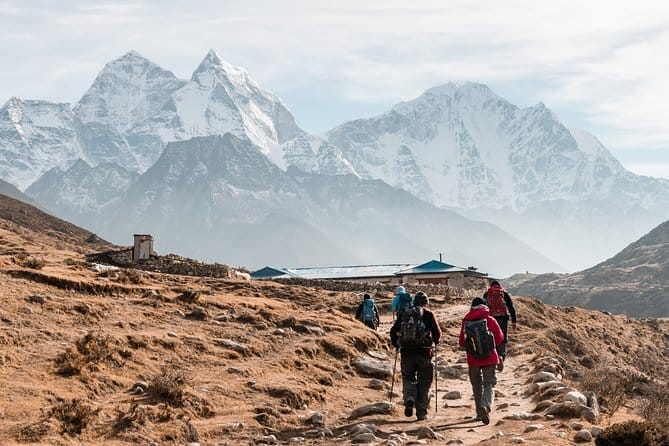
The Namche acclimatization day is one of the strongest parts of the plan. You remain in the same village but take an uphill walk to the Everest View Hotel.
From the viewpoint, you can see Ama Dablam, Thamserku, Everest, Nuptse, and other peaks. The walk is not a day off in the usual sense. It keeps you moving at a manageable pace, then returns you to the same sleeping elevation.
That pattern is valuable. You gain height during the day, see the mountains clearly, and return to Namche rather than sleeping significantly higher. The schedule allows about five hours for the activity.
Namche also gives you a chance to experience the social side of the route. Shops, food, prayer flags, and Sherpa life make it more than a place to pass through. You should enjoy it, but remember that comfort becomes more basic as you continue upward.
Day 5: Tengboche, prayer flags, and monastery views
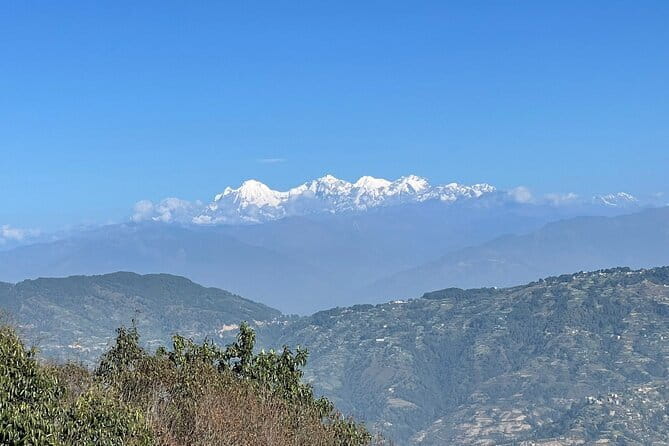
The trail to Tengboche is described as a gentler walking day, with fewer steep sections and about five hours on foot. That makes it a good day for taking photographs without constantly watching your feet.
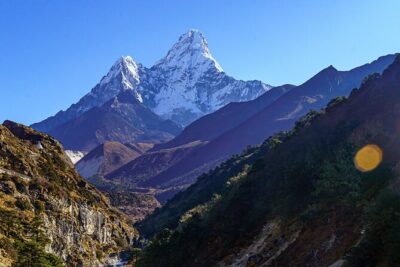
Ama Dablam is a major visual feature along this part of the route. You will also see prayer flags and stupas, which give the walk a strong cultural character rather than making it only a mountain sightseeing trip.
Tengboche is known for its ancient monastery and its views of Everest at sunrise and sunset. The setting is one of the route’s major highlights. Still, mountain weather can change quickly, so do not assume every sunrise or sunset will be perfectly clear.
Day 6: Pangboche and the road to Dingboche
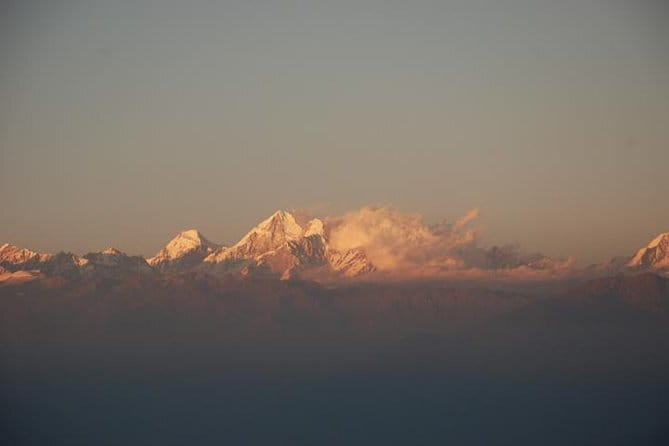
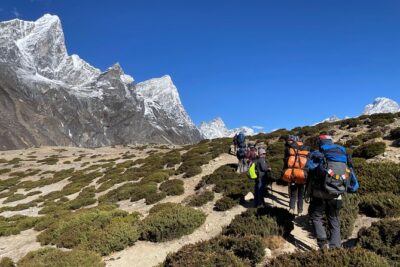
The walk to Dingboche takes about four hours and passes through Pangboche. Along the way, you see Ama Dablam, chortens, mani walls, and high settlements that show how people live in the upper Khumbu.
The trail continues upward through fields and open mountain country. You will notice fewer trees and more exposed ground as the elevation rises.
Dingboche is an important stop because the following day is set aside for acclimatization. Reaching it after a shorter walking day helps preserve energy for the higher section ahead.
Day 7: Active rest above Dingboche
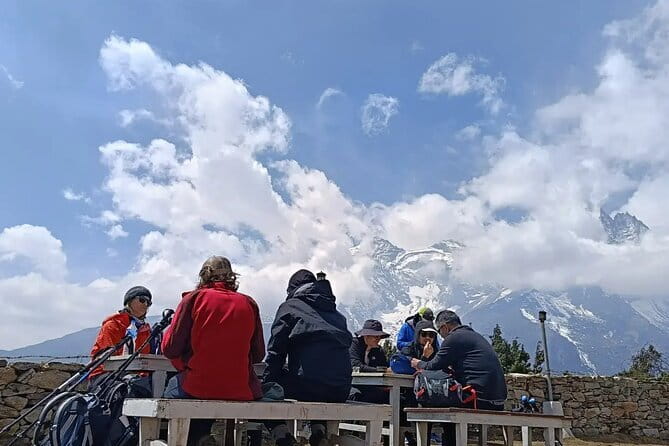
You stay in Dingboche for another night and take an acclimatization walk toward Nagarjun Hill, listed at about 5,100 meters. The walk takes roughly five hours and is described as a demanding climb with rewarding mountain views.
This is not a casual stroll. The point is to gain some height during the day while keeping your sleeping elevation at Dingboche. You should expect thinner air, slower steps, and a need for patience.
The rest day is also one of the reasons this 14-day plan is more sensible than a rushed schedule. At this stage, simply arriving higher is not the only goal. Your body needs time to respond.
Day 8: Pheriche Valley and Lobuche
The trail toward Lobuche begins through Pheriche Valley, with a gradual climb through alpine brush and yak pastures. Ama Dablam, Tawoch, and Cholatse rise above the valley.
The walking time is about four hours, but the elevation makes that number less meaningful than it sounds. A short day at high altitude can feel harder than a longer walk at lower elevation.
This section begins to look and feel more severe. Trees are largely gone, and the scenery is shaped by rock, ice, and open slopes. You should keep your layers accessible because conditions can shift during the day.
Day 9: Gorak Shep and Everest Base Camp
You walk from Lobuche to Gorak Shep, a small settlement beside the lateral moraine of the Khumbu Glacier. Snow-covered peaks surround the route, and the glacier gives the day a rough, powerful character.
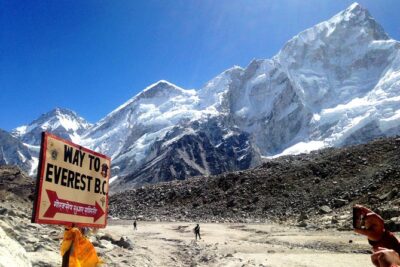
From Gorak Shep, you continue to Everest Base Camp. The walking time is listed at about four hours, though the exact pace depends on trail conditions and how your group handles the altitude.
Reaching Base Camp is a major emotional point, but keep your expectations grounded. You do not climb Mount Everest from here, and the famous summit itself may not appear as a perfect pyramid from every angle. The reward is standing at the foot of the route used by expeditions and seeing the Khumbu Glacier up close.
You return to Gorak Shep for the night. This is likely to be one of the most tiring evenings of the trip because you have reached high elevation after several demanding days.
Day 10: Kala Patthar and the descent to Pheriche
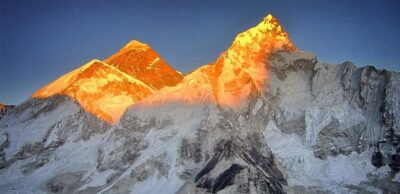
You start before dawn for Kala Patthar, the highest point on the trek at 5,545 meters. The early start is designed to reach the viewpoint for broad mountain views, including Everest, Nuptse, Lhotse, and Ama Dablam.
The climb is strenuous. At this height, even a steady walking pace can feel slow, and cold morning conditions add to the work. The reward is a wide panorama and one of the clearest ways to appreciate the scale of the Khumbu peaks.
After Kala Patthar, you descend toward Pheriche. Going down is welcome, but it does not make the day easy. Your legs have already worked hard, and the descent follows the effort of the summit viewpoint.
Days 11 and 12: Returning through Namche to Lukla
The route turns back toward Namche on Day 11. You lose elevation overall, though the trail still includes uphill stretches. Forests and plant life begin to return, giving the scenery a welcome change after the bare high country.
This is a long walking day, listed at about five hours. The descent may be easier on your breathing, but tired knees and feet can make it demanding.
Day 12 is the final hiking day, as you follow the trail back to Lukla. Reaching Lukla gives you a chance to rest and think back over the route from the airport to Base Camp and back again.
The return path is familiar, but it is not dull. You notice details differently when you are no longer focused on gaining height. It is also wise to keep some energy in reserve, since you still need to reach Lukla on foot.
Day 13: Lukla to Kathmandu or Manthali
The return flight depends on weather and availability. You may fly directly to Kathmandu, or you may fly to Manthali and continue by road.
That flexibility is practical, but it also means you should not schedule an important international connection immediately after the trek. The trip includes a Kathmandu return day, but mountain flights are not fully within the operator’s control.
Once back in Kathmandu, you have time for shopping and a farewell dinner at a typical Nepali restaurant. The contrast is pleasant: after basic mountain lodges and long walking days, city food and a comfortable hotel feel well earned.
Day 14: Airport transfer and departure
A staff member takes you to the airport three hours before your scheduled departure. Private airport pickup and drop-off are included, so the final transfer is straightforward.
The trip also includes an achievement certificate. It is a small keepsake, but after 14 days of walking, it gives you something tangible to take home.
What the $2,200 price covers
At $2,200 per person, the package includes a useful range of major costs:
- Private airport transfers
- Two nights in a three-star Kathmandu hotel with breakfast
- Domestic flights between the Lukla and Manthali route
- Domestic airport tax
- Breakfast, lunch, and dinner during the trek
- Sagarmatha National Park and TIMS permits
- A government-licensed trekking guide
- A porter for every two clients
- Staff wages, food, accommodation, gear, and insurance
- Government taxes, VAT, and office service charges
- A farewell dinner
- An achievement certificate
That is a fair amount of coverage for a high-altitude trek. You are not paying only for guiding. You are also paying for transport, permits, food, staff support, and the organization needed to move a small private group through a remote region.
You still need to budget for Nepal’s entry visa, international flights, travel insurance, personal trekking equipment, drinks, hot showers, WiFi, bar bills, snacks, desserts, and tips. Travel insurance should include high-altitude emergency evacuation. That is not a minor add-on for this kind of trip.
Lunch and dinner in Kathmandu are also excluded. Mineral water, hot water, coffee, and alcohol are excluded during the trek, so bring a clear daily spending plan.
Guide support, porters, and group size
This is a private tour, with only your own group taking part, and at least two people are required. Private travel gives you more control over pace and group mood, though the exact level of flexibility is not specified.
A licensed guide leads the trek. One porter is assigned to two clients, so you should pack with that arrangement in mind. Carry the personal items you need during the day, while the porter handles the shared trekking load.
The operator has also arranged customized routes for people working with Pemba, and Prayash has served as a guide on a previous high-altitude trek. Those names suggest useful local experience, but you should confirm who will lead your particular departure before booking.
Who should book this trek
You should consider this trip if you want the classic Everest Base Camp route with a planned acclimatization structure and a private group. It suits someone who values included logistics and prefers not to arrange permits, meals, airport transfers, flights, and porters separately.
It is also a good fit if you want cultural details along with mountain views. Namche, Tengboche, Pangboche, prayer flags, monasteries, chortens, mani walls, and Sherpa food give the journey more substance than a simple march toward Base Camp.
You should think twice if you dislike basic mountain conditions, long walking days, early starts, or uncertain flights. You also need moderate fitness and suitable personal gear. The operator does not include travel insurance, and emergency evacuation coverage is especially important here.
The cancellation terms are fairly strict close to departure. Cancel at least six full days before the start for a full refund. A cancellation two to six full days ahead receives 50 percent, while cancellations within two days receive no refund.
Should you book the 14-day Everest Base Camp Trek?
I would choose this trip if you want a well-packed classic route with the big landmarks included: Namche, Tengboche, Dingboche, Everest Base Camp, and Kala Patthar. The two acclimatization stops, included meals, permits, porter support, and private transfers add real value to the $2,200 cost.
I would book only after confirming the guide’s name, luggage limits, lodge standards, flight plan, and emergency procedures. If you accept altitude, basic comfort, and weather-related changes, this is a practical way to reach Everest Base Camp without arranging every moving part yourself.
FAQ
How long is the Everest Base Camp trek?
The full experience lasts approximately 14 days, including arrival and departure days in Kathmandu.
Where does the trek begin?
The walking portion begins in Lukla after a drive from Kathmandu to Manthali, also called Ramechhap, followed by an approximately 20-minute domestic flight.
Is airport pickup included?
Yes. Private airport pickup and drop-off in Kathmandu are included.
Are domestic flights included?
Yes. The package includes domestic flight tickets on the Lukla and Manthali route, along with domestic airport tax.
Is this a private tour?
Yes. Only your group participates, and the stated minimum is two people.
What fitness level is required?
The operator lists moderate physical fitness as necessary. Walking days generally last about four to five hours, with steep sections and high-altitude conditions.
Is a guide provided?
Yes. An experienced trekking guide licensed by the Nepalese government is included.
Is porter support included?
Yes. One porter is assigned to every two clients during the trek.
Are meals included?
Breakfast, lunch, and dinner during the trek are included. Breakfast is included during the two Kathmandu hotel nights, but lunch and dinner in Kathmandu are not included. Drinks, snacks, desserts, and bottled or hot water are extra.
Just added around Everest Region
- Day Tour to Everest Base Camp By Helicopter★ 5.0 · 16 reviews
- Kathmandu To Lukla By Helicopter Flight★ 5.0 · 6 reviews
- Luxury Everest Base Camp Trek – 11 Days★ 5.0 · 9 reviews
- Everest Base Camp Tour & View Point by Helicopter from Katmandu★ 5.0 · 3 reviews
- Everest base camp helicopter tour with Guarenteed Landing★ 4.0 · 7 reviews
- Everest base camp flight over by Helicopter from Kathmandu★ 5.0 · 10 reviews
- Everest Base Camp Helicopter Tour Stop at Hotel Everest View.★ 5.0 · 17 reviews
- Everest Base Camp Helicopter Tour★ 5.0 · 24 reviews
Everest Base Camp Treks, compared.
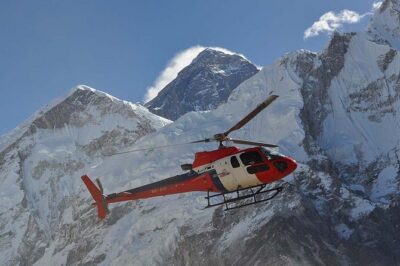
Everest Base Camp Trek with Helicopter Return from Gorakshep to Lukla
Read our review →Browse the lists this tour appears in