
Reviewed · EVEREST BASE CAMP TREKS
Luxury Everest Base Camp Trek -11 Days
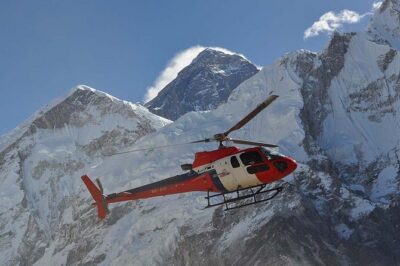
The clever part of this 11-day Everest Base Camp trek comes at the end: after reaching Gorakshep and hiking to Kalapatthar, you return toward Kathmandu by shared helicopter instead of retracing the entire route on foot. That saves several hard walking days and gives you a second view of Everest from the air.
I like the practical comfort of upgraded teahouses, plus the simple logistics: airport pickup, permits, meals, a guide, porters, and a duffle bag are covered. I also like that the trek keeps two acclimatization days, at Namche Bazaar and Dingboche. The main consideration is the price, $4,500 per person, and the fact that the helicopter is shared, not private. Weather can also delay both the Lukla flight and the return flight.
Key points before you book
- A helicopter return from Gorakshep: You hike to Everest Base Camp, then use a shared helicopter for the return to Kathmandu.
- Two acclimatization stops: Namche Bazaar and Dingboche give your body time to adjust to altitude.
- Upgraded mountain lodging: The trek uses upgraded teahouses on a twin-sharing basis rather than basic camping.
- A full support package: Guide, porter service, permits, meals on trek, flights, first aid supplies, and airport transfers are included.
- A private group: Only your own party takes part, with one porter assigned for every two clients.
- Best timing is spring or autumn: These seasons usually offer steadier weather for mountain views and helicopter travel.
What the $4,500 price really buys you
At $4,500, this is not a budget Everest Base Camp trip. You are paying for a more managed experience, with upgraded teahouses, a helicopter return, private group arrangements, staff support, and two nights in a five-star Kathmandu hotel.
The helicopter is the biggest price difference from a standard return trek. It saves the long walk back from Gorakshep and lets you see the Khumbu region from above. That matters if you have limited vacation time, dislike retracing your steps, or want to reduce the physical strain after reaching Base Camp.
The package also removes several chores that can become tiring in Nepal. Airport pickup, Kathmandu transfers, trekking permits, a guide, porters, meals in the mountains, and a duffle bag are arranged for you. You still pay for Nepal’s visa, international flights, insurance, drinks, hot showers, laundry, battery charging, tips, and personal purchases.
I would judge the value this way: you are paying for time, support, and comfort, not just accommodation. If you want the lowest-cost route to Everest Base Camp, this is the wrong trip. If you want the classic trek with a shorter return and fewer decisions to make along the way, the price is easier to justify.
One detail deserves checking before payment: the package includes a helicopter from Gorakshep to Kathmandu, while the final day includes an airport transfer. Confirm the exact arrival and departure schedule, especially if your international flight leaves soon after the helicopter ride.
More Everest Base Camp treks:
- Everest Base Camp Trek – 14 Days
★ 5.0 · 1,499 reviews - Everest Base Camp Trekking
★ 5.0 · 485 reviews - Everest Base Camp Trekking – 13 Day
★ 5.0 · 365 reviews
Kathmandu arrival and preparation on day one
Your trip begins at Tribhuvan International Airport, where a company representative meets you and takes you to your hotel by private vehicle. The airport transfer is a small but useful comfort after a long international flight, especially if this is your first visit to Kathmandu.
You have a chance to settle in, meet the team, and prepare for the mountain section. The package includes two nights at a five-star hotel in Kathmandu with breakfast. The itinerary does not provide a detailed list of sightseeing stops in the city, so you should treat these nights mainly as arrival and departure bases.
The company’s owner, Bhagwat Simkhada, is named in the company’s customer correspondence, and Prakash is singled out as a guide. Neither person is guaranteed for every departure, so ask who will lead your group before booking if a particular guide matters to you.
The listed start time is 6:00 am. That is important because the Kathmandu to Lukla flight often requires an early start, and mountain aviation is affected by weather and airport conditions. Keep your first day flexible rather than planning a demanding city tour.
Lukla to Phakding on day two
On day two, you fly from Kathmandu to Lukla Airport at about 2,860 meters. Lukla is the gateway to the Everest region, and arriving by air turns the mountain journey into a quick transition from city streets to steep Himalayan trails.
From Lukla, you begin walking toward Phakding. The provided schedule does not state the exact walking distance or duration, so ask your operator for the current daily estimate. The first day on foot is useful for easing into the rhythm of the trek rather than racing uphill.
You sleep in Phakding. The package covers breakfast, lunch, and dinner during the mountain portion, along with upgraded teahouse accommodation on a twin-sharing basis. Food and rooms at altitude are practical rather than luxurious in the city-hotel sense, but the upgraded lodging should offer a more comfortable base than the simplest available rooms.
Lukla flights can be delayed by weather. That is one reason to avoid connecting your international arrival too tightly to the mountain departure. Extra nights caused by early return, delayed flights, or a longer stay in the mountains are not included.
Namche Bazaar and the first acclimatization day
Day three takes you from Phakding to Namche Bazaar, at about 3,440 meters. This is one of the most important sections of the route because the trail begins to gain serious altitude and Namche becomes the main trading and rest center in the Khumbu Valley.
The walk is not just a transfer between hotels. Namche is where the trek begins to feel properly Himalayan, with high ridges, mountain paths, and a strong sense of local movement. The supplied itinerary does not give exact distances, so you should expect a substantial day of walking and ask the guide about current trail conditions.
Day four is an acclimatization day at roughly 3,880 meters. The schedule includes a visit toward Hotel Everest View, which gives you a chance to gain height during the day and return to sleep lower. That pattern is useful because altitude adjustment depends on how your body responds, not simply on how far you have walked.
Do not treat this as a day off in the usual sense. You still walk, but the slower pace and extra time at Namche are part of the safety plan. A moderate level of physical fitness is required, and you should tell the guide promptly about headaches, unusual fatigue, nausea, or breathing problems.
More trekking days out of Everest Region:
- Everest Base Camp Trek -14 Days
★ 5.0 · 321 reviews - Everest Base Camp Trekking – 2025/2026
★ 5.0 · 199 reviews - Everest Base Camp Trek
★ 5.0 · 193 reviews - Everest Base Camp Trek with Helicopter Return from Gorakshep to Lukla
★ 5.0 · 161 reviews
Tengboche and the approach to Dingboche
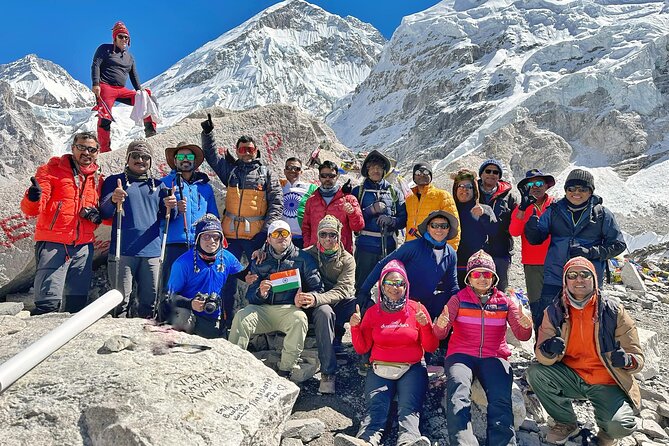
On day five, you leave Hotel Everest View and walk toward Tengboche, at about 3,820 meters. The stated walking time is around four to five hours, making this one of the shorter days on the schedule.
Tengboche is known for its mountain setting and Buddhist monastic tradition, though the supplied program does not promise a formal monastery visit or ceremony. You can expect the stop to serve as both a cultural point and an overnight base on the way toward the higher valleys.
Day six takes you from Diboche to Dingboche, at approximately 4,360 meters. The walk takes about five to six hours and marks a clear shift into higher-altitude trekking. The air is thinner, weather can change quickly, and simple tasks such as eating, dressing, or climbing stairs may take more effort.
This is where the upgraded teahouse arrangement earns its keep. You still need to accept basic mountain conditions, but a better room and organized meals give you a more settled place to rest. Hot showers, bottled or boiled water, charging, and other extras are not included, so carry cash for those costs.
Dingboche acclimatization on day seven
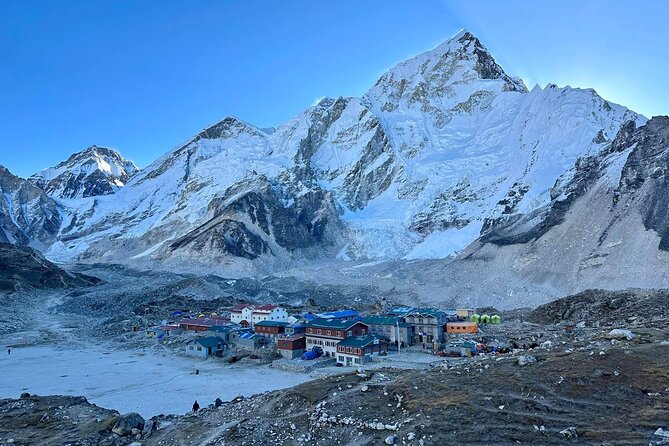
Day seven is another acclimatization day, this time at Dingboche. The purpose is clear: your body needs time to adjust before the route climbs toward Lobuche, Gorakshep, and Base Camp.
The itinerary does not specify the exact acclimatization walk, so ask the guide what is planned for your departure date. You might spend part of the day walking higher and returning to Dingboche, or follow a shorter local route if conditions or health require it.
I like that the schedule does not try to push from Namche straight to the high camps. The two acclimatization days add time, but they also make the itinerary more sensible. Still, no schedule can remove altitude risk. Good conditioning helps, but it does not guarantee that you will feel well at 4,360 meters or above.
Lobuche and Gorakshep at the edge of the glacier zone
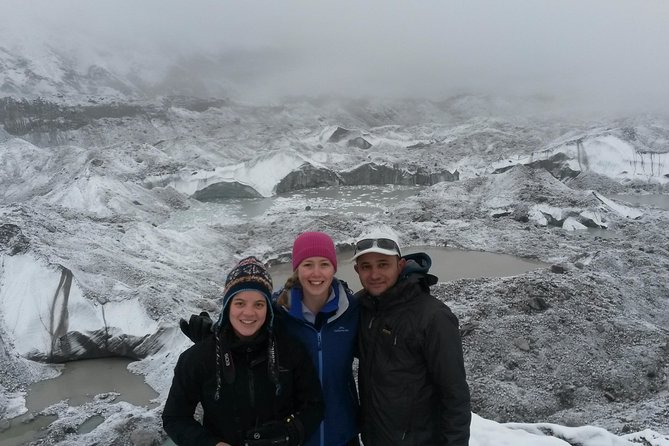
Day eight leads from Dingboche to Lobuche in about five to six hours. This is described as a moderate hike, but the altitude and weather can make it feel much tougher than the label suggests.
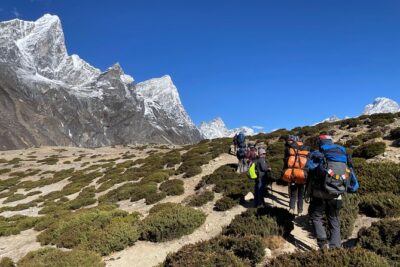
You cross high ground with rocky sections, glacial moraine, and wide views of surrounding peaks. At this point, the goal is less about speed and more about keeping an even pace, drinking what you can tolerate, and listening to the guide.
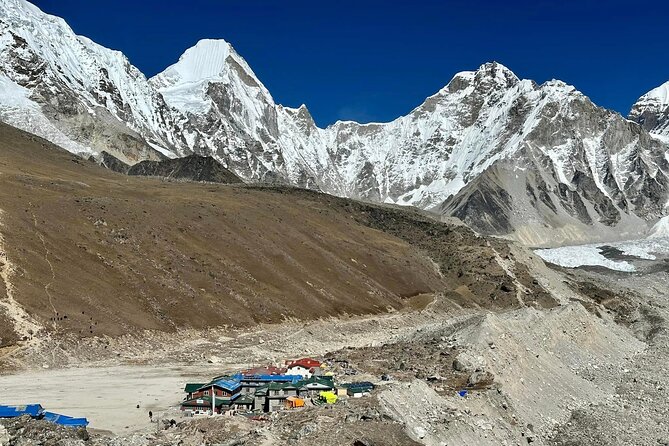
Day nine is the major walking day: Lobuche to Gorakshep, followed by the hike to Everest Base Camp and the return to Gorakshep. The full day takes around six to seven hours and includes rocky terrain, glacial moraine, and a steady climb.
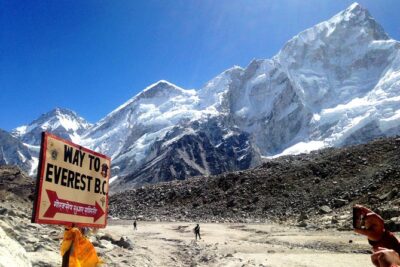
Everest Base Camp is a famous goal, but it is not a viewpoint in the same way that Kalapatthar is. Depending on the season, Base Camp may be an active mountaineering area, and the view of Everest itself may be partly blocked. The value lies in reaching the staging ground for expeditions and seeing the Khumbu glacier setting at close range.
Gorakshep is a high, basic overnight stop. The upgraded teahouse promise should not be confused with city comfort here. At this altitude, warmth, food, rest, and a dry bed matter more than decoration.
Kalapatthar and the helicopter return
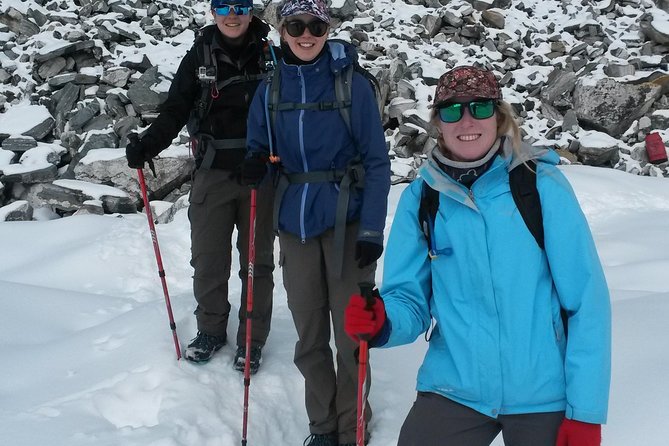
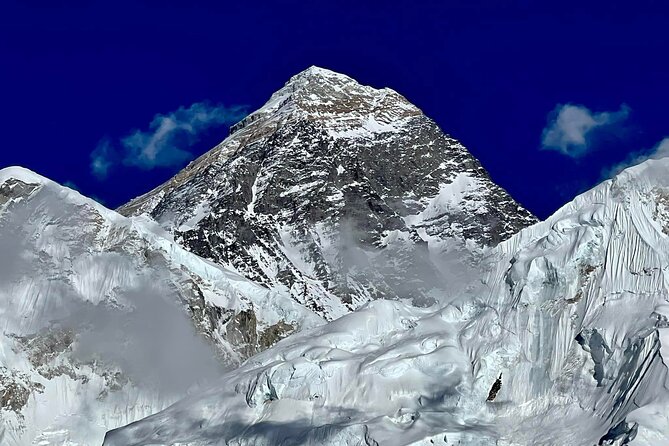
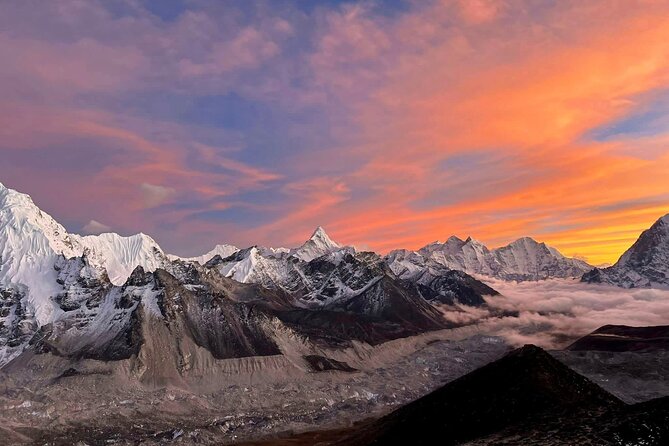
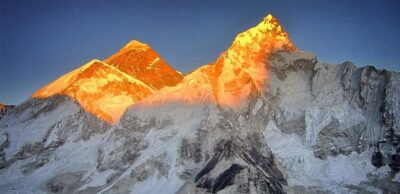
Day ten begins with the hike to Kalapatthar, at 5,545 meters, or 18,192 feet. This is often the visual high point of the trip because the summit area offers broad views of Everest and the surrounding peaks.
The walk to Kalapatthar is strenuous. You are already tired from the Base Camp day, and the altitude is extreme even for fit walkers. The reward is a wide mountain panorama from a higher viewpoint than Base Camp itself. If you want the best chance of clear views, the spring and autumn seasons are favored because weather is generally more stable.
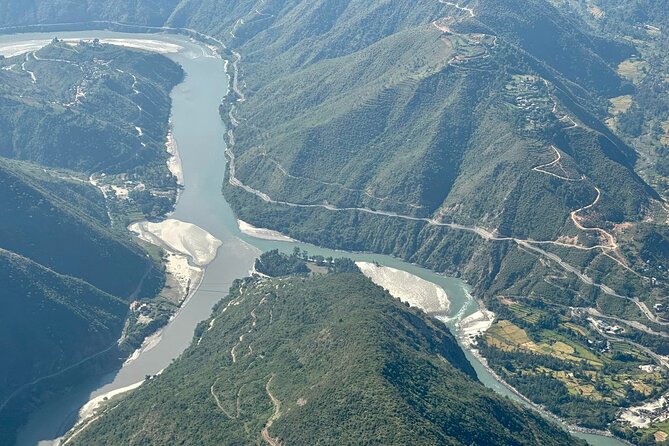
After the Kalapatthar hike, the plan calls for a shared helicopter from Gorakshep to Kathmandu. This is a major change from the standard return route, which normally involves several more walking days. It also gives you a rare aerial look at the valleys and ridges you crossed on foot.
Helicopter travel remains weather-dependent. The fare is included, but delays or changes caused by poor weather can create extra costs, including hotel nights or meals not covered by the planned schedule. Ask how the operator handles a delayed helicopter and where you would stay if the aircraft cannot fly.
Airport transfer and what is not covered
On day eleven, a company representative takes you to the airport about three hours before your scheduled flight. The activity ends back at the original meeting point in Kathmandu.
The final farewell dinner is included at an authentic Nepalese restaurant, with a cultural performance. This gives the trip a social finish after the demanding mountain section, though the exact timing should be confirmed if you leave Kathmandu that day.
The package covers ten breakfasts, nine dinners, and eight lunches. In practical terms, you should budget for food in Kathmandu, drinks, snacks, bottled or boiled water, hot showers, laundry, phone calls, charging, bar bills, and tips.
Travel and rescue insurance is not included. You should arrange your own policy that specifically covers high-altitude trekking and evacuation. This is one of the most important extra costs, not an optional luxury.
Who will enjoy this trek most
This trip suits you if you want the classic Everest Base Camp route but do not want to walk all the way back to Lukla. It is also a good fit if you value private group arrangements, organized support, better mountain lodging, and a hotel stay in Kathmandu.
Families can consider it, but the itinerary remains demanding. The route reaches 5,545 meters, includes long walking days, and requires a moderate fitness level. The operator should know about dietary needs when you book, and vegetarian meals are available if requested in advance.
You may prefer another option if you want a slower acclimatization schedule, a private helicopter, or a low-cost trek. The shared helicopter keeps the price below a private charter, but you will not control the aircraft timing in the same way.
The company has received seven published five-star ratings, with especially strong praise for organization, communication, guide and porter care, and the personal attention associated with Bhagwat. One account describes returning to the company for a second Nepal trek, while another highlights long planning conversations before arrival. Those details suggest a useful strength: the company appears willing to handle questions before you reach Nepal.
Should you book this Everest Base Camp trek?
I would book this trip if you want Everest Base Camp, prefer a supported private group, and see value in flying back from Gorakshep. The two acclimatization days, upgraded teahouses, included meals, porter support, and airport transfers make the demanding route easier to manage.
I would not book it without first confirming the helicopter plan, assigned guide, exact hotel names, Lukla flight arrangements, and what happens during weather delays. At $4,500, you deserve clear answers.
For a first Himalayan trek, this is a comfort-focused way to reach Base Camp without turning the return into another full week on foot. Just remember that luxury in the high Himalayas means better planning and upgraded teahouses, not five-star service at 5,545 meters.
FAQ
How long is the Luxury Everest Base Camp Trek?
The trek lasts approximately 11 days, beginning with airport arrival and ending with the airport transfer in Kathmandu.
What is included in the $4,500 price?
The price includes airport pickup, private vehicle transfers, two nights in a five-star Kathmandu hotel with breakfast, mountain meals, permits and Khumbu Valley fees, guide and porter service, flights to Lukla, upgraded teahouses, a duffle bag, a shared helicopter from Gorakshep to Kathmandu, first aid supplies, rescue arrangements, and a farewell dinner with cultural performance.
Is the helicopter private?
No. The included helicopter fare from Gorakshep to Kathmandu is on a shared basis.
How fit do I need to be?
The trip requires a moderate level of physical fitness. It includes several five to seven-hour walking days and reaches Kalapatthar at 5,545 meters.
Are vegetarian meals available?
Yes. Vegetarian food is available, but you should request it when booking. You can also advise the company of other dietary requirements at that time.
What are the best months for this trek?
Spring and autumn are identified as the best seasons because weather is generally more stable for helicopter flights and Himalayan views.
Can I cancel for a full refund?
Yes, if you cancel at least 24 hours before the experience start time. Cancellations or changes made less than 24 hours before the start time are not accepted for a refund.
Just added around Everest Region
- Day Tour to Everest Base Camp By Helicopter★ 5.0 · 16 reviews
- Kathmandu To Lukla By Helicopter Flight★ 5.0 · 6 reviews
- Luxury Everest Base Camp Trek – 11 Days★ 5.0 · 9 reviews
- Everest Base Camp Tour & View Point by Helicopter from Katmandu★ 5.0 · 3 reviews
- Everest base camp helicopter tour with Guarenteed Landing★ 4.0 · 7 reviews
- Everest base camp flight over by Helicopter from Kathmandu★ 5.0 · 10 reviews
- Everest Base Camp Helicopter Tour Stop at Hotel Everest View.★ 5.0 · 17 reviews
- Everest Base Camp Helicopter Tour★ 5.0 · 24 reviews
Everest Base Camp Treks, compared.
Everest Base Camp Trek with Helicopter Return from Gorakshep to Lukla
Read our review →Browse the lists this tour appears in