
Reviewed · EVEREST BASE CAMP TREKS
From Kathmandu Budget: 15 Day Everest Base Camp Trek
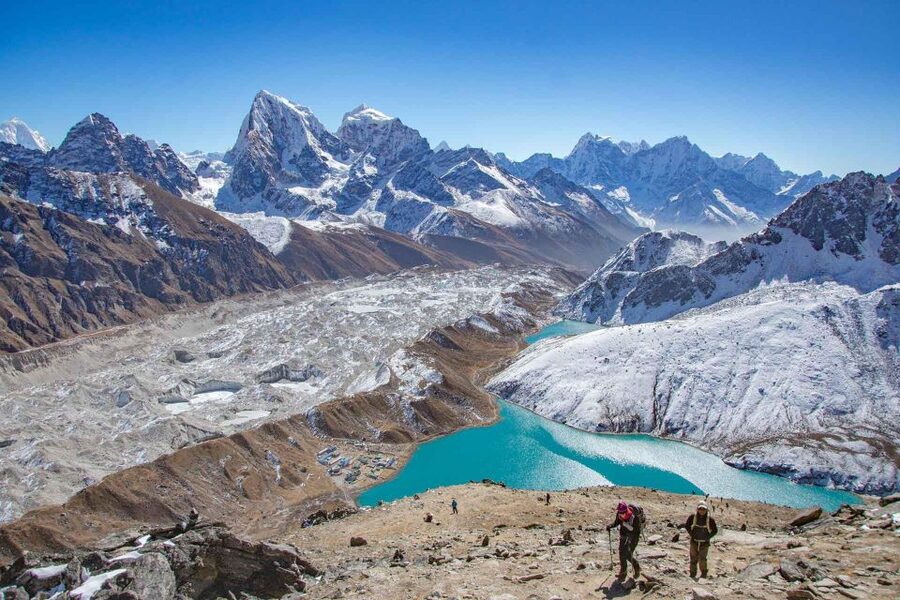
Everest Base Camp is the headline, but Kala Patthar at 5,545 meters is where the finest mountain view comes. From this rocky summit, you can look toward Everest, Lhotse, and Nuptse, often in the clear morning light. The trek also gives you suspension bridges, Buddhist monasteries, prayer flags, and Sherpa villages rather than a simple march to a famous signpost.
I like two things here: the private group format, which gives the guide room to adjust your pace, and the overland route through Salleri, which avoids relying on a flight to Lukla. The drawback is that the 15-day plan includes long shared jeep and bus rides, and food, drinks, travel insurance, and emergency rescue are extra.
Key points at a glance
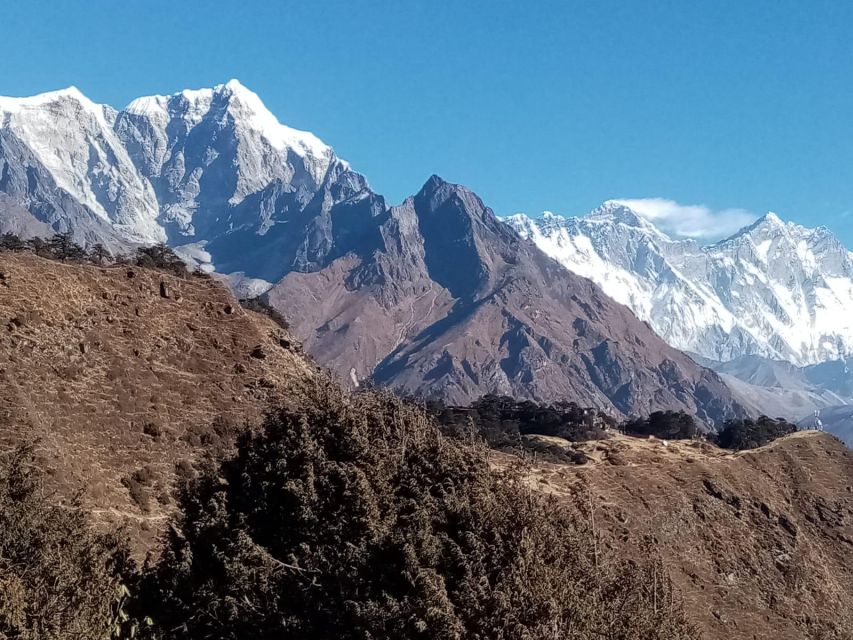
- Kala Patthar is the view day: At 5,545 meters, it gives you the trek’s clearest high point for seeing Everest, Lhotse, and Nuptse.
- The route begins with a long road journey: You travel from Kathmandu to Salleri, then return by shared jeep or bus after walking back to Lukla.
- You get a private trek: Your English, Nepali, or Hindi-speaking guide can adjust the pace for your group.
- The price covers the essentials: Lodging, permits, official documents, guide costs, transfers, a first aid kit, and a trekking pole are included.
- Meals are not included: You buy food and drinks along the route, so keep extra money available.
- Guiding is the strongest personal touch: Krisna is described as attentive and adaptable, while Milan is noted for regular health checks, clear communication, and flexible pacing.
Why Kala Patthar makes this route worthwhile
The walk to Everest Base Camp is the famous goal, but Base Camp itself is not the best place for a broad view of Everest. The surrounding peaks and the glacier make it dramatic, yet the mountain can be partly hidden from the base camp area.
Kala Patthar solves that problem. The rocky summit rises above Gorak Shep and gives you a much wider view toward Everest, Lhotse, and Nuptse. The itinerary allows about seven hours for the hike to Kala Patthar and the walk onward to Pheriche, so this is a demanding day. Your reward is not just a photograph. You get a sense of how the mountains fit together, with the high valleys and ice-covered ridges spread out around you.
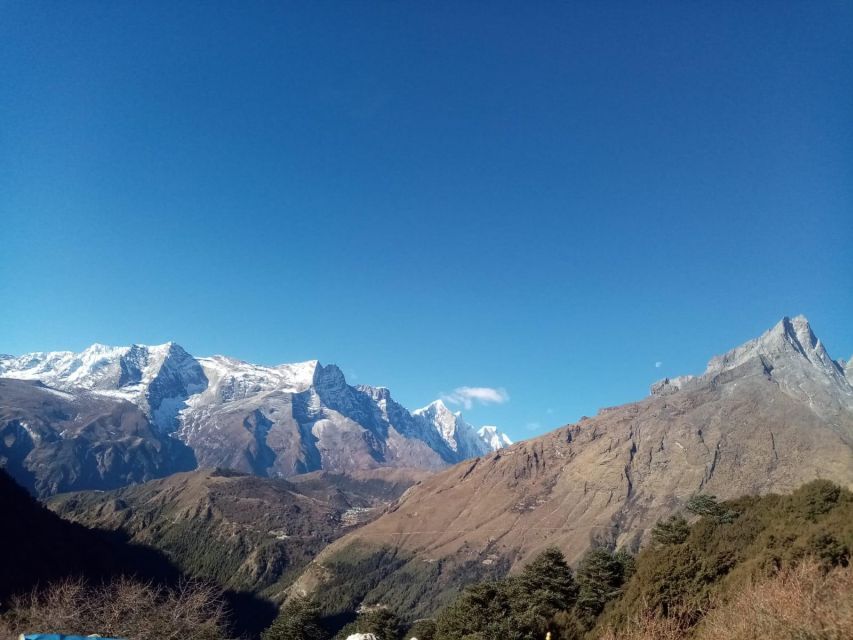
The route also takes you through ordinary mountain life. You pass Sherpa settlements, monasteries, prayer flags, suspension bridges, and high-altitude lodges. Those details matter because the trek is not only a summit-view outing. You are walking through a living region where trade, tourism, religion, and mountain weather shape daily routines.
More Everest Base Camp treks:
- Everest Base Camp Trek – 14 Days
★ 5.0 · 1,499 reviews - Everest Base Camp Trekking
★ 5.0 · 485 reviews - Everest Base Camp Trekking – 13 Day
★ 5.0 · 365 reviews
What the $796 price really covers
At $796 per person, this is a low-cost way to organize a full Everest Base Camp trek, but the headline price does not cover everything you will spend.
Included are Kathmandu pickup and drop-off, round-trip transport by shared bus or jeep, trekking permits, official documents, guesthouse lodging, a private trekking arrangement, a guide’s food and accommodation, and the guide’s personal expenses and insurance. You also receive a first aid kit carried by the guide and a trekking pole.
The transport arrangement is important. This is not a private vehicle throughout. The route uses a shared jeep or bus between Kathmandu, Salleri, and Lukla. That helps keep the cost down, but it also means long road days and less control over departure conditions.
You pay separately for your meals and drinks. Travel insurance is also your responsibility, and emergency rescue must be covered by that policy. At this altitude, rescue coverage is not a minor detail. Check that your policy specifically covers high-altitude trekking and evacuation before you leave home.
The included guesthouse lodging keeps the package simple. You should think of it as practical trekking accommodation rather than a hotel-based holiday. The strongest value comes from having the route, permits, lodging, transfers, and guide organized together.
Kathmandu to Salleri: a long first day
Day 1 begins early with pickup in Kathmandu. The drive to Salleri is listed as about 10 hours and roughly 266.9 kilometers, reaching around 2,600 meters.
This first day is mostly about positioning yourself for the trek. It is not a sightseeing day, and the road journey can feel long after an international flight or time in Kathmandu. Still, it avoids beginning with a Lukla flight, which some people prefer for planning reasons.
Salleri is the first overnight stop. Keep your day-one expectations modest: the value here is getting closer to the trailhead, not sightseeing in the town.
On Day 2, you continue by jeep from Salleri to Tham Danda, then walk to Surkhe. The combined driving and walking takes about seven to nine hours. This is an unusual start compared with routes that begin in Lukla, and it gives you an immediate lesson in how much time road travel takes in the Khumbu region.
Surkhe to Namche Bazaar
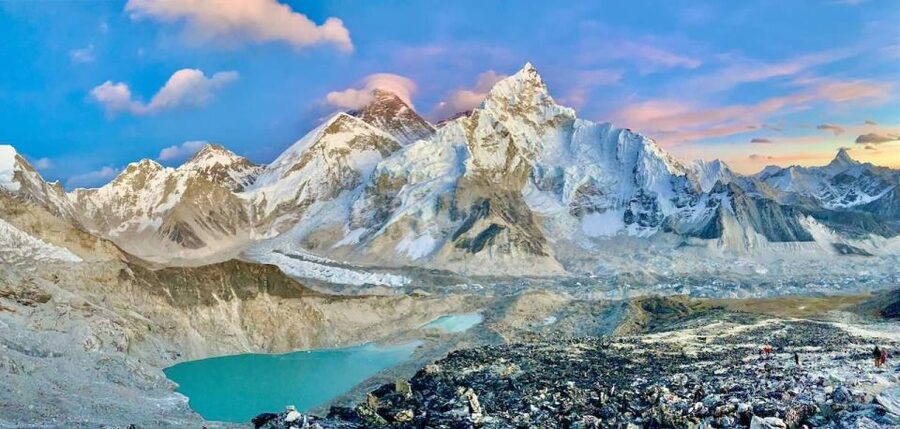
Day 3 takes you from Surkhe to Phakding in about six to seven hours. You are now walking through the lower part of the route, where the terrain includes forest, river valleys, and suspension bridges.
Phakding is a useful overnight stop because it breaks the approach into manageable stages. You do not gain the full height of Namche in one day, which gives the itinerary a gradual rhythm.
Day 4 is the walk from Phakding to Namche Bazaar, also around six to seven hours. Namche sits at 3,440 meters and is one of the most important settlements on the trek. It is a hub for the Khumbu region, with lodges, shops, and mountain guides passing through.
The approach to Namche is one of the route’s memorable sections. You cross suspension bridges over deep gorges, follow the river, and gain height toward the town. The climb becomes more serious here. You may feel the thinner air, especially if you move too quickly.
Namche is not just a place to sleep. It is where the trek begins to feel properly high-altitude. The town’s position among the mountains makes it a natural pause before the trail continues toward Tengboche.
More trekking days out of Everest Region:
- Everest Base Camp Trek -14 Days
★ 5.0 · 321 reviews - Everest Base Camp Trekking – 2025/2026
★ 5.0 · 199 reviews - Everest Base Camp Trek
★ 5.0 · 193 reviews - Everest Base Camp Trek with Helicopter Return from Gorakshep to Lukla
★ 5.0 · 161 reviews
Tengboche Monastery and Dingboche
Day 5 leads to Tengboche Monastery at about 3,860 meters. The walk takes around five hours. Tengboche is one of the spiritual highlights of the route, with Buddhist surroundings, prayer flags, and broad mountain views.
The monastery gives the trek a cultural center. You are not simply passing through a chain of lodges. You are moving through a region shaped by Sherpa Buddhist traditions, and the flags and monasteries become more common as you climb.
Day 6 continues to Dingboche, at about 4,350 meters, in five to six hours. The scenery becomes more open and severe as the trees thin out. The settlement is an important high-altitude stop before Lobuche and Base Camp.
Dingboche includes a planned acclimatization day on Day 7. This is one of the most valuable parts of the schedule. At 4,350 meters, your body needs time to adjust, and a rest day can make the next stages more manageable.
The itinerary does not specify a fixed activity for this day. That gives your guide room to respond to your condition. You may spend the day resting or taking a short local walk, but do not treat it as a wasted day. It is part of the safety plan built into the trek.
Lobuche, Everest Base Camp, and Gorak Shep
Day 8 takes you from Dingboche to Lobuche in around five hours, reaching about 4,910 meters. By now, the altitude is a central part of the experience. The walking distances may not look extreme on paper, but cold, thin air, and rough ground can slow you down.
Lobuche is a high settlement and a staging point for the main objective. The night here prepares you for the long Day 9.
Day 9 is the major push: Lobuche to Everest Base Camp, then back to Gorak Shep. The listed walking time is about eight hours, and Base Camp sits at roughly 5,365 meters, or 17,598 feet.
The route takes you into increasingly rugged ground, with dramatic views of the surrounding peaks. At Base Camp, you stand at the famous starting point for Everest expeditions. The experience is less about comfort and more about scale. The height, glacier, rock, and peaks around you make the achievement feel real.
You sleep at Gorak Shep, listed at about 5,180 meters. This is a demanding overnight location. Your guide’s attention matters here, and the flexible approach praised for Milan is especially useful. He is described as checking regularly on health, explaining things clearly, and putting safety and comfort first.
The Kala Patthar summit and the way down
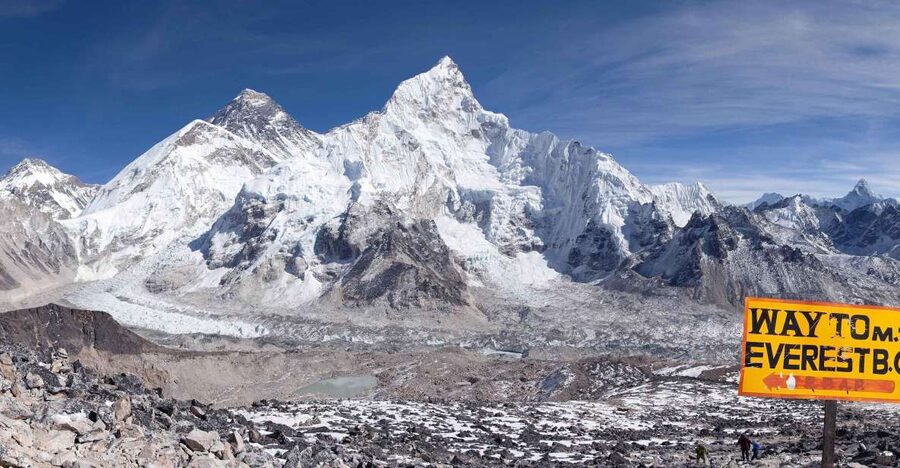
Day 10 begins with the hike to Kala Patthar at 5,545 meters. The full day is listed at about seven hours before continuing to Pheriche at 4,120 meters.
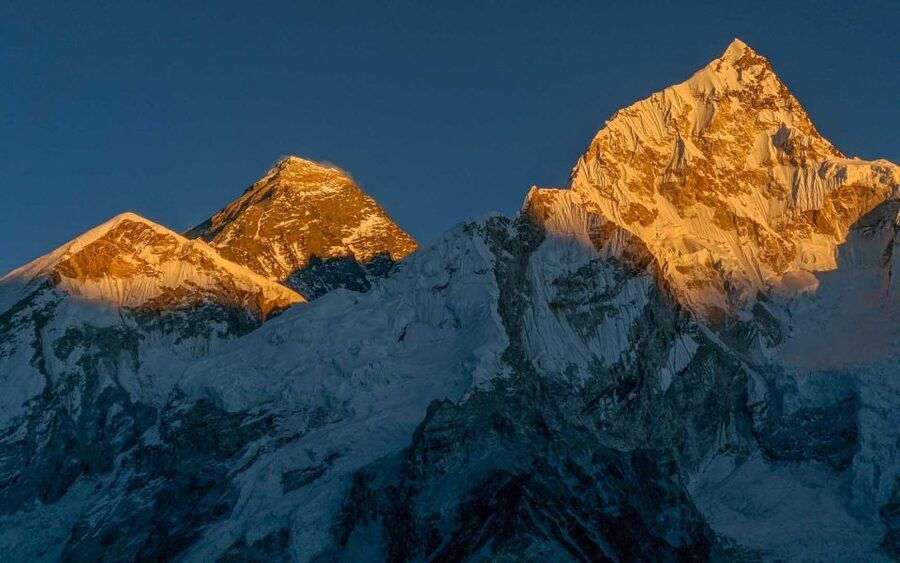
This is the trek’s best viewpoint and its highest scheduled point. From the summit, you look toward Everest, Lhotse, Nuptse, and other major peaks. If the sky is clear, sunrise or sunset can give the mountains a changing mix of shadow and light.
The descent to Pheriche is welcome after the summit. Dropping more than 1,400 meters from Kala Patthar to Pheriche also brings you back toward thicker air. Still, do not underestimate the day. A sunrise climb, a high-altitude summit, and a long descent make this one of the hardest sections.
Day 11 goes from Pheriche to Panboche, at about 3,985 meters, in five to six hours. The lower altitude should feel easier, and the route gives you more time to notice villages, monasteries, bridges, and mountain life instead of focusing only on breathing and footing.
Returning through Namche to Lukla
Day 12 takes you from Panboche to Namche in about seven hours. You retrace part of the route, but the return often feels different because you now recognize the terrain and have more time to absorb it.
Day 13 is Namche to Lukla, taking about five to six hours and ending around 2,860 meters. This is still a proper walking day, not a short transfer. You finish the trekking section here.
The itinerary then continues overland. Day 14 uses a shared jeep from Lukla to Salleri, listed at seven to eight hours. Day 15 returns from Salleri to Kathmandu by shared jeep or bus, taking about 10 hours.
These final road days are the main practical compromise in this package. They keep the route connected without relying on a flight, but they are long and can be tiring after the trek. If you value a lower price and a road-based plan, this arrangement makes sense. If you want a quicker finish, this may feel less appealing.
Guides, pacing, and personal attention
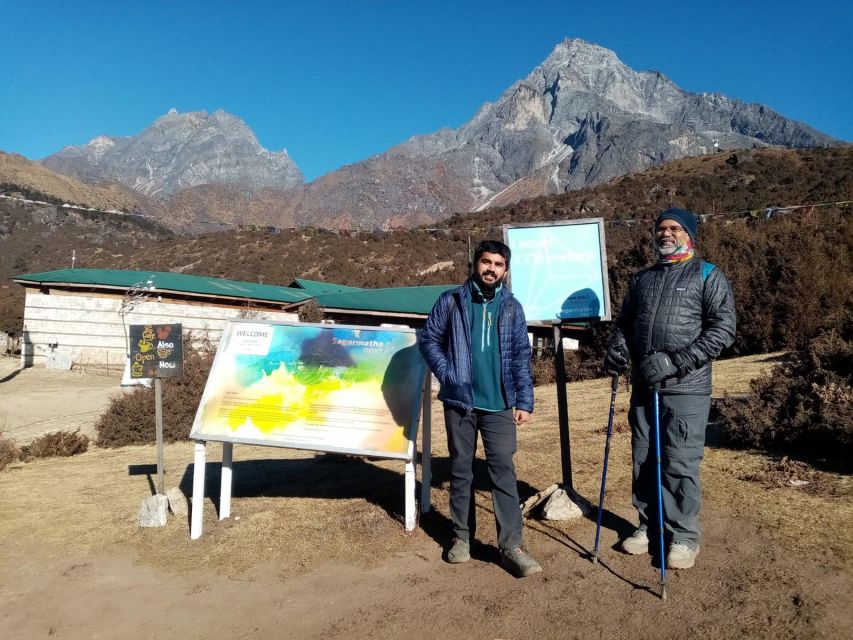
This is a private group trek, with live guiding available in English, Nepali, and Hindi. That matters because your group is not tied to strangers’ walking speeds.
Krisna is described as a serious guide who listens and adapts to the group’s needs. Milan receives especially strong praise for checking in often, putting health first, answering questions in detail, and changing the pace when needed. The exact guide assigned to you should be confirmed before departure, but these examples show the kind of support this experience is designed to provide.
I would use that flexibility wisely. Tell the guide early if you feel unwell, unusually tired, or unsure about the next stage. High-altitude trekking is not the place to hide a problem in order to keep up.
The itinerary also allows room for a slower day or an extra rest day if health requires it, according to the guide arrangement described. That is a real advantage, though any change may affect transport or lodging. Ask how such changes are handled before you set out.
What to bring and when to go
Pack warm clothing, hiking shoes, hiking pants, a passport or accepted copy, and a passport-sized photo. Travel insurance is required as a practical matter, even though it is not included.
Spring, from March to May, and autumn, from September to November, are listed as the best seasons. These periods usually offer more stable conditions and clearer mountain views. The trek can run throughout the year, but mountain weather can change quickly, so no season removes the need for warm clothing and sensible pacing.
The experience is not suitable for pregnant women or wheelchair users. Pets are not allowed. Food and drinks are available for purchase, but you should budget for them because they are outside the $796 package.
Should you book this Everest trek?
Book this trek if you want the classic Everest route with Kala Patthar included, a private group, guide support, guesthouse lodging, and a low listed price. It suits fit hikers who accept long walking days, basic accommodation, shared road transport, and the need to pay separately for meals and insurance.
Think twice if you want a short, polished holiday with private vehicles or hotel comforts. The Salleri road transfers take time, and the high-altitude days are serious. You also need your own rescue coverage.
For the right person, this is a strong-value way to reach Everest Base Camp and gain the best view from Kala Patthar. Confirm the assigned guide, the shared transport plan, insurance requirements, and expected meal costs before paying. Free cancellation is available up to 24 hours in advance, and you can reserve now and pay later, which helps if your plans are still taking shape.
FAQ
How long is the Everest Base Camp and Kala Patthar trek?
The experience lasts 15 days, including the road journeys from Kathmandu to Salleri and the return from Salleri to Kathmandu.
Does the trek start in Lukla?
The walking route begins after transport from Kathmandu to Salleri, followed by a jeep ride to Tham Danda and a trek to Surkhe. You later walk to Lukla before returning to Salleri by shared jeep.
Is the trek private?
Yes. The experience is arranged as a private group trek, with a live guide available in English, Nepali, and Hindi.
What does the $796 price include?
It includes Kathmandu pickup and drop-off, round-trip shared bus or jeep transport, a trekking guide, the guide’s food, accommodation, personal expenses and insurance, trekking permits, official documents, guesthouse accommodation, a first aid kit, and a trekking pole.
Are food and drinks included?
No. Food and drinks are available for purchase during the trek but are not included in the price.
Do I need travel insurance?
Yes. Travel insurance is not included, and emergency rescue must be covered by your own policy.
When is the best time to go?
The best listed seasons are spring, from March to May, and autumn, from September to November. The trek can operate throughout the year, but mountain weather and temperatures can change quickly.
Just added around Everest Region
- Day Tour to Everest Base Camp By Helicopter★ 5.0 · 16 reviews
- Kathmandu To Lukla By Helicopter Flight★ 5.0 · 6 reviews
- Luxury Everest Base Camp Trek – 11 Days★ 5.0 · 9 reviews
- Everest Base Camp Tour & View Point by Helicopter from Katmandu★ 5.0 · 3 reviews
- Everest base camp helicopter tour with Guarenteed Landing★ 4.0 · 7 reviews
- Everest base camp flight over by Helicopter from Kathmandu★ 5.0 · 10 reviews
- Everest Base Camp Helicopter Tour Stop at Hotel Everest View.★ 5.0 · 17 reviews
- Everest Base Camp Helicopter Tour★ 5.0 · 24 reviews
Everest Base Camp Treks, compared.
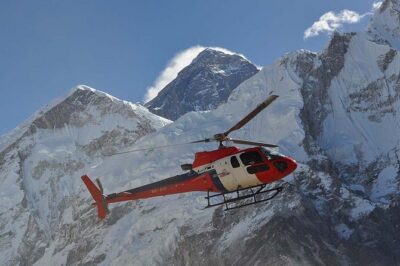
Everest Base Camp Trek with Helicopter Return from Gorakshep to Lukla
Read our review →Browse the lists this tour appears in