
Reviewed · ANNAPURNA BASE CAMP TREKS
7-Day Trek to Annapurna Base Camp from Pokhara
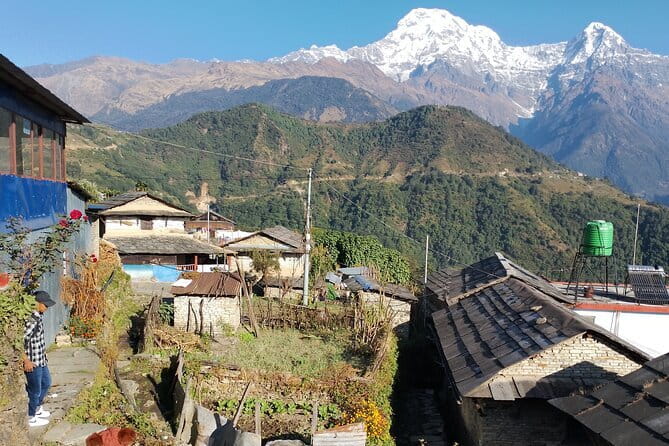
Annapurna Base Camp is the prize here: after several days through Gurung and Magar villages, river valleys, forests, and high mountain paths, you reach a sanctuary ringed by the Annapurna massif. The mountain setting is the main event, but the route earns its keep with village life and warm local hospitality along the way.
I like the practical setup: a private guide, permits, guesthouse accommodation, and transport from Pokhara are included. I also like the steady build toward the base camp, with Ghandruk, Sinuwa, Deurali, and Machhapuchhre Base Camp giving the trek a clear rhythm. The catch is fitness. Six to seven hours of walking each day, steep uphill sections, and a climb to about 4,130 meters require real stamina.
Key points to know
- Annapurna Base Camp is reached on Day 4, after the route passes Machhapuchhre Base Camp at about 3,900 meters.
- The trek is private, so only your own group takes part.
- Guides Biru, Amrit, and Shiva receive repeated praise for safety, friendliness, organization, and mountain knowledge.
- Transport is included from Pokhara to Siwai and from Samrung Khola back to Pokhara, using a shared jeep or bus.
- Food is not included, and a porter costs $25 per day for one porter shared by two people.
- The route takes six to seven hours most days, with steep climbs, long descents, suspension bridges, and changing altitude.
What the $345 price really covers
At $345 per person, this is a fairly practical package for a seven-day Himalayan trek. The price includes hotel pickup and drop-off within Pokhara’s Lakeside area, an English-speaking guide, trekking permits, official documents, guesthouse accommodation, transport at both ends of the route, a trekking pole, and a normal first-aid kit.
That list matters. Permits and transport can be awkward to arrange on your own, and having a guide handle the route lets you focus on walking rather than paperwork. The private format is another useful feature. You are not tied to the pace of a large group, though your own group still needs to agree on a sensible walking rhythm.
The price does not include meals, drinks, personal spending, tips, or a porter. A porter costs $25 per day for one porter shared by two people. If you want to keep the total close to the advertised price, plan to carry your own bag and budget separately for food and drinks at the guesthouses.
One small point deserves clarification before booking. The meeting information lists a 2:15 pm start time, while Day 1 describes a morning hotel pickup and drive to Siwai. Ask CAN Travels to confirm the exact pickup time for your date.
More Annapurna Base Camp treks:
- Annapurna base camp trek 5 Days
★ 5.0 · 252 reviews - Annapurna Base Camp Trek
★ 5.0 · 111 reviews - Kathmandu to Annapurna Base Camp (ABC) 5-Day Trek
★ 5.0 · 102 reviews
Day 1: Pokhara to Ghandruk by Siwai
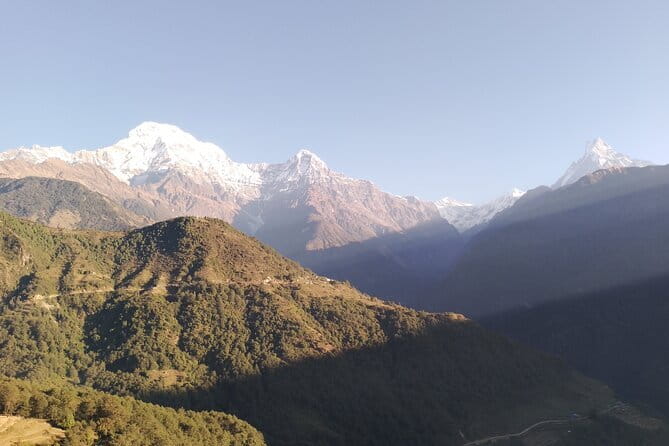
The trek begins with a drive from Pokhara to Siwai, followed by a walk toward Ghandruk. This first day takes about seven hours, including the transition from road travel to trail walking.
The route follows the Modi River and passes through local villages and hilly country with views toward the Annapurna region. Ghandruk is an important opening stop because it gives you a taste of the village culture that shapes the trek. Gurung and Magar communities live along this route, and their food, customs, and daily routines add more meaning than a quick mountain viewpoint ever could.
The first day may feel long because it combines transport and a substantial walk. You should arrive ready to move, not expecting a gentle warm-up. The included trekking pole can help on uneven ground, especially if your knees are not fond of descents.
Day 2: Ghandruk to Upper Sinuwa
After breakfast, you leave Ghandruk for Upper Sinuwa. The walk takes about seven hours, not counting lunch, and includes changing trail levels and demanding uphill sections.
This is a day for patience. The route does not simply climb in a straight line, and the repeated rises and dips can make the distance feel greater than the map suggests. Your guide’s main value here is practical: setting a manageable pace, helping with route decisions, and keeping an eye on how the group is handling the effort.
Upper Sinuwa is a useful overnight stop before the route heads farther into the Annapurna Sanctuary. The accommodation is in a guesthouse, a basic mountain stay rather than a hotel. Food and drinks are available to buy, but they are extra, so carry enough local currency for daily purchases.
Day 3: Upper Sinuwa to Deurali
From Upper Sinuwa, the path continues uphill toward Deurali. This section takes about six hours and leads into cooler, fresher air as you move toward the sanctuary.
The route follows winding mountain paths with views of peaks, forests, rivers, and waterfalls. The setting changes as the altitude rises, and the walking becomes less about village roads and more about entering a high mountain basin.
Deurali is an important staging point for the next day. You are close enough to the main objective to feel the excitement, but the hard work is not finished. Take this evening seriously. Eat, drink, organize your clothing, and keep your day pack simple for the morning climb.
More Day Hikes in Annapurna Region:
- 11-Day Hike Tour to Annapurna Base Camp Bliss in Kathmandu
★ 5.0 · 52 reviews - Pokhara: 5-Day Trek to Annapurna Base Camp and Hot Springs
★ 5.0 · 4 reviews - Nagarkot Sunrise View and Day Hiking from Kathmandu
★ 5.0 · 471 reviews - From Kathmandu: Everest View from Nagarkot & hike to Changu
★ 4.8 · 140 reviews
Day 4: Machhapuchhre Base Camp and Annapurna Base Camp
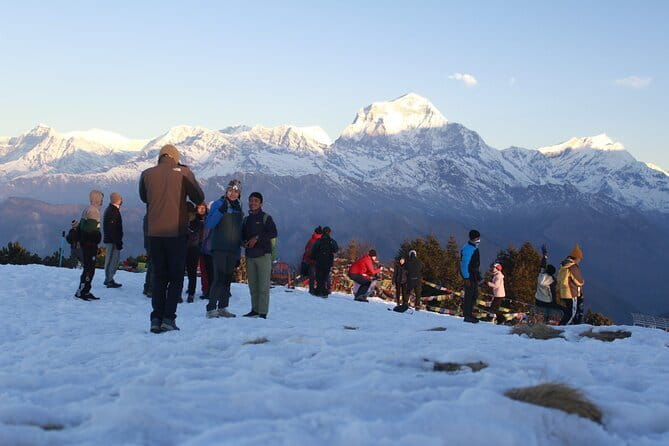
Day 4 is the high point of the trek, both literally and emotionally. After breakfast, you climb toward Machhapuchhre Base Camp at about 3,900 meters, then continue upward to Annapurna Base Camp.
The itinerary describes an additional climb of about 730 meters to Annapurna Base Camp, with roughly seven hours of walking for the day. The route is demanding, and the altitude makes each uphill section feel harder. You should not treat this as a sightseeing stroll.
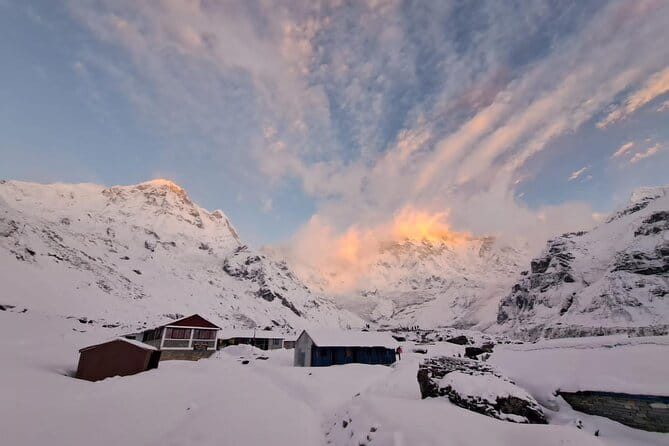
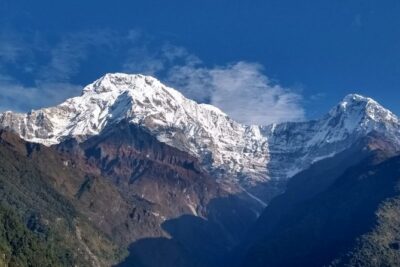
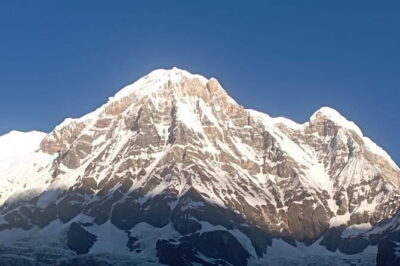
The reward is the Annapurna Sanctuary, a high alpine bowl surrounded by major Himalayan peaks. At base camp, the mountains feel close and enormous. The calm of the setting contrasts with the effort required to get there. This is the moment that gives the seven-day route its purpose.
Your guide is especially important on this day. Biru, Amrit, and Shiva are the guide names most often praised in the available feedback, with repeated references to their friendly manner, safety focus, organization, and explanations about the mountains. Guide assignments can vary, so confirm who will lead your trip.
Altitude affects people differently, and the supplied information does not describe a formal acclimatization schedule beyond the gradual route. You should discuss any concern with CAN Travels before departure and tell your guide promptly if you feel unwell.
Day 5: Returning to Bamboo
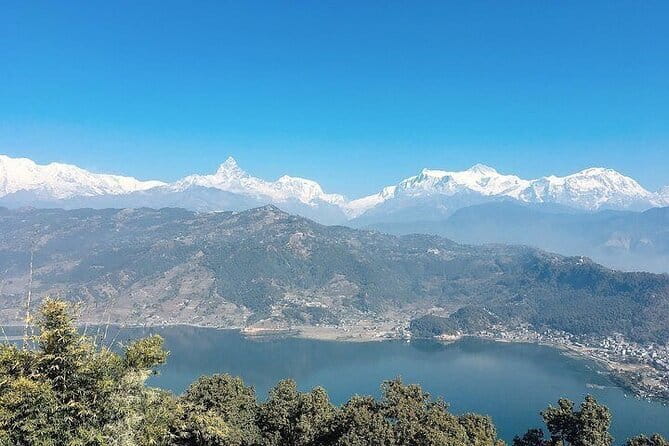
After time at Annapurna Base Camp, you retrace the route downhill toward Bamboo. The walk takes about six hours and passes through Deurali, Himalaya, and Dovan.
Downhill walking sounds easier than climbing, but it can be rough on your knees and ankles. The trail is described as decent, though care is needed on the descent. Use your trekking pole, shorten your stride, and avoid rushing simply because the route is going down.
This day also gives you a different view of the same country. On the way up, you may have been focused on breathing and reaching the next stop. The return walk lets you notice river valleys, forest sections, waterfalls, and changing views with less pressure.
Day 6: Bamboo to Jhinu Danda
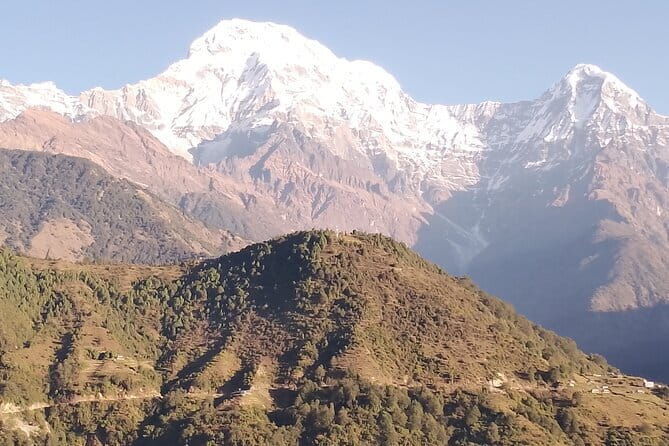
Day 6 brings a varied route toward Jhinu Danda, with about six hours of walking. From Bamboo, the trail climbs steeply for a short stretch to Khuldi Ghar, then descends through forest toward Sinuwa Danda.
You then descend to Chomrong Khola, cross a bridge, and climb again toward Chomrong village before continuing to Jhinu Danda. This up-and-down pattern is typical of mountain trails and can be more tiring than a steady incline.
Jhinu Danda is a satisfying late-stage stop because the route has a different feel after the high sanctuary. You are still walking hard, but the path returns toward villages and lower country. Keep some energy in reserve. Day 6 is not simply a relaxed walk back to Pokhara.
Day 7: Jhinu Danda to Pokhara Lakeside
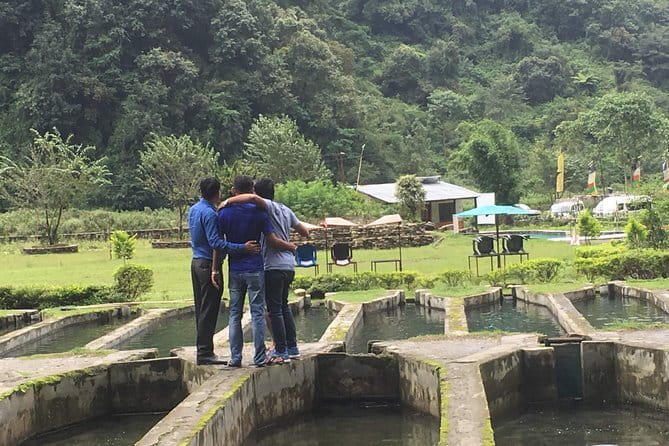
The final day takes about six hours. After a short downhill section and a long suspension bridge crossing, you reach Samrung Khola, where you take a local jeep back to Pokhara.
The transfer is included, but it uses a shared jeep or bus. That keeps the package affordable, though it also means the return may be less private than the trek itself. The drive completes the loop and brings you back to Lakeside, where hotel drop-off is included within that area.
The final walk and road transfer are a fitting end to the trip. You get one last stretch of trail before trading boots for a vehicle. Keep your day pack organized, since you will need access to water, snacks, and a warm layer before the drive.
The guide makes the difference
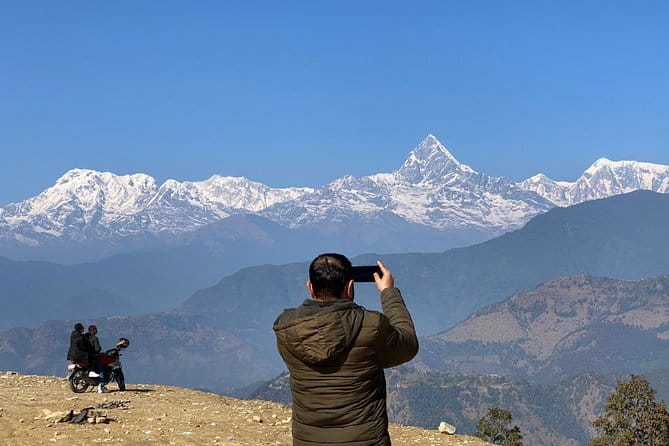
A guide matters on this trek for more than navigation. The route has long walking days, steep sections, altitude changes, and several points where a calm pace is better than a fast one.
The strongest praise goes to guides Biru and Amrit, with Shiva also singled out for clear information and good arrangements. The feedback repeatedly highlights friendliness, attention to safety, comfort, and smooth handling of accommodation and transport. That is exactly the kind of service you want on a seven-day mountain route.
Because the tour is private, you can discuss pacing and rest stops with your guide. Still, private does not mean effortless. You need to arrive with a strong level of fitness and be prepared to walk for six or seven hours on most days.
Guesthouses, meals, and what to budget
Accommodation is in guesthouses during the trek. This gives you a simple base at each stop and keeps you close to the route, but you should not expect city-hotel comforts.
Food and drinks are available for purchase and are not included in the $345 price. Your total cost will therefore depend on what you eat, drink, and buy along the way. Personal expenses are also separate.
A porter is optional. The stated rate is $25 per day for one porter shared by two people. If you are traveling with a companion, sharing a porter can make the cost easier to manage and reduce the weight on your back. If you prefer to carry your own belongings, pack with restraint.
Tips are optional. The included first-aid kit is a normal emergency kit carried by the guide, not a substitute for personal medication or insurance.
Who should book this trek?
This trip suits you if you want a focused route to Annapurna Base Camp without arranging permits, transfers, accommodation, and a guide on your own. It also works well for families or friends who value a private itinerary and want to walk at their group’s pace.
You should be comfortable with long days on foot. The route includes steep climbs, steep descents, high altitude, suspension bridges, and changing trail conditions. The tour specifically requires a strong level of physical fitness.
I would not choose it for a first mountain outing if you dislike sustained exertion or want a soft adventure with lots of free time. The seven-day schedule is efficient, but it leaves little room for an unplanned rest day.
The tour receives a listed rating of 5 from 12 ratings, with 100 percent recommendation shown in the supplied information. The most consistent praise centers on guides, organization, transportation, accommodation, and the mountain scenery. That pattern suggests the human side of the trip is one of its strongest assets.
Should you book the 7-day Annapurna Base Camp trek?
Book it if you want the major Annapurna Base Camp experience in a compact seven-day plan, with a private English-speaking guide and the basic logistics handled. The $345 price is attractive because it includes permits, guesthouses, trekking transport, hotel transfers in Lakeside, and a trekking pole.
Before paying, confirm the Day 1 pickup time, ask which guide will lead your group, and budget for meals, drinks, and possibly a porter. If you are fit, prepared for long walking days, and happy with simple guesthouses and shared road transport, this offers a direct and well-supported way to reach one of Nepal’s great mountain destinations.
FAQ
How long is the Annapurna Base Camp trek?
The experience lasts approximately seven days.
Where does the trek start?
It starts in Pokhara, with hotel pickup offered within the Lakeside area. The walking route begins after transport to Siwai.
Where does the trek finish?
The trek finishes near Samrung Khola, followed by local jeep or bus transport back to Pokhara Lakeside.
Is the tour private?
Yes. Only your own group participates in the activity.
Is a guide included?
Yes. The package includes a friendly English-speaking trekking guide. Guides named in the available feedback include Biru, Amrit, and Shiva, though the assigned guide should be confirmed with CAN Travels.
Are trekking permits included?
Yes. Trekking permits and official documents are included.
Is accommodation included?
Yes. Guesthouse accommodation during the trek is included.
Are food and drinks included?
No. Food and drinks are available to purchase during the trek but are not included in the price.
Is a porter included?
No. A porter is optional and costs $25 per day for one porter shared by two people.
Can I cancel for a full refund?
Yes, if you cancel at least 24 hours before the experience start time. Cancellations within 24 hours are not refunded, and changes within 24 hours are not accepted.
More 7-Day Experiences in Annapurna Region
- Pokhara: 7 Day Annapurna Base Camp Trek
★ 4.9 · 38 reviews - Annapurna Base Camp Trek from Pokhara 7 Days
★ 5.0 · 19 reviews - Pokhara: 7-Day Annapurna Base Camp Trek & Natural Hot Spring
★ 5.0 · 11 reviews - Annapurna Base Camp 7 Days Trek from Pokhara
★ 5.0 · 8 reviews
Just added around Annapurna Region
- 4 Day Mardi Himal Base Camp Trek from Pokhara★ 5.0 · 18 reviews
- Private 4 Day Poon Hill Trek from Pokhara★ 5.0 · 16 reviews
- Annapurna Base Camp Trek from Pokhara and Kathmandu★ 5.0 · 7 reviews
- 6 days Annapurna Basecamp Trek★ 5.0 · 16 reviews
- “Exclusive Round-Trip Transfer: Pokhara to Jomsom & Muktinath”★ 5.0 · 11 reviews
- Poon Hill Ghandruk Circuit Trek from Pokhara 4 Days★ 5.0 · 10 reviews
- Pokhara: Poon Hill Ghorepani Short Trek★ 5.0 · 6 reviews
- Pokhara: 4 Days Poon Hill and Ghandruk Trek★ 5.0 · 23 reviews
Annapurna Base Camp Treks, compared.
Kathmandu to Annapurna Base Camp (ABC) 5-Day Trek
Read our review →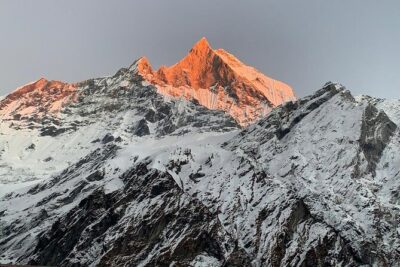
Kathmandu/Pokhara: 5-Day Annapurna Base Camp (ABC) Trek
Read our review →
11-Day Hike Tour to Annapurna Base Camp Bliss in Kathmandu
Read our review →Browse the lists this tour appears in