
Reviewed · WALKING TOURS
Oldest Local Market Walking Tour With Living Goddess Kumari
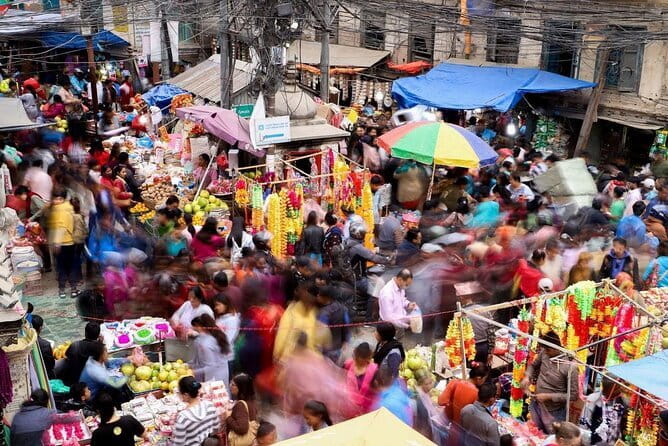
Seeing the Kumari, Kathmandu’s living goddess, is the most unusual part of this short walking tour. You visit her traditional residence after walking through Ason, an old market where spices, cloth, household goods, and souvenirs fill the narrow streets. The experience connects daily city life with Nepal’s Hindu and Buddhist traditions.
I like the route’s compact design. You get two very different sides of Kathmandu in one outing: the practical noise of Ason market and the carved courtyards of Kathmandu Durbar Square. I also like that the guide explains the meaning behind the Kumari tradition instead of leaving you to guess what you are seeing.
The main consideration is time. Two hours is enough for an introduction, but not for a slow, detailed visit to every corner of the square. You also pay the NPR 1,000 Kathmandu Durbar Square entrance fee separately, so include that in your budget.
Key points at a glance
- Ason market comes first, giving you a close look at one of Kathmandu’s oldest commercial areas.
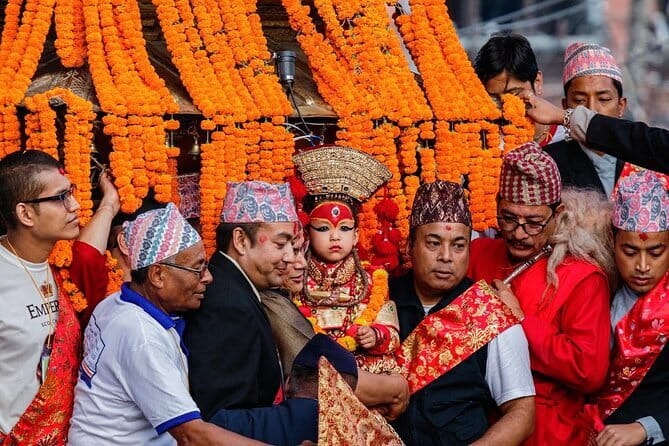
- The Kumari Ghar is the emotional focus, where you may see the young girl regarded as the living form of Taleju.
- Kathmandu Durbar Square adds royal architecture, temples, courtyards, and a strong sense of place.
- Hindu and Buddhist customs are explained together, which helps make sense of Kathmandu’s shared religious culture.
- Santos has led this walk, and the tour is conducted in English.
- The $39 price includes a guide, taxes, and bottled water, but excludes food, drinks, personal spending, and the NPR 1,000 square entry fee.
Starting at Chhaya Center in Thamel
The meeting point is at the main gate side of Chhaya Devi Complex in Thamel. That gives you a clear place to begin, especially if you are staying in the Thamel area and want a tour that does not require a long transfer outside central Kathmandu.
The tour is designed as a walking experience, not a vehicle-based sightseeing trip. You should expect city streets, market lanes, temple areas, and historic courtyards underfoot. Wear comfortable shoes and keep your belongings close in crowded places. The supplied information does not specify group size, so ask the operator if that matters to you before booking.
The guide meets you at the starting point and leads the route toward Ason. Bottled mineral water is included, but meals and other drinks are not. For a two-hour outing, that arrangement makes sense, though you may want to eat before or after the walk rather than count on a food stop during it.
The booking terms are useful for a short city activity. You can cancel up to 24 hours ahead for a full refund, and you can reserve now and pay later. Starting times depend on availability, so check the schedule before you build the rest of your Kathmandu day around it.
More Walking Tours in Kathmandu
- Kathmandu Food and Drink Walking Tour
★ 5.0 · 266 reviews - Kathmandu: Food and Drink Walking Tour
★ 4.9 · 119 reviews - Walking Street Food Tour in Kathmandu
★ 5.0 · 111 reviews
Walking through Ason, Kathmandu’s oldest market
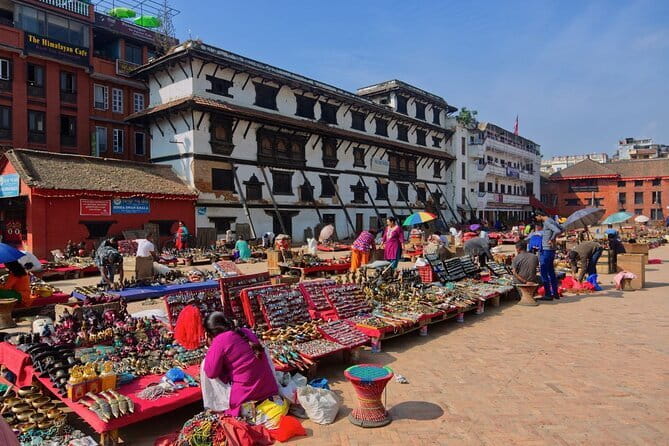
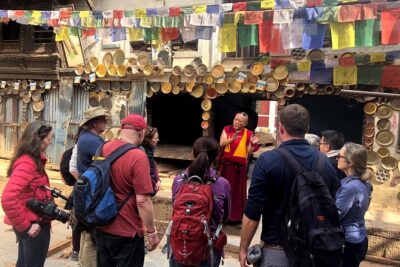
Ason is the part of the tour that brings you closest to ordinary city commerce. Its streets hold shops and stalls selling spices, textiles, souvenirs, and other daily goods. Instead of looking at Kathmandu only through monuments, you see a place where people shop, work, and pass through as part of normal life.
This is also a good setting for a guide. A market can look like a jumble of color and movement when you first arrive. An English-speaking guide can point out what you are looking at and explain how the area fits into the city’s cultural life. The tour information promises an English-speaking guide, and Santos is one guide associated with this experience.
Keep your expectations practical. Ason is not a quiet open-air museum. It is a working market, so the pleasure comes from observing the street scene rather than expecting a polished attraction. Shop displays, narrow lanes, and the mix of old buildings and modern trade give the stop its character.
You may also appreciate the contrast with the Kumari visit later. Ason is about goods and daily needs. The Kumari Ghar is about belief, ritual, and a tradition that carries great importance in Nepal. The route places those two worlds close together, which is one reason the tour works well as an introduction to Kathmandu.
Entering Kathmandu Durbar Square

Kathmandu Durbar Square is the main historic stop and takes up the formal sightseeing part of the tour. The square contains palaces, temples, and courtyards connected with the old royal center of Kathmandu. Its architecture shows the skill of Newar builders through carved wood, layered roofs, shrines, and detailed façades.
The square is not just a collection of old buildings. It is a place where Nepal’s royal, Hindu, and Buddhist traditions meet. With a guide beside you, you can ask why a certain courtyard matters, how a temple is used, or how different religious customs share the same urban space.
The tour is listed as two hours, so the guide will need to keep the route focused. You should expect an introduction to the square rather than an exhaustive study of every temple and palace. That is useful if you have limited time in Kathmandu, but less suitable if you want several hours for photography, quiet observation, or independent exploration.
Entry to Kathmandu Durbar Square is not included. The stated fee is NPR 1,000, payable separately. This extra cost is easy to overlook when comparing the $39 tour price, so add it before deciding how the activity fits your budget.
Meeting the Kumari at Kumari Ghar
The Kumari visit gives this walk its special purpose. In Nepalese tradition, the Kumari is a prepubescent girl regarded as the living embodiment of the goddess Taleju. She resides in the Kumari Ghar, a traditional building within the Kathmandu Durbar Square area.
This is not a theatrical show arranged for visitors. The Kumari is part of an active religious tradition, and the experience calls for respect. You should follow your guide’s instructions about where to stand, when to look, and whether photography is allowed. The supplied information does not state the exact viewing conditions or guarantee that the Kumari will appear, so it is best to treat the visit as an opportunity rather than a promise of a long encounter.
A brief appearance can still be memorable. One booking note describes the Kumari’s gaze as especially impressive, which points to the quiet intensity of the moment. You may see her only briefly, but that brief sight has meaning because of the role she represents, not because the visit is a long performance.
The guide’s explanation matters here. Without context, you might see a young girl at a window and miss the religious significance. With background on Taleju, the Kumari Ghar, and Nepalese belief, the stop becomes easier to understand and more respectful.
More Market Tours in Kathmandu:
- Kathmandu Secret Food Crawl & Local Market Tour
★ 4.7 · 54 reviews - Kathmandu Food Crawl & Market Tour
★ 5.0 · 26 reviews - Best Nepali Cooking Class in Thamel with Local Market Trip
★ 5.0 · 26 reviews - Oldest Local Market Walking Tour with Living Goddess Kumari
★ 5.0 · 8 reviews
Understanding Hindu and Buddhist Kathmandu
One of the tour’s strongest features is its attention to both Hinduism and Buddhism. Kathmandu is not divided into neat religious zones. Shrines, temples, courtyards, and local customs often sit within the same city fabric, and the tour uses Ason and Durbar Square to show that connection.
You do not need prior knowledge of Nepalese religion to follow the walk. An English-speaking guide can give you the basic framework, then explain details as they appear along the route. This is especially helpful at the Kumari Ghar, where a little cultural context changes the visit from a quick sighting into a meaningful part of the day.
The tour is also a good fit if you prefer people and traditions to a long list of dates. The focus is not only on architecture. You learn how a market functions, why the Kumari matters, and how Hindu and Buddhist ideas appear in the same historic center.
The available feedback repeatedly praises the clarity of the guiding. One person described the tour as very informative, while another said Santos communicated extremely well and explained details carefully. A Spanish-speaking booking note also praised the guide’s kindness and detailed explanations, but the advertised tour language is English, so English is the service you should expect.
Is $39 good value for two hours?
At $39 per person, this is not the cheapest way to wander through Kathmandu. You can walk around parts of the city on your own without paying a tour fee. You also need to add the NPR 1,000 entrance charge for Kathmandu Durbar Square, plus any food, drinks, souvenirs, or other personal costs.
The value comes from the guided interpretation, not transportation or a meal. You are paying for an English-speaking guide to connect a local market, a historic square, and the Kumari tradition within one short route. That can be worthwhile on a first visit, especially if you want cultural explanation rather than independent browsing.
The price makes more sense if you have limited time. In two hours, you get a planned introduction to three linked subjects: everyday commerce in Ason, the royal and religious setting of Durbar Square, and the Kumari tradition. You do not need to research the route or work out how the sites relate to one another.
It is less compelling if you already know Kathmandu well or want a long, unhurried photography walk. The short duration limits the amount of time available at each place, and the separate entry fee raises the total cost. I would compare the tour with your own priorities: pay for it if explanation and structure matter, skip it if you prefer to explore at your own pace.
Who will enjoy this walking tour?
I would recommend it most strongly to first-time visitors who want a quick cultural orientation. The tour gives you a useful first look at Kathmandu’s markets, historic center, religious traditions, and royal past without taking up half a day.
It also suits anyone curious about the Kumari. The living goddess tradition is unusual, and a guide can help you approach it with the right context. If you are interested in how belief continues within a modern capital, this is more rewarding than a simple monument checklist.
The tour can work well for couples, solo visitors, and small groups who want a set plan. The duration is short enough to fit before another activity, though you should leave some breathing room around the scheduled start and finish because street walking does not always run like a clock.
You may want something else if you need a slower accessible route, a longer architectural tour, or a meal-centered food walk. No accessibility details or group-size information are provided, so contact Mount Glory Treks before booking if you have mobility needs or want to know how many people will be on your departure.
Practical details before you book
Meet at the main gate side of Chhaya Devi Complex in Thamel. The tour returns to Chhaya Center, so you finish near the same area where you began.
The advertised duration is two hours. Check available starting times, since the schedule is not fixed in the information provided. Wear shoes suited to city walking, carry only what you need, and keep some Nepalese rupees available for the NPR 1,000 Durbar Square admission and personal purchases.
Your booking includes an English-speaking guide, government taxes and VAT, and one bottle of mineral water. It does not include meals, beverages, the square entrance ticket, or personal expenses.
The operator is Mount Glory Treks. The tour has a perfect 5 rating from eight listed bookings, with praise focused on clear explanations, friendly guiding, and the Kumari visit. That is a small sample, so I would treat it as encouraging rather than a guarantee that every departure will feel identical.
Should you book the Ason and Kumari walk?
Book this tour if you want a short, guided introduction to Kathmandu’s living culture and the chance to see the Kumari Ghar in the same outing. The combination of Ason market and Durbar Square is well chosen, and the best part is the way the guide links everyday street life with religious tradition.
Think twice if you want a full-day historical tour, a guaranteed extended view of the Kumari, or a very low-cost walk. The extra square fee matters, and two hours leaves little room for lingering.
For a first visit to Kathmandu, I think the tour earns its price when you value clear explanations and a planned route. Go with respectful expectations, allow for the separate admission cost, and you will get a focused look at one of the city’s most distinctive traditions.
FAQ
Where does the tour begin?
The meeting point is at the main gate side of Chhaya Devi Complex in Thamel, Kathmandu.
Where does the tour finish?
The tour returns to Chhaya Center.
How long does the walking tour last?
The stated duration is two hours.
Is Kathmandu Durbar Square admission included?
No. The entrance fee is listed separately as NPR 1,000.
Is the tour offered in English?
Yes. The tour includes a live English-speaking guide.
What does the $39 price include?
The price includes an English-speaking guide, government taxes and VAT, and bottled mineral water.
Can I cancel the booking?
Yes. You can cancel up to 24 hours in advance for a full refund. You can also reserve now and pay later.
Just added around Kathmandu
- Women Empowerment Project(Nepali cooking class & jewelry workshop★ 5.0 · 15 reviews
- Manthali Airport (Ramechhap) To Kathmandu – Transport Service★ 4.5 · 11 reviews
- Amazing 1 Day Trekking Experience in Kathmandu Nepal★ 5.0 · 24 reviews
- Walking tour of Kathmandu with awesome local guides★ 5.0 · 4 reviews
- Walking tour of real Kathmandu through back streets.★ 5.0 · 3 reviews
- Private Manaslu Circuit Trek at Himalayas★ 5.0 · 3 reviews
- Walking Street Food Tour in Kathmandu★ 5.0 · 111 reviews
- Kathmandu Street Food Walking Tour – Eat Like a Local★ 5.0 · 3 reviews
Walking Tours, compared.
Walking Food Tour in Hidden Local Eateries of Kathmandu
Read our review →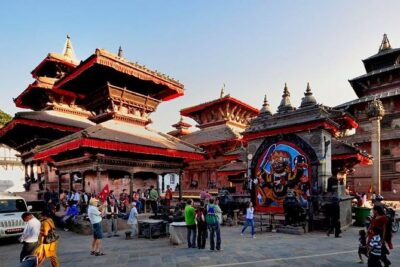
Old Kathmandu Walking Tour, Historic World Heritage Durbar Square
Read our review →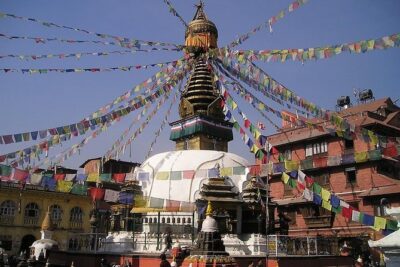
Browse the lists this tour appears in