
Reviewed · EVEREST BASE CAMP TREKS
12 Days Everest Base Camp Trek
Everest Base Camp is reached the old-fashioned way here: on foot, through Sherpa villages, suspension bridges, Buddhist monasteries, and high mountain valleys. The 12-day route includes the hard-to-arrange pieces, such as Lukla flights, permits, teahouses, meals, a guide, and porter service.
I like two things right away. First, the two acclimatization days in Namche and Dingboche give you a sensible chance to adjust. Second, the 2 trekkers to 1 porter setup keeps your personal load manageable without turning the trek into a luxury expedition. The main concern is the pace: reaching Everest Base Camp and returning to Gorak Shep can make Day 8 a very long day, and Lukla flights can be delayed or canceled by weather.
Key points to know before you book
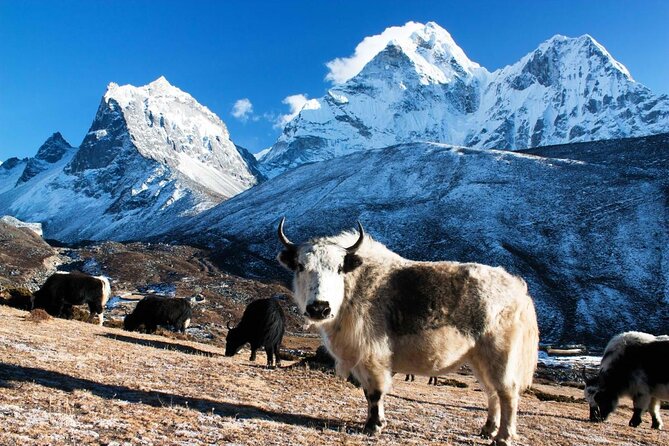
- Lukla to Base Camp on foot: The route passes through Phakding, Namche Bazaar, Tengboche, Dingboche, Lobuche, Gorak Shep, and Everest Base Camp.
- Two acclimatization stops: You spend a day in both Namche Bazaar and Dingboche, with optional hikes for mountain views.
- Kala Patthar is the big viewpoint: At 5,555 meters, it gives you a better broad view of Everest than Base Camp itself.
- The price covers the costly basics: At $1,390 per person, the package includes domestic flights, permits, meals, teahouses, guide service, porter support, and airport transfers.
- The schedule is weather-sensitive: Kathmandu and Lukla flights may wait for hours or be canceled for one or more days.
- You need moderate fitness and altitude patience: The walking is not technical climbing, but the height, cold, long days, and thin air make this a serious trek.
What the $1,390 package really covers
At $1,390 per person, this is not simply a walking tour. It bundles the logistics that can be awkward to arrange separately in Nepal: Kathmandu to Lukla flights, the return flight, national park and TIMS permits, teahouse accommodation, three meals a day during the trek, an English-speaking government-licensed guide, and porter service.
That bundle gives you practical value. You do not have to negotiate a new room, meal, or permit at every stop. Staff costs are also included, covering salaries, insurance, equipment, food, accommodation, and domestic airfare for the trekking team.
The package includes airport pickup and drop-off, plus a farewell dinner. It does not include international flights, a Nepalese visa, travel and rescue insurance, tips, drinks, bottled or boiled water, showers, laundry, battery charging, phone calls, bar bills, or extra porters.
That list matters. Rescue insurance is not included, and it is especially important on a trek reaching 5,555 meters. You should also budget for personal drinks and small comforts. The advertised price is strong for an all-inclusive trekking package, but it is not your full trip budget.
The start is early, with a 5:15 am meeting time. Your first flight and the final flight to Kathmandu are both subject to mountain weather, so keep spare time around the trek if you have an international flight to catch.
More Everest Base Camp treks:
- Everest Base Camp Trek – 14 Days
★ 5.0 · 1,499 reviews - Everest Base Camp Trekking
★ 5.0 · 485 reviews - Everest Base Camp Trekking – 13 Day
★ 5.0 · 365 reviews
Day 1: The short flight to Lukla and Phakding
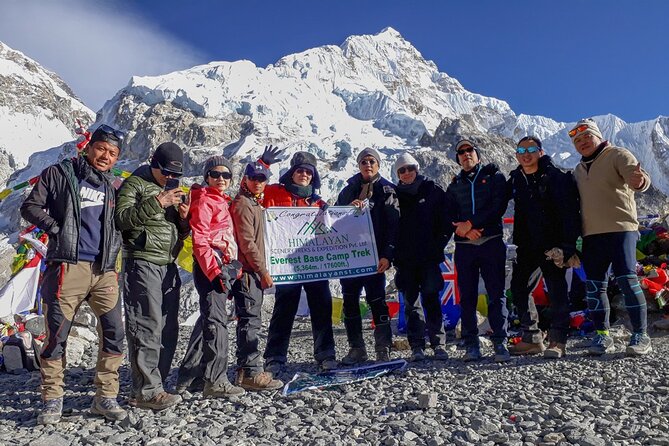
The adventure begins with an early domestic flight from Kathmandu to Lukla. The flight takes about 30 minutes, then you meet the rest of the crew and begin walking toward Phakding.
The first trek is around three to four hours. You pass through Cheplung village and get a view of Mt. Khumbila, a sacred mountain that has never been summited. Phakding sits at about 2,651 meters, so this first night is a gentle introduction rather than a brutal test.
I like this opening because it gets you walking soon after landing. Still, do not mistake the short first day for an easy holiday. You are already moving through remote mountain country, and the next days bring a clear increase in height.
Day 2: Namche Bazaar and the first real climb
The route follows the Dudh Koshi River through Benkar, Chumoa, and Monjo. At Monjo, you enter Sagarmatha National Park, then cross suspension bridges and continue past Jorsale.
The final approach to Namche Bazaar is the first serious uphill section. The walk takes roughly four to five hours and finishes at about 3,438 meters. Namche is a natural stopping point, with an amphitheater of mountain slopes and a very different feel from the smaller villages below.
This is where pacing matters. Walk slowly, drink regularly, and do not race ahead simply because you feel strong. Altitude often waits until later in the day to make its point.
Day 3: Namche acclimatization with wide Himalayan views
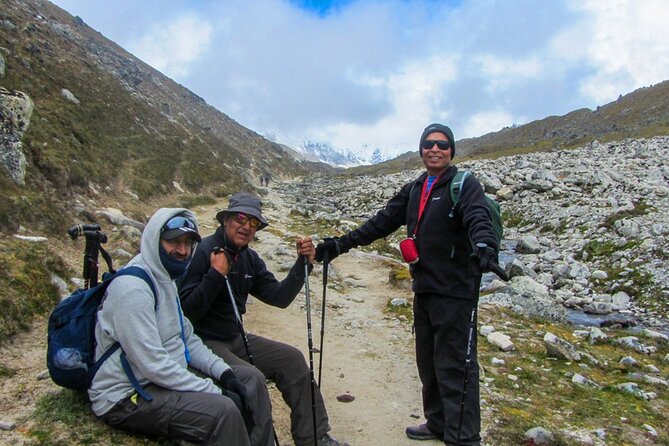
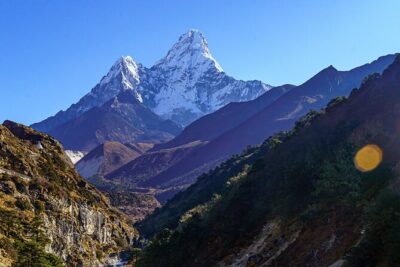
You spend a second night in Namche, which is one of the best features of the schedule. The planned outing heads toward Sagarmatha National Park for sunrise views of Everest, Lhotse, Nuptse, Ama Dablam, Thamserku, and Kongde.
An optional hike can take you toward Khumjung village. The point is not to cover a huge distance. It is to climb higher during the day, then sleep lower in Namche, giving your body a better chance to adjust.
Namche is also a useful place to slow down mentally. You are no longer simply following a river uphill. You are entering the high Khumbu, and the size of the mountains becomes much more apparent.
More trekking days out of Everest Region:
- Everest Base Camp Trek -14 Days
★ 5.0 · 321 reviews - Everest Base Camp Trekking – 2025/2026
★ 5.0 · 199 reviews - Everest Base Camp Trek
★ 5.0 · 193 reviews - Everest Base Camp Trek with Helicopter Return from Gorakshep to Lukla
★ 5.0 · 161 reviews
Day 4: Tengboche Monastery and the first high views
The trail from Namche toward Phunki is fairly easy, followed by a climb to Tengboche. The total walking time is about five to six hours, and Tengboche sits at roughly 3,870 meters.
The main draw is Tengboche Monastery, described as the largest monastery in the Everest region. It sits inside Sagarmatha National Park, a UNESCO World Heritage Site, with views toward Everest, Nuptse, Lhotse, Ama Dablam, and Thamserku.
The monastery opens at 3:00 pm. If your group arrives around 4:00 pm, you may be able to observe a Buddhist religious ceremony. That timing is not guaranteed, but it is worth asking your guide about. This is one of the days when the cultural side of the trek feels as important as the mountain scenery.
Day 5: Pangboche, Imja Valley, and Dingboche
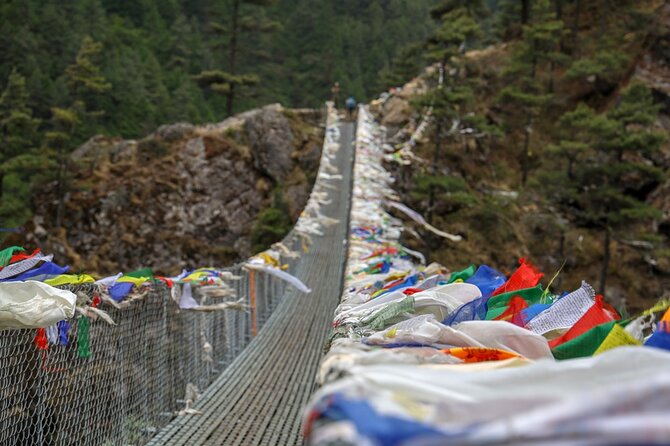
You descend to Debuche, cross the Imja River, and reach Pangboche. The route continues along the upper Pangboche trail, with time to explore Pangboche Monastery, before entering the Imja Valley.
The walk to Dingboche takes about five to six hours. Dingboche sits at approximately 4,360 meters, and the air will feel noticeably thinner here.
This day has a useful rhythm: a downhill start, cultural stops, then a steady climb into a more exposed valley. You may find the views becoming larger and the villages more spare as you gain height. The teahouse arrangement is helpful here because you can focus on eating, resting, and staying warm rather than searching for a bed.
Day 6: Dingboche acclimatization
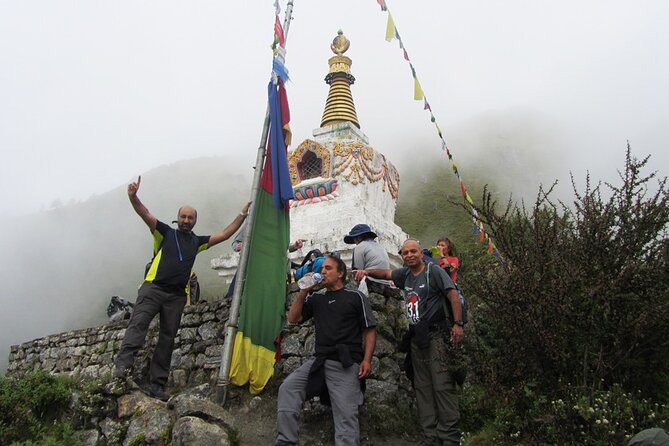
Dingboche provides the second acclimatization day. The suggested outing is a roughly four-hour hike behind the village, with views toward Lhotse, Makalu, and Cho Oyu.
This is a key safety day, not a spare day to remove. High-altitude trekking rewards patience. You may feel fine at breakfast and tired by afternoon, so use the extra time to move gently, eat well, and pay attention to how you feel.
The itinerary gives this day a three-hour activity estimate in one place and describes a hike of about four hours elsewhere. Treat it as a flexible acclimatization outing, not a fixed race against the clock.
Day 7: Dingboche to Lobuche across rough high ground
The route to Lobuche covers about 9 kilometers and is described as taking around seven hours, although another timing in the schedule lists four hours. Either way, this is a demanding day because the altitude is now close to 4,900 meters.
You follow the Himalayan trail toward the base camp area and pass through Dughla Pass. The scenery becomes stark and powerful, with fewer trees and more rock, ice, and high peaks. Lobuche is a simple overnight stop, and your main job is to eat and recover for the biggest day ahead.
The difference between the listed walking times is worth noting. Mountain pace depends on weather, trail conditions, group speed, and how your body handles the altitude. Plan for the longer estimate.
Day 8: Gorak Shep and Everest Base Camp
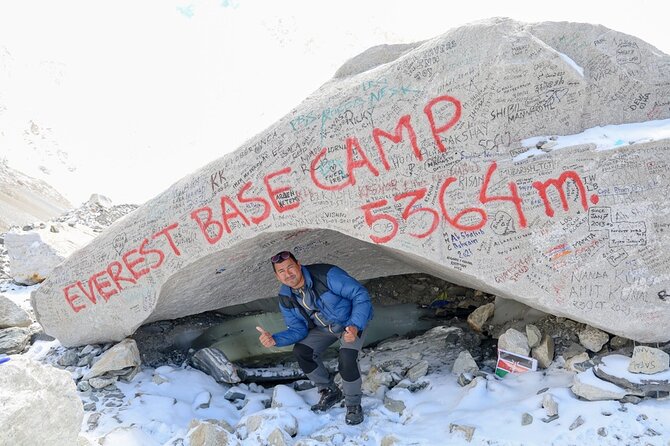
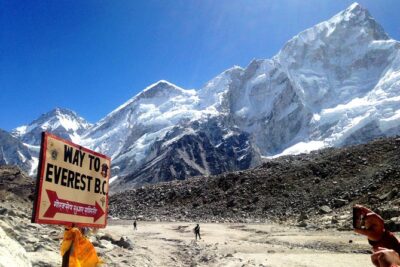
This is the centerpiece of the trek and the day that requires the most stamina. You walk from Lobuche to Gorak Shep at about 5,160 meters, check in, eat lunch, and then continue to Everest Base Camp at 5,365 meters.
The published schedule describes nearly 12 hours and about 17 kilometers for the full day, while another section gives a six-hour estimate. The safer way to plan is to expect a long day with slow walking and limited energy. The route to Base Camp is not a technical climb, but the altitude makes every rise and uneven stretch harder.
At Base Camp, you get views toward Nuptse, Khumbutse, and Pumori. Depending on the season, the appearance of the camp itself can vary, but reaching the site is still a major personal milestone.
You then return to Gorak Shep for the night. This is not the day to save energy for a late celebration. Eat, hydrate, and rest as soon as you return.
Day 9: Kala Patthar and the descent to Pheriche
The early start is worth it. You hike up Kala Patthar to about 5,555 meters, the highest point on the route, for views of Everest, Lingtren, Khumbutse, and Changtse.
The climb takes about three hours, and the air is thin. The reward is a broad mountain viewpoint. In many ways, Kala Patthar offers the clearest overall view of Everest on this trip, while Base Camp puts you closer to the expedition route but does not provide the same wide outlook.
After returning to Gorak Shep for lunch, you descend to Pheriche at around 4,200 meters. That drop in altitude should feel welcome, though the descent still puts pressure on tired knees.
The schedule labels one section Pheriche to Dughlha Road, but the detailed route clearly describes Gorak Shep, Kala Patthar, and Pheriche. Confirm the day-by-day plan with the operator before departure if precise timing matters to you.
Days 10 and 11: Back through Tengboche and Lukla
The descent to Namche takes you through Pangboche and Tengboche. You arrive in Namche in the afternoon and spend the night in a guesthouse. The walk is listed at about five to seven hours, depending on the day and the section being described.
Returning through familiar villages is rewarding. The route feels different in reverse, and your legs will be tired but your breathing should be easier as you lose height.
The final trekking day takes about five to six hours to Lukla. You have time in the afternoon to wander, relax, and take a hot shower. The evening includes a chance to celebrate with the trekking group.
That final night is useful beyond its social value. It gives you a buffer before the flight, although it does not remove the risk of weather delays. Lukla is not a place where schedules always behave as planned.
Day 12: Lukla to Kathmandu
You take an early flight back to Kathmandu, with a stated flight time of about 40 minutes in the final transfer information. After arrival, you are transferred to your hotel, and the program includes a cultural dinner in Kathmandu.
This day may be quick, but do not book a tight international connection unless you have confirmed the timing with the operator. Flights between Kathmandu and Lukla can be delayed for hours or canceled for one or more days because of unfavorable weather. The delay can happen at the start, at the end, or both.
Guides, porters, and the human side of the trek
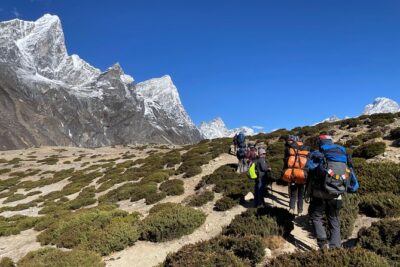
The trek includes an English-speaking, government-licensed guide and porter service at a ratio of one porter for every two trekkers. That ratio is a practical middle ground. You carry a daypack, while the porter handles the heavier shared load.
Himalayan Sanctuary Adventure identifies Bishnu as a key contact, and communication was praised in connection with planning, transfers, refunds during the pandemic, and the farewell dinner. The available information does not identify the individual guide for every departure, so ask for your guide’s name and experience before leaving Kathmandu.
The staff package includes salaries, insurance, equipment, food, accommodation, and domestic airfare for the trekking team. Tips are not included, so bring a plan for tipping the guide, porters, and driver.
Food, beds, and what all-inclusive means here
Accommodation is in teahouses, with breakfast, lunch, and dinner included during the trek. You should expect practical mountain lodging rather than hotel-style comfort. The value comes from having rooms and meals arranged along a route where options become more limited as you climb.
Breakfast is listed as included for all 12 days, while the detailed inclusions also cover lunch and dinner during the trek. Kathmandu lunches and evening meals are not included, nor are meals if you return early from the mountains.
Drinks, mineral water, tea, coffee, soft drinks, laundry, showers, phone calls, charging, and bar bills cost extra. These are small expenses one by one, but they add up over 12 days. Carry some cash for personal needs and tips.
Who should book this Everest Base Camp trek?
This trip suits you if you want a guided, organized route and do not want to arrange flights, permits, porters, and teahouses on your own. It also works well if you value a private activity, since only your group participates.
You should have moderate physical fitness and be ready for long walking days at high altitude. The route is not presented as technical mountaineering, but Everest Base Camp is still a serious physical challenge.
I would be cautious about booking this exact 12-day schedule if you need a generous margin for acclimatization, bad weather, or slow walking. The two acclimatization days help, but Day 8 is long, the published timings are inconsistent, and the Lukla flights can disrupt the plan.
Cancellation is allowed up to 24 hours before the experience for a full refund. That is useful flexibility, but it does not solve the need for rescue insurance, spare time, and a realistic fitness assessment.
Should you book it?
Book this trek if you want the main Everest Base Camp route in a compact package with flights, meals, permits, teahouses, a licensed guide, and porter support already arranged. The combination offers solid value at $1,390, especially for a first Himalayan trek.
Before paying, confirm the individual guide, exact walking times, baggage allowance, Kathmandu hotel arrangements, and what happens if Lukla flights are canceled. If you can accept weather delays and prepare for the long Gorak Shep to Base Camp day, this is a practical way to reach Everest Base Camp without taking on every logistical task yourself.
FAQ
What is included in the 12-day Everest Base Camp trek?
The package includes airport pickup and drop-off, teahouse accommodation, meals during the trek, a farewell dinner, Kathmandu to Lukla and Lukla to Kathmandu flights, an English-speaking government-licensed guide, porter service, permits, a medical kit, staff costs, and government and local taxes.
Are international flights included?
No. International flights are not included. Nepalese visa fees, sightseeing entrance fees, and extra Kathmandu accommodation are also excluded.
How difficult is the trek?
The activity requires a moderate level of physical fitness. The route reaches Everest Base Camp at 5,365 meters and Kala Patthar at 5,555 meters, with long walking days and high-altitude conditions.
Are there acclimatization days?
Yes. You spend an acclimatization day in Namche Bazaar and another in Dingboche. Optional hikes are planned on both days to help you adjust to the altitude.
Can Lukla flights be delayed or canceled?
Yes. Kathmandu to Lukla and Lukla to Kathmandu flights may be delayed for hours or canceled for one or more days because of unfavorable weather. You should be prepared for long waits at either airport.
Is travel insurance included?
No. Travel and rescue insurance are not included. Personal expenses, tips, bottled or boiled water, drinks, laundry, showers, charging, and extra porters are also not included.
Just added around Everest Region
- Day Tour to Everest Base Camp By Helicopter★ 5.0 · 16 reviews
- Kathmandu To Lukla By Helicopter Flight★ 5.0 · 6 reviews
- Luxury Everest Base Camp Trek – 11 Days★ 5.0 · 9 reviews
- Everest Base Camp Tour & View Point by Helicopter from Katmandu★ 5.0 · 3 reviews
- Everest base camp helicopter tour with Guarenteed Landing★ 4.0 · 7 reviews
- Everest base camp flight over by Helicopter from Kathmandu★ 5.0 · 10 reviews
- Everest Base Camp Helicopter Tour Stop at Hotel Everest View.★ 5.0 · 17 reviews
- Everest Base Camp Helicopter Tour★ 5.0 · 24 reviews
Everest Base Camp Treks, compared.
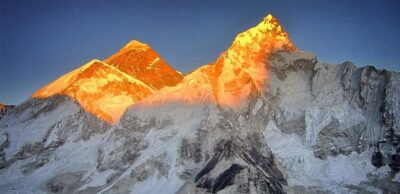
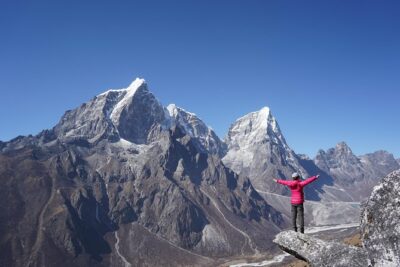
Everest Base Camp Trek with Helicopter Return from Gorakshep to Lukla
Read our review →Browse the lists this tour appears in