
Reviewed · EVEREST BASE CAMP TREKS
Mt Everest Base CampTrek | Budget Package
Everest Base Camp is the main event here, but Kala Patthar at 5,545 meters may give you the finest mountain view of the whole trek. A pre-dawn climb puts Everest, the South Col, Nuptse, and nearby glaciers in front of you before the long walk back toward Pheriche.
I like the two acclimatization days, one in Namche Bazaar and one in Dingboche. I also like that the $400 package includes Lukla flights, tea-house lodging, airport pickup, an English-speaking guide, and a medical kit. The big catch is that meals, insurance, equipment, drinks, tips, and personal costs are not included, so your final budget will be much higher.
Key points at a glance
- Kala Patthar is the visual high point: The 5,545-meter climb offers a direct mountain outlook before the return to Pheriche.
- Two acclimatization days help: Namche Bazaar and Dingboche break up the steady climb to high altitude.
- Lukla flights are included: Round-trip airfare from Kathmandu is part of the package, subject to weather and availability.
- Tony and Tika are named guides: The team is described as patient, helpful, polite, and good at teaching trekking skills.
- Food costs extra: Breakfast, lunch, and dinner are not included, a major detail for a high-altitude trip.
- Groups are capped at 15: That is small enough for a shared trek while keeping the price low.
What $400 really buys you
At first glance, $400 looks remarkably low for a 14-day Everest Base Camp trek. The value comes from the essentials already built into the price: round-trip Kathmandu to Lukla flights, 10 nights in tea houses, private pickup and drop-off transportation, an English-speaking guide, government and local taxes, a medical kit, and preparatory sessions before and after arrival.
That is a useful package for someone who wants a guided route without paying for a private luxury setup. The group limit is 15 people, so you get company on the trail but are not placed in a huge walking crowd.
You need to budget separately for all three daily meals. Breakfast, lunch, and dinner are excluded, as are drinks and other beverages. Visa fees, international flights, insurance, trekking equipment, extra porter or equipment costs, tips, shopping, and personal expenses are also yours to cover.
The package includes 10 tea-house nights, but the trip lasts about 14 days. That means you should ask the operator exactly which nights are covered and what is arranged in Kathmandu before booking. The supplied details do not specify Kathmandu hotel nights or meals, so do not assume they are included.
More Everest Base Camp treks:
- Everest Base Camp Trek – 14 Days
★ 5.0 · 1,499 reviews - Everest Base Camp Trekking
★ 5.0 · 485 reviews - Everest Base Camp Trekking – 13 Day
★ 5.0 · 365 reviews
Day 1 in Kathmandu and the flight to Lukla
The first day is arrival in Kathmandu, with pickup offered from Tribhuvan International Airport. A preparation session before and after arrival is included, which can be useful if this is your first high-altitude trek.
On Day 2, you fly from Kathmandu to Tenzing-Hillary Airport in Lukla, then walk to Phakding. The first route is about 8 kilometers and takes three to four hours, ending at roughly 2,651 meters.
Lukla is not just a transport point. It is the practical gateway to the Khumbu route, and the flight saves you days of road travel. It is also the most weather-sensitive part of the trip. The cancellation terms specifically say poor weather can lead to a different date or a full refund, but you should still allow flexibility in your wider Nepal plans.
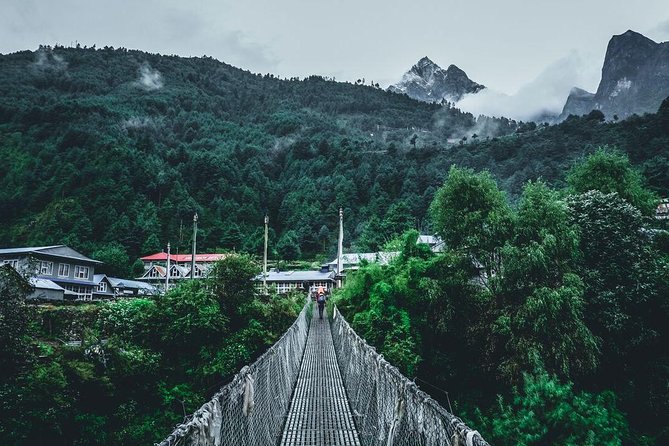
Phakding is a moderate first walking day. That matters because you are beginning to adjust to altitude, not simply testing your legs. The route then continues through the Khumbu valley toward Namche Bazaar.
Namche Bazaar and the first acclimatization day
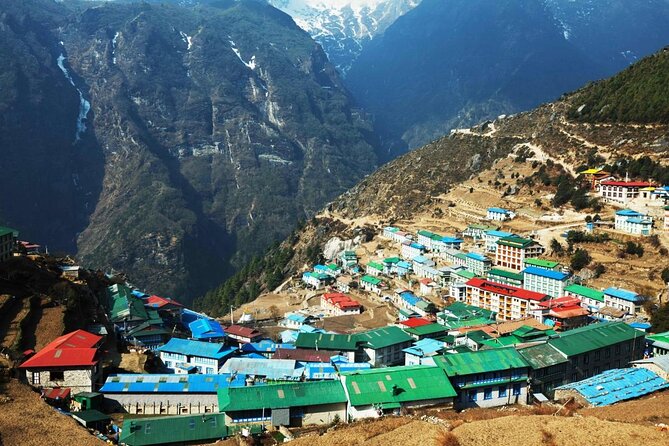
Day 3 runs from Phakding to Namche Bazaar, about 11 kilometers in five to six hours. Namche sits at approximately 3,438 meters, a clear jump from Phakding.
This is one of the most important days in the schedule. The walking distance is not extreme on paper, but the height gain makes the route feel harder than a normal day hike. You should keep your pace steady and save energy rather than trying to prove anything early in the trip.
Day 4 is reserved for acclimatization in Namche. The itinerary gives you a full day here rather than rushing straight uphill. I see this as a strong feature, especially in a budget package where schedules can sometimes be too tight.
Namche is also one of the main social and practical stops on the route. The program lists the Irish Pub as a waypoint more than once, but that does not mean drinks are included. Since beverages are specifically excluded, treat it as a named stop, not a prepaid activity.
Tengboche Gompa and the road to Dingboche
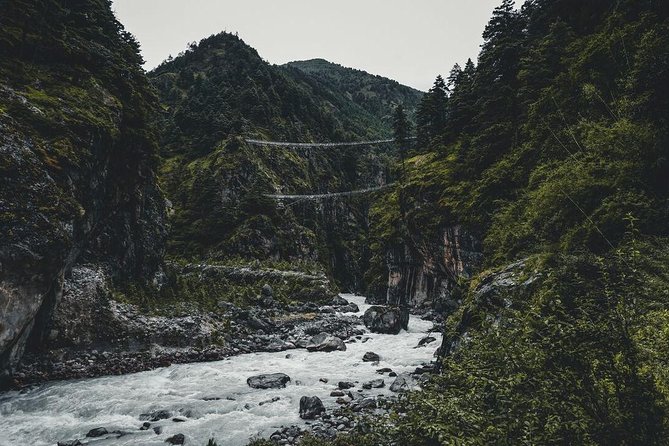
On Day 5, you walk from Namche to Tengboche, covering about 10 kilometers in five to six hours. The elevation reaches 3,870 meters.
Tengboche Gompa is the cultural highlight of this stretch. The itinerary includes a stop at the monastery, giving you a chance to connect the mountain route with Sherpa Buddhist life rather than treating the walk as a simple climb.
The next day takes you from Tengboche to Dingboche, about 9 kilometers in five to six hours. At 4,360 meters, Dingboche marks the point where altitude becomes a serious part of the experience. The air is thinner, the walking pace naturally slows, and small efforts can feel surprisingly demanding.
Day 7 is another acclimatization day in Dingboche. I like the placement of this rest day. You have two rising walking days behind you, and the schedule gives your body time before the route moves above 4,900 meters.
The listed itinerary refers to the Dingboche to Chhukhung Path 7 area, but it does not specify a separate excursion or summit. You should follow the guide’s plan rather than assume an extra side hike is included.
More to do in the Everest Region:
- Everest Base Camp Helicopter Tour landing at Everest View Hotel
★ 5.0 · 668 reviews - Everest Base Camp Trek -14 Days
★ 5.0 · 321 reviews - Everest Base Camp Helicopter Tour landing at Hotel Everest View
★ 5.0 · 218 reviews - Everest Base Camp Trekking – 2025/2026
★ 5.0 · 199 reviews
Lobuche, Gorak Shep, and Everest Base Camp
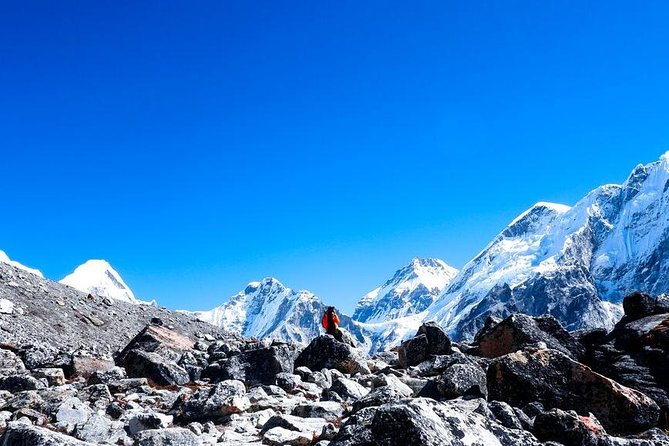
Day 8 takes you from Dingboche to Lobuche, covering about 7 kilometers in five to six hours. The destination is 4,940 meters, so the distance is short but the altitude is not.
This is a good example of why you should judge the trek by height as well as kilometers. A seven-kilometer day at this elevation may be much harder than an 11-kilometer day near Phakding. You need moderate physical fitness, and you should be ready for a slow, controlled pace.
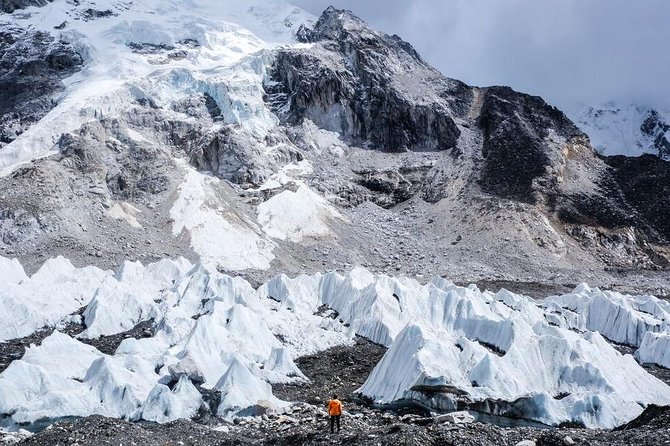
Day 9 is the long objective day. You walk from Lobuche to Gorak Shep at about 5,170 meters, then continue to Everest Base Camp at approximately 5,364 meters. The stated total is 13 kilometers and six to seven hours.
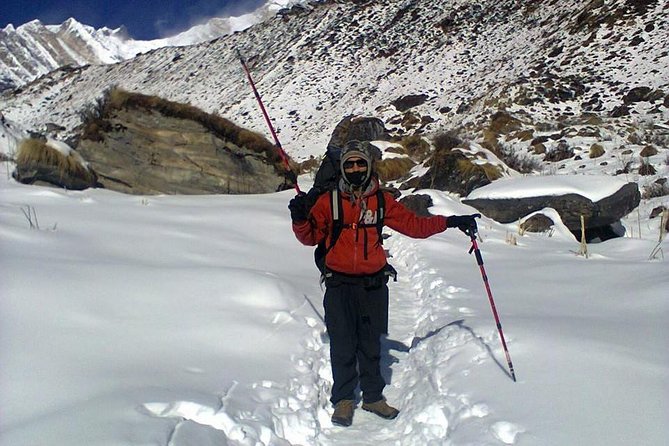
Gorak Shep is the last high stopping point before the Base Camp visit. The route is physically demanding because of the altitude, not just the distance. You will need to keep water, warm layers, and personal essentials close at hand, though the package does not include trekking equipment or drinks.
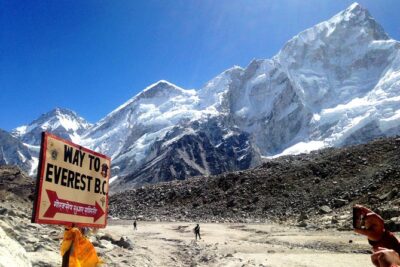
Everest Base Camp is the emotional payoff for many people. You reach the highest point of the standard trek itself, look toward the glacial surroundings, and stand at the foot of the route used by climbers heading higher. The package describes a visit to Base Camp, not an ascent of Everest, so keep the goal clear.
Kala Patthar at 5,545 meters
Day 10 begins with the trek from Gorak Shep to Kala Patthar, then continues to Pheriche. The total distance is listed as 16 kilometers, taking seven to eight hours.
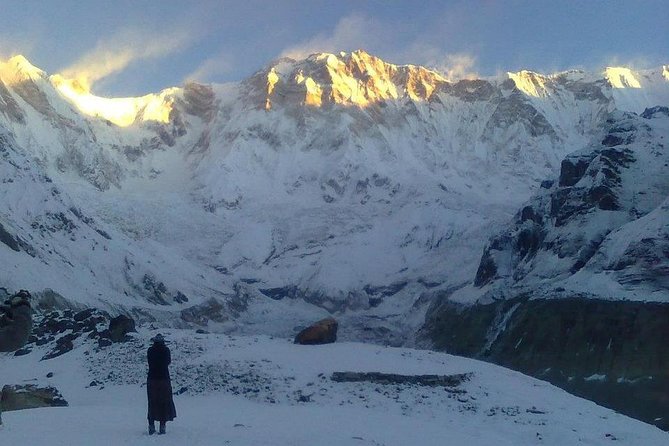
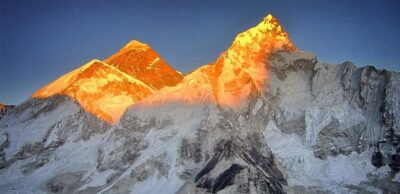
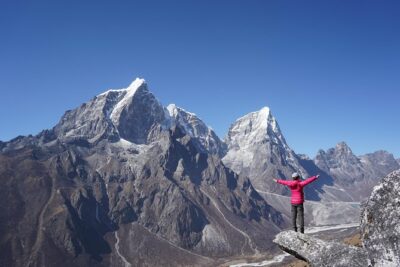
Kala Patthar is the route’s highest point, at 5,545 meters. The climb is usually timed before sunrise in this schedule, and the reason is simple: the early light can reveal Everest, the South Col, Nuptse, and the lower glaciers from a strong viewing point.
This is likely the hardest morning of the trek. You are starting high, climbing higher, and then walking down and onward to Pheriche at 4,288 meters. The descent does not make the day easy because the overall distance is long.
I would treat Kala Patthar as a major reason to choose this route. Everest Base Camp gives you the destination, but Kala Patthar gives you the broad mountain view. If photography matters to you, protect your battery power and keep your camera ready, but do not let pictures distract you from the cold and altitude.
The long return through Namche and Lukla
Day 11 runs from Pheriche to Namche Bazaar, about 20 kilometers in six to seven hours. This is one of the longest days by distance, even though the route generally loses elevation.
A downhill trend helps, but 20 kilometers after Base Camp and Kala Patthar is still a serious effort. Your legs may be tired, and the return route can feel less exciting simply because the main goal is behind you. I like that the itinerary does not pretend the return is effortless.
Day 12 continues from Namche to Lukla, listed as 19 kilometers in six to seven hours. By now you have already walked this direction, but the final day has its own importance. You need to reach Lukla in time for the flight the next day, and the guide will help keep the group moving together.
Day 13 is the return flight to Kathmandu. Again, weather can affect mountain flights, so keeping a little flexibility around your international departure is sensible. The final departure is scheduled for Day 14, with airport transfer support included.
Tea houses, guides, and group size
Tea-house accommodation keeps the price down and places you in the basic lodging system used along the trail. The package includes 10 nights, but the information does not describe room arrangements, bathrooms, heating, or whether any Kathmandu accommodation is covered. Ask those questions before paying.
The program includes an English-speaking trekking guide and a comprehensive medical kit. The named team includes Jiban, the travel coordinator, plus guides Tony and Tika. The guidance is described as patient, helpful, polite, and organized, with attention to building trekking skills rather than simply pushing people along.
That matters on a high-altitude route. A good guide needs to watch the group’s pace and help you handle a difficult day without turning the trek into a race. The group limit of 15 is a reasonable middle ground: more social than a private trek, but still small enough for the guide to keep track of people.
The package also includes certificates and preparatory sessions before and after arrival. Those extras are not the reason to book, but they add structure to a low-cost trip.
Who will get the best value
This trek suits you if you want the classic Everest Base Camp route, prefer a guided group, and are willing to manage your own extra spending. It is especially appealing if the included Lukla flights and guide support matter more to you than private rooms or included meals.
You should be comfortable with long walking days, steep altitude changes, and basic tea-house accommodation. The operator asks for moderate physical fitness, but the 5,545-meter Kala Patthar day and the 19 to 20-kilometer return days deserve serious preparation.
This is less suitable if you want a fully inclusive holiday. Food, drinks, insurance, equipment, and personal costs are all outside the $400 price. You also need a passport name, number, expiry date, and country for every participant at booking.
The cancellation policy is friendly before the deadline: cancel at least 24 hours before the start time for a full refund. Cancellations or changes within 24 hours are not refunded, and poor weather may result in a new date or full refund.
Should you book this Everest Base Camp trek?
I would consider this a strong low-cost route for an independent-minded trekker who wants guide support and the main Everest sights without paying for a private package. The included Lukla flights, two acclimatization days, and Kala Patthar summit give it real value.
Book it only after confirming the missing cost details, especially Kathmandu lodging, tea-house nights, and how the flight schedule handles delays. If you are ready to pay separately for meals, insurance, gear, tips, and drinks, this package can be a practical way to reach Everest Base Camp. If you want every expense settled in advance, the low headline price may mislead you.
FAQ
How long is the Everest Base Camp trek?
The experience lasts approximately 14 days, including arrival in Kathmandu, the trek, return to Kathmandu, and final departure.
What is the price of the trek?
The listed price is $400.
Are flights from Kathmandu to Lukla included?
Yes. Round-trip flights between Kathmandu and Lukla are included.
Is airport pickup provided?
Yes. Private transportation for pickup and drop-off is included.
What accommodation is included?
The package includes 10 nights of tea-house accommodation.
Are meals included?
No. Breakfast, lunch, and dinner are not included. Drinks and beverages are also excluded.
Is a guide included?
Yes. An English-speaking trekking guide is included.
What fitness level is required?
The activity requires a moderate physical fitness level.
What is the maximum group size?
The group can include a maximum of 15 participants.
What happens if bad weather cancels the experience?
If poor weather causes cancellation, you will be offered a different date or a full refund.
Just added around Everest Region
- Day Tour to Everest Base Camp By Helicopter★ 5.0 · 16 reviews
- Kathmandu To Lukla By Helicopter Flight★ 5.0 · 6 reviews
- Luxury Everest Base Camp Trek – 11 Days★ 5.0 · 9 reviews
- Everest Base Camp Tour & View Point by Helicopter from Katmandu★ 5.0 · 3 reviews
- Everest base camp helicopter tour with Guarenteed Landing★ 4.0 · 7 reviews
- Everest base camp flight over by Helicopter from Kathmandu★ 5.0 · 10 reviews
- Everest Base Camp Helicopter Tour Stop at Hotel Everest View.★ 5.0 · 17 reviews
- Everest Base Camp Helicopter Tour★ 5.0 · 24 reviews
Everest Base Camp Treks, compared.
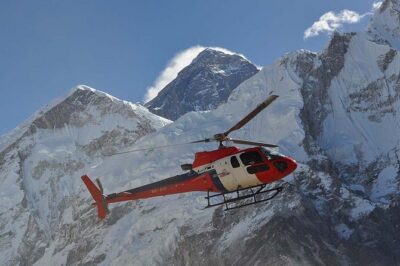
Everest Base Camp Trek with Helicopter Return from Gorakshep to Lukla
Read our review →Browse the lists this tour appears in