
Reviewed · EVEREST BASE CAMP TREKS
Everest Base Camp Trek 15 days | Local Guide | Flexible Itinerary
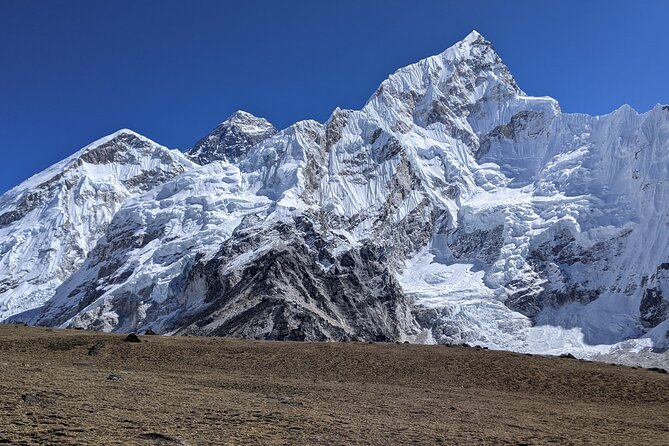
Everest Base Camp is the headline, but the real reward comes from the changing trail: the Hillary Bridge, Sherpa villages, Tengboche Monastery, glacial valleys, and the first sight of Everest above the Khumbu. I like the two acclimatization days in Namche and Dingboche, and I like that flights, permits, porters, trekking gear, and most meals are built into the price. The possible catch is simple: this remains a serious high-altitude trek, with long walking days and basic tea-house accommodation.
I also like the local setup. An English-speaking licensed guide leads the group, one porter carries the bags of two people, and groups of five or more receive an assistant guide. Guides named by the company include Raj, Sagar, Ram, Rabin, Jal, and Ganesh, though your assigned guide can vary. The Phorste and Mong Danda return route adds quieter trail time after Base Camp instead of sending you straight back the same way.
Key points at a glance
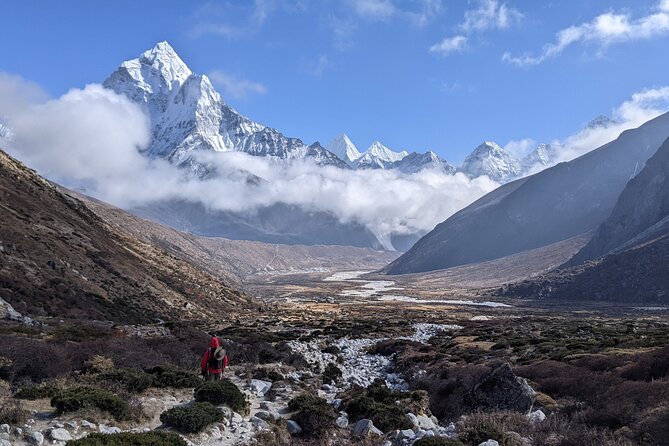
- Everest Base Camp at 5,364 meters: Reach the famous Khumbu destination after walking through glacier country and high mountain villages.
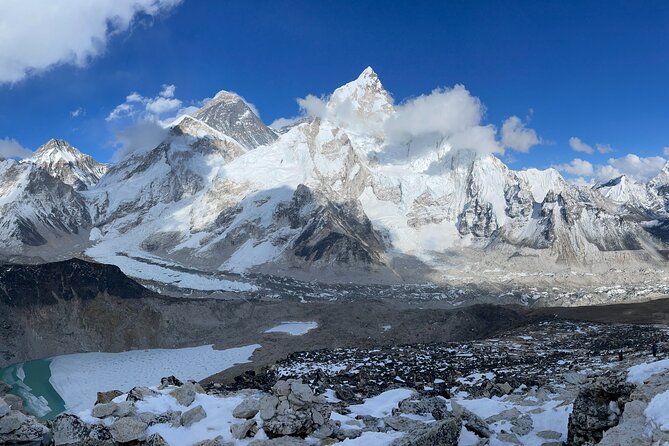
- Kala Patthar at 5,545 meters: Start early for the trip’s highest point and views toward Everest, Lhotse, and Nuptse.
- Two planned acclimatization days: Spend extra time in Namche Bazaar and Dingboche, with short side walks to help your body adjust.
- Private 15-day itinerary: Only your group participates, with a local guide and porters supporting the trek.
- Useful equipment included: Trekking poles, sleeping bags, down jackets, permits, flights, meals, and a trail map are covered.
- A quieter return route: Walk through Pangboche, Phorste, and Mong Danda before reconnecting with the Lukla trail.
Why this 15-day route works
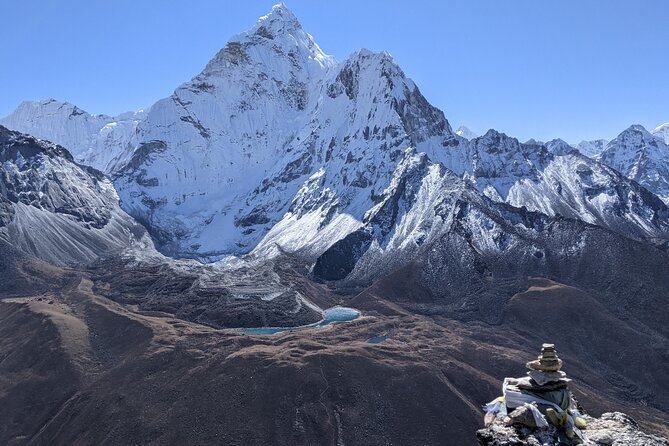
This is a classic Everest Base Camp trek with a few useful touches. You fly from Kathmandu to Lukla, walk uphill through the Khumbu region, spend two acclimatization days, reach Base Camp and Kala Patthar, then return by a less crowded route before finishing in Lukla.
The timing is important. A shorter schedule can look attractive on paper, but altitude does not care about your calendar. The extra days in Namche and Dingboche give you time to rest while still taking short walks. That is a sensible plan for a trek reaching more than 5,000 meters.
Your group is private, so the pace and daily routine can be adjusted within the fixed route. The title promises a flexible itinerary, but you should still ask before booking how much flexibility is realistic. Lukla flights depend on weather, and the high-altitude villages have limited accommodation and food choices.
More Everest Base Camp treks:
- Everest Base Camp Trek – 14 Days
★ 5.0 · 1,499 reviews - Everest Base Camp Trekking
★ 5.0 · 485 reviews - Everest Base Camp Trekking – 13 Day
★ 5.0 · 365 reviews
Day 1: A practical start in Kathmandu
Your trip begins at Tribhuvan International Airport, where a Life Himalaya representative meets you and transfers you to your hotel. This is useful after an international flight, especially if Kathmandu is new to you and you are arriving late or tired.
The first day is not packed with sightseeing. That is a good thing. You need time to settle in, organize your trekking kit, and make sure you understand the early flight and baggage limits. The domestic flight allowance is 10 kilograms for a main bag and 5 kilograms for hand luggage, 15 kilograms total per person.
Day 2: Flying to Lukla and entering the Khumbu
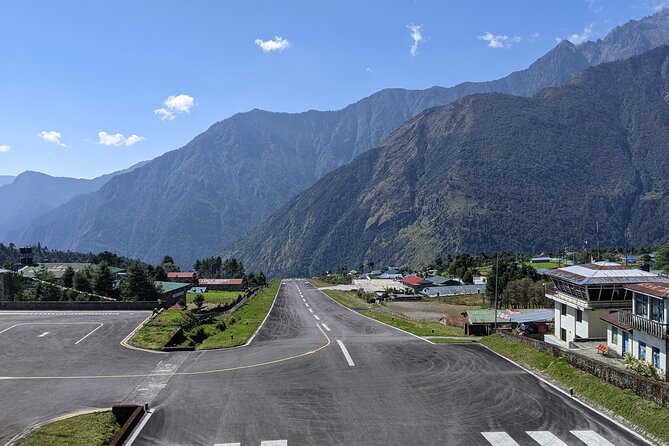
The early flight to Tenzing-Hillary Airport at Lukla takes about an hour. At 2,810 meters, Lukla is the gateway to the Everest trekking region and the proper beginning of the walk.
The flight is part of the adventure, but it is also one of the less predictable parts of the trip. The operator includes flights from Kathmandu or Ramechhap to Lukla and back, yet weather can disrupt the schedule. Keep your international plans flexible enough to handle a delay.
From Lukla, the route follows the Dudh Koshi valley toward the Sherpa villages. The first walking day is not listed as a separate stop in the schedule, so confirm the exact overnight village and walking distance before departure. This is a small but useful planning detail.
Day 3: Crossing the Hillary Bridge to Namche Bazaar
You walk for roughly five hours toward Namche Bazaar, crossing the famous Hillary Bridge along the way. The suspension bridge is one of the trail’s memorable moments, with the river far below and high mountain walls rising around you.
Namche, at about 3,440 meters, is the Sherpa capital and one of the best places on the route to pause. It has a livelier feel than the smaller settlements, though you should still expect a mountain town rather than city comfort.
The climb to Namche is a real first test. You gain altitude steadily, and the trail can feel demanding even before the highest sections begin. Your guide’s job is not simply to point out the way. A good guide watches your pace, mood, hydration, and signs of altitude trouble.
More trekking days out of Everest Region:
- Everest Base Camp Trek -14 Days
★ 5.0 · 321 reviews - Everest Base Camp Trekking – 2025/2026
★ 5.0 · 199 reviews - Everest Base Camp Trek
★ 5.0 · 193 reviews - Everest Base Camp Trek with Helicopter Return from Gorakshep to Lukla
★ 5.0 · 161 reviews
Day 4: Acclimatization above Namche
You spend an extra day in Namche, with a side excursion to the Hotel Everest View area. This is one of the strongest features of the schedule. Resting does not mean lying in bed all day. A short walk at altitude helps you adjust while giving you early views of the Himalayan peaks.
The stop at Hotel Everest View is listed as about one hour, and admission is not included. Set aside a little money for that visit and for personal drinks or snacks.
Namche is also a good place to check your equipment. Make sure your boots, socks, sleeping bag, and layers are working before the trail becomes more remote. The company supplies sleeping bags, down jackets, and hiking poles, but you still need personal clothing and a travel insurance policy covering trekking up to 6,000 meters.
Day 5: Tengboche Monastery and the Sherpa trail
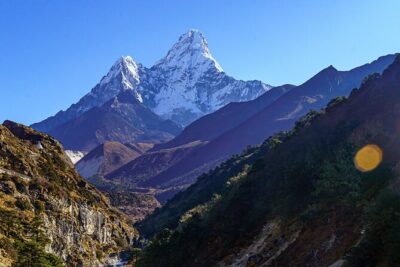
The walk from Namche to Tengboche takes about five hours. The trail rises and falls through the Khumbu, with views of peaks such as Ama Dablam and Thamserku.
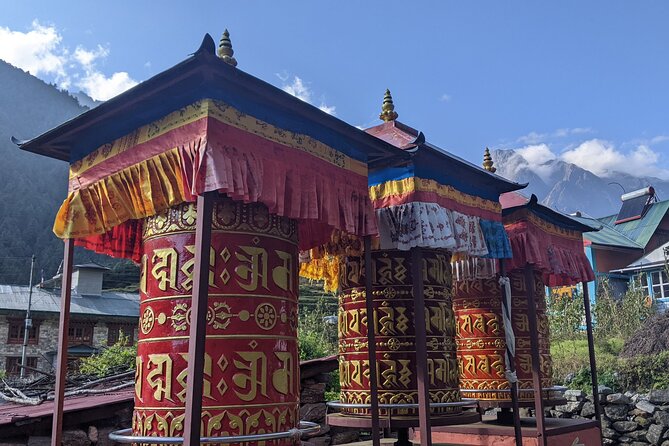
Tengboche is known for its monastery, and the setting is one of the cultural highlights of the route. This is not just a place to stop for a photograph. It gives you a direct connection to Sherpa Buddhist life, which is a major part of the region’s character.
The day also shows why this trek is more than a mountain challenge. You pass villages, mani stones, prayer flags, and working mountain communities. At the same time, the route is becoming higher and colder, and tea-house rooms are likely to feel more basic than those in Namche.
Day 6: Walking toward Dingboche
The route continues along the Imja Khola and crosses a bridge before reaching Orsho, where the trail divides toward Pheriche and Dingboche. The walk takes about four to five hours.
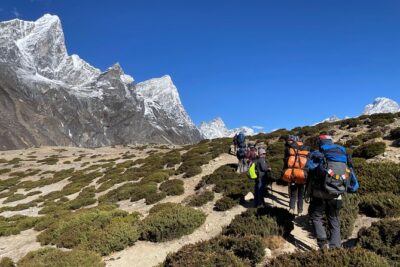
Dingboche sits at a high elevation, so this is another day to control your pace. The scenery opens up as you move deeper into the Khumbu, with rocky slopes, broad valleys, and large peaks surrounding the route.
The schedule calls for dinner and breakfast in the tea houses, with lunch included as well. Food is chosen from the lodge menu, and the company describes it as hygienic. You should expect practical trekking food, not a wide restaurant menu. Personal snacks and beverages are extra.
Day 7: The second acclimatization day
Dingboche provides the trek’s second planned acclimatization day. You remain active with a side excursion rather than pushing farther toward Base Camp.
This pause matters because the next few days take you above 4,000 meters and then much higher. You may feel perfectly fine in the morning and slower by afternoon. That is normal at altitude. The important thing is to follow your guide’s advice and report symptoms early.
This is also a day to appreciate the village itself. Dingboche is a high mountain settlement surrounded by dramatic stone and snow peaks. The air is thin, the nights are cold, and comfort is limited. The extra day improves the schedule, but it does not remove the physical demands.
Day 8: Thukla and the memorial area
After Dingboche, the trail leads toward Thukla. The walk offers wide Himalayan views and brings you into a much more severe setting, with glacial valleys and exposed high-altitude terrain.
Thukla is associated with memorials to climbers and Sherpa workers who died in the Everest region. It is a quiet, serious stop on the trail, and it adds human meaning to a journey often presented only through mountain scenery.
You then continue toward Lobuche, the usual staging point before Base Camp. The exact overnight arrangement should be confirmed, since the provided schedule describes the route but does not spell out every lodge name. At this height, tea-house beds are basic and demand often exceeds supply during busy seasons.
Day 9: Reaching Everest Base Camp
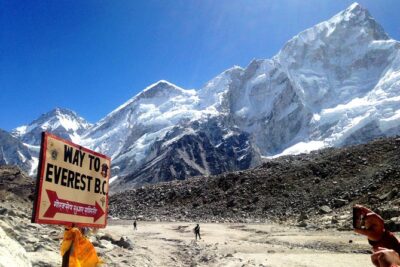
This is the trek’s main goal. From the high settlement near Lobuche, you walk over rocky ground toward Everest Base Camp at 5,364 meters.
The route is not a simple stroll to a viewpoint. You are walking beside the Khumbu Glacier, and the trail can be uneven, windy, and tiring. The famous Base Camp area changes with the climbing season, so the visual experience can vary. You may see expedition activity at some times of year, while at others the glacier and surrounding peaks dominate the scene.
Your guide supports the group through this demanding day, and the company includes the park and local permits needed for the route. Give yourself time at Base Camp, but do not treat reaching it as the end of the effort. You still need to walk back to the lodge at high altitude.
Day 10: An early climb to Kala Patthar
You start early for Kala Patthar, the highest point of the trip at 5,545 meters. The climb is short in distance compared with the full trek, but the altitude makes each step count.
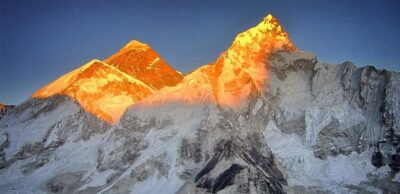
Kala Patthar is valued for its mountain view rather than for the summit itself. From the top, you can look toward Everest, Lhotse, Nuptse, and the surrounding Khumbu peaks. Early light is the reason for the pre-dawn start, though the cold can be severe.
The schedule lists about 20 minutes at the stop and no admission fee. In practice, your total morning will include the climb, time at the top, and the walk down. Keep your expectations realistic. Cloud and wind can affect the view, and no guide can control mountain weather.
Days 11 and 12: A quieter route through Phorste and Mong Danda
After the high point, you descend toward Pangboche and then take a less crowded route toward Phorste. This change is a welcome touch. You see different views of Ama Dablam, Thamserku, and Tengboche Monastery instead of repeating every step of the ascent.
The next day begins with a descent to the river coming from Gokyo Lake, followed by the trail toward Phorste Thanga and Mong Danda. This section adds variety, but it should not be mistaken for an easy walk. Descending can be hard on tired knees, and the route still includes uphill sections.
The quieter trail is one of the tour’s best details for people who want more than a quick out-and-back trek. It gives you another look at the Everest region and a less repetitive return. Ask the operator for the expected walking hours on these two days, since the schedule provides route names and elevations but not full distances.
Day 13: Returning to Lukla
You retrace part of the lower route through Toktok, Phakding, Ghat, and Cheeplung before the final climb to Lukla. The last 200 meters rise uphill into town, a fitting reminder that the trek is not finished until you reach the airstrip.
The evening in Lukla is set aside to relax and mark the end of the walking section. The company provides porters at a ratio of one for two people, with each porter carrying 20 kilograms total, or 10 kilograms per client. Pack carefully and stay within the domestic flight limit.
Day 14: Flying back to Kathmandu
You take the earliest possible flight from Lukla to Kathmandu or Ramechhap, depending on the operating plan. Once back at the hotel, the rest of the day is free.
This buffer is useful. It gives you time to rest after the trek and leaves some separation before your international departure. Still, because flights in the region depend on weather, do not build an important same-day international connection around the domestic flight without checking the operator’s advice.
The farewell dinner is included, as is an achievement certificate. Those are small touches, but they give the group a pleasant way to close the trek.
Day 15: Airport transfer and departure
On the final day, a Life Himalaya representative transfers you to Tribhuvan International Airport according to your flight schedule. The trip ends here, with no extra sightseeing or meals included.
What the $1,890 price really covers
At $1,890 per person, the value is strongest if you need a full-service trek rather than a stripped-down guiding package. The price includes:
- Domestic flights to and from Lukla
- Private transportation
- English-speaking licensed guide
- Assistant guide for groups of five or more
- Porters, with one porter for two people
- National park, local area, and TIMS permits
- Three meals on most trekking days
- Tea-house accommodation
- Sleeping bag, down jacket, and hiking poles
- Trail map and achievement certificate
- Farewell dinner
You still pay for international flights, Nepal visa costs, Kathmandu lunches and dinners, personal snacks, drinks, tips, extra nights, hot showers, and battery charging. Travel insurance covering trekking up to 6,000 meters is listed separately at $200 per person.
The price therefore looks fair for the included domestic flights, permits, equipment, guide, porter, and meals. It is not an all-inclusive luxury trek. Tea houses are described as clean and comfortable, but high-altitude lodging remains simple, and paid extras can add up.
Who should book this trek
I would recommend this trip to someone with strong physical fitness who wants a private, guided route with the main logistics handled. It suits you if you want the classic Everest trail, Sherpa culture, two acclimatization days, and the added variety of the Phorste return route.
It is less suitable if you want hotels, reliable hot showers, easy internet, or a relaxed walking holiday. You need to accept cold rooms, limited charging, long days, changing flight schedules, and the possibility that altitude affects your plans.
The company’s guide team has included people such as Raj, Suren, Sonam, Sagar, Ram, Rabin, Jal, Ganesh, Vijay, and Teeras. Specific staff assignments can change, but the package is built around local guides and porters rather than a large commercial group. That is a useful fit for anyone who values personal support and local trail knowledge.
Should you book it?
Book this trek if you want a well-supported 15-day route to Everest Base Camp and can handle the physical demands of high altitude. The strongest reasons are the two acclimatization days, included flights and permits, porter support, supplied gear, and the quieter return through Phorste and Mong Danda.
Before paying, confirm the exact daily walking hours, your assigned guide, the Kathmandu or Ramechhap flight plan, and the extra-night cost if weather delays you. Cancellation is free up to 24 hours before the start time, while weather cancellations offer a new date or full refund. If those details work for you, $1,890 is a sensible price for a serious Himalayan trek with the major arrangements already in place.
FAQ
How long is the Everest Base Camp trek?
The trek lasts approximately 15 days, including arrival and departure days in Nepal, flights to and from Lukla, two acclimatization days, the walk to Everest Base Camp, the Kala Patthar climb, and the return route.
What altitude does Everest Base Camp reach?
Everest Base Camp is at 5,364 meters. Kala Patthar, the highest point on the itinerary, reaches 5,545 meters.
Are flights to and from Lukla included?
Yes. Flights from Kathmandu or Ramechhap to Lukla and from Lukla back to Kathmandu or Ramechhap are included for the group and staff. Flights require suitable weather.
What equipment is provided?
The package includes hiking poles, sleeping bags, and down jackets. These items must be returned after the trek.
Are meals included?
Breakfast, lunch, and dinner are included during the trekking portion as specified in the package. Lunch and dinner in Kathmandu, personal snacks, and beverages are not included.
Is this a private tour?
Yes. Only your group participates. An English-speaking, experienced, licensed guide is included, and groups of five or more receive an assistant guide.
Just added around Everest Region
- Day Tour to Everest Base Camp By Helicopter★ 5.0 · 16 reviews
- Kathmandu To Lukla By Helicopter Flight★ 5.0 · 6 reviews
- Luxury Everest Base Camp Trek – 11 Days★ 5.0 · 9 reviews
- Everest Base Camp Tour & View Point by Helicopter from Katmandu★ 5.0 · 3 reviews
- Everest base camp helicopter tour with Guarenteed Landing★ 4.0 · 7 reviews
- Everest base camp flight over by Helicopter from Kathmandu★ 5.0 · 10 reviews
- Everest Base Camp Helicopter Tour Stop at Hotel Everest View.★ 5.0 · 17 reviews
- Everest Base Camp Helicopter Tour★ 5.0 · 24 reviews
Everest Base Camp Treks, compared.
Everest Base Camp Trek with Helicopter Return from Gorakshep to Lukla
Read our review →Browse the lists this tour appears in