
Reviewed · MANASLU TREKS
Dancing in the Manaslu Circuit Trek
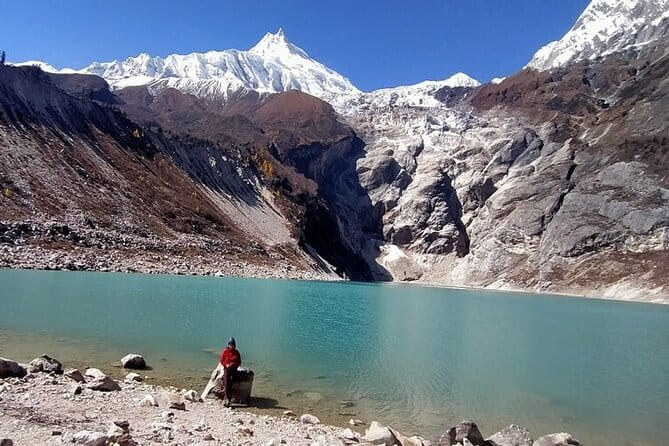
Mount Manaslu rises over a quieter corner of Nepal, where the trail follows the Budhi Gandaki River from warm river valleys to icy high passes. The Larkya La crossing at 5,100 meters is the big prize, but the Tibetan-style villages, monasteries, Mani walls, prayer flags, and small family-run lodges give the trek its character.
I like the slow change in scenery and the personal service from Master Himalaya. Guides such as Bijaya, Tenji, Lakpa, and Krishna have helped make recent departures feel friendly and well organized. I also like that meals, permits, rooms, road transfers, and a first aid kit are bundled into the $1,390 price.
The catch is the schedule. Several days are listed at about 12 hours, and the final crossing can be hard even for fit hikers. You also need to arrange insurance and pay separately for a porter, drinks, hot water, laundry, and other personal costs.
Key points to know before booking
- Larkya La reaches 5,100 meters: The highest and hardest part comes late in the trek, after a dedicated acclimatization day near Samagaun.
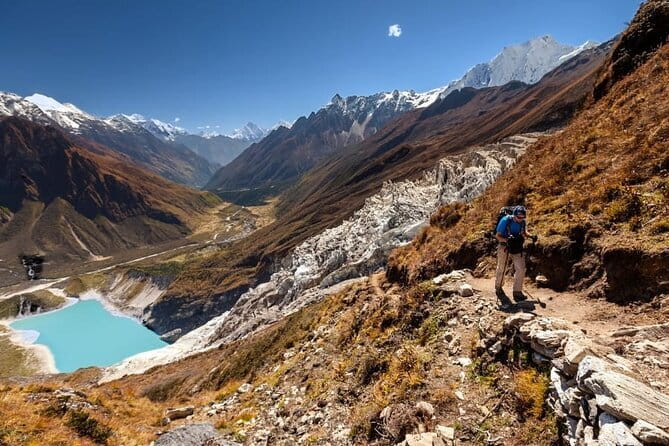
- The route changes dramatically: You move from green hills and hot springs to glaciers, icy streams, frozen lakes, and high mountain passes.
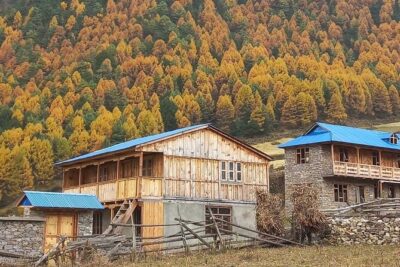
- Tibetan-influenced culture shapes the trek: Expect Mani walls, prayer flags, monasteries, stone houses, and local traditions rather than a nonstop parade of mountain views.
- The $1,390 package covers a lot: Meals, permits, government taxes, guide, twin rooms, and most ground transport are included.
- Porter service is extra: You can hire a porter in Kathmandu or at Sotikhola, so budget for that before you arrive.
- This is a private trip: Only your own group takes part, which allows a more personal pace and easier communication with the guide.
Why Manaslu feels different from Nepal’s busier routes
The Manaslu Circuit circles Mount Manaslu, Nepal’s eighth-highest peak, through a restricted region with fewer visitors than the country’s best-known trekking routes. That access control matters. You get a trail experience shaped more by villages, river crossings, monasteries, and mountain work than by large groups moving from lodge to lodge.
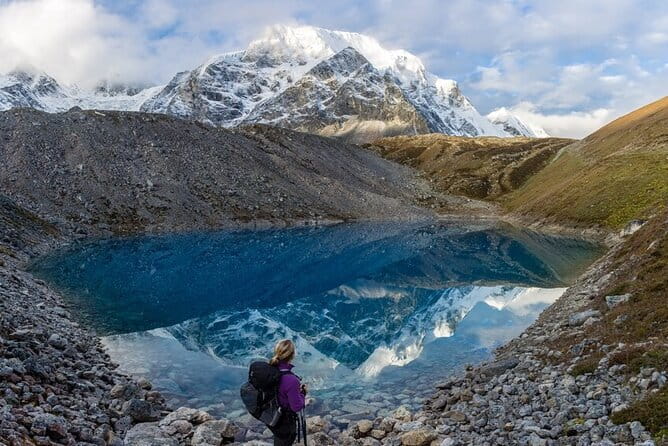
The route also gives you a remarkable change in altitude and climate. At the start, you pass green hillsides and subtropical river country. Near Samagaun, the air is thin and the views turn stark. By Larkya La, you are walking beside glaciers and frozen lakes.
I especially like the cultural side of this trek. Villages such as Jagat, Prok, Deng, Namrung, Shyala, and Samagaun have stone homes, Mani walls, monasteries, and strong Tibetan influence. The mention of music and dance is not a promise of a scheduled performance every day, but the trip is designed to connect you with local traditions in a way that a faster, more commercial route may not.
More Manaslu Circuit treks:
- Manaslu Circuit Trek (15 Days)
★ 5.0 · 50 reviews - 16 Day Private Manaslu Circuit Trek from Kathmandu
★ 5.0 · 42 reviews - Manaslu Circuit Trek 13 Days
★ 5.0 · 30 reviews
Day 1: The long road to Maccha Khola
Your first day is mostly a road journey from Kathmandu toward Maccha Khola, passing rural villages and green hillsides. The listed travel time is about 12 hours, and you may change vehicles at Soti Khola before continuing toward Maccha Khola.
This is not a gentle sightseeing transfer. Roads in the region can make a long day feel longer, and the vehicle change adds another practical step. Still, the drive gets you quickly from Kathmandu’s urban setting into the hill country where the trek begins.
The package includes a deluxe bus transfer from Kathmandu to Sotikhola. The final onward transport is part of the route arrangement, but the exact vehicle setup can vary. Keep a small day bag close with water, snacks, medication, and anything you need during a full day on the road.
Day 2: Tatopani hot springs and stone houses in Jagat
After breakfast in Maccha Khola, you follow the Budhi Gandaki River toward Jagat. The route passes Tatopani, a natural hot spring, before entering the restricted trekking area.
Jagat is a memorable first village stop. Its stone houses give it a sturdy rural look, and the settlement marks a clear change from the road approach to the more remote trail ahead. You will likely notice that the river remains a constant companion, sometimes close below the path and sometimes farther away in the gorge.
The schedule again lists about 12 hours. That makes this a demanding early day, especially after the long drive on Day 1. You should arrive with a moderate level of physical fitness and be ready for a steady, full day rather than a short introductory walk.
Day 3: From Jagat toward Deng
The itinerary labels the stop as Salleri but describes the trek from Jagat to Deng. That is worth checking with the operator before departure, since the named overnight place and the route description do not match perfectly.
The important part is the scenery and direction. You continue along the Budhi Gandaki corridor, moving through changing river country and village sections toward Deng. The route begins to feel more remote, and the days become less about reaching a famous viewpoint and more about following the valley through a series of settlements.
Again, allow around 12 hours as the stated duration. That figure may include breaks and the full day in the mountains, but you should not treat it as a casual walking estimate.
More trekking days out of Kathmandu:
- Nagarkot Sunrise View and Day Hiking from Kathmandu
★ 5.0 · 471 reviews - Kathmandu: Nagarkot Sunrise View & Morning Hike with Lunch
★ 4.9 · 188 reviews - Kathmandu: Nagarkot Sunrise and Hike Tour to Changu Narayan
★ 4.7 · 151 reviews - Langtang Valley Trek
★ 5.0 · 140 reviews
Day 4: Prok village, Mani walls, and forest
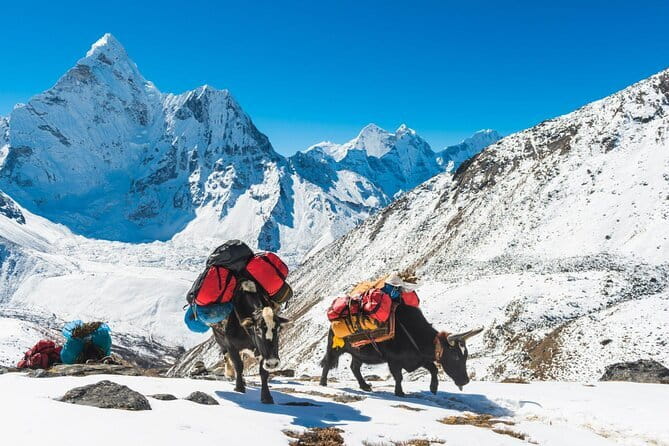
The route toward Namrung includes Prok village, Mani walls, and forest. This is one of the days when the cultural details become as important as the scenery.
Mani walls are built from stones carved with Buddhist prayers. Prayer flags and monasteries add a clear Tibetan Buddhist presence, while the forest offers a change from the exposed river stretches. Your guide can help explain the symbols and customs, which is one reason an English-speaking local guide adds real value here.
The package includes a government-certified guide who speaks English fluently. The guide is not only there to lead the route. A good guide can help you understand the villages, communicate at lodges, manage timing, and watch for signs that the altitude is affecting you.
Day 5: High mountain views around Shyala
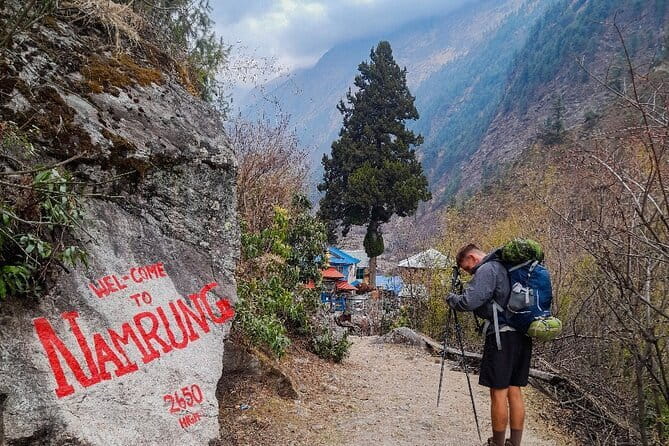
From Namrung, you trek toward Shyala. The scenery becomes more open and dramatic as the route gains altitude, with the mountains taking a larger role in your day.
Shyala is a useful transition point. You are no longer simply walking through a river valley. The air is colder, the settlements are more exposed, and the surrounding peaks feel closer. The itinerary gives another 12-hour day, so pace matters.
I would use this stage to settle into a steady walking rhythm. You may be excited by the increasingly grand views, but saving energy is sensible because the most demanding altitude work still lies ahead.
Day 6: Samagaun and Pungeyn Gumpa
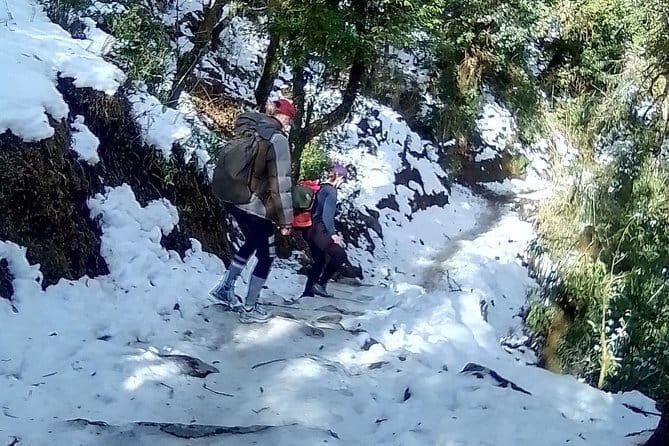
The walk from Shyala to Samagaun is one of the major highlights. Samagaun is an important high-altitude village and a natural base for exploring the area around Manaslu.
The itinerary includes a hike to Pungeyn Gumpa, adding a cultural and spiritual stop to the day. Monasteries and prayer sites give the route a quieter tone. You may also see how high-altitude communities live in a setting where movement, weather, and supplies are more difficult.
The day is again listed at about 12 hours, so do not assume that reaching Samagaun ends the day. The extra hike may be short or long depending on the group and local conditions, and your guide should confirm the plan.
Day 7: Acclimatization near Manaslu
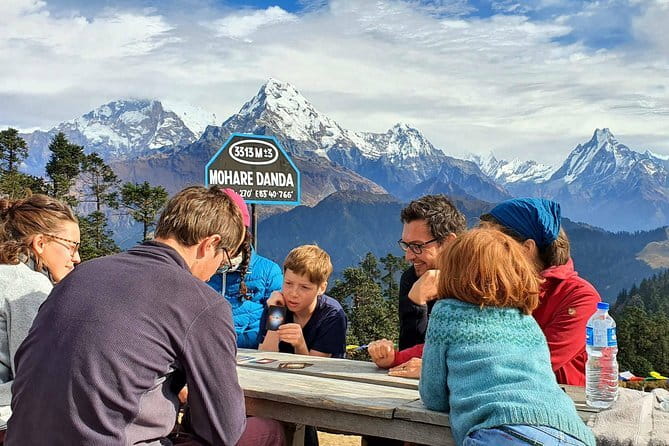
Day 7 is set aside for acclimatization near Manaslu. You may take an optional hike to Manaslu Base Camp and Birendra Lake.
This rest day is one of the most valuable parts of the schedule. Larkya La comes later at 5,100 meters, and giving your body time to adjust is safer and more enjoyable than forcing the ascent without a pause. You can make the day active without treating it as a race.
The optional hike gives you a chance to see more of the high country around Samagaun. If you are feeling tired, staying closer to the village may be the wiser choice. The guide can help you judge the day based on how you are adapting.
Days 8 and 9: Glaciers, icy streams, and Dharmasala
The next two itinerary entries describe the approach to the high pass. One section mentions descending toward the Budhi Gandaki River, crossing a wooden bridge, and seeing the Larkya Glacier. Another describes icy streams, Larke Bazaar, monasteries, Mani walls, and the climb toward Dharmasala.
The order of these descriptions is not perfectly clear, so confirm the overnight stops and walking plan with Master Himalaya before you set out. The route itself is clear enough: you are entering colder, more exposed terrain and preparing for the pass crossing.
Dharmasala is important because it is the final staging point before Larkya La. The walk can feel stark and demanding, with glaciers and high ridges replacing forest. Your included meals and room arrangement simplify the basic logistics, but you still pay separately for mineral water, hot water, phone charging, and similar extras.
Day 10: Crossing Larkya La at 5,100 meters
This is the day that defines the trek. You climb toward Larkya La through challenging terrain, with views of Cho Danda, Larkya Peak, and four frozen lakes.
At 5,100 meters, the pass is not a simple photo stop. Cold, altitude, uneven ground, and the length of the day all matter. Your guide’s judgment becomes especially important, and you need to follow a steady pace rather than sprinting ahead for a view.
The reward is a remarkable high mountain setting with the Larkya Glacier and surrounding peaks. After the pass, the route begins to descend, but fatigue can remain a problem. Keep warm layers, gloves, water, and snacks easy to reach. You should also have travel insurance that covers trekking at the required altitude, since insurance is not included.
Day 11: Forest and river country on the way to Dharapani
After the pass, the route descends through greener forest toward Dharapani. You cross the Dudh Khola and pass through Karche Village.
This is a welcome change after the exposed high country. The descent gives your lungs some relief, but downhill walking can still be hard on tired knees. Poles may be useful, although the tour information does not specify equipment rental or a gear list.
Dharapani is the final trekking stop. Twin-sharing private rooms are included throughout the trek, subject to the available local accommodation. The rooms give you a clear basic arrangement, but this is still a remote mountain route, not a hotel-based holiday.
Day 12: Jeep to Besisahar, then back to Kathmandu
The final day begins with a shared jeep from Dharapani to Besisahar, followed by a roughly five-hour drive to Kathmandu. The listed total is about eight hours.
Shared transport keeps the package price down, but it means you will not have a private vehicle for this part of the journey. The bus transfer from Besisahar to Kathmandu is included, as is the initial deluxe bus arrangement from Kathmandu toward Sotikhola.
A farewell dinner is also included after the trek. That is a pleasant way to mark the end of a physically demanding circuit, especially for a private group that has spent nearly two weeks moving together.
What the $1,390 price really covers
At $1,390 per person, the package offers solid value for a 12-day private trek. You receive breakfast, lunch, and dinner during the route, required permits and government taxes, a certified English-speaking guide, twin-sharing rooms, transport from Kathmandu to Sotikhola, a shared jeep to Besisahar, the onward transfer to Kathmandu, a first aid kit, and a farewell dinner.
The main extra cost is a porter. You can hire one in Kathmandu or at Sotikhola. Since porter service is not included, ask about the current rate and luggage arrangement before booking. You should also set aside money for bottled or mineral water, hot water, phone charging, laundry, and personal purchases.
The price works best if you value support and convenience but do not need luxury. It is not an all-inclusive holiday. You are paying for a properly arranged trek with food, permits, guide service, and transport, while handling insurance, porter hire, tips, and personal spending yourself.
The guide and group experience
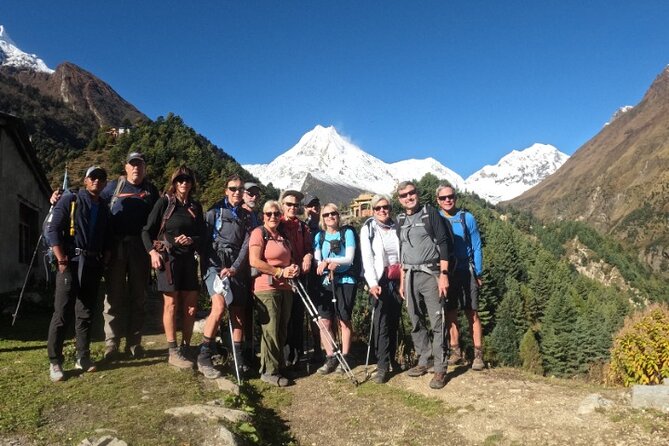
This is a private activity, so only your own group takes part. That can make a real difference on a demanding route. You can discuss pace, rest days, and optional hikes more easily than you might in a large mixed group.
Guide assignments vary, but Bijaya, Tenji, Lakpa, Laajin, and Krishna are names associated with recent departures. The available feedback consistently highlights attentive care, clear organization, local information, and warm relationships between guides, porters, and hikers. One family group particularly valued the time spent talking with guide Tenji and porter Nema, while another praised Bijaya for sharing useful information about Himalayan life.
I would still confirm your guide’s name, porter arrangements, and communication plan before leaving Kathmandu. The company has been praised for staying in touch through WhatsApp and for helping with preparation, insurance checks, gear, and even bag transport in one case. Those details are useful signs of hands-on support, but you should confirm exactly what is included for your departure.
Who should book this trek?
You should consider this trip if you want a quieter Himalayan route, enjoy long walking days, and care about village life as much as mountain views. It suits hikers with moderate fitness who are ready for altitude, cold, basic lodges, road transfers, and a demanding pass day.
It may not suit you if you want short walks, comfortable hotels, flexible sightseeing, or a soft adventure with little physical strain. The 12-hour days deserve serious attention, even if your usual fitness level is good.
You also need to be comfortable with uncertainty in a remote mountain region. The trek depends on good weather and a minimum number of participants. If poor weather or insufficient numbers force cancellation, you are offered another date or a full refund. Standard cancellation allows a full refund if you cancel at least 24 hours before the start time. Inside that window, the payment is not refunded.
Should you book Dancing in the Manaslu Circuit?
I would book it if you want Mount Manaslu, Tibetan-influenced villages, a quieter trail, and a properly supported crossing of Larkya La. The included meals, permits, guide, rooms, and transport make the $1,390 price reasonable, especially for a private group.
Before paying, ask three practical questions: Which guide will lead your departure? What are the exact overnight stops on Days 3, 8, and 9? What is the current porter cost? If the answers are clear and your insurance covers high-altitude trekking, this is a strong choice for a serious but culturally focused Himalayan trek.
FAQ
Where does the Manaslu Circuit Trek start and finish?
The activity starts at P897+443 in Kathmandu, Nepal, and ends back at the same meeting point after the return from Besisahar.
How long does the trek take?
The experience lasts approximately 12 days, including road transfers between Kathmandu, Sotikhola, Dharapani, Besisahar, and Kathmandu.
What is the highest point on the trek?
The route crosses Larkya La at approximately 5,100 meters.
Is an acclimatization day included?
Yes. Day 7 is set aside for acclimatization near Manaslu, with an optional hike to Manaslu Base Camp and Birendra Lake.
Are meals included?
Yes. Breakfast, lunch, and dinner are included during the trek. The package lists 11 breakfasts, 12 lunches, and 12 dinners, including the farewell dinner.
Is transportation included?
Yes. The package includes the Kathmandu to Sotikhola transfer, shared jeep transport from Dharapani to Besisahar, and the Besisahar to Kathmandu transfer.
Is a porter included?
No. Porter service is not included. You can hire a porter in Kathmandu or at Sotikhola.
Do I need travel insurance?
Yes. You are responsible for arranging your own travel insurance. The tour information specifically notes that insurance is not included.
Just added around Kathmandu
- Traditional Momo Making Class★ 5.0 · 10 reviews
- Manthali Airport (Ramechhap) To Kathmandu – Transport Service★ 4.5 · 11 reviews
- Women Empowerment Project(Nepali cooking class & jewelry workshop★ 5.0 · 15 reviews
- Amazing 1 Day Trekking Experience in Kathmandu Nepal★ 5.0 · 24 reviews
- Walking tour of Kathmandu with awesome local guides★ 5.0 · 4 reviews
- Walking tour of real Kathmandu through back streets.★ 5.0 · 3 reviews
- Private Manaslu Circuit Trek at Himalayas★ 5.0 · 3 reviews
- Walking Street Food Tour in Kathmandu★ 5.0 · 111 reviews
Manaslu Treks, compared.
16 Day Private Manaslu Circuit Trek from Kathmandu
Read our review →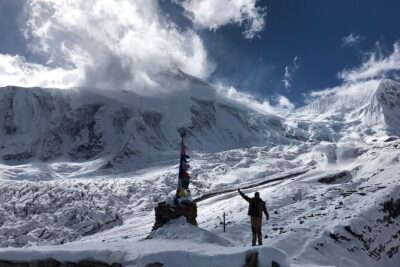
10 Days Manaslu Circuit Trek in Larke La Pass
Read our review →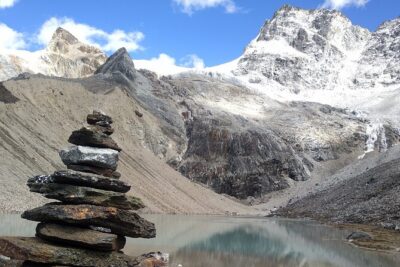
Manaslu Circuit Trek 8th Highest in the World
Read our review →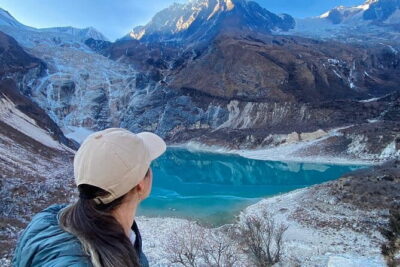
Manaslu Circuit Trek to the Beauty of 8th Highest Mountain
Read our review →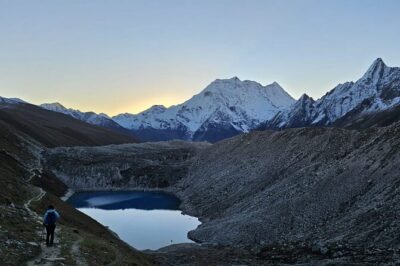
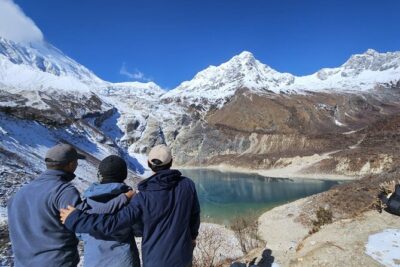
Manaslu Circuit Trek – 14 days of Himalayan Adventure
Read our review →Browse the lists this tour appears in