
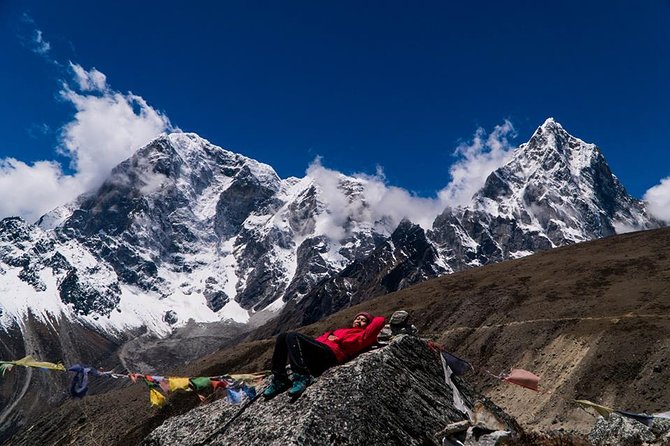
Reviewed · EVEREST BASE CAMP TREKS
Everest Base Camp trek- 11 days
The real prize here is not simply reaching Everest Base Camp. It is the steady change from Kathmandu streets to high Sherpa villages, Buddhist monasteries, glacier views, and the sunrise panorama from Kala Patthar. I like that flights, permits, meals, porters, and local transport are bundled together, and I like the private format, which lets your group move at its own pace.
I also like the practical support. Guide Dipu is named repeatedly in the available feedback, and the service includes airport pickup, a licensed guide, one porter for two clients, and prearranged lodging and flights. The main drawback is the schedule: 11 days is brisk, with long walking days and limited time to adjust before reaching high elevations.
Key points to know before booking
- Lukla flights begin the adventure: Your first flight connects Kathmandu with the mountain airstrip at Lukla, followed by a walk to Phakding.
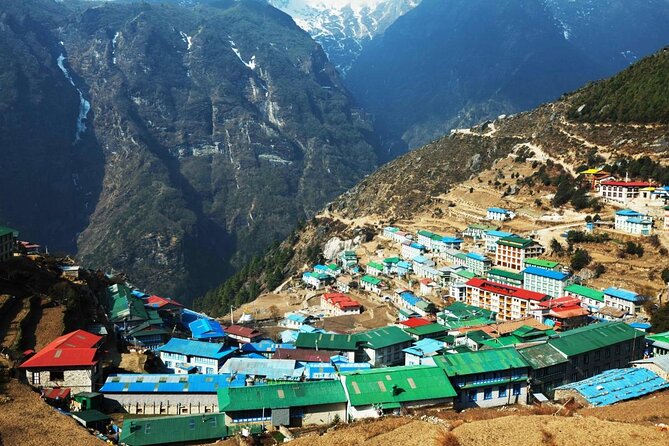
- Namche is the cultural center: You spend an acclimatization day here, with Sherpa homes, mountain views, and access to monasteries.
- The route reaches serious altitude: Everest Base Camp sits at 5,380 meters, while Kala Patthar reaches 5,545 meters.
- A private group gives you flexibility: Only your party joins the activity, with a government-licensed guide and porter support.
- The package covers most major trek costs: Flights, full-board meals, accommodation, permits, TIMS, staff costs, and airport transfers are included.
- The final return is demanding: Day 10 combines the walk from Namche to Phakding with the continued route to Lukla.
What the $1,699 price really covers
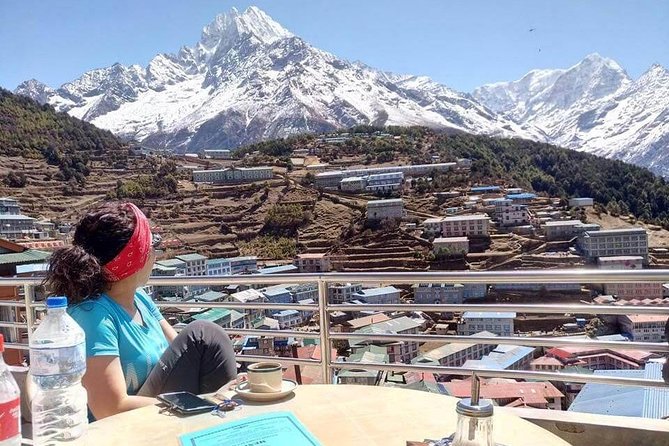
At $1,699 per person, this is a substantial package rather than a simple guided walk. The price includes the Kathmandu to Lukla and Lukla to Kathmandu flights, local airport pickup and drop-off, accommodation during the trek, breakfast, lunch, and dinner throughout the trekking period, and the ground transport needed when you return to Kathmandu.
You also get a government-licensed guide, a porter, staff insurance and salaries, local taxes, trekking equipment for the staff, a first aid kit, TIMS registration, required permits, and a farewell dinner before departure. That matters because these small charges add up quickly when arranged separately.
The package does not include your Kathmandu hotel, meals in Kathmandu, international flights, Nepal’s entry visa, travel insurance, drinks, laundry, personal equipment, tips, or souvenirs. You should budget for those items rather than treating $1,699 as your full Nepal holiday cost.
The value is strongest if you want one company to handle the moving parts. Flights to Lukla and mountain lodging are already arranged, so you can focus on walking and altitude adjustment. The price is less useful if you already have trekking gear, prefer to arrange food and lodging yourself, or want a slower schedule. Costs can be recalculated if the number of trekking days changes.
More Everest Base Camp treks:
- Everest Base Camp Trek – 14 Days
★ 5.0 · 1,499 reviews - Everest Base Camp Trekking
★ 5.0 · 485 reviews - Everest Base Camp Trekking – 13 Day
★ 5.0 · 365 reviews
Day 1: Kathmandu to Lukla, then the walk to Phakding
The day starts at 7:15 a.m. from Thamel in Kathmandu. You are picked up for the flight to Lukla, at roughly 2,850 meters, then walk to Phakding at about 2,660 meters.
The flight is part of the experience, not just transport. It quickly shifts the trip from Kathmandu to the Khumbu region. Once on foot, the route begins at a manageable pace, giving you a first look at the villages and mountain setting without immediately forcing you into the hardest walking.
The first day still requires an early start and a full day of logistics. Keep your important personal items close, and expect the schedule to depend on the flight and the trek operator’s arrangements. The supplied program gives no exact walking time, so you should ask Mount Face Nepal for the current day-by-day distances before departure.
Day 2: Phakding to Namche Bazaar
The walk to Namche Bazaar, at approximately 3,435 meters, is one of the key days of the entire route. Namche is widely known as the gateway to Everest Base Camp, and here the trip begins to feel less like a normal mountain walk and more like a high-altitude expedition.
I like this stop because it brings together scenery and daily life. You are not only walking toward Everest. You are passing through the Sherpa homeland, seeing local homes, monasteries, and a town that supports the mountain communities and expeditions of the Khumbu.
This is also the point where the altitude begins to matter more. The distance may look manageable on paper, but the increase in elevation can make the walk feel harder than expected. Let your guide set the pace, and do not judge the rest of the trek by how quickly you handled the first two days.
Day 3: Acclimatization in Namche
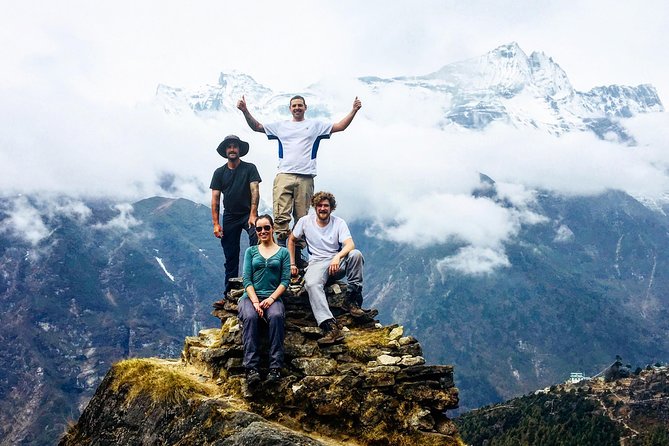
The third day is set aside for acclimatization in Namche Bazaar. That pause is important because the following days climb much higher, first to Tengboche, then Dingboche, Lobuche, Gorakshep, and Base Camp.
The schedule does not specify a particular excursion in Namche, so do not assume a fixed side trip. The value of this day is time at altitude, a chance to explore the town, and a break before the harder section of the route. You can use it to speak with your guide about the coming days, check your equipment, and organize your daypack.
Namche is also one of the better places to appreciate the human side of the trek. The program highlights Sherpa culture, monasteries, and friendly multi-ethnic communities. Those details give the route more depth than a simple march to a famous signpost.
More trekking days out of Everest Region:
- Everest Base Camp Trek -14 Days
★ 5.0 · 321 reviews - Everest Base Camp Trekking – 2025/2026
★ 5.0 · 199 reviews - Everest Base Camp Trek
★ 5.0 · 193 reviews - Everest Base Camp Trek with Helicopter Return from Gorakshep to Lukla
★ 5.0 · 161 reviews
Day 4: Namche to Tengboche
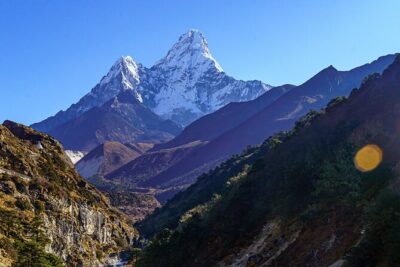
The route continues to Tengboche, around 3,890 meters. The main draw here is Tengboche Monastery, along with views toward Everest, Lhotse, Nuptse, Ama Dablam, and Thamserku.
This is one of the strongest cultural and scenic combinations on the itinerary. You get a major mountain viewpoint and a place of Buddhist worship in the same stop. The monastery gives you a reason to slow down and notice the local culture, rather than treating each village as a place to sleep.
The walk also marks a steady gain in altitude. Your guide’s role becomes increasingly important here, since the private format allows the group to discuss pace and rest stops. You should not expect city-style comfort. The accommodation is described as the best available during the trek, which means conditions may vary from one mountain lodge to another.
Day 5: Tengboche to Dingboche
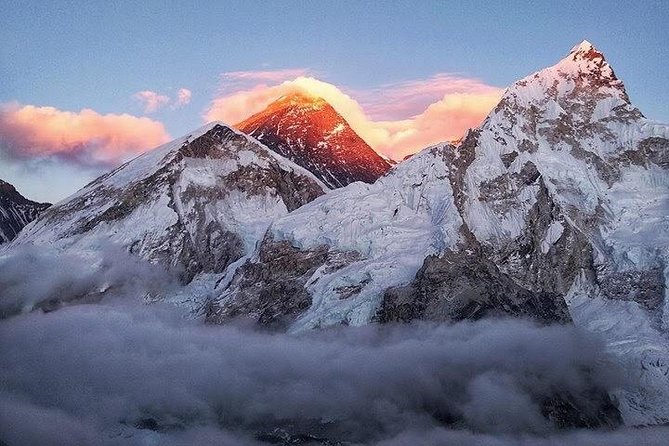
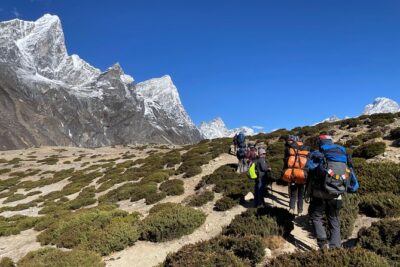
At about 4,400 meters, Dingboche is a major step upward. By this stage, the mountains feel larger and the air thinner. The route brings you closer to the high valleys and the glacial world around Everest.
The scenery is a major reason to accept the physical effort. Views of Ama Dablam, Thamserku, Lhotse, Nuptse, and the Khumbu Icefall help explain why this route has such lasting appeal. You are seeing the famous peaks from changing angles instead of viewing them from a single lookout.
There is no separate acclimatization day listed in Dingboche. That makes the pace worth examining before you book. The program labels the trek suitable for people with moderate physical fitness, but you should still prepare for long days, altitude, and basic mountain accommodation.
Day 6: Dingboche to Lobuche
The route climbs to Lobuche at approximately 4,910 meters. You are now close to the highest section of the trek, and the walking can feel more demanding even when the daily distance is not extreme.
This day is about position. Lobuche places you within reach of Gorakshep and Everest Base Camp on the following day. The mountain views remain central, but the practical job is to arrive ready for the early start and high-altitude walking ahead.
I would treat this as a day for conserving energy. Avoid carrying more than you need, listen closely to the guide, and keep warm layers accessible. The tour provides a porter, normally one for every two clients, but you still need a small daypack for water, clothing, and personal essentials.
Day 7: Lobuche to Everest Base Camp and back to Gorakshep
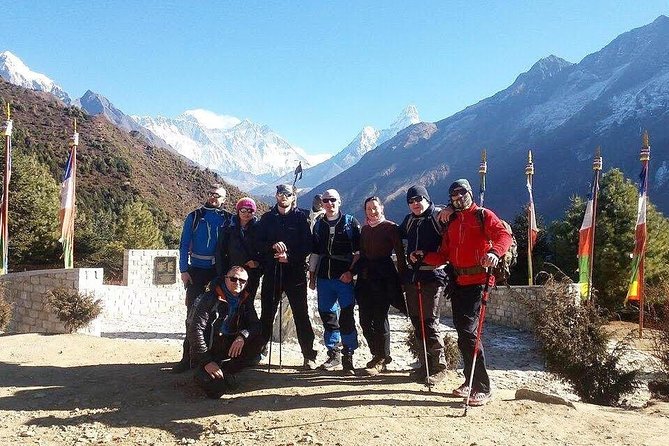
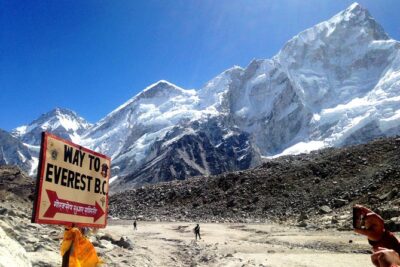
This is the central day of the trek. You walk from Lobuche to Gorakshep, continue to Everest Base Camp at about 5,380 meters, then return to Gorakshep at approximately 5,180 meters.
Base Camp is the headline destination, but it is not the best point for a wide sunrise view of Everest. The appeal here is being at the staging area for expeditions and seeing the Khumbu Icefall region. Conditions and exact views can change, so keep your expectations focused on the full setting rather than one perfect photograph.
The out-and-back structure makes this a long, tiring day at high elevation. You do not sleep at Base Camp. That return to Gorakshep is built into the schedule, so you need enough energy for the walk back after reaching the main goal.
Day 8: Gorakshep to Kala Patthar, then Pheriche
The early climb to Kala Patthar, listed at about 5,545 meters, is the visual high point of the trip. The itinerary specifically highlights an early morning sunrise view over the snowcapped peaks, with Everest, Lhotse, Nuptse, Ama Dablam, and Thamserku among the major sights.
This is the place for the broad mountain panorama. If you want a strong view of Everest itself, Kala Patthar is likely to be more rewarding than Base Camp. The early start can be cold and tiring, but the timing is part of what makes the viewpoint special.
After Kala Patthar, you descend to Pheriche at around 4,320 meters. That descent is welcome after the high point, though the day still combines an early climb with a long walk down. This is another reason to pack light and follow the guide’s pace.
Days 9 and 10: Pheriche back to Namche and Lukla
Day 9 takes you from Pheriche to Namche Bazaar. The route retraces familiar ground, but the lower elevation should make the walking feel more manageable after the high section.
Day 10 continues from Namche to Phakding and then to Lukla, listed at roughly 2,835 meters. This is a particularly full return day. The itinerary combines two familiar sections into one, so you should not treat the final walking day as an easy stroll.
The benefit is efficiency. You return to Lukla in time for the flight connection on Day 11, rather than adding another trekking day. The cost is comfort. If you want a slower descent, ask in advance how the company would recalculate the price and schedule for additional days.
Day 11: Lukla to Kathmandu
The final flight returns you to Kathmandu, and the activity ends back at the Thamel meeting point. Airport drop-off is included, which is useful after the trek, when you may be tired and carrying dusty gear.
The plan is neat and easy to follow, but flight schedules in mountain regions can affect timing. The supplied details do not promise a specific departure hour or a backup day. If you have an international flight immediately after returning to Kathmandu, ask Mount Face Nepal how they handle delays and schedule changes before you commit to tight connections.
Guides, porters, and the private format
The private setup is one of the strongest practical features. Only your group participates, so you are not locked into the pace of a large party. That can help on steep sections, during rest stops, and on days when someone needs more time.
Guide Dipu is specifically named in the feedback supplied for this experience. The comments connected with him describe steady communication, help during the hike, and good conversation. Names are spelled in several ways in the supplied material, so confirm your guide’s name and contact details before departure.
A porter normally carries baggage for two clients. That is valuable on a trek where every extra kilogram matters, but you should still pack responsibly. Tips are not included, and the amount is left to your judgment.
Food, lodging, and what you still need to pay for
Breakfast, lunch, and dinner are included during the trekking period. Drinks are not included, including hot, soft, cold, and alcoholic drinks. Carrying money for beverages is essential, since those purchases can become a regular extra cost at mountain lodges.
Accommodation is described as the best available during the trek, not as luxury lodging. The exact properties and room arrangements are not provided. Expect the standard of accommodation to vary along the route, and ask about room sharing, heating, charging, and shower arrangements before leaving Kathmandu.
You need to bring or rent your personal trekking equipment. Travel insurance is also your responsibility, as are the Nepal visa, international airfare, Kathmandu hotel, Kathmandu meals, laundry, shopping, gifts, and souvenirs.
Who should choose this 11-day trek?
I would recommend it to someone who wants the full Everest Base Camp route but prefers a company to handle flights, permits, meals, porters, and mountain lodging. It also suits a pair or small private group that values direct contact with a guide rather than joining a large departure.
You should be comfortable with a demanding, high-altitude walking holiday. The stated requirement is moderate physical fitness, but the schedule includes elevations above 5,000 meters and a compact return. If you want generous rest days, a gentler pace, or more time in each village, ask about extending the trek before booking.
The route is also a good match if culture matters to you. Namche, Tengboche Monastery, Sherpa communities, and the multi-ethnic character of the region are not side notes. They are part of what makes the journey meaningful.
Should you book it?
Book this trek if you want a well-supported, private route to Everest Base Camp and Kala Patthar at a price that includes most of the major costs. The strongest points are the organized Lukla flights, full-board trekking meals, porter support, licensed guide, and cultural stops at Namche and Tengboche.
Think twice if you need a slow itinerary or dislike uncertain mountain transport. The 11-day plan is efficient but demanding, especially around Lobuche, Gorakshep, Base Camp, and the long return to Lukla. Before paying, confirm the current flight arrangements, accommodation standards, guide assignment, equipment expectations, and the cost of adding extra days.
The cancellation terms are straightforward: cancel at least 24 hours before the experience begins for a full refund. Changes or cancellations inside that window are not accepted or refunded.
FAQ
Where does the Everest Base Camp trek begin?
The activity begins at 7:15 a.m. from Thamel in Kathmandu, Nepal. Pickup and drop-off to the local airport for the Lukla flight are included.
How long is the trek?
The experience lasts approximately 11 days, including the flights from Kathmandu to Lukla and from Lukla back to Kathmandu.
Is the tour private?
Yes. Only your group participates in the activity.
What meals are included?
Breakfast, lunch, and dinner are included during the trekking period. Lunch and dinner in Kathmandu are not included.
Are flights to Lukla included?
Yes. The package includes airfare from Kathmandu to Lukla and from Lukla to Kathmandu.
Is accommodation included?
Yes. The package includes the best available accommodation during the trek. A hotel in Kathmandu is not included.
Is a porter provided?
Yes. The usual arrangement is one porter for two clients. Porter salary, insurance, food, drinks, accommodation, equipment, transportation, and local taxes are included.
What is not included in the price?
Travel insurance, Nepal’s entry visa, international airfare, airport departure tax, Kathmandu hotel, Kathmandu meals, drinks, personal equipment, laundry, shopping, souvenirs, and tips are not included.
Just added around Everest Region
- Day Tour to Everest Base Camp By Helicopter★ 5.0 · 16 reviews
- Kathmandu To Lukla By Helicopter Flight★ 5.0 · 6 reviews
- Luxury Everest Base Camp Trek – 11 Days★ 5.0 · 9 reviews
- Everest Base Camp Tour & View Point by Helicopter from Katmandu★ 5.0 · 3 reviews
- Everest base camp helicopter tour with Guarenteed Landing★ 4.0 · 7 reviews
- Everest base camp flight over by Helicopter from Kathmandu★ 5.0 · 10 reviews
- Everest Base Camp Helicopter Tour Stop at Hotel Everest View.★ 5.0 · 17 reviews
- Everest Base Camp Helicopter Tour★ 5.0 · 24 reviews
Everest Base Camp Treks, compared.
Everest Base Camp Trek with Helicopter Return from Gorakshep to Lukla
Read our review →Browse the lists this tour appears in