
Reviewed · EVEREST BASE CAMP TREKS
Everest Base Camp trek 14 days
Everest Base Camp is the prize, but the real drama builds slowly: a short flight from Kathmandu to Lukla, stone villages above the Dudh Kosi, and giant peaks appearing one by one. I like that this 14-day plan includes acclimatization days, not just a mad rush uphill. I also like that the $1,380 price covers the Lukla flights, permits, lodges, meals, guide, sleeping bag, and down jacket.
The drawback is the physical demand. You’ll reach 5,550 meters at Kala Patthar, and the schedule includes several long days on rough mountain paths. The day-by-day wording also appears to have a small error around Dingboche, so I’d confirm that section with Sunrise Adventure Trek before paying.
Key points at a glance
- Kala Patthar reaches 5,550 meters: This is the high point of the trip and the place for sweeping views toward Everest.
- Namche Bazaar gets a full acclimatization day: That pause helps you adjust before the trail climbs higher.
- Lukla flights are built into the price: Airport transfers and Kathmandu to Lukla and return flights are included.
- Sleeping bag and down jacket are provided: Useful savings for anyone who does not own high-altitude trekking gear.
- Meals and lodge stays are arranged: Breakfast, lunch, and dinner are included during the trek.
- The group can reach 18 people: That keeps the price down, though it is not a small private walk.
Why the 14-day route works
I like the rhythm of this trek. You gain height in stages, pause at Namche Bazaar and Dingboche, then make the push to Base Camp and Kala Patthar. That is much more sensible than trying to hurry to the top and hoping your body catches up.
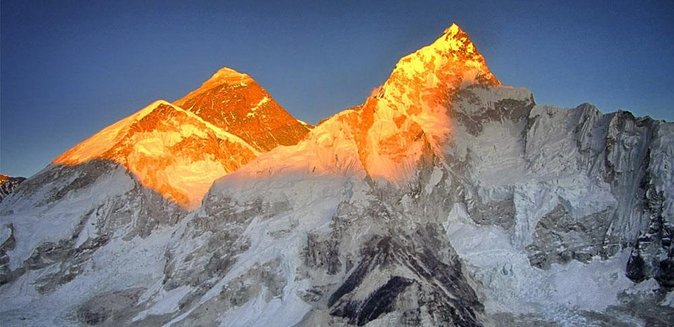
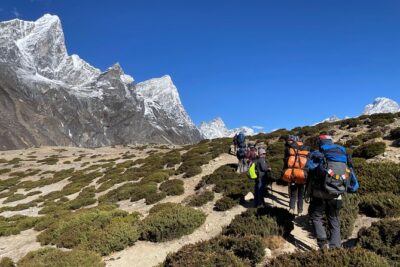
The route also gives you more than one famous viewpoint. You’ll see Ama Dablam, Lhotse, Makalu, Cho Oyu, and Everest, with villages and monasteries providing a human scale to all that stone and snow. The mountains are the headline, but the daily life of the Khumbu region is what gives the walk its character.
You should still take the word moderate with care. This is a serious trek, with several days of five to seven hours of walking and a maximum altitude above 5,500 meters. A person with average day-to-day fitness should not assume this will feel easy.
More Everest Base Camp treks:
- Everest Base Camp Trek – 14 Days
★ 5.0 · 1,499 reviews - Everest Base Camp Trekking
★ 5.0 · 485 reviews - Everest Base Camp Trekking – 13 Day
★ 5.0 · 365 reviews
Kathmandu begins the trip at ground level
Day 1 is arrival in Kathmandu. The package includes airport pickup and departure transport, plus city accommodation in a standard twin-sharing room with breakfast.
This first night is useful for more than sleep. It gives you time to meet the guide, check your equipment, and settle into the trip before the mountain section begins. The operator also provides a T-shirt and a trip achievement certificate, small touches that make sense at the start and end of a long walk.
Kathmandu meals outside breakfast are not included. Personal spending, bar bills, and entrance fees are also separate, so keep some money aside for city time and any sightseeing you add.
Lukla to Phakding: the short flight and first walk
Day 2 starts with a 40 to 45-minute flight from Kathmandu to Lukla. From there, you walk to Phakding, a three to four-hour trek at about 2,640 meters.
This is a good opening day because the walking time is manageable. You get your first taste of the trail without being asked to climb straight into the higher country. The route introduces the steady pattern of the trek: breakfast, walking, a lodge stop, and dinner before an early night.
Flights to Lukla are a key part of the schedule, and the package includes both the outbound and return tickets. The itinerary does not state how flight delays are handled, so ask the operator about contingency plans before departure. Mountain flights can shape the whole timetable.
Phakding to Namche Bazaar, then a needed pause
On Day 3, you walk from Phakding to Namche Bazaar, reaching about 3,440 meters after five to six hours. This is one of the first demanding days, with the trail gaining height and the mountain setting becoming more dramatic.
Namche is more than a stop for the night. It is the main hub of the upper Khumbu, and Day 4 is set aside for acclimatization. That is one of the strongest parts of the schedule. You are not simply sitting idle. The pause gives your body time to adjust before the route moves toward Tengboche and Dingboche.
The plan does not give a detailed activity list for this acclimatization day, so ask your guide what the group will do. You may find the day includes a short walk and time to rest, but the exact program is not specified.
More trekking days out of Everest Region:
- Everest Base Camp Trek -14 Days
★ 5.0 · 321 reviews - Everest Base Camp Trekking – 2025/2026
★ 5.0 · 199 reviews - Everest Base Camp Trek
★ 5.0 · 193 reviews - Everest Base Camp Trek with Helicopter Return from Gorakshep to Lukla
★ 5.0 · 161 reviews
Tengboche brings monastery country and Ama Dablam views
Day 5 takes you to Tengboche at about 3,860 meters. The walk lasts six to seven hours, making it one of the longer days before the higher section of the trip.
Tengboche is a memorable stop because the setting combines a major mountain view with a well-known Himalayan monastery. The sight of Ama Dablam is one of the trip’s visual highlights, and the monastery gives the day a quieter, more reflective feel.
You should expect the trail to feel harder here. You are walking for much of the day at a higher elevation, and the path can be tiring even if the distance does not look extreme on paper. The included guide, meals, and lodge arrangements matter more at this point than they did on the first day.
Dingboche is the second acclimatization test
The schedule lists an acclimatization day in Dingboche on Day 6, followed by a trek to Dingboche on Day 7. That appears to be a wording or sequencing problem, since the normal flow would be to travel from Tengboche to Dingboche and then take an acclimatization day there.
The listed Day 7 figures are about 4,410 meters and five to six hours of walking. Treat this part as something to confirm in writing. You want to know which day is the transfer to Dingboche and which day is the rest day before you book flights or make other fixed plans.
The pause at this height is important. From Dingboche onward, thin air becomes a central part of the walk. A rest day gives you a better chance of continuing safely toward Lobuche and Gorakshep. I would not ask the operator to remove it just to shorten the trip.
Lobuche and Gorakshep: the high country gets serious
Day 8 leads to Lobuche at about 4,910 meters, with around five hours of walking. By now, the trail feels very different from the river valleys near Phakding. Vegetation thins, temperatures drop, and the mountains dominate every view.
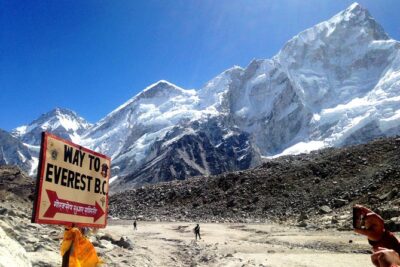
Day 9 is the first Base Camp day. You walk to Everest Base Camp and then return to Gorakshep at about 5,200 meters. The schedule does not give a walking time for this day, but you should expect it to be one of the hardest sections because of the altitude and the out-and-back route.
Reaching Base Camp is a major personal milestone, but the famous summit views are not necessarily best from Base Camp itself. The next morning’s climb to Kala Patthar is included for that reason. Base Camp gives you the destination and the atmosphere of the expedition route, while Kala Patthar provides the broad mountain view.
Kala Patthar is the visual high point
Day 10 begins with a hike to Kala Patthar at about 5,550 meters. The ascent is listed as roughly two and a half hours, followed by a seven-hour descent to Pheriche at about 4,200 meters.
This is the highest point of the trip, and it demands patience. The climb may be short in hours, but the altitude makes every step count. Go slowly, drink as directed by your guide, and do not treat the climb as a race.
The reward is the view toward Everest and the surrounding giants, including Lhotse and Nuptse. Afterward, the descent to Pheriche is long, but going downhill is usually a relief after the high point. You will still need energy, especially because tired legs can make uneven ground harder to manage.
The return route is not an afterthought
Day 11 takes you back to Namche Bazaar in about six hours. Day 12 continues to Lukla and lasts roughly seven hours.
The return walk lets you see familiar places from a different angle, but it is also where fatigue can catch up with you. The included guide and porter support are valuable here. The package lists the guide’s salary, accommodation, meals, and insurance, though it does not specifically describe porter costs, so ask whether porters are part of the arrangement.
Returning to Lukla creates a buffer before the flight back to Kathmandu on Day 13. The package includes that flight, along with Kathmandu transport. Day 13 includes breakfast and dinner, while lunch is not listed as included.
The package covers the costly essentials
At $1,380 per person, the price is worth examining as a bundle rather than as a simple daily rate. It includes:
- Airport pickups and departures
- Kathmandu to Lukla and Lukla to Kathmandu flights
- City hotel accommodation with breakfast
- Trekking lodge accommodation
- Breakfast, lunch, and dinner during the trek
- Guide salary, lodging, meals, and insurance
- Trekking permit and TIMS card
- Sleeping bag and down jacket if needed
- First aid items
- Tourist transport and air-conditioned car transport where used
- Government taxes
- A cultural show and farewell dinner
- T-shirt and trip certificate
The flights alone are a major part of the logistics, and permits, meals, lodges, and guide costs quickly add up on a two-week trek. If you already own cold-weather gear, the included sleeping bag and down jacket are still useful as backup, though you should confirm the quality and warmth rating before relying on them.
The package does not include international flights, travel insurance, tips for the trekking crew, Kathmandu meals beyond the stated breakfast arrangements, entrance fees, bar bills, or personal expenses. Travel insurance is especially important for a high-altitude trek, and it is your responsibility here.
The group size and guiding setup
The maximum group size is 18 people. That is large enough to keep the price reasonable, but it may feel less personal than a small private group. Pace, fitness, and altitude tolerance can vary widely in a group of this size.
The operator has connected guides with names including Suresh, Sobit, Pasang Sherpa, and Ram. Ram has guided an Everest Base Camp trek combined with Kathmandu UNESCO sightseeing, while Suresh and Sobit have been praised for organization and support on past trips. Ask who will lead your departure and how many assistants or porters will be with the group.
The included first aid items are helpful, but they are not a replacement for your own medical preparation. Bring any personal medication you need, and discuss altitude concerns with a medical professional before the trip.
What kind of trekker should book it
I would consider this trip a good fit if you want a planned Everest route without arranging each lodge, flight, meal, permit, and guide separately. It suits someone who values structure and does not mind joining a group of up to 18 people.
It is less suitable if you want luxury lodging, a private guide, a flexible pace, or a short sightseeing trip with only a taste of the mountains. The route is long, the altitude is serious, and several days involve five to seven hours of walking.
The provided equipment makes the trip easier to arrange, but you still need suitable trekking clothes and footwear. The package does not list every item you should bring, so ask for a packing list before departure.
How the final evening closes the trip
Day 14 is departure, with breakfast listed. The package also includes a cultural show and farewell dinner, generally placed near the end of the stay.
That closing event is a nice counterpoint to the physical effort of the trek. You return from the high mountains to Kathmandu, share a meal, and mark the end of the route before heading home.
The cancellation terms are simple: you can receive a full refund if you cancel at least 24 hours before the local start time. Cancellations or changes made within 24 hours are not accepted for a refund.
Should you book this Everest Base Camp trek?
I would book this tour if you want the main logistics handled and value the two acclimatization pauses. The strongest points are the included Lukla flights, permits, lodge stays, meals, guide costs, and cold-weather equipment. Those inclusions give the $1,380 price solid value.
Before booking, confirm the Dingboche schedule, the exact guide, porter arrangements, flight-delay plan, and the standard of the sleeping bag and down jacket. If you are comfortable with a group of up to 18 and prepared for long high-altitude days, this is a practical way to reach Base Camp and Kala Patthar without planning every detail yourself.
FAQ
How long is the Everest Base Camp trek?
The planned program lasts 14 days, including arrival and departure days. The general tour information also describes the duration as approximately 5 to 14 days.
Where does the trek begin?
The experience begins in Kathmandu, Nepal. Airport pickup and departure transport in Kathmandu are included.
Is the flight from Kathmandu to Lukla included?
Yes. The package includes Kathmandu to Lukla and Lukla to Kathmandu flight tickets.
Are meals included?
Breakfast, lunch, and dinner are included during the trekking days listed in the itinerary. Extra meals in Kathmandu, bar bills, and personal food expenses are not included.
Is accommodation included?
Yes. The package includes standard twin-sharing hotel accommodation in the city with breakfast and lodge accommodation during the trek.
Are a sleeping bag and down jacket provided?
Yes. A sleeping bag and down jacket are available if you need them during the trek.
How large can the group be?
The maximum group size is 18 people.
Can I cancel for a full refund?
Yes, if you cancel at least 24 hours before the experience start time. Cancellations or changes made less than 24 hours before the start time are not eligible for a refund.
Just added around Everest Region
- Day Tour to Everest Base Camp By Helicopter★ 5.0 · 16 reviews
- Kathmandu To Lukla By Helicopter Flight★ 5.0 · 6 reviews
- Luxury Everest Base Camp Trek – 11 Days★ 5.0 · 9 reviews
- Everest Base Camp Tour & View Point by Helicopter from Katmandu★ 5.0 · 3 reviews
- Everest base camp helicopter tour with Guarenteed Landing★ 4.0 · 7 reviews
- Everest base camp flight over by Helicopter from Kathmandu★ 5.0 · 10 reviews
- Everest Base Camp Helicopter Tour Stop at Hotel Everest View.★ 5.0 · 17 reviews
- Everest Base Camp Helicopter Tour★ 5.0 · 24 reviews
Everest Base Camp Treks, compared.
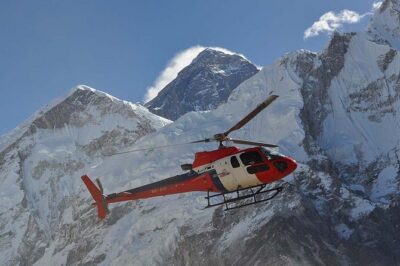
Everest Base Camp Trek with Helicopter Return from Gorakshep to Lukla
Read our review →Browse the lists this tour appears in