
Reviewed · EVEREST BASE CAMP TREKS
Everest Base Camp Trek
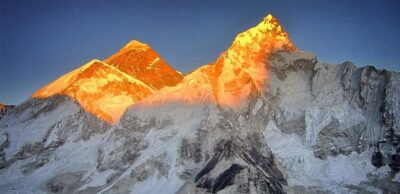
Everest Base Camp is not a quick mountain outing. It is a 14-day high-altitude trek through Sherpa villages, suspension bridges, Buddhist monasteries, glacial valleys, and some of the world’s most famous peaks. The payoff is reaching Base Camp and watching the sun strike the snow from Kala Patthar.
I like the sensible acclimatization plan, especially the extra day in Namche Bazaar and another in Dingboche. I also like the practical inclusions: Lukla flights, permits, meals, a sleeping bag, down jacket, duffel bag, and airport transfers. The main consideration is the physical demand. This is a serious walking trip at altitude, not a sightseeing holiday, and weather can disrupt the flights.
Key points before you book
- Two acclimatization days: You spend extra time in Namche Bazaar and Dingboche, giving your body a better chance to adjust to altitude.
- Lukla flights included: Round-trip domestic flights from Kathmandu are covered, though delays and cancellations caused by weather or other disruptions can create extra costs.
- Sherpa country on foot: The route passes through Namche Bazaar, Tengboche, Pangboche, Dingboche, and other mountain villages.
- Base Camp plus Kala Patthar: The itinerary includes both Everest Base Camp and an early climb to Kala Patthar for the classic sunrise mountain view.
- Useful gear supplied: Nepal High Trek provides a sleeping bag, down jacket, and duffel bag, reducing the amount of equipment you need to bring.
- Private group format: Only your group takes part, with a licensed mountain guide from Kathmandu.
What the $1,799 price really covers
At $1,799.27 per person, this trip is priced as a guided, organized trek rather than a bare-bones route package. The value comes from the pieces that are costly and inconvenient to arrange yourself: round-trip flights to Lukla, national park and local entrance fees, 11 nights of trekking accommodation, meals, a licensed mountain guide, and airport pickup and drop-off.
You receive 12 breakfasts, 12 lunches, and 11 dinners according to the main inclusions. The details also list 13 lunches, 14 breakfasts, and 13 dinners, so I would ask the operator to confirm the exact meal count before paying. Three cups of hot tea during the trek, a medical kit, a sleeping bag, down jacket, and duffel bag are also included.
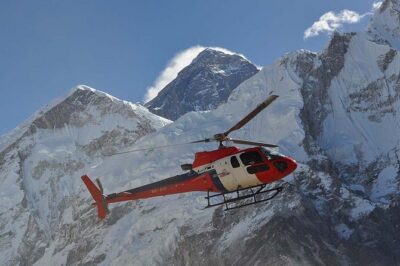
The price does not cover a hotel in Kathmandu, porter service, travel and rescue insurance, drinks beyond the stated tea, hot showers, laundry, phone calls, battery charging, bottled water, or tips. You should budget for these extras. Most important, emergency helicopter service is arranged if needed, but payment is expected from your travel insurance company, not from the tour price.
That insurance requirement matters. You should have a policy that specifically covers high-altitude trekking and helicopter rescue. A standard travel policy may not be enough. The tour also notes that strikes, delays, or canceled flights can lead to extra expenses.
More Everest Base Camp treks:
- Everest Base Camp Trek – 14 Days
★ 5.0 · 1,499 reviews - Everest Base Camp Trekking
★ 5.0 · 485 reviews - Everest Base Camp Trekking – 13 Day
★ 5.0 · 365 reviews
Day 1: Kathmandu arrival and a gentle start
After landing at Tribhuvan International Airport, a Nepal High Trek representative, identified as Anjan in the trip details, meets you and takes you to the arranged hotel. A welcome dinner follows.
This is a useful first evening rather than wasted time. You can meet the guide, sort your bags, and make sure your trekking gear is ready before leaving Kathmandu. The schedule lists about two hours for this opening activity, but your airport arrival and hotel transfer will depend on flight timing.
The Kathmandu hotel is not included in the tour price, so confirm exactly what is arranged for this night. The same point applies to your final night in Kathmandu.
Day 2: The flight to Lukla
After breakfast, you transfer to Kathmandu’s domestic terminal for the flight to Lukla. This short flight is the gateway to the Everest region, and Lukla is where the walking begins.
The itinerary does not give a flight duration, but it does make clear that the route depends on air travel. Weather can affect these flights, so keep your schedule flexible if you have an important international departure immediately after the trek. The operator’s policy allows a full refund if the experience itself is canceled for poor weather, but extra costs from transport delays or cancellations are not included.
From Lukla, you walk toward Phakding. The route begins at a lower elevation than the later stages, giving you a manageable first day to get used to carrying your daypack and walking on mountain trails.
Day 3: Phakding to Namche Bazaar
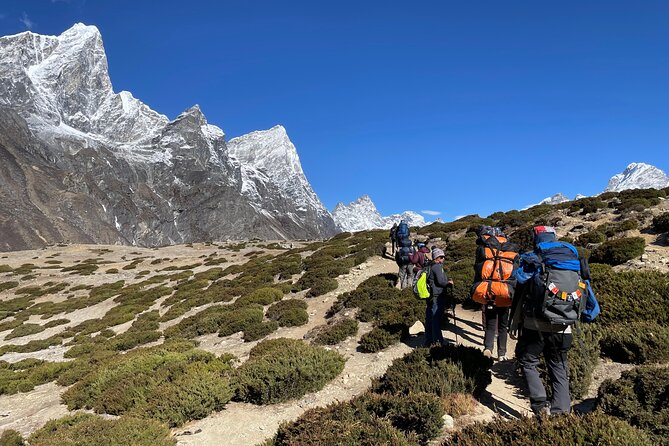
From Phakding, you follow the Dudh Koshi River toward Namche Bazaar, crossing several suspension bridges along the way. The route climbs steadily, and you get views of Mount Thamserku, listed at 6,618 meters.
Namche is the main trading center of the Khumbu region and one of the most important stops on the trek. It is also where the climb begins to feel real. The itinerary allows about an hour at the listed stop, but the full walking day is longer than that, so do not mistake the stop duration for the total trek time.
The bridges and uphill trail are manageable for fit walkers, but the altitude starts to affect pace. Your best tactic is simple: walk slowly, drink regularly, and avoid trying to prove anything on the first uphill stretch.
More trekking days out of Everest Region:
- Everest Base Camp Trek -14 Days
★ 5.0 · 321 reviews - Everest Base Camp Trekking – 2025/2026
★ 5.0 · 199 reviews - Everest Base Camp Trek
★ 5.0 · 193 reviews - Everest Base Camp Trek with Helicopter Return from Gorakshep to Lukla
★ 5.0 · 161 reviews
Day 4: Acclimatization in Namche Bazaar
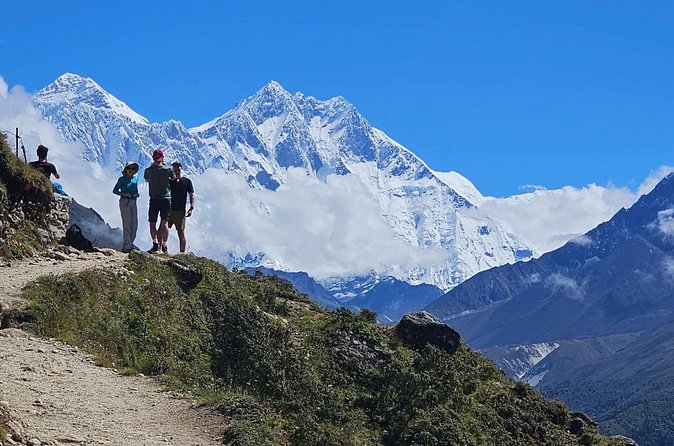
You spend the day in Namche Bazaar to help your body adjust to the increasing altitude. The plan includes exploring the surrounding area, with time near shops, banks, ATMs, and internet cafés.
I like this pause because it serves a real purpose. You are not merely waiting around. You are giving yourself a better chance of handling the higher villages ahead. A short walk is more useful than staying in bed all day, though you should keep the pace easy.
The itinerary names the Irish Pub as a stop, but the important point is the free time in Namche rather than the venue itself. Facilities here are better than farther up the trail, so this is a sensible time to make calls, withdraw cash, and deal with any small gear problem.
Day 5: Tengboche and its famous monastery
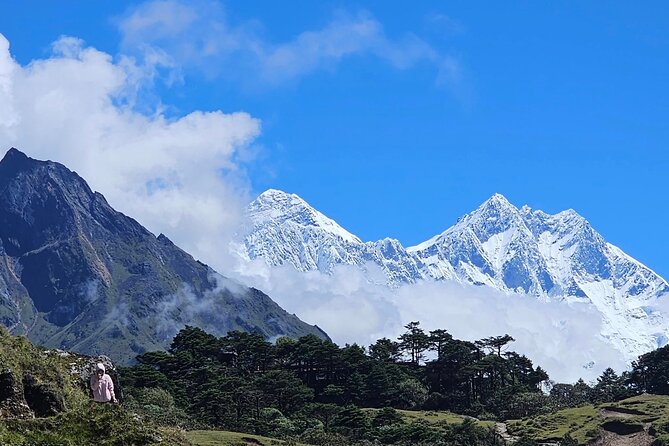
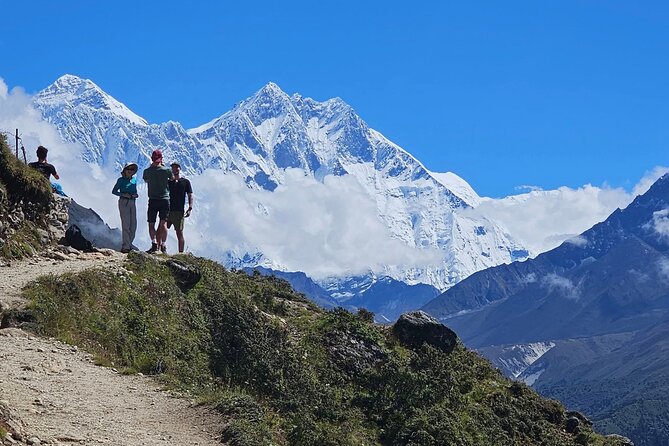
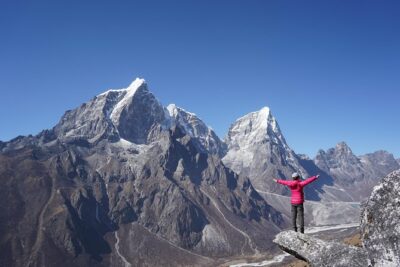
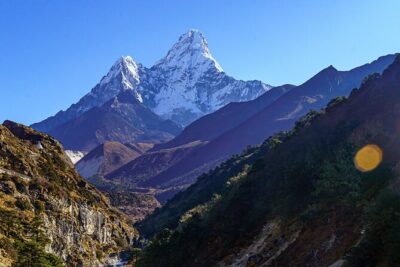
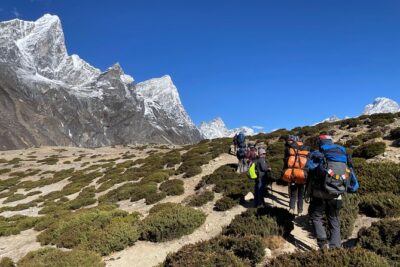
From Namche, the route brings you into colder, higher country. You can expect impressive views of Everest, Nuptse, Lhotse, and Ama Dablam along the way.
The stop is Tengboche Gompa, one of the most meaningful cultural points on the route. The monastery gives the trek a strong spiritual and local character. It is not just a mountain photo stop. Your guide can help explain the role of Buddhism and monasteries in Sherpa communities.
The scheduled stop is listed as about an hour, but conditions on the trail will control the day. Cold wind and uphill walking can make this section feel harder than the distance suggests. Bring layers you can put on and remove easily.
Day 6: Tengboche to Dingboche
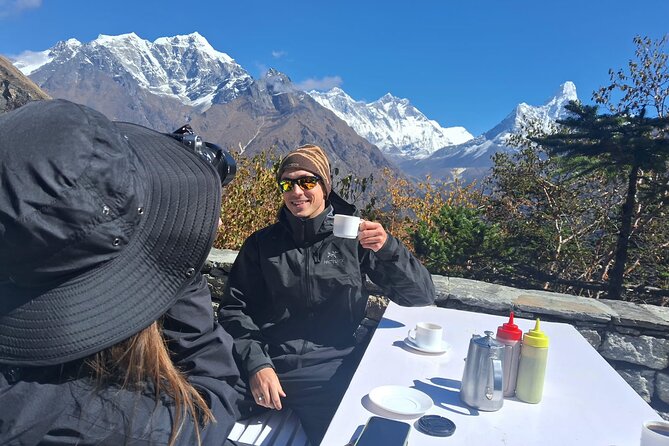
The day begins with a short visit to Tengboche and its monasteries, followed by the walk toward Dingboche. A stop at Dingboche View Point is listed for roughly three hours.
Dingboche is an important overnight point because the elevation is now much higher and the air is thinner. The surrounding views include Lhotse and other snow-covered peaks. The setting becomes more open and stark as trees give way to high mountain terrain.
This is where patience matters. You may feel fine at breakfast and tired by the afternoon. Keep your steps steady, follow the guide’s pace, and treat headaches, unusual fatigue, or other altitude symptoms seriously.
Day 7: A second acclimatization day at Dingboche
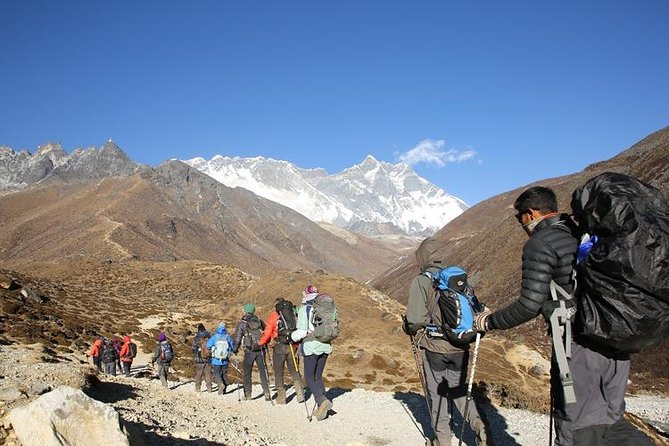
You spend another day in Dingboche, with a short hike toward Chhukung through the Imja Khola valley. The itinerary also names Dingboche Stupa as a stop and highlights views of Lhotse from the valley.
This is one of the strongest parts of the schedule. The trek has a real height gain, and rushing upward is a poor idea. A shorter walk at altitude lets you see more of the area without spending the whole day pushing toward the next lodge.
You should not treat the acclimatization day as an easy tourist stroll. Even a few hours can feel demanding at this elevation. The goal is to go up for a while, return to sleep at the same altitude, and prepare for Lobuche and Gorak Shep.
Day 8: Along the Khumbu Glacier
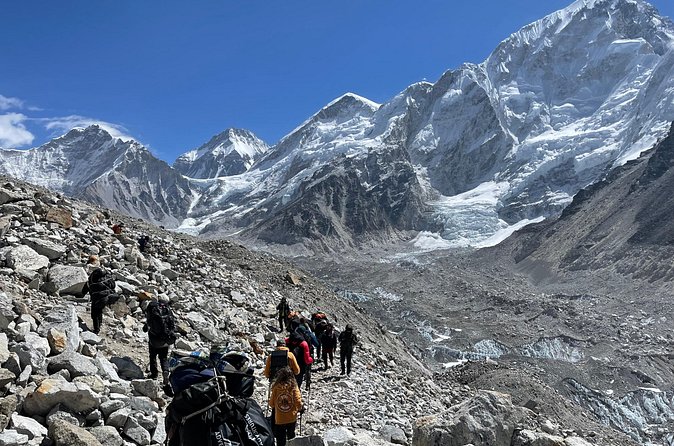
The route continues beside the lateral moraine of the Khumbu Glacier. You pass stone memorials dedicated to climbers who died on nearby summits before continuing toward Lobuche.
This section has a solemn quality. The memorials are a reminder that Everest is not simply a backdrop for holiday photographs. The mountain has real risks, and the route demands respect.
The itinerary lists about two hours for the Khumbu Glacier stop, but the full walking day includes the approach and the climb toward Lobuche. The terrain can be rough and tiring, particularly as you gain height. Keep your water close and protect yourself from the strong sun, which can feel intense even in cold air.
Day 9: Gorak Shep and Everest Base Camp
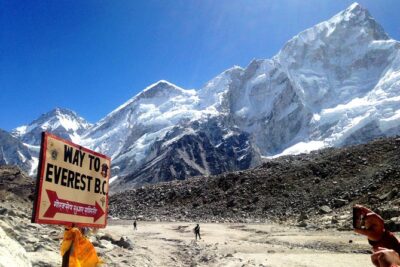
After breakfast, you walk to Gorak Shep, the final settlement on this section of the route. From there, the trail continues toward Everest Base Camp, with views of high peaks all around you.
Reaching Base Camp is the emotional center of the trip. You are not climbing Everest itself, and the summit is not always visible from Base Camp, but you are standing at the starting point used by expeditions on the mountain’s south side. The Khumbu Glacier and surrounding peaks give the place a powerful sense of scale.
The schedule lists a very short duration for the Base Camp stop, only a few minutes. That likely reflects the named stop rather than the full trek from Gorak Shep and back. Ask the operator how long you will have at Base Camp and whether the group returns to Gorak Shep the same day.
Gorak Shep is also where the altitude is most likely to test you. Sleep may be poor, and the cold can be sharp. You will appreciate having a warm sleeping bag supplied by the operator, though you should still bring suitable personal layers.
Day 10: Kala Patthar and the big mountain view
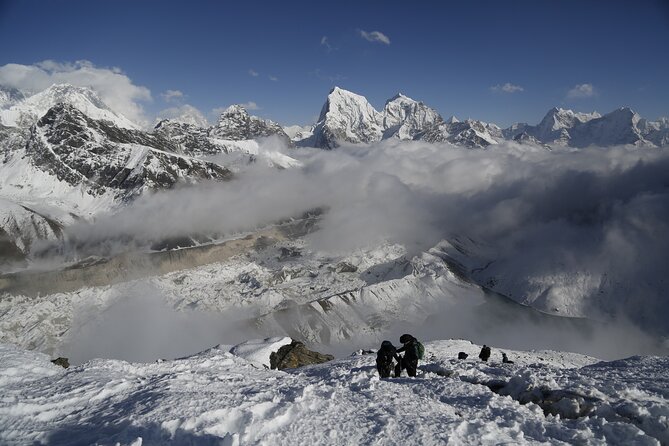
The itinerary calls this the main day of the journey, beginning with an early climb to Kala Patthar. The purpose is the view: sunlight reaches across the snow and peaks, creating the classic Himalayan panorama.
This early start is worth the effort if the weather cooperates. You can expect a steep, sustained ascent for several hours, followed by views toward Everest and the surrounding mountains. The schedule lists Gorak Shep as a 30-minute stop, but the full day also includes the climb and the walk onward.
Do not judge this day by distance alone. Altitude makes every uphill section slower. Sunscreen is essential, a point worth repeating because the combination of strong sunlight, cold air, and high elevation can catch you off guard.
Days 11 and 12: The return through Pheriche, Pangboche, Namche, and Lukla
The return route leads through Pheriche and then along a somewhat different path toward Orsho and Pangboche. Pangboche is noted for its old monastery and a local story connected with the scalp and bones of the abominable snowman.
You should treat that story as local folklore, not scientific proof. Still, it adds character to the walk and gives your guide a chance to explain how mountain beliefs and village traditions shape the region.
From Namche, you continue back to Lukla. The itinerary gives you leisure time in Lukla before spending the night at a guesthouse. This can be a welcome buffer after the hardest walking days, though your legs may still be tired and the next flight remains weather dependent.
The return is not simply a repeat of the outward journey. Descending puts different strain on your knees, and the trail can feel long even though the air gets thicker. Trekking poles may be useful, but they are not listed among the supplied equipment, so bring or arrange them separately if you prefer to use them.
Days 13 and 14: Back to Kathmandu and departure
You fly from Lukla to Kathmandu and have time to visit Kathmandu Durbar Square or explore the city. The schedule allows about two hours for the Kathmandu stop, followed by a final night before departure.
Kathmandu Durbar Square gives you a useful change of pace after two weeks in the mountains. The plan refers to seeing views around the Kathmandu Valley, but the exact sightseeing depends on your arrival time and the flight schedule.
On the final day, you transfer to Tribhuvan International Airport, with the plan calling for arrival three hours before your flight. A small farewell program is also mentioned.
How the guide and private format affect the trip
This is a private activity, so only your group takes part. That gives the guide more room to manage the pace, respond to fitness levels, and handle small changes in the daily plan.
Guides named in the trip information include Buddhi and Pawan, while Anjan is identified as an airport representative. The particular guide assigned to you should be confirmed before departure. The strongest practical value of a good guide is not simply pointing out peaks. It is setting a safe pace, watching for altitude problems, explaining local customs, and helping with decisions when weather affects flights.
The tour provides a government licensed mountain guide from Kathmandu. Porter service is not included, so decide in advance whether you will carry your own bag or hire a porter separately. The supplied duffel bag is useful, but it does not remove the need to manage your personal load.
Who should book this Everest trek?
You should consider this trip if you have strong physical fitness, enjoy long days of walking, and want a guided route with major costs arranged in advance. The itinerary gives you time in Sherpa villages, monasteries, glacier country, Base Camp, and Kala Patthar rather than rushing straight to the destination.
It is less suitable if you want flexible hotel comfort, dislike early starts, or need a firm guarantee that every flight will operate on schedule. The route includes high altitude, cold conditions, demanding uphill sections, and basic mountain accommodation.
The 100 percent recommendation rate and 5 out of 5 rating shown for the experience point to a very strong record, with particular praise directed at supportive guides, careful organization, backup plans, and the positive leadership of Buddhi. Those strengths matter most on difficult days. Still, the rating should not make you underestimate the physical challenge.
Should you book it?
I would book this trek if you want a well-supported first attempt at Everest Base Camp and value having flights, permits, meals, gear, and a licensed guide arranged together. The two acclimatization days are a real plus, and the inclusion of Kala Patthar makes the route more than a simple out-and-back to Base Camp.
Before booking, confirm the Kathmandu hotel arrangement, exact meal count, porter options, guide assignment, and procedures for flight delays. Buy high-altitude rescue insurance, arrive prepared for cold and sun, and leave some flexibility around your international flights. If you can handle the effort and accept mountain weather as part of the deal, this is a strong value for a demanding and memorable Himalayan trek.
FAQ
How long does the Everest Base Camp Trek last?
The trip lasts approximately 14 days, including arrival in Kathmandu, the trek, return to Kathmandu, and departure.
Where does the trek begin?
The walking portion begins in Lukla after a flight from Kathmandu. Lukla is described as the starting point for the Everest Base Camp route.
Are flights between Kathmandu and Lukla included?
Yes. Round-trip flights between Kathmandu and Lukla are included.
Are meals included?
Yes. The package includes breakfast, lunch, and dinner during the trek. The supplied details give different meal totals in different sections, so confirm the exact count with the operator.
Is accommodation included?
The package includes 11 nights of accommodation during the trek. A hotel in Kathmandu is not included.
Is a porter included?
No. Porter service is not included in the stated price.
What trekking equipment is provided?
Nepal High Trek provides a sleeping bag, down jacket, and duffel bag. Other personal trekking equipment is your responsibility.
Do I need travel insurance?
Yes. Travel and rescue insurance is not included, and emergency helicopter service is expected to be paid by your travel insurance company.
Can I cancel for a full refund?
You can receive a full refund if you cancel at least 24 hours before the experience start time. If poor weather causes the operator to cancel the experience, you are offered another date or a full refund.
Just added around Everest Region
- Day Tour to Everest Base Camp By Helicopter★ 5.0 · 16 reviews
- Kathmandu To Lukla By Helicopter Flight★ 5.0 · 6 reviews
- Luxury Everest Base Camp Trek – 11 Days★ 5.0 · 9 reviews
- Everest Base Camp Tour & View Point by Helicopter from Katmandu★ 5.0 · 3 reviews
- Everest base camp helicopter tour with Guarenteed Landing★ 4.0 · 7 reviews
- Everest base camp flight over by Helicopter from Kathmandu★ 5.0 · 10 reviews
- Everest Base Camp Helicopter Tour Stop at Hotel Everest View.★ 5.0 · 17 reviews
- Everest Base Camp Helicopter Tour★ 5.0 · 24 reviews
Everest Base Camp Treks, compared.
Everest Base Camp Trek with Helicopter Return from Gorakshep to Lukla
Read our review →Browse the lists this tour appears in