
Reviewed · EVEREST BASE CAMP TREKS
Everest Base Camp Trek
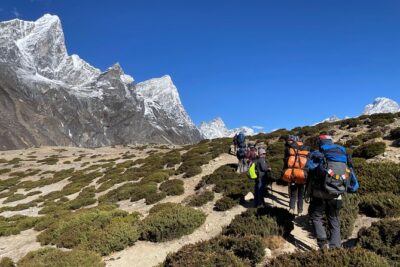
Reaching Everest Base Camp means walking for days through high mountain villages, crossing the Khumbu region on foot, and sleeping in simple tea houses rather than polished hotels. The route builds slowly from Kathmandu to Lukla, Namche Bazaar, Tengboche, Dingboche, Lobuche, and finally Gorak Shep.
I like the included Lukla flights, since that removes one major cost from a trek where transport can be complicated. I also like the built-in acclimatization day at Namche Bazaar, plus the experienced guide, private group format, and first-aid kit. The catch is altitude: the route reaches about 5,364 meters, and Lukla flights can be delayed or canceled, so you should add one or two spare days.
Key points before you book
- Lukla flights are included: Round-trip airfare from Kathmandu, including airport tax, is part of the package.
- The route reaches 5,364 meters: Strong fitness and a doctor’s advice are recommended before departure.
- Tea houses provide the main accommodation: Expect 11 nights in basic mountain lodgings, not resort comfort.
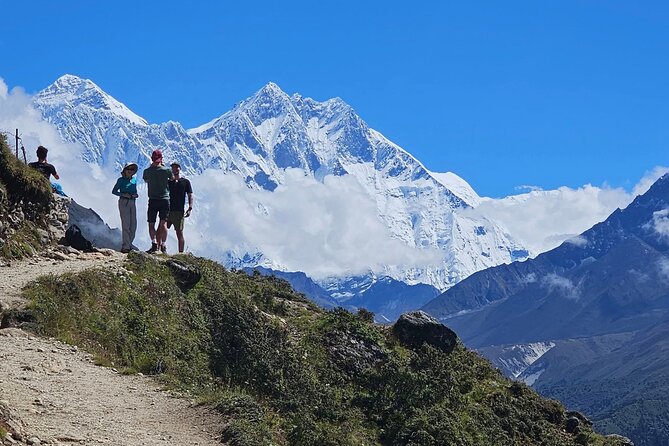
- Namche includes an acclimatization day: You can visit the Everest View Point before climbing higher.
- The tour is private: Your booking can include up to eight people, with a licensed guide assigned to your group.
- Budget beyond the advertised price: Food and drinks are listed at about $350 per person, with $150 suggested for gratuities.
The real value of a $999 Everest trek
At $999 per person, this package covers many of the big-ticket basics: the Kathmandu to Lukla flights, return airfare, tea house accommodation, Kathmandu hotel nights, airport transfers, a licensed trekking guide, government taxes, and first-aid equipment.
That makes the headline price attractive for a 14-day Everest Base Camp trip. You are not paying only for a walk. You are also paying for route planning, local transport, accommodation arrangements, and help in a region where weather and altitude can change the day’s plan quickly.
Still, budget for the listed extras. Food and drinks are estimated at $350 per person, and gratuities are listed at $150 per person. That brings the practical total to about $1,499 before personal gear, insurance, possible equipment rental, and other spending.
There is one detail I would confirm before paying: the package description refers to three nights in a Kathmandu hotel, while the included section specifies two nights, with breakfast on days 1 and 13. Ask the operator to confirm the exact hotel-night count and meal plan in writing.
The package also includes dinner, but the food section says meals and drinks are not included unless specified. That wording is not perfectly clear. Ask which dinner is covered, and assume that most meals during the trek are your responsibility unless you receive a more precise answer.
More Everest Base Camp treks:
- Everest Base Camp Trek – 14 Days
★ 5.0 · 1,499 reviews - Everest Base Camp Trekking
★ 5.0 · 485 reviews - Everest Base Camp Trekking – 13 Day
★ 5.0 · 365 reviews
Days 1 and 2: Kathmandu, Thamel, and the flight to Lukla
Your trip begins with pickup at Tribhuvan International Airport in Kathmandu. A guide from Himalayan Recreation is scheduled to meet you and provide arrival and departure assistance by private car.
The first day is set aside for Kathmandu and Thamel. Thamel is the practical staging area for a Himalayan trek, with trekking shops and places to arrange or rent gear. The company says its guide can help you find required equipment in Kathmandu, which is useful if your packing list has a gap.
Day 2 includes a flight toward Lukla and visits to Swayambhunath, Boudhanath Stupa, and the Garden of Dreams. The schedule is written in a compressed way, so do not expect every stop to unfold as a leisurely sightseeing day if your Lukla flight runs early or late.
The itinerary then places you in Phakding. In practical terms, this is the first mountain night after flying into the Everest region. The flight itself is listed as about one hour, but the total day can feel much longer because flight timing, airport procedures, and the walk from Lukla all affect the schedule.
Kathmandu’s cultural stops are a good addition. Swayambhunath gives you a hilltop introduction to the city, while Boudhanath offers a very different setting centered on a large Buddhist stupa. These visits also give you something meaningful to do before the long walking days begin.
Days 3 and 4: Namche Bazaar and your first altitude test
From Phakding, the route continues toward Namche Bazaar along the Dudh Koshi River. The itinerary gives this as a 12-hour day, which signals that you should be ready for a serious walk rather than a casual transfer.
Namche is the main trading town on the route and one of the most important stops for adjusting to altitude. Day 4 is reserved for Namche, with a visit to the Everest View Point. That rest and acclimatization day is one of the strongest parts of the plan.
You still walk on an acclimatization day, but the purpose is to climb a little higher and return to sleep at the same elevation. The itinerary lists about two hours for Everest View Point. You will want to keep your pace easy and pay attention to how your body feels.
The route’s altitude warnings deserve respect here. Fitness helps you walk uphill, but it does not guarantee that your body will adjust smoothly to thin air. The operator recommends speaking with your doctor, and that is sensible advice, especially for anyone with a medical condition.
Day 5: Tengboche, the monastery, and Ama Dablam
The trail continues to Tengboche, with a visit to Tengboche Gompa. The gompa is one of the cultural highlights of the route, and it gives the trek a sense of place beyond mountain scenery and physical endurance.
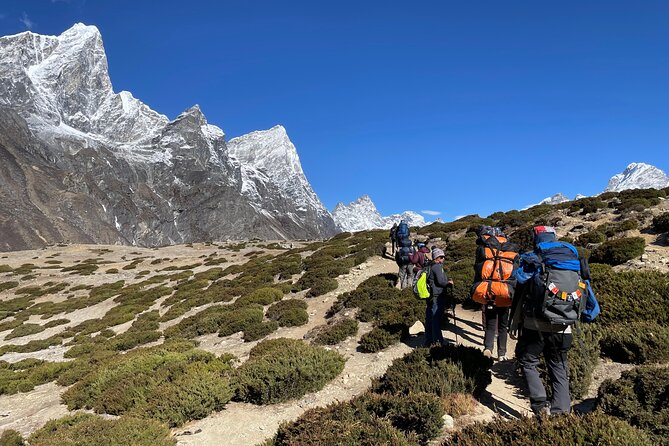
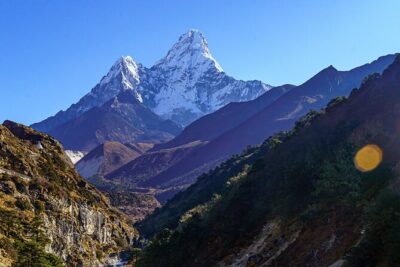
The itinerary also calls out views toward Ama Dablam and Taboche. These peaks are part of what makes the walk feel distinct from a standard high-altitude hike. You are moving through a region where the villages, monasteries, rivers, and peaks all form part of the daily experience.
The day is again shown as roughly 12 hours. That may reflect a full route day rather than a guaranteed walking time, but you should read it as a demanding schedule. A guide can help keep the group moving at a sensible pace and point out the nearest medical facilities if a health problem develops.
More trekking days out of Everest Region:
- Everest Base Camp Trek -14 Days
★ 5.0 · 321 reviews - Everest Base Camp Trekking – 2025/2026
★ 5.0 · 199 reviews - Everest Base Camp Trek
★ 5.0 · 193 reviews - Everest Base Camp Trek with Helicopter Return from Gorakshep to Lukla
★ 5.0 · 161 reviews
Days 6 and 7: Dingboche and the Island Peak area
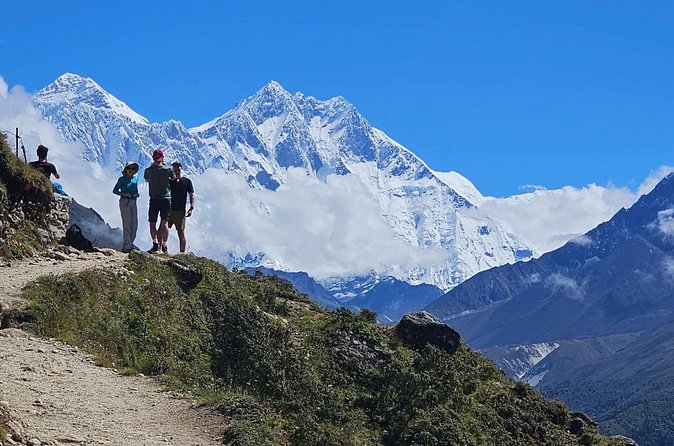
Dingboche is another key altitude stop. Day 6 takes you there, and day 7 remains in the area, with Chukhung and the route toward Island Peak included in the plan.
This portion is valuable because the itinerary does not simply rush you from one village to the next. Time around Dingboche gives you another chance to adjust before the route climbs toward Lobuche and Gorak Shep.
Do not confuse the Island Peak reference with an included Island Peak climb. The supplied plan describes a route toward the Island Peak area, but it does not include a summit attempt or technical climbing program. If that is important to you, ask for exact clarification.
The accommodation remains in tea houses. These provide a bed and a place to rest, but the package does not promise private rooms, en suite bathrooms, or luxury facilities. Pack with that level of simplicity in mind.
Day 8: Lobuche and the Khumbu Glacier
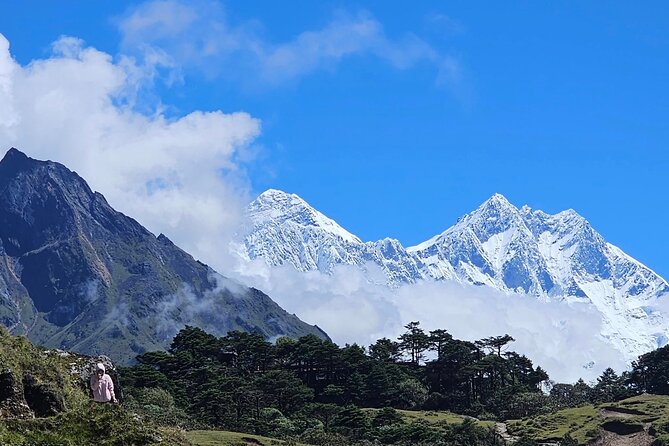
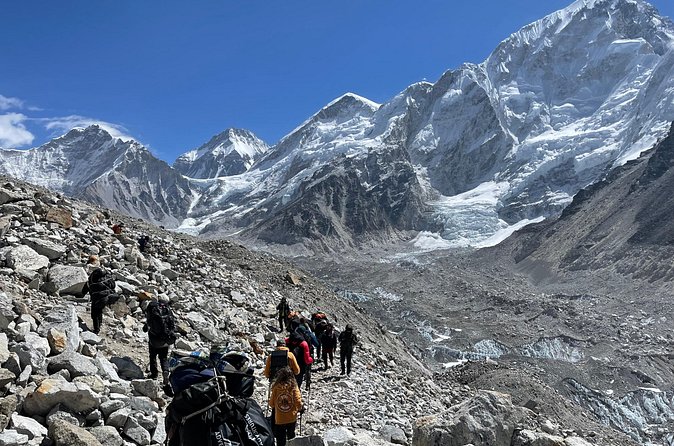
The route continues to Lobuche, with the Khumbu Glacier listed as a stop. This is where the scale of the Everest region becomes especially clear. The glacier is not simply a photo stop. It marks the harsh, high setting of the final approach.
The day is listed at about 12 hours, so save your energy. You will be carrying your own luggage, and the operator recommends keeping it under 22 pounds, or 10 kilograms. That is a reasonable limit for a trek where every extra item becomes part of the daily effort.
You may leave extra luggage at the company office or hotel in Kathmandu and collect it after returning. Use that option. Bring only what you need above the tree line, and keep important personal items easy to reach.
Day 9: Gorak Shep and Everest Base Camp
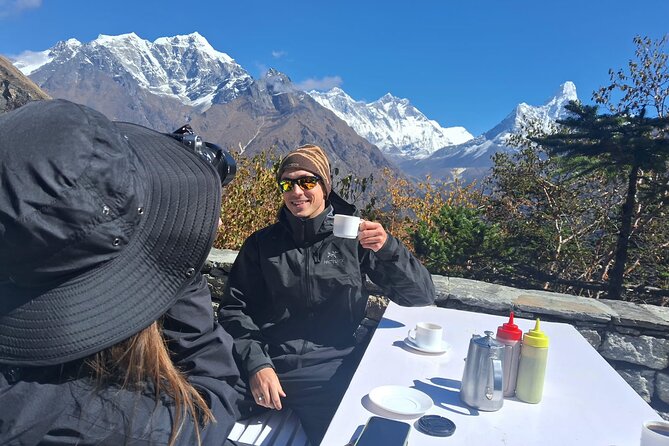
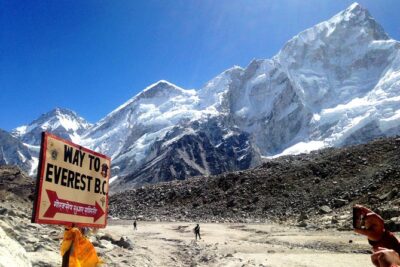
Gorak Shep is the staging point for the Everest Base Camp visit. The route also lists Mount Everest and the Khumbu area, with about three hours assigned to the Everest portion and 12 hours for the wider day.
The wording does not spell out every walking segment, so confirm with your guide how the Base Camp visit is scheduled. The important point is that the trek reaches Everest Base Camp, not Everest’s summit. This is a high-altitude walking expedition, not a mountaineering ascent.
At this point, the cold, thin air, long walking days, and basic accommodation can all catch up with you. The value of having a licensed guide becomes clear. You need someone who can monitor the group, help judge pace, and respond if a member develops signs of altitude trouble.
The tour states that all leaders have basic first-aid training and know the closest medical facilities. That is helpful, but it does not replace travel insurance. Medical coverage with emergency repatriation is required, and you must show proof to the tour leader on the first day.
Day 10: Kala Patthar and the long return
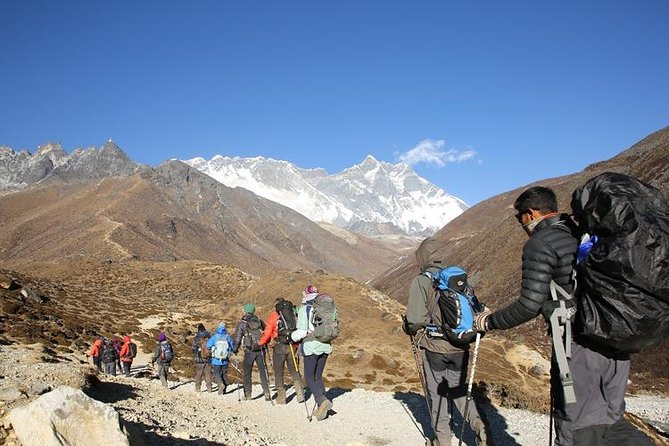
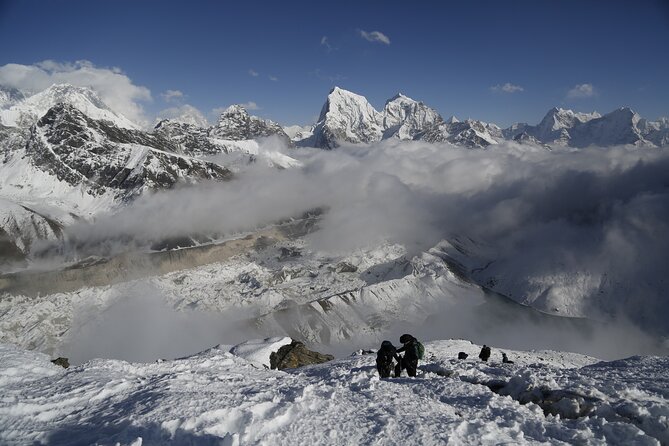
Kala Patthar is included on the return schedule, followed by the Pheriche to Dughlha road and Pangboche. The short time shown for Kala Patthar suggests an early, focused mountain viewpoint visit rather than a full-day side trip.
This is a demanding day because you are still at high altitude while beginning the descent. The route through Pheriche and Pangboche provides a change of pace after Gorak Shep, but the itinerary again lists long walking hours.
The return is not an afterthought. Descending can feel easier than climbing, yet tired legs and rough trails still require care. Follow the guide’s pacing advice, drink regularly, and keep your daypack light.
Days 11 to 14: Namche, Lukla, and Kathmandu
The route returns through Namche Bazaar on day 11, then continues to Lukla on day 12. These days retrace part of the approach, giving you another look at villages and river valleys that may have passed quickly on the way up.
Day 13 is scheduled for the return flight to Kathmandu, followed by the final Kathmandu stay. Because Lukla weather can delay or cancel flights, the operator specifically asks you to allow one or two extra days.
This is one of the most important practical warnings in the entire package. Do not schedule a tight international connection immediately after the planned Lukla return. A weather delay could affect your onward travel, so build in a buffer if you can.
Day 14 is the final Kathmandu day. Airport departure assistance is included, but confirm the exact pickup time with the company after your return flight and hotel arrangements are settled.
Guides, group size, and the level of support
This is a private activity for your own group, with a maximum of eight people per booking. That is a useful middle ground. You get more personal attention than in a large walking group, while still having company on long trail days.
The tour includes a government-licensed trekking guide, first-aid supplies, and airport support. The company also says it can arrange a guide who speaks a language other than English for an additional $200 per group.
Bishnu is specifically praised for keeping arrangements on track, while guide Basu is praised for careful attention and practical support. Those names are useful when you contact the operator: ask who will lead your departure and what experience that person has with the Everest Base Camp route.
You are expected to carry your own luggage, so do not assume a porter is included. Keep the total below 10 kilograms, and use the Kathmandu storage option for anything you do not need on the trail.
Who should book this Everest Base Camp trek?
I would recommend this trip to a fit walker who wants the major Everest Base Camp route arranged in advance, including flights, tea houses, a Kathmandu hotel, and a licensed guide.
It also suits you if you prefer a private group over a large departure. The package has a sensible route structure, especially the Namche acclimatization day and the extra time around Dingboche.
I would be cautious if you dislike basic lodging, long walking days, uncertain flight schedules, or limited control over meal arrangements. The minimum age is eight, but the altitude and physical demands matter far more than the age rule.
The published score is 4.9 from 97 ratings, with a 100 percent recommendation figure. That supports confidence in the general operation, but your own preparation still matters. No guide can remove the effects of altitude, bad weather, or a delayed Lukla flight.
Should you book it?
Book this trek if you want a private, guided Everest Base Camp route with the main transport and accommodation arranged for you at a relatively low starting price. The strongest value comes from the included Kathmandu to Lukla flights, tea houses, guide, airport transfers, and acclimatization structure.
Before booking, get written confirmation of the Kathmandu hotel-night count, the dinners and breakfasts included, the guide assigned to your group, and the plan if Lukla flights are delayed. Add the listed $350 food budget and $150 gratuity budget, buy the required insurance, and leave spare days after the trek.
If you can handle the altitude, simple tea houses, and long walking days, this is a practical way to reach Everest Base Camp without organizing every moving part yourself.
FAQ
How long is the Everest Base Camp trek?
The experience lasts approximately 14 days, including Kathmandu time, the trek, domestic flights, and the return to Kathmandu.
What is included in the price?
The package includes Kathmandu airport pickup and drop-off, Kathmandu hotel accommodation, 11 nights in tea houses, round-trip Kathmandu to Lukla airfare with airport tax, a licensed trekking guide, government taxes, VAT, service charges, a first-aid kit, and a company T-shirt.
Are food and drinks included?
Food and drinks are listed as an additional cost of about $350 per person unless specifically stated. Dinner is listed as included, while breakfast is shown for two occasions. Confirm the exact meal plan before booking.
How high does the trek go?
The route reaches approximately 5,364 meters, or 17,598 feet, above sea level.
Do I need travel insurance?
Yes. Insurance covering medical expenses and emergency repatriation is required, and proof must be shown to the tour leader on the first day.
How much luggage can I bring?
You are advised to keep your luggage under 22 pounds, or 10 kilograms, because you are expected to carry it yourself. Extra luggage can be left at the company office or hotel in Kathmandu.
Can Lukla flights be delayed?
Yes. Flights may be delayed or canceled because of weather and other conditions. The operator recommends allowing one or two extra days for this possibility.
Just added around Everest Region
- Day Tour to Everest Base Camp By Helicopter★ 5.0 · 16 reviews
- Kathmandu To Lukla By Helicopter Flight★ 5.0 · 6 reviews
- Luxury Everest Base Camp Trek – 11 Days★ 5.0 · 9 reviews
- Everest Base Camp Tour & View Point by Helicopter from Katmandu★ 5.0 · 3 reviews
- Everest base camp helicopter tour with Guarenteed Landing★ 4.0 · 7 reviews
- Everest base camp flight over by Helicopter from Kathmandu★ 5.0 · 10 reviews
- Everest Base Camp Helicopter Tour Stop at Hotel Everest View.★ 5.0 · 17 reviews
- Everest Base Camp Helicopter Tour★ 5.0 · 24 reviews
Everest Base Camp Treks, compared.
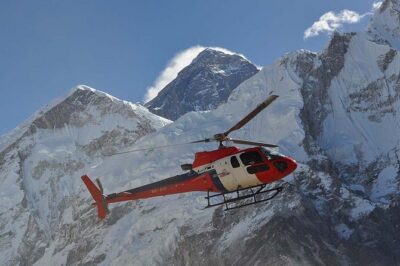
Everest Base Camp Trek with Helicopter Return from Gorakshep to Lukla
Read our review →Browse the lists this tour appears in