
Reviewed · EVEREST BASE CAMP TREKS
Everest Base Camp Trek
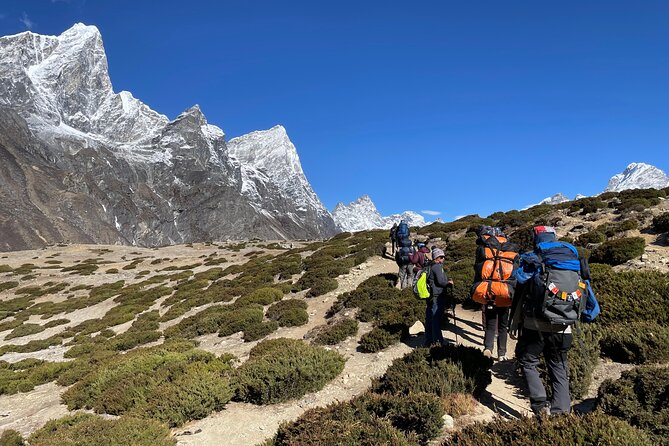
Everest Base Camp is the headline, but the real reward comes from the slow approach: suspension bridges over the Dudh Koshi, Sherpa villages, prayer flags, rhododendron forests, and the first great views of Everest. I like the small maximum group of eight and the built-in acclimatization days, both useful when altitude and weather begin calling the shots.
I also like that the $1,300 price includes Lukla flights, meals, two Kathmandu hotel nights, airport transfers, and guide flights. The main caution is that Lukla flights can be delayed or canceled, and peak-season flights may use Ramechhap instead of Kathmandu, adding a road transfer.
- Kala Patthar at 5,550 meters: The highest point of the trek and the place scheduled for sunrise views of Everest.
- Namche acclimatization day: A needed pause with an Everest View Point visit and the Sherpa Museum.
- Tengboche Monastery: A peaceful Buddhist stop with broad mountain views.
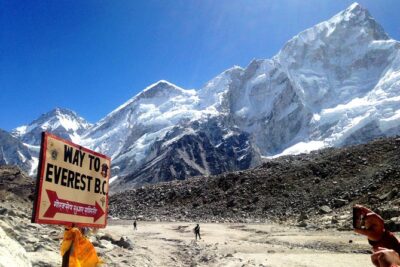
- Khumbu Glacier and Icefall: The route reaches the famous glacier area and Everest Base Camp.
- Small groups up to eight: More manageable on narrow mountain paths than a large walking party.
- Guide support in difficult moments: Previous departures included guides and porters such as Ram, Amer, Bishnu, Rajesh, Prakash, Tilak, Binode, Sanjay, and Gore.
What the 14-day route is really like
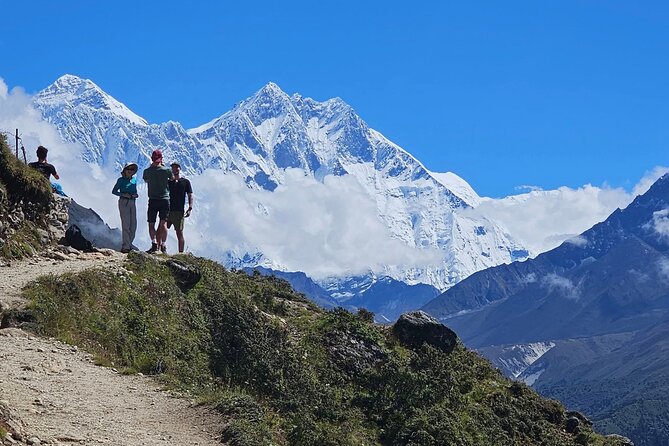
This is not a sightseeing trip with a few walks added on. You spend most days on foot, reaching high altitude over a series of gradual stages. The route begins in Kathmandu at roughly city level and climbs to Everest Base Camp, then to Kala Patthar before returning by the same general corridor.
The itinerary gives you two nights in Namche and two nights in Dingboche. Those pauses matter. At altitude, a rest day is not wasted time. It gives your body a chance to adjust and gives you a short walk option instead of forcing another long uphill day.
The schedule also includes a night at Gorak Shep, the last settlement before Base Camp and Kala Patthar. This is basic high-altitude trekking, not a luxury mountain holiday. You should expect long walking days, simple lodge accommodation outside Kathmandu, changing weather, and limited control over transport schedules.
Kathmandu preparation before the mountains
Your first day begins with airport pickup and a drive to a hotel near Thamel. There is a pre-trek meeting and preparation for the following morning. Two Kathmandu hotel nights on a bed-and-breakfast plan are included, with Hotel Kailash Kutee or a similar property named as the expected category.
This first day is useful for more than sleeping off a flight. It gives you time to meet the team, check your equipment, and clarify the flight plan to Lukla or Ramechhap. You also get a final taste of Kathmandu before the quieter mountain villages take over.
The itinerary leaves the first day fairly light, with about one hour listed for the airport and hotel arrangements. That is sensible, since the mountain flight begins early.
More Everest Base Camp treks:
- Everest Base Camp Trek – 14 Days
★ 5.0 · 1,499 reviews - Everest Base Camp Trekking
★ 5.0 · 485 reviews - Everest Base Camp Trekking – 13 Day
★ 5.0 · 365 reviews
Lukla and Phakding: the trail starts quickly
The flight to Lukla takes about 40 minutes when weather and local conditions cooperate. The approach is one of the memorable parts of the trip, with aerial Himalayan views before landing at Lukla. It is also the first major uncertainty of the trek. The schedule openly allows for cancellations and delays.
During the busy season, flights may operate through Ramechhap because of air traffic at Kathmandu airport. In that case, you drive from Kathmandu to Ramechhap before flying to Lukla. The return may follow the same pattern, so do not schedule an international flight too soon after the planned return.
From Lukla, you walk for about three hours toward Phakding. The day is short by trekking standards, which gives you a gentle start after the flight. Phakding is a place to walk around, see the local community, and settle into the rhythm of mountain lodging.
The important point is that the trek begins immediately after the flight. You do not get a spare day at Lukla, so arrive ready to walk.
Namche Bazaar and the first acclimatization pause
Day three takes you toward Namche Bazaar, usually the first demanding walking day. The route follows the western bank of the Dudh Koshi and crosses small suspension bridges before Monjo. From there, the trail climbs toward Namche, with about six hours of walking listed.
Namche is the gateway to the Everest region and a cultural center for the Sherpa communities. Its location also makes it the right place to slow down. The town is more than a stop for food and sleep. It is where you begin to feel the change in altitude and see how mountain communities serve the trekking route.
Day four is an acclimatization day. You visit an Everest View Point, with the itinerary allowing about two hours for the outing, then return toward town and the Sherpa Museum. The museum connects local culture with mountaineering history, giving context to the peaks you are seeing.
I consider this one of the strongest parts of the plan. A rushed itinerary might push onward, but this schedule gives you a better chance to adjust before the trail rises higher. You should still take the day seriously and avoid treating the viewpoint walk as a race.
Tengboche and Dingboche: monasteries, forests, and big peaks
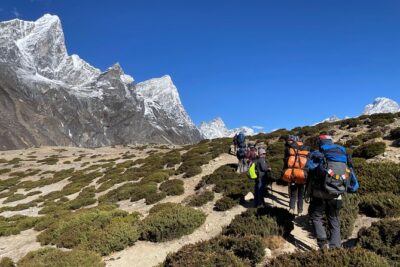
From Namche, the trail heads toward Tengboche along a high route above the Dudh Koshi. The walking time is about five hours. The mountain views become more dramatic, with Everest, Nuptse, Lhotse, Thamserku, and Kwangde among the peaks named for this section.
Tengboche is best known for its monastery and its calm setting. The visit gives the route a cultural center, not just a series of mountain viewpoints. You are still walking through a living Sherpa region, so the monastery is not simply a photo stop.
The next day leads toward Dingboche through rhododendron forests and meadows, passing the Buddhist nunnery at Deboche and the Imja Khola. The trail offers views toward Island Peak and Amphu Laptsa Peak. This day is listed at about five hours, but the rising altitude makes distance feel different from a lowland walk.
Dingboche gets its own acclimatization day. You can rest fully or take a shorter walk before the route becomes more demanding. I like this second pause because the itinerary does not pretend that fitness alone solves altitude. You need time, patience, and the freedom to keep the day easy.
More trekking days out of Everest Region:
- Everest Base Camp Trek -14 Days
★ 5.0 · 321 reviews - Everest Base Camp Trekking – 2025/2026
★ 5.0 · 199 reviews - Everest Base Camp Trek
★ 5.0 · 193 reviews - Everest Base Camp Trek with Helicopter Return from Gorakshep to Lukla
★ 5.0 · 161 reviews
Lobuche and the memorials on the way up
The route from Dingboche to Lobuche takes around six hours and includes Dughla village. Above Dughla, you pass memorials to Sherpas who died on Everest expeditions. This is a sober part of the trek, and it adds human meaning to the famous mountain names.
The trail continues along the Khumbu Glacier moraine, with views toward Kala Patthar and Pumori. The ground becomes rougher, and the setting feels more exposed than the lower sections near Phakding and Namche.
Lobuche is a staging point for Base Camp and Gorak Shep. By this stage, the combination of altitude, cold, and long walking days can make even ordinary tasks feel slow. You should expect the guide to set a steady pace rather than chase a fixed walking speed.
Everest Base Camp from Gorak Shep
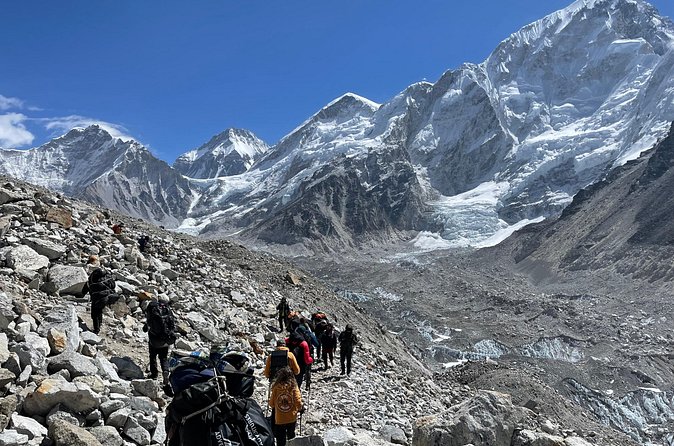
Day nine is the main goal for many people. After lunch, you continue toward Everest Base Camp, crossing stony ground, moraines, and streams on the way to the Khumbu Icefall area.
The base camp itself is not a permanent city or a viewing platform. It is a rough glacier-side area whose appearance can change with the climbing season and conditions. The value is in reaching the point used by expeditions and seeing the glacier and icefall environment at close range.
The itinerary allows about six hours for the Base Camp section, then about three more hours to return to Gorak Shep. That makes this a long day at high altitude. You need to preserve energy and listen carefully to your guide.
Gorak Shep is the overnight base for the next morning’s Kala Patthar climb. Accommodation here is described as lodge-based, so keep expectations practical. This is about location and access, not comfort.
Kala Patthar at sunrise
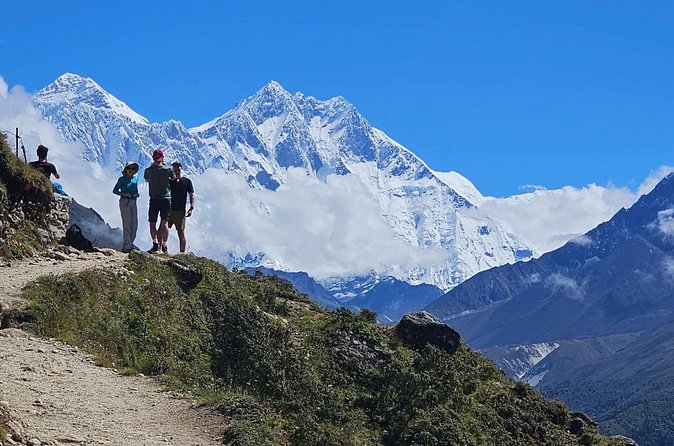
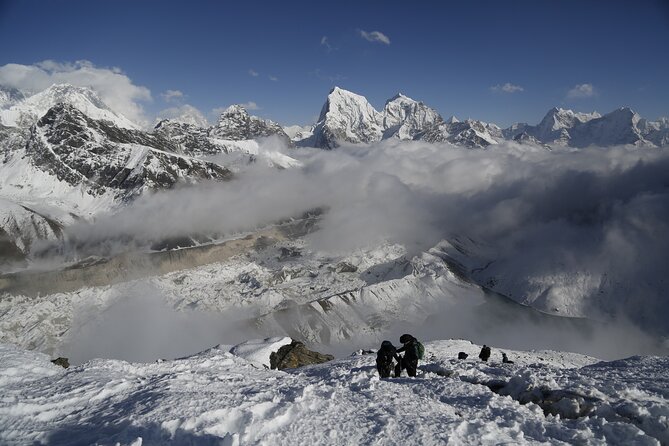
Kala Patthar reaches about 5,550 meters, the highest point on this route. The climb takes about two hours, and the reward is a dawn view toward Everest and the surrounding peaks.
I would treat this as the visual high point of the trek. Base Camp puts you near the expedition route, but Kala Patthar gives the broad mountain view many people picture when they think of Everest. The early start can be cold and tiring, especially after the Base Camp day, but the timing is chosen for the light.
After returning to Gorak Shep, you have breakfast and descend toward Pheriche, with about six hours listed. That descent is welcome, though it is not effortless. Loose ground and tired legs still require care.
The return through Pheriche, Namche, and Lukla
Day eleven continues toward Namche Bazaar, again taking about six hours. The route includes the area around Pangboche and its monastery, described as the oldest in the region, then follows the return path through Tengboche and toward Kyanj.
The return is not just a repeat of the ascent. You see familiar places from a different angle, and the downhill direction changes the strain on your legs. You also have more time to appreciate villages and mountain views that may have passed quickly during the climb.
Day twelve is the long return to Lukla, listed at about six hours. The trail passes mountain scenery and Sherpa hamlets before reaching the Hillary Suspension Bridge area and Lukla. Once there, the guide confirms the flight arrangements.
That final detail matters. The return flight is not guaranteed simply because it is written into the schedule. Weather and air traffic can still affect the plan, so keep a flexible attitude.
Flights, delays, and the value of a buffer
Day thirteen is set aside for the flight from Lukla, possibly through Ramechhap during the busy season, and then onward to Kathmandu. The flight itself is listed at about 30 minutes, while the Ramechhap airport section allows four hours. The guide provides transport to your accommodation after the flight.
The schedule says the flight depends on weather and availability. This is one of the most important practical facts in the entire trip. Past departures have included canceled Lukla flights because of erratic weather, and a surprise snowstorm has also affected at least one trip.
I strongly recommend keeping your international departure separate from this return day. The fourteenth day includes airport transfer for your flight home, but a weather delay can shift the entire sequence. The final day is otherwise free for extra Kathmandu plans if your schedule allows.
What the $1,300 price covers
At $1,300, the value depends on what you would otherwise have to arrange yourself. The package includes:
- Airport pickup and final departure transfer
- All listed fees and taxes
- Kathmandu to Lukla and return flights, or the Ramechhap routing
- Guide flight costs
- Two Kathmandu hotel nights with breakfast
- Thirteen breakfasts
- Eleven lunches
- Eleven dinners
Personal expenses, drinks, alcoholic beverages, and tips are not included. The number of included meals suggests that food is covered on nearly every trekking day, which keeps daily spending simpler.
The price does not remove every cost or uncertainty. You still need to budget for personal purchases, beverages, tips, and possible extra costs created by delays. Still, including the mountain flights is important because those tickets are a major part of the route’s logistics.
Guides, group size, and the human side of the trek
The experience is capped at eight people, a useful size for a trail where different walking speeds and altitude responses can quickly complicate a large group. A small party also gives you more room to ask questions and communicate when you feel tired or unwell.
Past departures have included guides named Ram, Bishnu, Rajesh, Prakash, Tilak, Binode, Sanjay, and Gore, along with porters such as Amer. Ram was especially noted for keeping a nervous walker calm, while Gore helped with gear, repaired shoes, and made careful decisions during a snowstorm. These details point to the kind of support that matters most here: patience, practical help, and good judgment.
You should still ask who will lead your particular departure and how porter support works before booking. The supplied information confirms guide assistance but does not specify a fixed guide for every date.
Who should book this trek
This trip suits you if you want the classic Everest route and can handle sustained walking at altitude. A moderate physical fitness level is required, but the itinerary is not an all-out speed challenge. The rest days help, though they do not make the altitude risk disappear.
It is a good match for families with older children or teenagers who are prepared for the effort, as well as adults seeking a structured first Himalayan trek. One past family departure included a granddaughter, with the guide helping keep the mood light during hard days.
It is less suitable if you need guaranteed flight times, hotel-style comfort every night, or a fixed schedule with no weather risk. June departures may still be possible, but monsoon conditions can bring rain, and the mountain flights remain dependent on weather.
Booking details and cancellation terms
Confirmation is provided when you book. Pickup is offered, mobile tickets are available, and group discounts are listed as features. The stated operating period runs from September 1, 2024, through August 12, 2026, with weekday hours of 9:15 AM to 5:15 PM.
You can cancel for a full refund up to three full days before the local start time. Cancellations or changes inside that period are not refunded or accepted. If poor weather cancels the experience, you are offered another date or a full refund. The same choice applies if the minimum number of people is not reached.
Should you book the Everest Base Camp Trek?
I would choose this trek if you want the established Everest route with flights, meals, hotel nights, airport transfers, acclimatization days, and a small group handled in one package. The strongest features are the sensible pacing, the Kala Patthar sunrise, the Sherpa cultural stops, and the practical support described by past departures.
Book only after accepting the hard truth of the route: Lukla flights can fail, weather can change the plan, and the highest days are physically demanding. Keep a buffer after the trek, ask about the exact flight routing and guide assignment, and arrive ready for basic mountain lodging.
For a first Everest Base Camp attempt, the package offers a clear route and useful support at a reasonable price. It is not carefree, but that is part of what makes the achievement meaningful.
FAQ
How long is the Everest Base Camp Trek?
The scheduled experience lasts approximately 14 days, including Kathmandu arrival and departure days, the trek, acclimatization stops, and flights between Kathmandu or Ramechhap and Lukla.
What is the price of the trek?
The listed price is $1,300.
Are airport transfers included?
Yes. Airport pickup on arrival and transport to the airport for final departure are included.
Are flights to Lukla included?
Yes. The package includes the client’s flight from Kathmandu to Lukla and back, or the Ramechhap to Lukla routing when that arrangement is used. Guide flight costs are also included.
Why might I fly through Ramechhap?
During the busy season, air traffic at Kathmandu airport may require flights to operate through Ramechhap. The itinerary includes a drive to Ramechhap in that situation.
Is food included?
Breakfast, lunch, and dinner are included on the listed trekking days. The package specifies 13 breakfasts, 11 lunches, and 11 dinners. Personal expenses, beverages, and alcohol are not included.
What level of fitness do I need?
The experience requires a moderate physical fitness level. You should be prepared for repeated walking days, high altitude, and the 5,550-meter climb to Kala Patthar.
How large is the group?
The maximum group size is eight people.
What happens if weather cancels a flight or the trek?
If poor weather cancels the experience, you can choose a different date or receive a full refund. Flights to and from Lukla may also be delayed or canceled, so keeping your schedule flexible is important.
Just added around Everest Region
- Day Tour to Everest Base Camp By Helicopter★ 5.0 · 16 reviews
- Kathmandu To Lukla By Helicopter Flight★ 5.0 · 6 reviews
- Luxury Everest Base Camp Trek – 11 Days★ 5.0 · 9 reviews
- Everest Base Camp Tour & View Point by Helicopter from Katmandu★ 5.0 · 3 reviews
- Everest base camp helicopter tour with Guarenteed Landing★ 4.0 · 7 reviews
- Everest base camp flight over by Helicopter from Kathmandu★ 5.0 · 10 reviews
- Everest Base Camp Helicopter Tour Stop at Hotel Everest View.★ 5.0 · 17 reviews
- Everest Base Camp Helicopter Tour★ 5.0 · 24 reviews
Everest Base Camp Treks, compared.
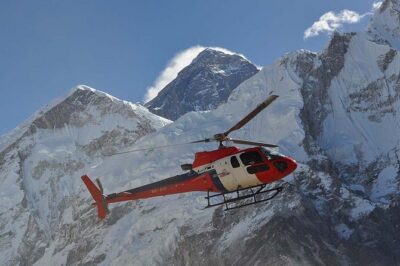
Everest Base Camp Trek with Helicopter Return from Gorakshep to Lukla
Read our review →Browse the lists this tour appears in