
Reviewed · EVEREST BASE CAMP TREKS
Everest Base Camp Trek
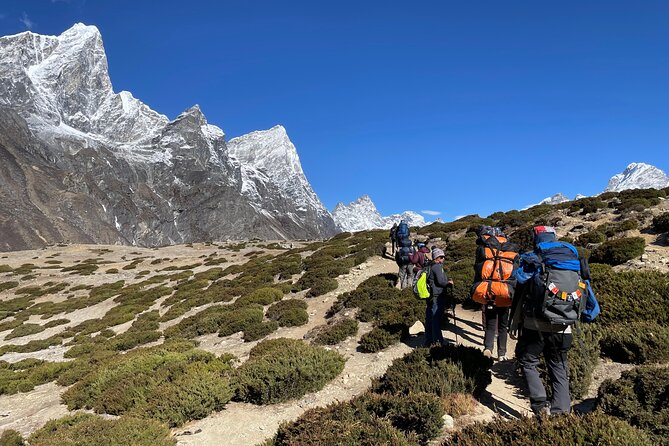
Everest Base Camp is not a sightseeing stop you simply tick off. You walk for days through Sherpa villages, thin mountain air, stone paths, monasteries, and high passes before reaching the foot of the world’s highest mountain. The route includes two acclimatization days, which matter far more than a fast schedule at this altitude.
I like the practical setup: a guide, one porter for every two trekkers, tea-house lodging, meals during the trek, and Kathmandu transfers are included. I also like the chance to see both Everest Base Camp and Kala Patthar, the high viewpoint on Day 10. The main drawback is that this is a demanding trip with basic rooms, long walking days, uncertain Lukla flights, and very limited comfort above Namche.
Key points at a glance
- Reach Everest Base Camp at 5,364 meters: The route passes through Gorak Shep before reaching the famous mountaineering base.
- Climb Kala Patthar at 5,545 meters: This is the trek’s highest point and a major reason to choose this itinerary.
- Two acclimatization stops: Rest days in Namche Bazaar and Dingboche help you adjust before the highest section.
- Sherpa culture along the trail: Namche Bazaar, Tengboche, and the mountain lodges give the trek a strong local character.
- Guide and porter support included: One porter is provided for every two people, while the guide leads the walking days and handles practical needs.
- Lukla flights shape the schedule: Delays can push the trip back, and a helicopter option costs at least $500 per person.
What this 14-day Everest trek is really like
This is a classic Khumbu trek with a brisk but workable schedule. You spend 14 days on the full program, including arrival and departure in Kathmandu, two flights between Kathmandu and Lukla, 11 nights or so on the trail, and two acclimatization days.
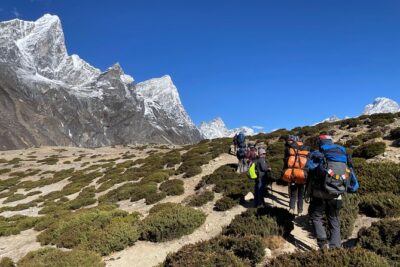
The walking itself is not a technical climb. You do not need ropes or mountaineering skills, but you do need strong physical fitness. The challenge comes from repeated six-hour walking days, steep sections, rocky trails, cold nights, and altitude that rises from 2,640 meters at Phakding to more than 5,500 meters at Kala Patthar.
The group can reach a maximum of 15 people. That is large enough to offer company but still small enough for a guide to keep an eye on the group. Ask before booking how many people are in your departure and who your guide will be. Guides associated with this operator include Pradip, also called Master Zi, and Laxman. Pradip has been especially praised for his mountain experience, humor, wildlife spotting, and calm support on difficult ground.
More Everest Base Camp treks:
- Everest Base Camp Trek – 14 Days
★ 5.0 · 1,499 reviews - Everest Base Camp Trekking
★ 5.0 · 485 reviews - Everest Base Camp Trekking – 13 Day
★ 5.0 · 365 reviews
Kathmandu arrival and the early Lukla flight
Your first day begins with airport pickup at Tribhuvan International Airport. A representative meets you after customs, holding a sign with your name, then takes you to the hotel. The program includes two nights in a standard three-star hotel in Kathmandu, one on arrival and one after the trek.
The next morning starts early, with a listed meeting time of 5:30 a.m. You fly from Kathmandu to Lukla, at 2,886 meters, then begin walking toward Phakding. The flight is short, but the schedule is not fully in your hands. Weather and airport conditions can delay or cancel flights, so do not plan a tight international connection immediately after returning from the mountains.
If a Lukla flight is canceled, the operator says it will try to move you to the following day, subject to availability. A helicopter can sometimes keep the itinerary moving, but the stated minimum cost is $500 per person. Travel insurance covering flight cancellation and delay is not just a nice extra here. It is a sensible part of your budget.
The walk to Phakding takes about four hours. It is a useful introduction rather than a major test. You are already at altitude, but the day is short enough to let your legs and lungs adjust after the flight.
Phakding to Namche Bazaar, the first serious climb
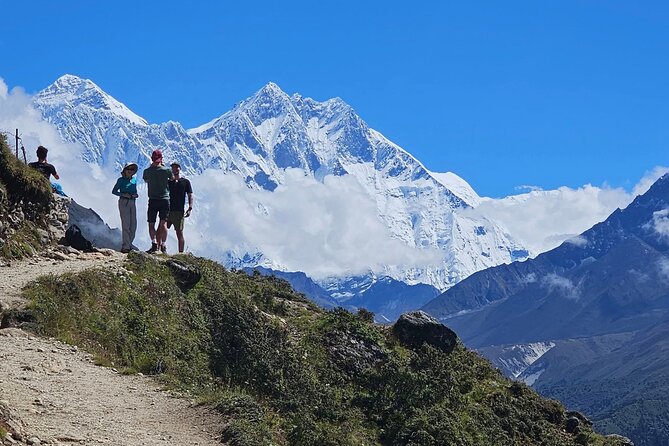
Day 3 takes you from Phakding to Namche Bazaar at 3,440 meters. Allow about six hours. Namche is the main commercial center of the Khumbu and the best place on the route to get a sense of Sherpa life before the trail becomes more remote.
This is also where the walking starts to feel real. You gain altitude, cross sections of mountain trail, and spend more time climbing. Your porter carries the main luggage, but you should keep your day pack light, with water, sunscreen, a spare jacket, camera, and anything you may need during the day.
The accommodation is in local lodges and tea houses. They are described as clean and comfortable, but you should not expect hotel-style privacy or facilities. Rooms are generally twin share, and a single supplement is available for $200. Hot showers may cost extra, and charging devices also costs extra in some villages.
The Namche acclimatization day
The rest day in Namche is not a day to stay in bed all morning. The point is to spend time at altitude, take a gentle walk, and return to sleep at the same elevation. That helps your body adjust before the trail climbs higher.
Namche is a good pause because you can use the time for practical chores. Check your layers, charge batteries where possible, refill water, and buy snacks if you need them. Electricity is available in some villages, but power may depend on solar supply, so spare batteries are useful.
The itinerary lists a six-hour acclimatization stop, though the exact walking plan is not explained. Ask your guide what outing is planned. The guide’s judgment matters here, especially if anyone develops a headache, nausea, unusual tiredness, or other altitude symptoms.
More trekking days out of Everest Region:
- Everest Base Camp Trek -14 Days
★ 5.0 · 321 reviews - Everest Base Camp Trekking – 2025/2026
★ 5.0 · 199 reviews - Everest Base Camp Trek
★ 5.0 · 193 reviews - Everest Base Camp Trek with Helicopter Return from Gorakshep to Lukla
★ 5.0 · 161 reviews
Tengboche and Dingboche, where the air gets thin
From Namche, you walk to Tengboche, listed at 3,867 meters, in about six hours. Tengboche is known for its monastery and its mountain setting. This is one of the trek’s most meaningful stops because it adds a spiritual and cultural layer to what could otherwise become a long series of uphill walks.
You then continue to Dingboche at 4,260 meters. The six-hour route takes you into a more exposed, high-altitude setting. The villages become smaller, the nights colder, and the effects of altitude more noticeable.
Dingboche gets its own acclimatization day. The schedule describes a walk toward the Chhukhung path before returning to Dingboche. This is a good design choice. The route gives you two rest days at useful points rather than saving all the adjustment time for lower elevations.
Do not judge an acclimatization day by how little distance you cover. At this height, the purpose is to move gently and sleep at the same altitude. Your guide should set the pace and watch how everyone is coping.
Lobuche, Gorak Shep, and Everest Base Camp
Day 8 goes from Dingboche to Lobuche at 4,930 meters. The route takes about six hours, with lunch at Dugla, listed at 4,595 meters. This is a harder day because you are now close to 5,000 meters and the body gets less oxygen with every step.
From Lobuche, you walk through Gorak Shep at 5,140 meters on the way to Everest Base Camp at 5,364 meters. The itinerary allows about six hours. The trail is rocky, and the description makes clear that the final section winds through rough ground rather than a smooth walking path.
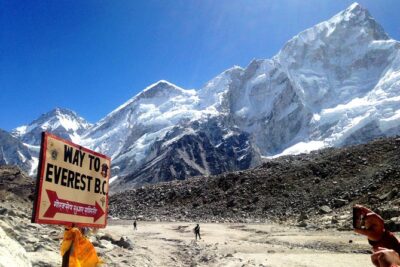
Everest Base Camp itself is a powerful goal, but keep your expectations realistic. You are not climbing Mount Everest, and the summit is not necessarily the clearest or most dramatic view from the base camp area. The achievement comes from reaching this remote point after days of walking, while the camp connects you with the expeditions and mountaineers who attempt the summit.
The night at Gorak Shep is likely to be the least comfortable part of the trip. It is high, cold, and basic. Keep your essentials close, follow your guide’s advice, and do not expect reliable hot water or easy charging.
Kala Patthar and the long return to Pheriche
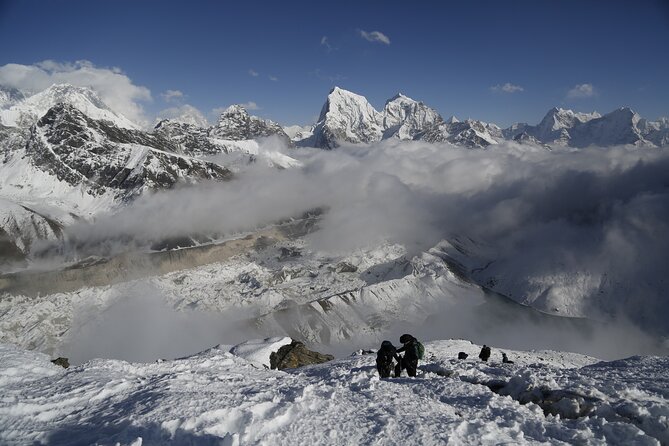
The next morning takes you from Gorak Shep to Kala Patthar at 5,545 meters, the highest point on the itinerary. You then descend to Pheriche at 4,243 meters. The full day is listed at about six hours, but the combination of an early high climb and a long descent can feel tougher than the time suggests.
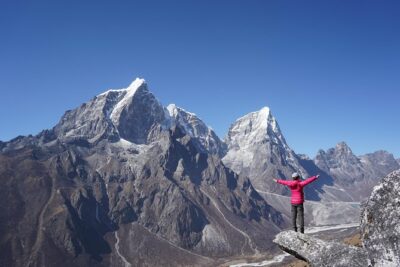
Kala Patthar is one of the strongest reasons to choose this particular route. It gives you a high mountain viewpoint, while Everest Base Camp provides the symbolic destination. If weather is clear, this is where you are most likely to appreciate the scale of the Everest range.
The descent to Pheriche is welcome, but do not treat it as an easy stroll. Descending puts stress on knees and ankles, and fatigue has built up over the previous days. Trekking poles, sturdy footwear, and a measured pace will help.
The following itinerary entry says Pheriche to Namche Bazaar, then describes a route from Tengboche to Namche. That wording appears inconsistent, so confirm the exact overnight stop and walking plan with the operator before departure. The intended route is clearly the return toward Namche, but precise day-by-day details matter on a high-altitude trek.
Returning through Namche to Lukla
The route eventually returns to Namche Bazaar, where you can enjoy lower altitude and more lodge facilities. From there, the walk to Lukla takes about six hours. The trail is familiar in reverse, but it will not feel identical. You now know what the route demanded on the way up, and the changing direction gives you different views.
Arriving in Lukla gives you a final night in the mountains before the flight back to Kathmandu. If your flight operates as planned, you return to Kathmandu the next day, transfer to your hotel, and have time to rest before airport drop-off on Day 14.
Build flexibility into your wider Nepal plans. A delayed Lukla flight can affect the return as easily as the outward journey. If you have an international flight soon after the scheduled return, ask about adding a buffer night.
What the $1,500 price includes
At $1,500 per person, this package offers solid value if you want organized support rather than handling the route alone. The listed inclusions cover airport pickup and drop-off, two Kathmandu hotel nights, tea-house accommodation during the trek, guide and porter services, meals on the trail, the TIMS card, a first-aid kit, government taxes, and service charges.
One porter serves two trekkers, which keeps your daily load manageable. You carry a day pack while the porter carries your main bag. Nepal’s domestic airline allowance is listed as 15 kilograms including hand luggage, and excess weight costs extra, so pack carefully.
Breakfast is included for 14 days, with 11 lunches and 11 dinners listed. Lunch and dinner in Kathmandu are not included. Alcoholic and nonalcoholic drinks are also extra, along with snacks, hot showers, charging, tips, souvenirs, and personal purchases.
The package does not include travel insurance. That is the largest financial gap to plan for, particularly because Lukla flight disruption can lead to an expensive helicopter transfer. The operator suggests allowing 10 to 15 percent of the tour cost for tips if the service meets your expectations.
Lodges, meals, water, and daily comfort
Tea-house accommodation is part of the experience, not just a cost-saving measure. You sleep in local lodges along the route, usually sharing a twin room. Facilities become more basic as you climb, and hot showers may be available only for a fee in some places.
Meals are taken at the lodges, with breakfast and dinner where you sleep and lunch chosen by the guide along the trail. Normal drinking water is available, and the operator recommends purification tablets. You can also buy bottled or boiled water, but those costs add up over many days.
Bring a good water bottle, purification tablets, sunscreen, spare batteries, and a warm spare layer. Your day pack should stay light, but it must carry what you need between lodges. Main luggage can be left in a Kathmandu hotel locker if you have clothing or belongings that are not needed on the mountain.
Who should book this trek?
This trip suits you if you want the classic Everest Base Camp route with organized logistics, local guide support, and a porter carrying most of your luggage. It is especially useful for first-time Himalayan trekkers who want help with lodging, meals, airport transfers, and altitude decisions.
It is not a good match if you want luxury accommodation, a relaxed walking schedule, or complete control over flight times. The tour requires strong fitness, and the highest days are demanding even for people who exercise regularly.
The strongest part of the arrangement is the human support. Pradip and Laxman are names worth asking about, while Niti is associated with careful pre-trip and post-trip coordination. Confirm the actual guide, group size, luggage limits, and flight plan before paying.
Should you book the Everest Base Camp Trek?
Book it if reaching Everest Base Camp and Kala Patthar is a major personal goal, and if you value a guide and porter system more than polished accommodation. The price covers many of the expensive and awkward pieces of the trek, while the route gives you Sherpa villages, Tengboche monastery, Namche Bazaar, and the high Khumbu in one compact program.
Think twice if you cannot allow schedule flexibility for Lukla flights or if basic tea-house rooms will make you miserable. For the right person, this is a serious physical challenge with strong cultural and mountain rewards, not a comfortable holiday. Free cancellation is available up to 24 hours before the start time, but flight disruption and insurance terms deserve careful checking before you commit.
FAQ
How long does the Everest Base Camp trek take?
The full program lasts approximately 14 days, including arrival and departure in Kathmandu, the Lukla flights, the trek, and two acclimatization days.
What is the price per person?
The listed price is $1,500 per person.
Where does the trek start?
The organized program begins with pickup at Tribhuvan International Airport in Kathmandu. The walking portion starts after the flight from Kathmandu to Lukla.
What is the highest point on the itinerary?
Kala Patthar is the highest point, at 5,545 meters. Everest Base Camp is listed at 5,364 meters.
Are meals included?
Breakfast is included for 14 days, along with 11 lunches and 11 dinners. Lunch and dinner in Kathmandu are not included, and drinks are extra.
Is accommodation included?
Yes. The package includes two nights in a standard three-star hotel in Kathmandu and tea-house or lodge accommodation during the trek. Rooms are generally twin share.
Is a porter included?
Yes. The package provides one porter for every two trekkers. You normally carry a day pack, while the porter carries your main luggage.
What happens if the Lukla flight is canceled?
The operator says it will try to reschedule the flight for the following day, subject to availability. A helicopter may be arranged for at least $500 per person, at your own expense, so travel insurance covering flight disruption is strongly advised.
Just added around Everest Region
- Day Tour to Everest Base Camp By Helicopter★ 5.0 · 16 reviews
- Kathmandu To Lukla By Helicopter Flight★ 5.0 · 6 reviews
- Luxury Everest Base Camp Trek – 11 Days★ 5.0 · 9 reviews
- Everest Base Camp Tour & View Point by Helicopter from Katmandu★ 5.0 · 3 reviews
- Everest base camp helicopter tour with Guarenteed Landing★ 4.0 · 7 reviews
- Everest base camp flight over by Helicopter from Kathmandu★ 5.0 · 10 reviews
- Everest Base Camp Helicopter Tour Stop at Hotel Everest View.★ 5.0 · 17 reviews
- Everest Base Camp Helicopter Tour★ 5.0 · 24 reviews
Everest Base Camp Treks, compared.
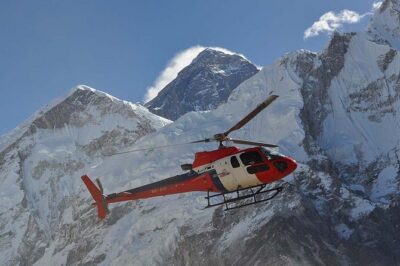
Everest Base Camp Trek with Helicopter Return from Gorakshep to Lukla
Read our review →Browse the lists this tour appears in