
Reviewed · EVEREST BASE CAMP TREKS
Everest Base Camp Trek
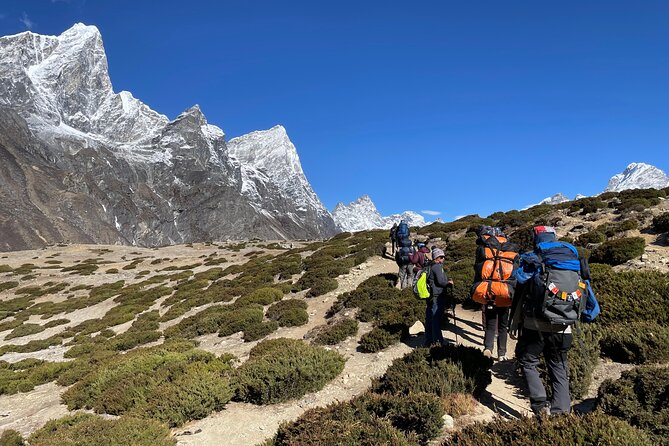
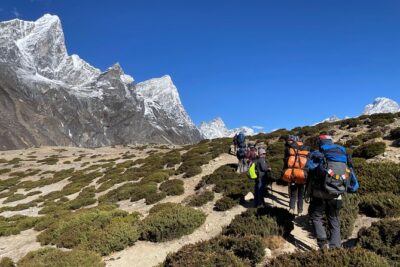
Everest Base Camp is the headline, but the real reward is the long approach through Sagarmatha National Park. You walk past suspension bridges, Buddhist monasteries, rhododendron forests, high villages, glaciers, and the Dudh Koshi River before reaching the foot of the world’s highest mountain.
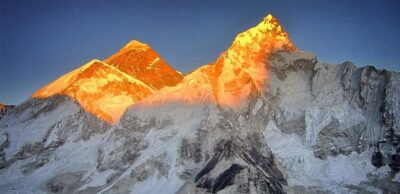
I like the sensible acclimatization day in Namche Bazaar and the practical support package: tea house lodging, three meals a day, hot soup at high elevations, a guide, and one porter for every two trekkers. The Kala Patthar sunrise climb is another strong point, giving you a better Everest panorama than Base Camp itself.
The catch is the altitude and the pace. This is a serious mountain trek, not a scenic stroll, and the itinerary includes several long uphill days above 4,000 meters. Lukla flights can also shape the schedule, so build flexibility into your wider Nepal plans.
Key points to know before booking
- Reach Everest Base Camp at 5,364 meters: The trek includes the hike from Gorakshep to Base Camp and back on Day 7.
- Climb Kala Patthar at about 5,545 meters: This early hike is the best viewing opportunity in the itinerary for Mount Everest and the surrounding peaks.
- Use tea houses along the trail: Lodging is simple, practical mountain accommodation, with meals included during the trek.
- Travel with private-group arrangements: Only your group participates, with a professional guide and porter service at a ratio of two trekkers to one porter.
- Allow for a very early start: The meeting time at Tribhuvan Airport is 5:15 am for the flight to Lukla.
- Check two itinerary details before departure: One version lists Dingboche to Lobuche as four hours and another says five, while the final day indicates a hotel night in Kathmandu after the flight.
Why this classic route still earns its reputation
This route works because it gives you more than a single mountain viewpoint. You begin in Kathmandu, fly into Lukla, and then walk gradually into the Khumbu region. The scenery changes by the day, from lower forests and rivers to bare high-country trails, glaciers, and enormous Himalayan peaks.
The cultural side matters just as much. Namche Bazaar is a major Sherpa settlement, Tengboche has one of the region’s best-known monasteries, and the path passes Buddhist monuments, prayer sites, villages, and suspension bridges. You are not simply heading toward a sign at Base Camp. You are moving through a living mountain region.
The 12-day schedule is compact. It includes one clear acclimatization day in Namche, followed by a steady climb through Tengboche, Dingboche, Lobuche, and Gorakshep. That makes the trip efficient, but it also leaves little room for delays or a slow day caused by altitude.
More Everest Base Camp treks:
- Everest Base Camp Trek – 14 Days
★ 5.0 · 1,499 reviews - Everest Base Camp Trekking
★ 5.0 · 485 reviews - Everest Base Camp Trekking – 13 Day
★ 5.0 · 365 reviews
Kathmandu to Lukla: an early start and a dramatic beginning
Your organized pickup begins with transport from Tribhuvan Airport in Kathmandu. The listed meeting time is 5:15 am, so expect a very early morning. The package includes private airport transfers for both international and domestic flights, which removes some of the usual confusion in Kathmandu.
The flight to Lukla takes about 25 minutes. The route is short, but it quickly changes the feel of the trip. You leave the capital behind and land in a mountain town that serves as the starting point for the trek.
After arriving, you begin walking toward Phakding. The first trek takes about three hours and reaches Phakding at 2,650 meters. The trail passes through forests, Buddhist monasteries, and local settlements. On a clear day, you might catch a view of Kanguru Peak.
This is a useful first day because the walking time is moderate, but do not treat it as a free pass. The flight, early start, unfamiliar trail, and change in elevation can make the opening day feel longer than the numbers suggest.
Phakding to Namche Bazaar through rivers and villages
Day 2 is a bigger step up, with about six hours of walking to Namche Bazaar at 3,440 meters. The route follows rivers and waterfalls, crosses suspension bridges, and passes through villages such as Monjo and Jorsalle.
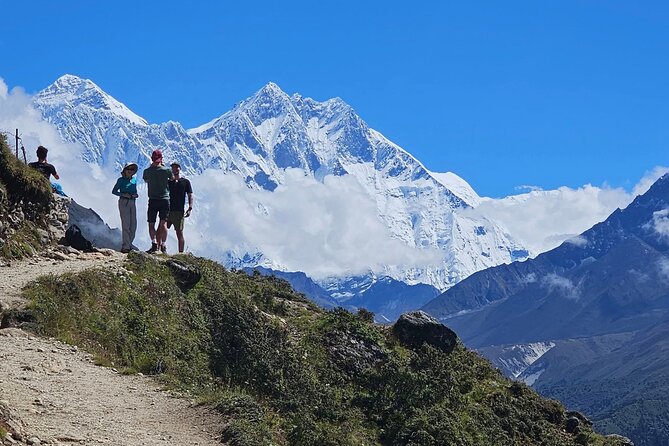
Lunch is planned around Monjo or Jorsalle. Near Namche, the trail climbs more sharply. A viewpoint near Top Danda may offer the first sight of Mount Everest, depending on weather and visibility.
Namche is one of the most important stops on the route. It is not only a place to sleep. It is where the itinerary gives your body time to adjust before the trail rises much higher. The town also has the Sagarmatha National Park museum and opportunities to buy souvenirs.
Namche acclimatization: a day that earns its place
The third day is set aside for acclimatization and local exploration. You can hike toward the Everest View Point and see nearby peaks such as Kusum Kanguru, Taboche, and Khonde. You can also explore Namche itself and visit the national park museum.
I like this pause because the itinerary does not rush straight from the low trail to the high settlements. You still walk, but the day is intended to help you adjust rather than simply add distance.
The schedule describes several possible nearby sights rather than one fixed excursion. Ask your guide how the day will be organized for your group, especially if weather or energy levels change. This is also a sensible time to check your gear, batteries, water supply, and personal spending money before the more remote sections.
More trekking days out of Everest Region:
- Everest Base Camp Trek -14 Days
★ 5.0 · 321 reviews - Everest Base Camp Trekking – 2025/2026
★ 5.0 · 199 reviews - Everest Base Camp Trek
★ 5.0 · 193 reviews - Everest Base Camp Trek with Helicopter Return from Gorakshep to Lukla
★ 5.0 · 161 reviews
Tengboche and its important monastery
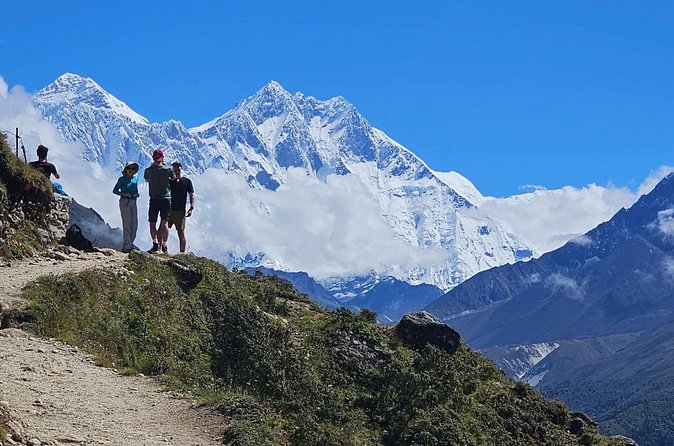
From Namche, you walk for about five hours to Tengboche at 3,860 meters. The trail passes through rhododendron forest and follows the river system before reaching the settlement.
Tengboche Monastery is the main attraction here. The itinerary includes a visit, giving you a chance to see monks and local religious practices. This stop adds meaning to the trek. The Himalayas are not just scenery, and the monastery helps connect the route to the beliefs and daily life of the Khumbu.
The night at Tengboche also marks a shift in the trip. You are now higher, the air is thinner, and the trail ahead becomes more demanding. The descent and ascent patterns can be tiring even when the walking time looks manageable.
Dingboche at 4,400 meters
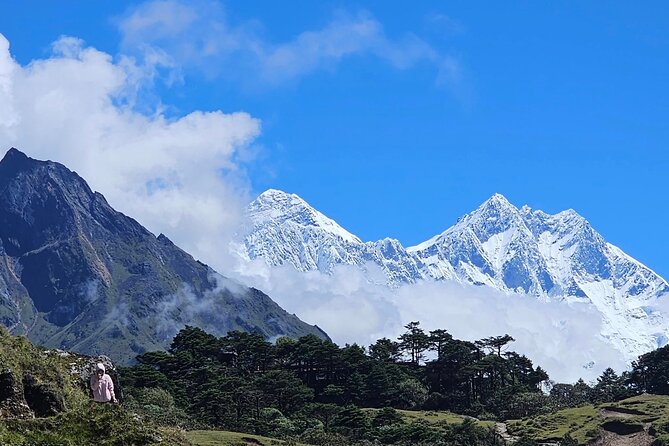
Day 5 takes about five hours from Tengboche to Dingboche. The plan places breakfast in Tengboche, lunch around Pangboche or Somare, and dinner in Dingboche.
Dingboche sits at 4,400 meters and is a major altitude milestone. From here, the scenery becomes more open and alpine, with views toward peaks including Island Peak, although the exact visibility will depend on weather.
The itinerary does not list a separate acclimatization day in Dingboche. That makes the steady pace and careful attention to how you feel especially important. You should tell your guide promptly if you are struggling, rather than waiting for symptoms to worsen.
The package includes hot soup in high places, which is a small but welcome detail in cold conditions. Personal extras such as hot showers, battery charging, bottled water, laundry, and bar bills are not included, so carry a budget for these costs.
Lobuche and the road to Gorakshep
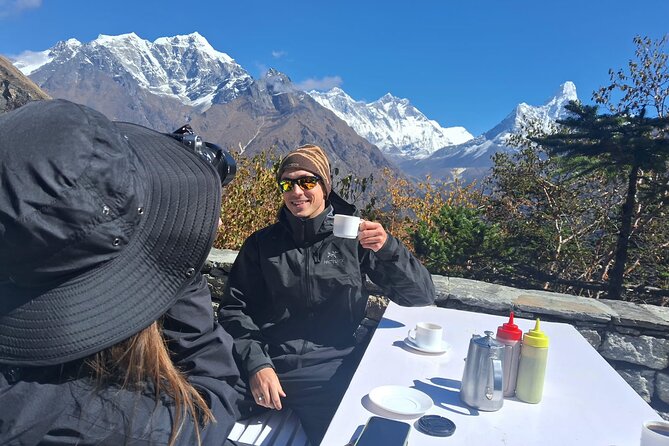
The next stage takes you from Dingboche to Lobuche, listed at 4,910 meters. The timing is not completely consistent: one part of the schedule says about four hours, while the detailed plan says about five. Treat five hours as the safer estimate and ask the operator to confirm the final schedule.
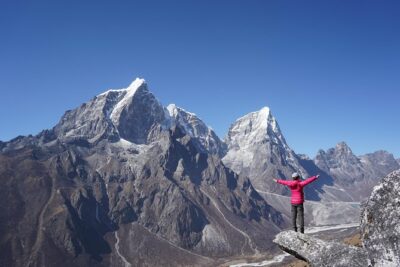
This section gives you clear views toward Nuptse, Island Peak, Lobuche Peak, and Taboche. The mountain scenery becomes the main event, but the altitude is now a serious factor. The walk may be shorter than some lower sections, yet it can feel harder because each step requires more effort.
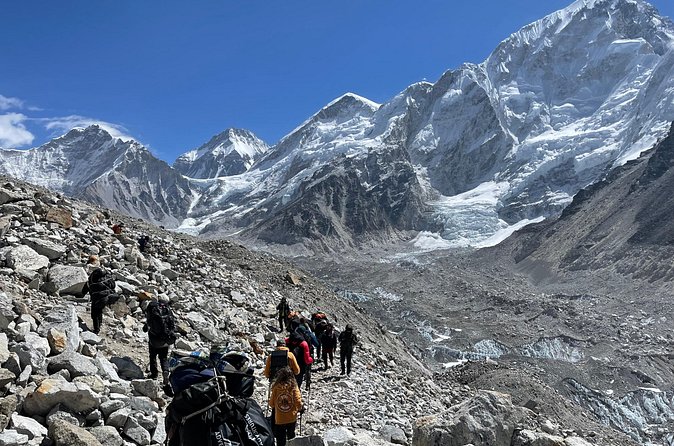
From Lobuche, you continue to Gorakshep at 5,150 meters. This takes about three and a half hours along a steep trail. You can expect views of the Khumbu Glacier, Kala Patthar, and Everest.
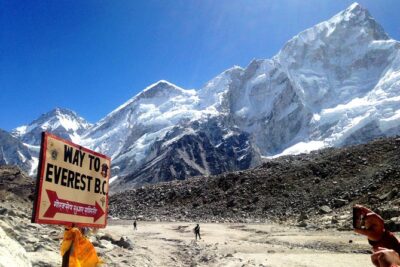
Gorakshep is the base for the day’s main goal. After lunch, you hike toward Everest Base Camp, crossing rough ground around the glacier and a small lake before reaching 5,364 meters.
Everest Base Camp: the achievement at 5,364 meters
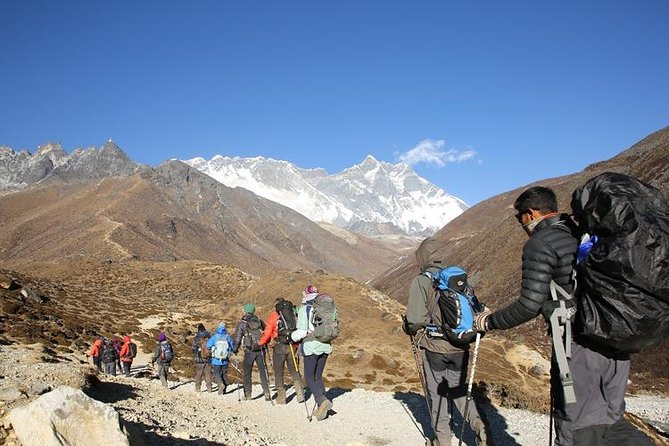
The hike from Gorakshep to Base Camp and back is one of the longest and most demanding parts of the journey, even though the itinerary gives it as a separate excursion after the morning walk to Gorakshep.
At Base Camp, you can take photographs and absorb the scale of the Khumbu Glacier and surrounding peaks. The site is closely linked to mountaineering expeditions, but the views from here are not necessarily the best place to see the summit of Everest.
That is why the following morning matters so much. Base Camp is the destination written on the itinerary, but Kala Patthar is the better viewing platform.
Kala Patthar for the best Everest panorama
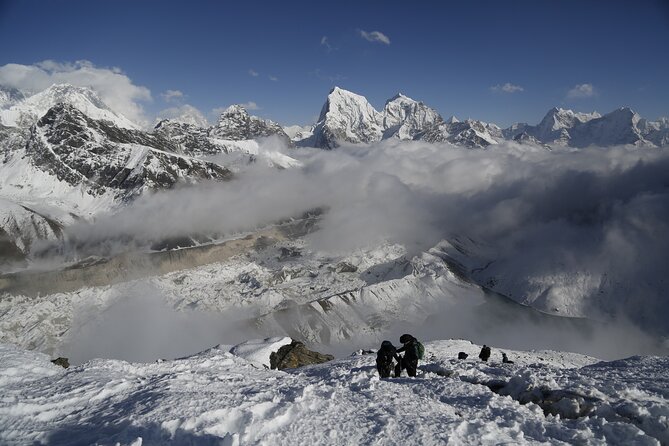
You leave early on Day 8 for the climb to Kala Patthar, which takes about three hours. At roughly 5,545 meters, this is the highest point in the schedule and the place designed for the clearest Everest views.
After the viewpoint, you descend to Gorakshep for breakfast and continue to Lobuche, a walk of about two and a half hours. This day combines a high climb with a long descent, so it is not an easy victory lap.
The early start is worth understanding. Mountain weather can change quickly, and the itinerary clearly treats the morning viewpoint as a priority. Bring warm clothing and keep your camera or phone protected from the cold, since the best light comes early and the wait at the viewpoint can be chilly.
The return through Pangboche, Namche, and Monjo
The return begins with a long descent from Lobuche to Tengboche, about five and a half hours. You stop around Pangboche and Deboche for lunch, with more monasteries, stupas, bridges, and rivers along the route.
Day 10 continues from Tengboche to Monjo through Namche Bazaar. The total walking time is about six hours. You first pass through rhododendron forest, stop for lunch in Namche, then continue through Jorsalle to Monjo.
This part of the route may feel easier because you are losing altitude, but downhill walking can be hard on knees and feet. Take the descents steadily. The scenery also deserves attention on the way back, since familiar places can look quite different in changing light and weather.
From Monjo, the trail returns toward Lukla in about five hours. You pass through Phakding, cross the Dudh Koshi River on suspension bridges, and continue along the trail to Lukla.
What the $2,500 price covers
At $2,500, the price is not simply paying for a guide and a route. It includes airport transfers, domestic transport, tea house accommodation, three meals during the trek, hot soup at high elevations, a farewell dinner in Kathmandu, a professional guide, and porter support for two trekkers per porter.
It also includes guide and porter insurance, government and local taxes, a trekking map, a company T-shirt, and a trip completion certificate. Those inclusions reduce the number of small arrangements you need to make yourself.
You still need to budget for a Nepal visa, international flights, personal travel and rescue insurance, and personal purchases on the trail. Hot showers, battery charging, water, laundry, and bar bills are specifically excluded. Tips for the guide and porters are also extra.
The value depends on how much organization you want. If you prefer a private group with transport, meals, lodging, guide services, and porter support arranged together, the package is easier to manage than building the trek piece by piece. If you already have a guide, insurance, and mountain logistics organized, some inclusions may be less useful to you.
Guides, group style, and practical support
This is a private activity, so only your group participates. That gives you more control than a large shared departure, though the itinerary remains fairly fixed because the Lukla flights and mountain lodges shape the route.
The company has used guides named Ajay and Jangbu on other mountain trips described in the supplied material. Their names should not be treated as a guarantee for this Everest itinerary, so confirm your assigned guide before departure if that matters to you.
The guide and porter arrangement is one of the package’s strongest practical features. A ratio of one porter for two trekkers limits what you personally need to carry, but pack carefully and keep essential items in your own day bag.
A moderate fitness level is required. The schedule includes six-hour days, steep sections, cold high-altitude mornings, and a climb above 5,500 meters. Your travel and rescue insurance is not included, so arrange that separately before setting off.
Should you book this Everest Base Camp trek?
Book it if you want the classic Everest route in a private group, with the main logistics handled for you. The combination of Namche acclimatization, Tengboche Monastery, Base Camp, and Kala Patthar gives you both cultural stops and major mountain views.
Think twice if you want a slow schedule with several spare days. This 12-day plan is efficient and physically demanding, and weather-related flight changes could affect the timing. Confirm the Lobuche walking time, the final Kathmandu hotel arrangement, and the identity of your guide before paying.
For a fit person who wants a direct, well-supported route to Everest Base Camp, this package offers a useful balance of structure and independence. Just arrive prepared for long days, high altitude, simple lodging, and the possibility that the mountains, not the timetable, will have the final word.
FAQ
How long is the Everest Base Camp Trek?
The planned duration is 12 days, including flights between Kathmandu and Lukla, the trek to Everest Base Camp, the Kala Patthar climb, and the return to Kathmandu.
Where does the trek begin?
The experience begins at Tribhuvan Airport in Kathmandu, Nepal. The listed meeting time is 5:15 am before the flight to Lukla.
How long is the flight from Kathmandu to Lukla?
The flight takes about 25 minutes. The return flight from Lukla to Kathmandu is also listed as approximately 25 minutes.
What accommodation is included?
Tea house accommodation during the trek is included. The final-day plan says an agent will take you to a hotel in Kathmandu after returning from Lukla, so confirm whether that final overnight stay is included in your booking.
Are meals included?
Three meals a day during the trek are included, along with hot soup in the high-altitude sections. Personal drinks and purchases such as bar bills and water are not included.
Is porter support provided?
Yes. Porter service is included at a ratio of two trekkers to one porter. Insurance for the guides and porters is also included.
What is not included in the price?
Nepal visa fees, international flights, your travel and rescue insurance, personal expenses, hot showers, battery charging, laundry, water, bar bills, extra Kathmandu nights outside the itinerary, and tips for guides and porters are not included.
Just added around Everest Region
- Day Tour to Everest Base Camp By Helicopter★ 5.0 · 16 reviews
- Kathmandu To Lukla By Helicopter Flight★ 5.0 · 6 reviews
- Luxury Everest Base Camp Trek – 11 Days★ 5.0 · 9 reviews
- Everest Base Camp Tour & View Point by Helicopter from Katmandu★ 5.0 · 3 reviews
- Everest base camp helicopter tour with Guarenteed Landing★ 4.0 · 7 reviews
- Everest base camp flight over by Helicopter from Kathmandu★ 5.0 · 10 reviews
- Everest Base Camp Helicopter Tour Stop at Hotel Everest View.★ 5.0 · 17 reviews
- Everest Base Camp Helicopter Tour★ 5.0 · 24 reviews
Everest Base Camp Treks, compared.
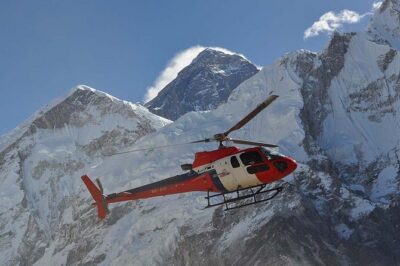
Everest Base Camp Trek with Helicopter Return from Gorakshep to Lukla
Read our review →Browse the lists this tour appears in