
Reviewed · EVEREST BASE CAMP TREKS
Everest Base Camp Trek: A short EBC Trek to Iconic Himalaya
Everest Base Camp is not a casual mountain walk. It is a demanding route to 5,364 meters, with thin air, long days, suspension bridges, and a final push beside the Khumbu Glacier. The reward is a front-row view of Everest, Lhotse, and Nuptse, plus the unmistakable thrill of reaching the famous base camp.
I like two things here. First, the route passes through real Sherpa communities rather than racing straight to the finish. Second, the price of $681 per person includes meals, a guide, permits, trekking gear, and airport transfers, which gives the package useful value. The catch is the schedule: nine days is fast, and the plan does not include a full acclimatization day in both Namche Bazaar and Dingboche.
Key points to know before you book
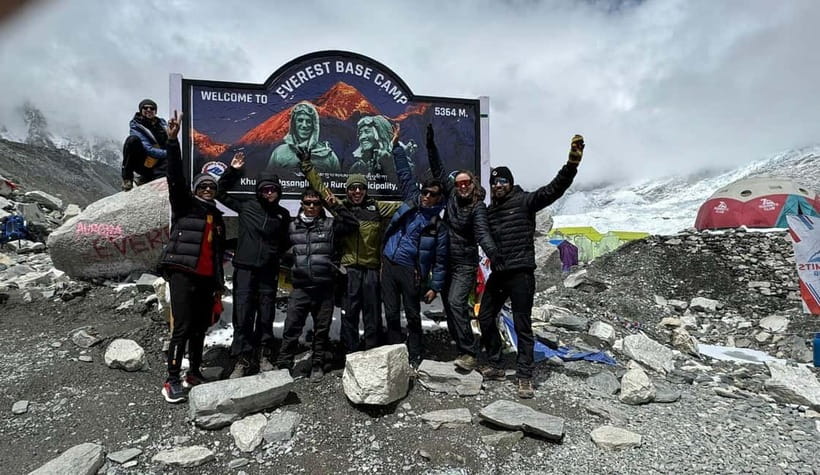
- The route reaches 5,364 meters at Everest Base Camp, with a sunrise hike to Kala Patthar at 5,545 meters.
- The nine-day schedule is quick, with walking days often lasting five to eight hours.
- Sherpa culture is part of the route, especially in Namche Bazaar and at Tengboche Monastery.
- Meals, a guide, permits, a sleeping bag, down jacket, duffle bag, and trekking pole are included, but drinks and flights are extra.
- Recent guide support has been highly praised, with Ramesh, Palden, and coordinator Sobit named for attentive and helpful service.
- Mountain weather can disrupt Lukla flights, so you need at least one spare day before your international departure.
Why this short Everest Base Camp trek is appealing
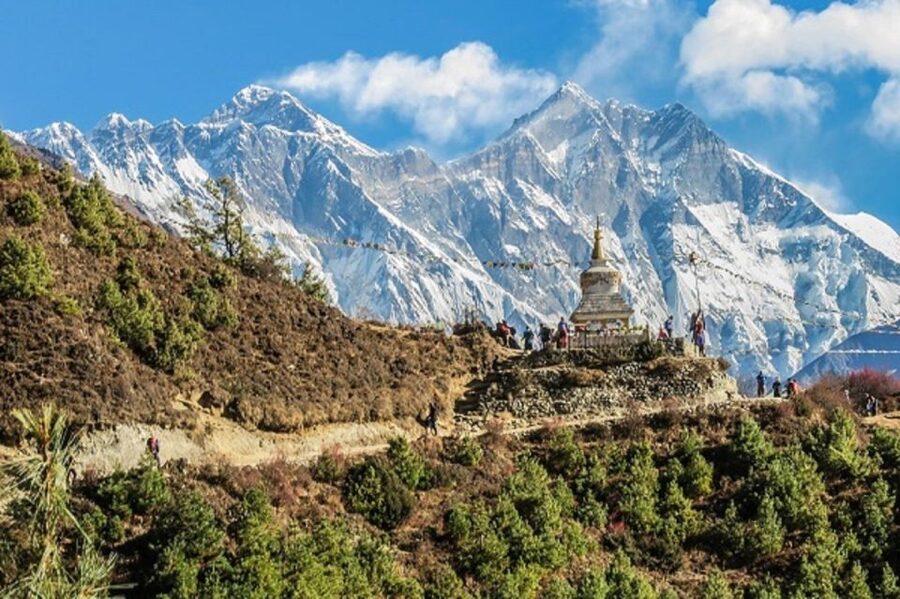
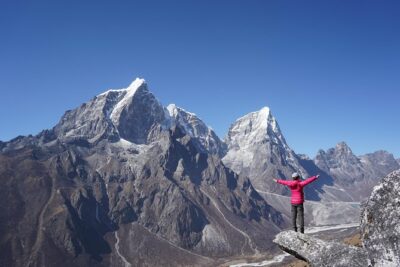
The classic Everest Base Camp route is famous for good reason. You begin with a flight toward Lukla, then walk through pine and rhododendron forests, cross high suspension bridges, and climb into a world of stone villages and snowy summits.
This version covers about 130 kilometers round trip and finishes in nine days. That makes it useful for people with limited holiday time, but it also demands more from your legs and lungs. You should be able to walk four to five hours a day at high altitude, with several days lasting much longer.
The itinerary is not a gentle introduction to trekking. It includes a rapid climb from Lukla at about 2,860 meters to Namche Bazaar at 3,440 meters, then continues to Tengboche, Dingboche, Lobuche, Gorak Shep, and Base Camp. The altitude gains are the main challenge, not technical climbing.
You are not climbing Mount Everest itself. You are walking to the staging area used by mountaineering expeditions, then climbing Kala Patthar for one of the best viewpoints in the region. That distinction matters. The route is accessible to fit trekkers, but it is still physically serious.
More Everest Base Camp treks:
- Everest Base Camp Trek – 14 Days
★ 5.0 · 1,499 reviews - Everest Base Camp Trekking
★ 5.0 · 485 reviews - Everest Base Camp Trekking – 13 Day
★ 5.0 · 365 reviews
Day 1: Lukla to Phakding begins with a dramatic flight
The trip starts with an early flight from Kathmandu to Lukla. At times, heavy air traffic means the flight leaves from Ramechhap instead. In that case, you will drive about four hours from Kathmandu before boarding the Lukla flight.
This is an important practical detail. The flight is short, but the overall morning can be long. Your pickup time depends on your Kathmandu location and flight schedule, and you need to be at the airport at least one hour before departure.
From Lukla, you walk about three hours to Phakding, at 2,610 meters. This is a sensible opening day because it lets your body begin adjusting before the higher sections. The trail introduces you to the basic rhythm of the trek: walk, eat, rest, and repeat.
Phakding is a simple overnight stop. Do not expect luxury. The standard accommodation is a trekking lodge or guesthouse, and rooms can be modest. That is part of the deal at this altitude, where practical shelter matters more than decoration.
Day 2: Namche Bazaar brings the first major climb
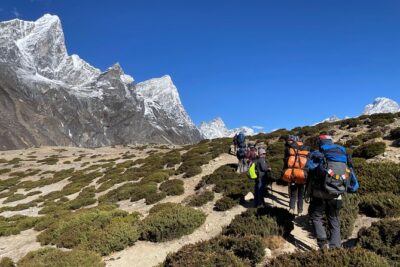
The walk from Phakding to Namche Bazaar takes about six to seven hours. The route climbs steadily through the Khumbu region, with suspension bridges and mountain scenery becoming more dramatic as you go.
Namche Bazaar sits at 3,440 meters and is one of the most important settlements on the route. It is a trading center for the surrounding Sherpa villages and a key place to pause before going higher.
The schedule describes acclimatization in Namche, but the nine-day plan does not provide a separate extra day here. That is a weakness for anyone new to high-altitude trekking. If you can add one or two days, using extra time in Namche and Dingboche is the best adjustment you can make.
You should not treat acclimatization as wasted time. It gives your body a chance to respond to thinner air and makes the later stages more manageable. The operator specifically recommends extra days for beginners or anyone who wants a more comfortable pace.
Day 3: Tengboche combines mountain views and Sherpa culture
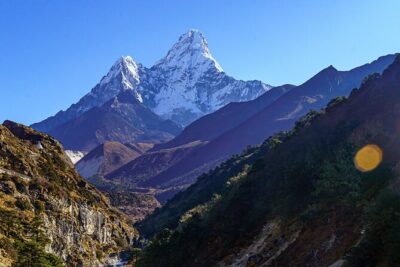
From Namche, you walk five to six hours to Tengboche, at 3,860 meters. The route brings broad views of Himalayan peaks, including Ama Dablam, one of the most recognizable mountains in the region.
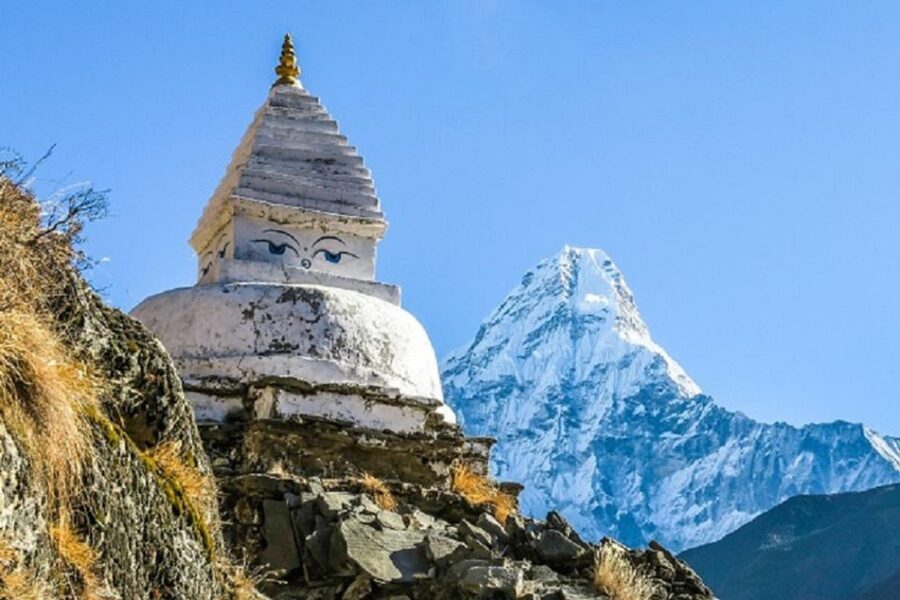
Tengboche is best known for its monastery. A visit here gives the trek a cultural and spiritual side that a simple point-to-point hike would miss. You are not only counting meters toward Base Camp. You are passing through a living Sherpa region with its own traditions and religious practices.
The day is long enough to feel demanding, but it is not yet the hardest stretch. The steady climb continues, and the scenery changes as forests give way to more open, high-altitude terrain.
More trekking days out of Everest Region:
- Everest Base Camp Trek -14 Days
★ 5.0 · 321 reviews - Everest Base Camp Trekking – 2025/2026
★ 5.0 · 199 reviews - Everest Base Camp Trek
★ 5.0 · 193 reviews - Everest Base Camp Trek with Helicopter Return from Gorakshep to Lukla
★ 5.0 · 161 reviews
Day 4: Dingboche is where altitude becomes serious
The walk from Tengboche to Dingboche takes about five to six hours. Dingboche sits at 4,410 meters, so the altitude becomes a more serious concern here.
The plan includes an acclimatization day in Dingboche, but, like Namche, the standard nine-day schedule moves on without a full rest day. That is why the advertised duration should be understood as a short version of the trek rather than the most relaxed version.
You will want warm layers, gloves, thermal clothing, good socks, and a dependable jacket by this point. Temperatures can feel very different from the lower valleys, and the walking pace naturally slows as the air thins.
Dingboche is a useful place to judge your condition. If you are struggling with altitude symptoms, adding time here is wiser than forcing the schedule. A slower trek is far better than turning a memorable route into an avoidable medical problem.
Day 5: Lobuche leads into the high valley
The five to six-hour walk from Dingboche to Lobuche reaches 4,910 meters. By now, the route feels stark and exposed, with fewer trees and more rock, ice, and snow-covered peaks.
Lobuche is a practical overnight stop before the push to Gorak Shep and Base Camp. The lodging remains basic, and the higher you go, the more you should focus on rest, hydration, and keeping your clothing dry.
This is also the point where the short schedule shows its cost. You have already gained a great deal of altitude in just a few days. Fit trekkers may handle it well, but beginners should strongly consider adding one or two days.
Day 6: Gorak Shep and Everest Base Camp are the big test
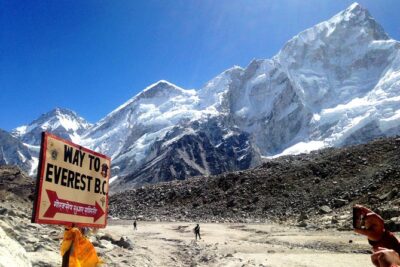
This is the longest and most important day. You walk from Lobuche to Gorak Shep at 5,140 meters, then continue to Everest Base Camp at 5,364 meters. The full walking time is about seven to eight hours.
Gorak Shep is the final overnight settlement on the route. From there, the trail follows the Khumbu Glacier toward Base Camp. The scenery becomes more severe and dramatic, with glacial formations, high ridges, and views toward the Khumbu Icefall.
The Khumbu Icefall is one of the visual highlights of the trip. It is a huge, broken section of glacier, famous for its hazards and for its place on the route used by climbers heading toward Everest. From the trekking route, you see its scale without taking on the mountaineering danger.
Reaching Base Camp is a personal milestone rather than a comfortable sightseeing stop. You may be tired, cold, and moving slowly. That is exactly why the moment matters. The route asks you to keep going when every step takes more effort than it would at sea level.
You return to Gorak Shep for the night. Do not expect a leisurely evening. The combination of altitude, cold, and a long walking day makes this a demanding part of the trip.
Day 7: Kala Patthar delivers the best sunrise view
The early hike to Kala Patthar reaches 5,545 meters, higher than Everest Base Camp itself. The goal is the sunrise panorama, with Mount Everest and the surrounding peaks catching the first light.
This is often the visual high point of the trek. Base Camp gives you the satisfaction of reaching a famous destination, but Kala Patthar offers the broader view. From the summit, you can see Everest, Lhotse, Nuptse, and the surrounding Himalayan peaks.
After the sunrise hike, you descend to Pheriche at 4,371 meters. The day takes about seven to eight hours, so it combines an early start, a steep climb, and a long descent.
The descent is welcome for your breathing, but it can be hard on tired knees. Good hiking shoes and trekking poles are useful here. A trekking pole is included if you need one and return it after the trek.
Day 8: The return to Namche feels different
The walk from Pheriche to Namche Bazaar takes about six to seven hours. You retrace part of the route, but descending gives you a new view of the villages, bridges, and peaks.
At lower altitude, you may feel stronger again. This is one of the pleasant surprises of a high-altitude trek: the same body that felt slow and heavy above 5,000 meters can feel much better after losing elevation.
Namche is a welcome stop before the final walk to Lukla. It gives you a last chance to enjoy the Sherpa setting before leaving the main mountain route.
Day 9: Lukla and the flight back to Kathmandu
The final trekking day takes you from Namche to Lukla in about six to seven hours. You then fly back to Kathmandu.
This is where you need to plan carefully. Lukla flights depend on mountain weather, and delays can affect your international departure. The operator advises allowing at least one buffer day before your flight home. I consider that essential, not optional.
The nine-day program ends in Kathmandu after the flight. A special cultural show and farewell dinner are included, giving you a softer landing after the physical effort of the trek.
What the $681 price really covers
At $681 per person, this is a strong package price for a guided trek, but you need to read the inclusions closely.
The price includes airport pickup and departure services related to the trek, standard trekking lodge accommodation, breakfast, lunch, dinner, some seasonal fruit, an experienced guide, national park and local entrance fees, and TIMS registration.
You also receive a sleeping bag, down jacket, duffle bag, and trekking pole if needed. A T-shirt or cap and a trip certificate are included, along with the cultural show and farewell dinner in Kathmandu.
The biggest extra cost is the Kathmandu to Lukla round-trip flight. The company can arrange it, or a helicopter ticket, but the airfare is not included in the $681. Hotel nights in Kathmandu before and after the trek are also extra.
Drinks, tea, coffee, bottled water, laundry, communication, personal gear, and personal expenses are not covered. Porter service is available by arrangement, but it is not listed as part of the standard price.
For the money, the package is best suited to someone who already owns suitable hiking clothing and wants a guide-led route without paying for a large luxury setup. The value is less impressive if you need to add flights, hotels, a porter, equipment, and several extra days.
Guides and support from Kathmandu to the trail
Guide support matters on this route, especially when the itinerary moves quickly. Recent trips have specifically praised Ramesh for being attentive and Palden for his friendly work with the trekking team. Sobit has handled coordination from Kathmandu and helped with practical needs during the trip.
Those names give you useful points of contact when booking. Ask which guide is assigned to your departure, whether porter support is arranged, and what happens if weather changes the Lukla flight schedule.
The available guide languages include English, Chinese, Korean, Russian, Traditional Chinese, and Japanese. That is helpful for international groups, though you should confirm your preferred language before booking.
What to pack for a nine-day high-altitude trek
The required clothing list is simple but important:
- Warm clothing and thermal layers
- Hiking shoes
- A warm jacket
- Gloves
- Several pairs of socks
- Hiking pants
- Personal adventure gear and equipment
The company provides a sleeping bag and down jacket, but you remain responsible for your personal trekking equipment. Comfortable, broken-in hiking shoes matter more than stylish footwear. Cold hands and damp socks can quickly spoil a long day.
Bring clothing that can be layered. Conditions change as you move from Lukla to the high valley, and you need to adjust without stopping for a full wardrobe change.
Who should choose this trek?
This trek suits fit adults who want the classic Everest Base Camp route in a short nine-day format. You should be comfortable walking four to five hours a day, including at high altitude, and ready for several days of five to eight hours.
It is a better choice for experienced hikers or physically prepared beginners than for casual walkers. Beginners can still consider it, but adding one or two days is a wise move.
The trip is not suitable for wheelchair users, babies under one year, or people over 95. Those limits are clearly stated, but age alone does not tell the whole story. Your fitness, altitude experience, and ability to handle long walking days matter more than the number on your passport.
Should you book this Everest Base Camp trek?
Book it if you want the essential Everest route, have limited time, and like the idea of a guide-led trip with meals, permits, basic gear, and airport support bundled together. The cultural stops at Namche and Tengboche make it more than a march toward a sign at Base Camp.
Think twice if you dislike simple lodges, long walking days, uncertain flight schedules, or high-altitude conditions. I would also avoid the nine-day version if you have never trekked at altitude and cannot add extra acclimatization days.
The best decision is to treat the listed nine days as the minimum workable schedule. Add one or two days if possible, arrange a buffer before your international flight, and confirm the Lukla airfare and porter cost before paying. With those details settled, this is a focused and fairly priced way to reach one of the world’s most famous mountain destinations.
FAQ
How long is the Everest Base Camp trek?
The trek lasts nine days and covers approximately 130 kilometers round trip.
What is the highest point on the trek?
Everest Base Camp reaches 5,364 meters. The early morning hike to Kala Patthar reaches 5,545 meters.
Is the Kathmandu to Lukla flight included?
No. The Kathmandu to Lukla and Lukla to Kathmandu flights are not included in the $681 price, though the company can arrange flights or a helicopter ticket on request.
Can the flight leave from Ramechhap instead of Kathmandu?
Yes. Due to high air traffic, the flight may leave from Ramechhap. In that case, you will travel about four hours by road from Kathmandu before flying to Lukla.
Are meals included during the trek?
Yes. Breakfast, lunch, and dinner are included during the trekking portion, along with some seasonal fruit.
Is accommodation included?
Yes. Standard trekking lodge or guesthouse accommodation during the trek is included. Hotels in Kathmandu before and after the trek are not included.
Is trekking equipment provided?
A sleeping bag, down jacket, duffle bag, and trekking pole are available if needed. Personal adventure clothing and equipment are not included.
Can the trek be made longer for acclimatization?
Yes. One or two extra days can be added, especially for acclimatization in Namche Bazaar and Dingboche or for a slower personal pace.
How much walking should I expect each day?
You should be able to walk four to five hours daily at high altitude. Several scheduled days take about six to eight hours, including the Base Camp day and the Kala Patthar descent.
Just added around Everest Region
- Day Tour to Everest Base Camp By Helicopter★ 5.0 · 16 reviews
- Kathmandu To Lukla By Helicopter Flight★ 5.0 · 6 reviews
- Luxury Everest Base Camp Trek – 11 Days★ 5.0 · 9 reviews
- Everest Base Camp Tour & View Point by Helicopter from Katmandu★ 5.0 · 3 reviews
- Everest base camp helicopter tour with Guarenteed Landing★ 4.0 · 7 reviews
- Everest base camp flight over by Helicopter from Kathmandu★ 5.0 · 10 reviews
- Everest Base Camp Helicopter Tour Stop at Hotel Everest View.★ 5.0 · 17 reviews
- Everest Base Camp Helicopter Tour★ 5.0 · 24 reviews
Everest Base Camp Treks, compared.
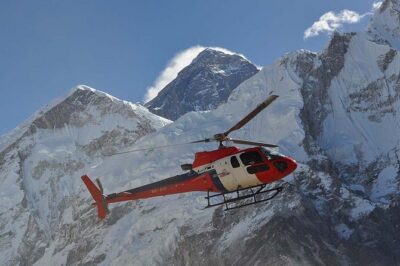
Everest Base Camp Trek with Helicopter Return from Gorakshep to Lukla
Read our review →Browse the lists this tour appears in