
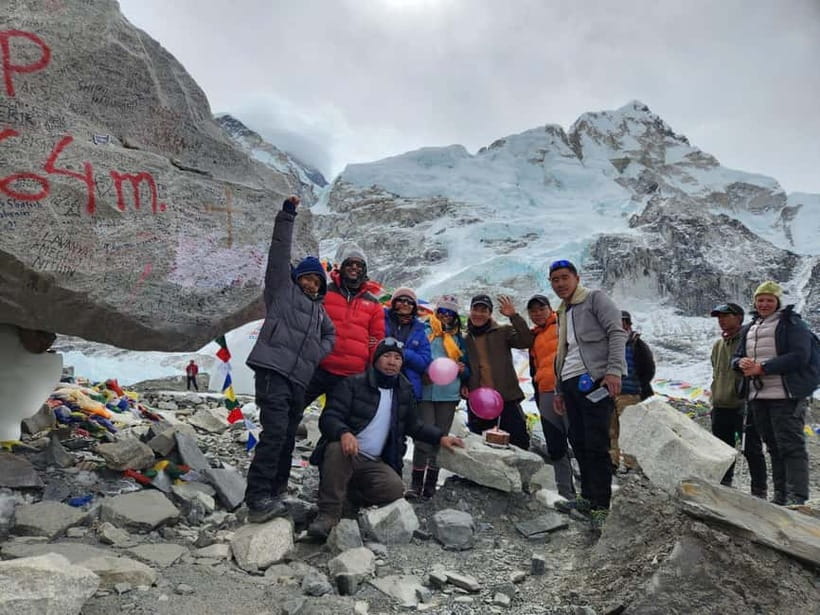
Reviewed · EVEREST BASE CAMP TREKS
Everest Base Camp Trek from Lukla
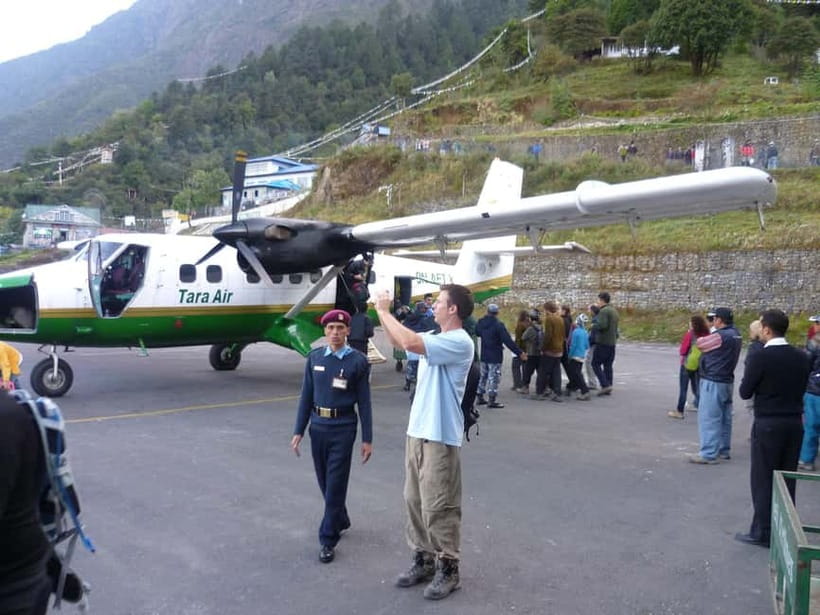
Landing at Lukla puts you straight into the drama: a short mountain-airport arrival, then a footpath through the Khumbu Valley toward Everest. I like the steady acclimatization plan, with rest days in Namche Bazaar and Dingboche, and I like that the package includes a guide, porter, permits, teahouse lodging, and a first aid kit.
The big consideration is altitude. You reach 5,364 meters at Everest Base Camp and 5,545 meters at Kala Patthar, while walking for roughly five to seven hours most days. The $466 price is appealing, but flights to Lukla, insurance, meals, drinks, and personal costs are extra.
Key points of the trek
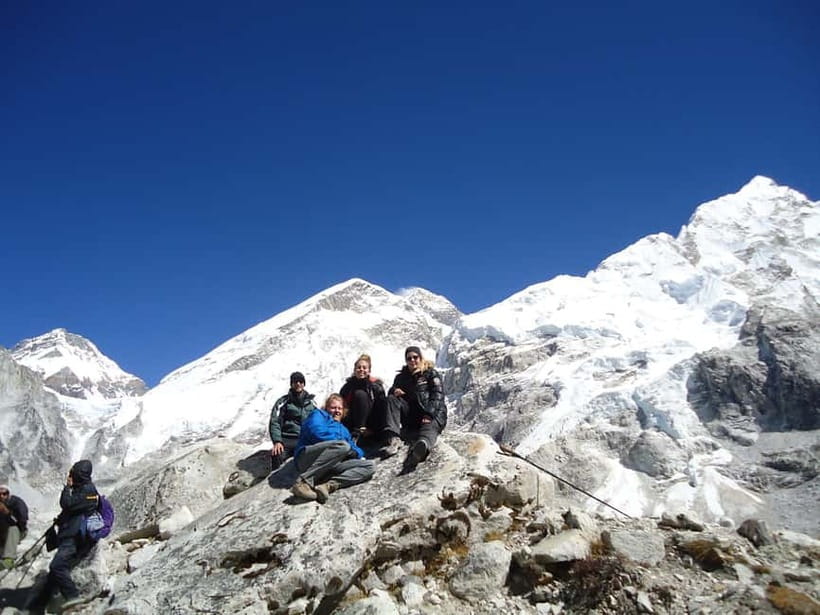
- Kala Patthar at sunrise: The early hike to 5,545 meters gives you the strongest view of Everest on the route.
- Two acclimatization days: You spend one rest day in Namche and another in Dingboche, a sensible rhythm for a high-altitude trek.
- Tengboche Monastery: This spiritual stop brings Sherpa culture and wide mountain views into the middle of the trek.
- A true teahouse route: Accommodation is basic, local, and practical rather than hotel-like.
- Support from guides and porters: English-speaking staff, porter service, permits, and a first aid kit are included.
- Flexible add-ons: The operator has helped arrange Lukla flights, meals, extra porter support, an extra night in Gorakshep, and helicopter changes for an additional cost.
Why this Lukla to Everest trek works
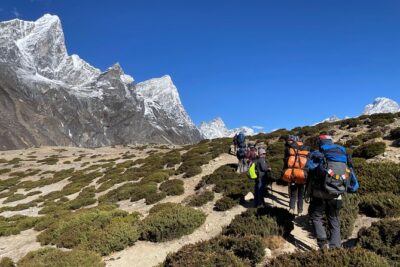
The route gives you the classic Everest Base Camp experience without trying to rush it into a week. You begin at Tenzing-Hillary Airport in Lukla, walk along the Dudh Koshi River, pass through pine and rhododendron forests, and gradually trade green hills for bare, high mountain terrain.
That change is part of the pleasure. The first days feel like a village walk through the Khumbu. Later, the air is thinner, the trees fade away, and the peaks feel much closer. You are not simply going to one viewpoint and returning. You are moving through the Sherpa homeland, with Namche, Tengboche, Dingboche, Lobuche, and Gorakshep each marking a clear stage of the climb.
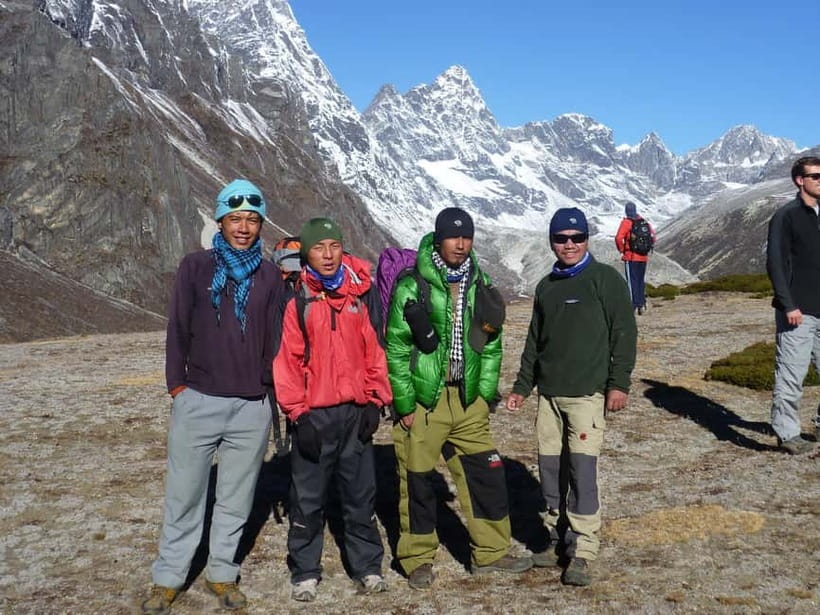
The group size is limited to 10 people, which is useful on a route where pace and health can vary. An English-speaking guide leads the trek, and porter service is included. Tirtha is one guide associated with this program, and Pradip has helped with trip arrangements. Ask for the exact guide and porter plan before departure.
More Everest Base Camp treks:
- Everest Base Camp Trek – 14 Days
★ 5.0 · 1,499 reviews - Everest Base Camp Trekking
★ 5.0 · 485 reviews - Everest Base Camp Trekking – 13 Day
★ 5.0 · 365 reviews
Day 1: Lukla to Phakding beside the Dudh Koshi
Your guide meets you at Lukla Airport after you share your flight details. The walk to Phakding takes you through the first section of the Khumbu Valley, with forests, villages, and suspension bridges over the Dudh Koshi River.
This is a useful opening day because it is not yet a punishing climb. The route introduces you to the terrain and to the rhythm of walking with a pack, while Phakding offers a small village setting for your first teahouse night.
Do not expect a polished resort arrival. Teahouses are basic, and the point is warmth, food, and a bed after a long walk. Bring snacks and water, since your personal food and drinks are not covered in the price.
Day 2: Phakding to Namche Bazaar
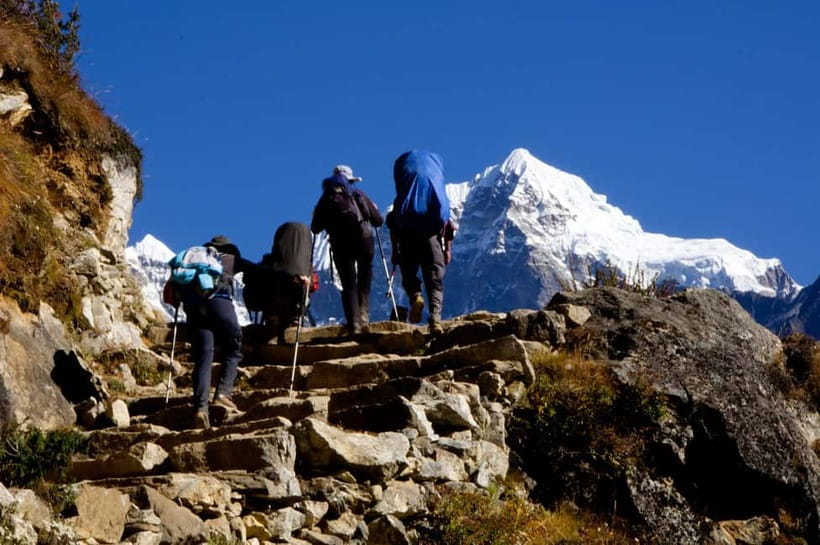
The route becomes more demanding as you head toward Namche Bazaar. You cross several suspension bridges and gain height through forest before reaching the Sherpa capital.
Namche is more than a sleep stop. It is the main place to rest, look around local markets, and see the surrounding peaks, including Thamserku and Kongde Ri. The village gives you your first strong sense of Sherpa life on the route, although its popularity means you should expect a busy trekking hub rather than a quiet rural village.
The walk is listed as up to eight hours in the schedule, while the practical guidance is five to seven hours daily. Your exact timing will depend on pace, stops, weather, and group fitness.
Day 3: Namche acclimatization
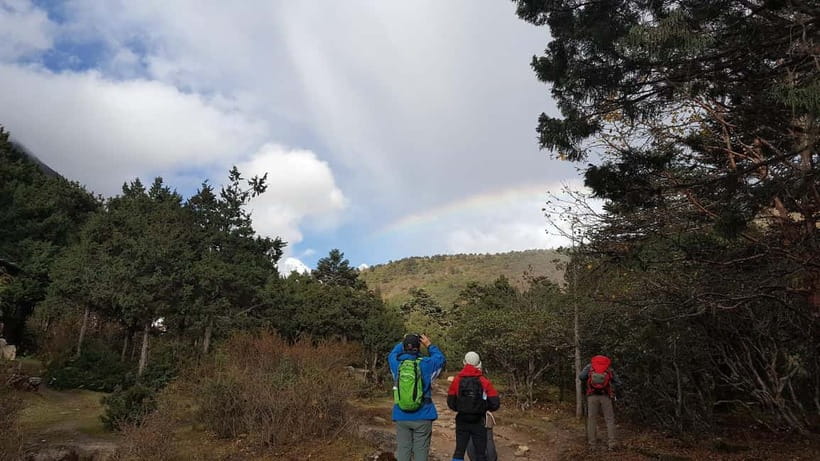
This rest day is one of the most important parts of the program. You stay in Namche rather than pushing higher, giving your body time to adjust before the more serious altitude begins.
You can explore the markets and take in the mountain views. The schedule does not require a specific acclimatization hike, so your day can remain fairly gentle. That is useful if you are tired, but ask your guide about a short walk if you feel well enough.
Altitude problems can affect fit people, and no itinerary removes that risk. Tell your guide quickly if you feel unwell. Travel insurance covering high-altitude trekking is essential, and it is not included.
More trekking days out of Everest Region:
- Everest Base Camp Trek -14 Days
★ 5.0 · 321 reviews - Everest Base Camp Trekking – 2025/2026
★ 5.0 · 199 reviews - Everest Base Camp Trek
★ 5.0 · 193 reviews - Everest Base Camp Trek with Helicopter Return from Gorakshep to Lukla
★ 5.0 · 161 reviews
Day 4: Tengboche Monastery and the forest trail
From Namche, the route continues through rhododendron and pine forests toward Tengboche. The walking is scenic, but the rising altitude makes the day more serious than the early section.
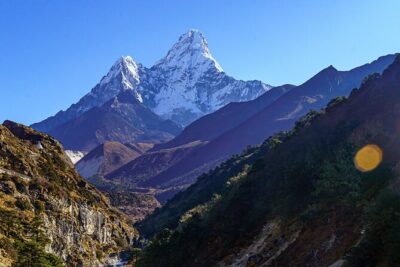
Tengboche Monastery is the cultural heart of the trek. It is one of the largest monasteries in the region and remains a place where monks and trekkers meet. You also get broad views toward Ama Dablam, Everest, and Lhotse.
I like this stop because it breaks up the physical challenge with a sense of place. You are not just collecting mountain viewpoints. You are passing through a community with its own religious life and traditions. Be respectful around the monastery and follow your guide’s advice about where you may go.
Day 5: Tengboche to Dingboche at 4,410 meters
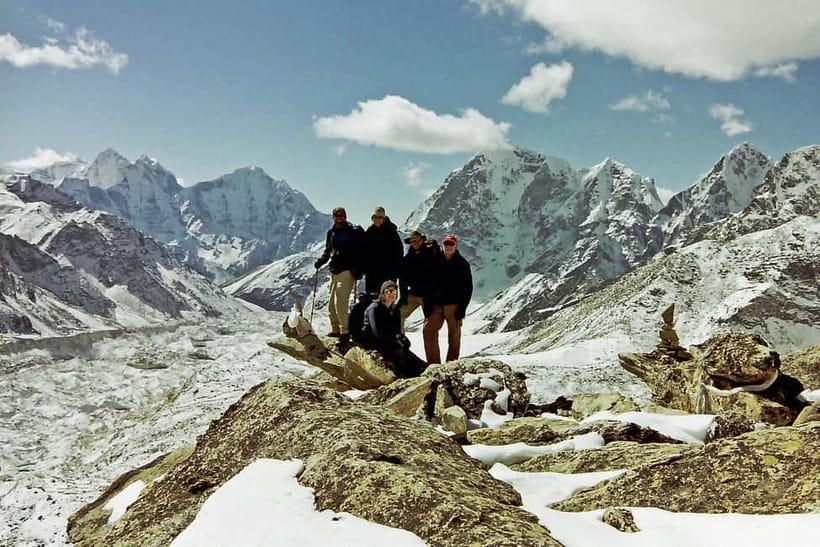
The route carries you onward to Dingboche, a high village at 4,410 meters. By now, the trees begin to thin and the terrain feels more open and exposed.
Dingboche is a practical base for the next acclimatization day. Mountain views surround the village, and short walks can help you adjust, provided your guide agrees that you are ready.
This is also where the basic nature of the accommodation matters more. Nights are colder, services are simpler, and internet access is not something to count on. Carry local currency because ATMs become scarce beyond Namche Bazaar.
Day 6: Dingboche acclimatization
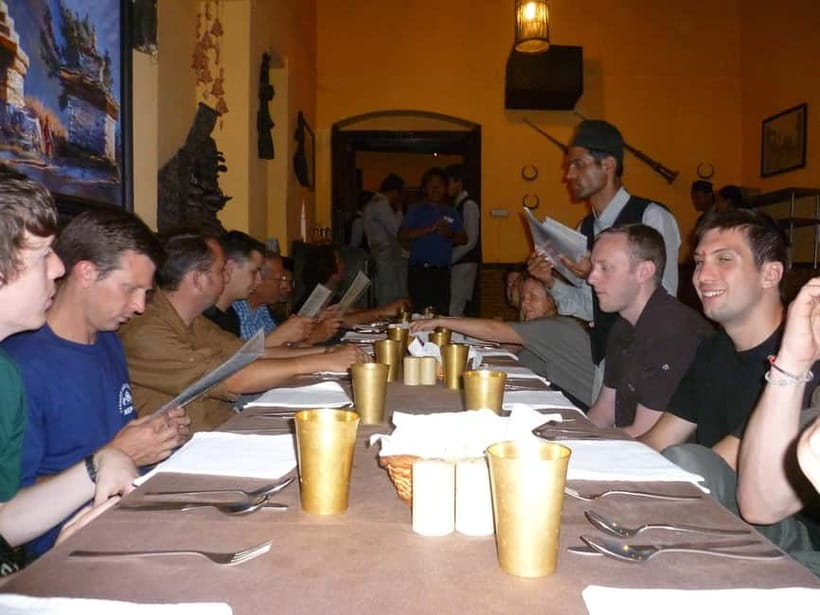
You spend another day at altitude before heading toward Lobuche. That extra pause is a real strength of this itinerary, not wasted time.
Use the day to rest, take a short acclimatization walk, and watch your energy. You may feel fine in the morning and slow down later. Warm clothing, a hat, sunscreen, water, and snacks all earn their place here.
The route is not suitable for people with heart problems, mobility impairments, or pregnancy. The information also lists people prone to seasickness as unsuitable, although seasickness is not a normal issue on a mountain trek. If that description applies to you, ask the operator for clarification before booking.
Day 7: Dingboche to Lobuche
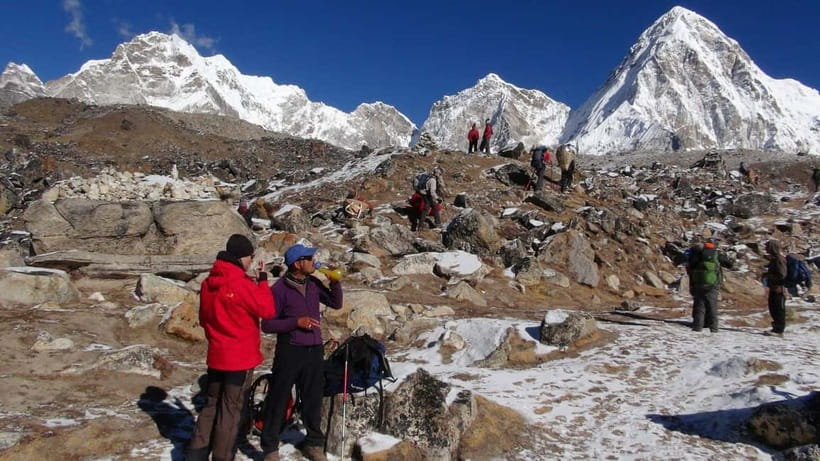
The path continues upward to Lobuche, a remote settlement surrounded by tall peaks. The green forest zone is now behind you, and the terrain becomes more barren.
This is one of the days when the trek can feel most demanding. You are getting close to Everest Base Camp, but the high altitude makes every hour count. The goal is not speed. A steady pace, regular water breaks, and honest communication with your guide matter more than arriving early.
Lobuche is primarily a staging point for the next day. Accommodation remains simple, so pack your sleeping and warm layers where they are easy to reach.
Day 8: Gorakshep and Everest Base Camp
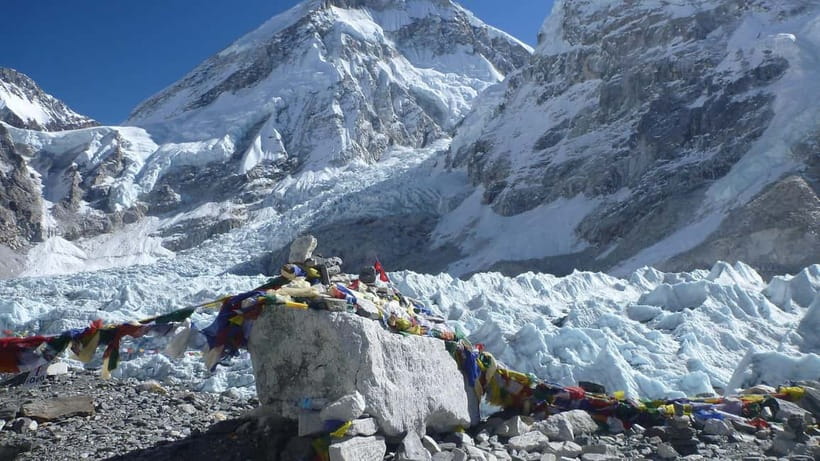
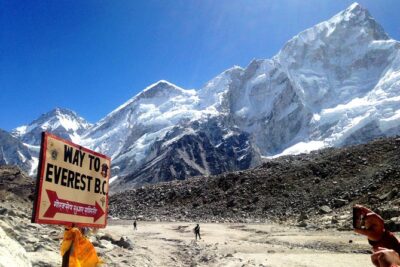
You continue to Gorakshep, the final overnight point before Base Camp. From there, you walk toward Everest Base Camp at 5,364 meters.
Reaching Base Camp is the emotional center of the trek. You see the Khumbu Icefall and the peaks around it, and you can appreciate how far you have come from the forests near Lukla. The setting is powerful, but keep expectations sensible: Base Camp is not the summit, and the view of Everest itself is often stronger from Kala Patthar.
The day can be long and tiring. The schedule lists up to eight hours of walking, and altitude will slow you down. Your guide and porters are there to support the group, but you still need to manage your own clothing, water, snacks, and personal spending.
An extra night in Gorakshep has been arranged for an added charge, which can make sense if you want more rest at this stage. It is worth asking about this before departure rather than deciding when exhausted.
Day 9: Kala Patthar, then Pheriche
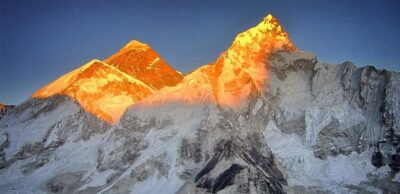
The early climb to Kala Patthar reaches 5,545 meters, higher than Everest Base Camp. The reward is the clearest major view of Mount Everest on this route, along with the surrounding Himalayan peaks.
Sunrise is the classic choice. Golden light reaches the peaks, and the view can become the defining image of the whole trip. The climb is short compared with the full trekking days, but the altitude makes it hard. Start slowly and keep your warm layers close.
After Kala Patthar, you return toward Pheriche for the night. Some groups have chosen a sunset visit to Kala Patthar and Base Camp the following morning instead. That change shows the itinerary can sometimes be adjusted, but any change should be agreed with the guide and may affect timing or cost.
Days 10 to 12: Pheriche, Namche, and Lukla
The return route retraces familiar ground through the Khumbu Valley. From Pheriche, you head back toward Namche, then continue to Lukla for the final night and airport departure.
Walking downhill is not automatically easy. Tired knees, sore feet, and the long hours can make the return just as demanding as the climb. Still, the lower altitude usually brings more energy, and you can appreciate the forests, bridges, and villages with less pressure than on the way up.
The stated program is 12 days, with the final airport arrival shown after the Lukla return. Confirm the exact flight day and airport transfer plan before booking, since mountain weather can affect flights. Lukla flights are not included, and the operator can assist with tickets if you send your details.
What the $466 price really covers
At $466 per person, the package offers solid value if you want the main trekking structure arranged for you. Included are:
- An English-speaking professional guide
- Porter service
- Tea house accommodation
- Permits and entrance fees
- A first aid kit
- Applicable taxes
The price does not include flights, travel insurance, visa fees, meals, drinks, laundry, internet, or other personal expenses. That list matters because costs rise as you go higher, while cash access becomes limited beyond Namche Bazaar.
Meals can be arranged separately. Some trekkers have added meal plans, and a 10 percent reduction was offered on meal prices in one case. Ask for the current cost before you leave. Dal bhat, a traditional rice and lentil meal, is a practical way to keep your energy up, but food is not part of the advertised $466.
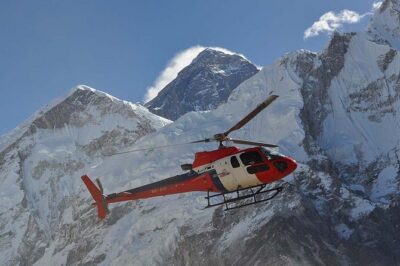
The package also does not include optional changes such as an extra Gorakshep night or a helicopter flight. A helicopter transfer from Lobuche to Kathmandu has been arranged for an additional cost, saving several days of walking. That is a major change to the experience, so treat it as an optional escape route rather than part of the standard trek.
Teahouses, food, and what to pack
Teahouse accommodation is basic but suited to the route. You get a bed and a place to recover, not a full hotel service. Bring warm clothing, comfortable shoes, a hat, sunscreen, water, snacks, and a camera.
Weather can change fast in the Himalayas. Pack for sun, cold, wind, and possible wet conditions. Keep essential layers and personal items accessible instead of burying them in a porter’s load.
Carry local currency from Kathmandu or Namche. ATMs are scarce beyond Namche, and you will need money for drinks, internet, laundry, snacks, and other personal expenses.
Who should book this trek?
This trek suits you if you want a classic Everest route with a planned support team and a small group. You should be comfortable walking for five to seven hours a day, with some itinerary days listed at up to eight hours, and you should be ready for cold, simple accommodation and high altitude.
It is a good fit if you value a gradual schedule. The Namche and Dingboche acclimatization days reduce the temptation to rush, while the guide and porter service take care of route support and much of the heavy load.
It is not a good choice if you need step-free access, have a heart condition, are pregnant, or cannot handle extended high-altitude walking. Do not treat the Base Camp goal as more important than your health.
Free cancellation is available up to 24 hours before departure, and you can reserve now and pay later. Those terms add flexibility, but they do not replace travel insurance or medical preparation.
Should you book it?
Book this trek if you want the full Lukla to Everest Base Camp route at a low starting price, and you are comfortable budgeting separately for flights, meals, insurance, and personal expenses. The strongest parts are the well-spaced acclimatization days, the support of guides and porters, Tengboche Monastery, and the sunrise view from Kala Patthar.
Before paying, confirm four things: your Lukla flight plan, the meal arrangement, the exact guide and porter setup, and the total cost with insurance and personal spending added. If you do that homework, this is a practical way to reach Everest Base Camp without giving up the cultural stops and mountain villages that make the route worthwhile.
FAQ
How long is the Everest Base Camp trek from Lukla?
The trek is advertised as a 12-day experience, beginning at Tenzing-Hillary Airport in Lukla and returning to Lukla before the airport departure.
What is the price per person?
The listed price is $466 per person.
Are flights to Lukla included?
No. Flights are not included, but the operator can assist with issuing flight tickets after you share your details.
Is accommodation included?
Yes. Accommodation in teahouses is included.
Are meals included?
No. Meals and personal expenses are not included. Meals can be arranged separately through the operator.
What language does the guide speak?
The live guide speaks English.
How large is the group?
The group is limited to 10 participants.
What is the highest point on the trek?
Kala Patthar is the highest point listed, at 5,545 meters. Everest Base Camp is at 5,364 meters.
Are acclimatization days included?
Yes. You spend an acclimatization day in Namche Bazaar and another in Dingboche.
What insurance do I need?
You need adequate travel insurance that covers high-altitude trekking. Insurance is not included in the price.
Just added around Everest Region
- Day Tour to Everest Base Camp By Helicopter★ 5.0 · 16 reviews
- Kathmandu To Lukla By Helicopter Flight★ 5.0 · 6 reviews
- Luxury Everest Base Camp Trek – 11 Days★ 5.0 · 9 reviews
- Everest Base Camp Tour & View Point by Helicopter from Katmandu★ 5.0 · 3 reviews
- Everest base camp helicopter tour with Guarenteed Landing★ 4.0 · 7 reviews
- Everest base camp flight over by Helicopter from Kathmandu★ 5.0 · 10 reviews
- Everest Base Camp Helicopter Tour Stop at Hotel Everest View.★ 5.0 · 17 reviews
- Everest Base Camp Helicopter Tour★ 5.0 · 24 reviews
Everest Base Camp Treks, compared.
Everest Base Camp Trek with Helicopter Return from Gorakshep to Lukla
Read our review →Browse the lists this tour appears in