
Reviewed · EVEREST BASE CAMP TREKS
Everest Base Camp Trek with Helicopter Flight Back
The clever part of this Everest journey comes at the end: you trek to Everest Base Camp, hike up Kala Patthar for sunrise, then skip the long walk back by helicopter. That saves several hard days on the trail and gives you a fine aerial look at the Himalayas.
I like the built-in acclimatization day in Dingboche and the practical inclusions, especially the sleeping bag, down jacket, trekking poles, permits, meals, and Lukla flight. I also like that airport pickup and a Kathmandu hotel night are handled, so you are not left to sort out the first landing on your own.
The main catch is important: the helicopter flight from Gorakshep to Kathmandu is not included in the advertised $446.50 price. Porters, international flights, insurance, tips, and bar bills are also extra, so ask for the current helicopter cost before you pay.
Key points to know before you book
- Kala Patthar comes before the helicopter ride: You get the classic sunrise viewpoint at 5,550 meters, then fly out from Gorakshep.
- Dingboche includes an acclimatization day: The hike toward Nagarjun Peak gives your body time to adjust before the highest section.
- The $446.50 rate covers a useful base package: Meals, permits, guide costs, domestic flights, some gear, and one Kathmandu hotel night are included.
- The return helicopter costs extra: This is the biggest budget detail, and it can change the real price of the trip.
- The trek is private: Only your group takes part, with pickup offered from Tribhuvan Airport in Kathmandu.
- The route reaches 5,364 meters: You need moderate physical fitness and must be ready for long days at high altitude.
Why the helicopter return changes the Everest trek
Most Everest Base Camp trips require you to walk back the same way you came. That return is not just a gentle stroll. You still have long days, steep steps, cold mornings, and tired legs after reaching Base Camp. This version puts the hardest walking on the way up, then gives you a fast exit after Kala Patthar.
I see this as a good fit for someone who wants the full approach to Base Camp but has only about ten days. You still cross suspension bridges, pass Sherpa villages, visit Tyangboche Monastery, sleep in high mountain settlements, and walk beside the Khumbu region’s famous peaks. You simply do not spend several extra days retracing the route downhill.
The helicopter is also a practical safety valve in a broad sense, though it should not be treated as a guarantee against delays. Flights in the Himalayas depend on weather, and poor conditions can affect both the Lukla flight and the final departure from Gorakshep. The cancellation terms allow a new date or full refund if the experience is canceled because of poor weather, but you should still leave flexibility in your wider Nepal plans.
More Helicopter Tours in the Everest Region
- Everest Base Camp Helicopter Tour landing at Everest View Hotel
★ 5.0 · 668 reviews - Everest Base Camp Helicopter Tour landing at Hotel Everest View
★ 5.0 · 218 reviews - Everest Base Camp Trek with Helicopter Return from Gorakshep to Lukla
★ 5.0 · 161 reviews
Day 1: A useful start in Kathmandu
Your trip begins with pickup at Tribhuvan Airport. You are transferred to a hotel, listed as Hotel Thrive or a similar property, with one night in twin-sharing accommodation and breakfast.
An evening briefing follows. This matters more than it may sound. You can check your equipment, ask questions about the walking days, and make sure you understand the plan for Lukla, high-altitude nights, and the helicopter departure. The company supplies a sleeping bag, down jacket, trekking poles, and a duffle bag if needed, which cuts down on the amount of specialist gear you must bring.
The Kathmandu portion also includes a cultural show and dinner program. It is a small extra rather than the main reason to book, but it gives the trip a clear beginning and end in the capital.
Day 2: Lukla to Phakding, the first taste of the trail
The domestic flight from Kathmandu to Lukla is one of the memorable parts of the trip. You fly toward the Himalayas and land at Lukla, the mountain gateway for the route. The schedule allows around four hours for the day, including the trek downhill to Phakding.
This first walk moves through alpine forest and gives you a gentle introduction to the trail. Since the route begins with a downhill section, do not assume the day is effortless. Your body is still adjusting to the altitude, and the excitement of the flight can make it easy to walk too fast.
The flight may operate from Ramechhap instead of Kathmandu according to the itinerary and seasonal arrangements. That possibility is worth confirming before departure, since it can affect your transport plans within Nepal.
Day 3: Suspension bridges and the climb to Namche Bazaar
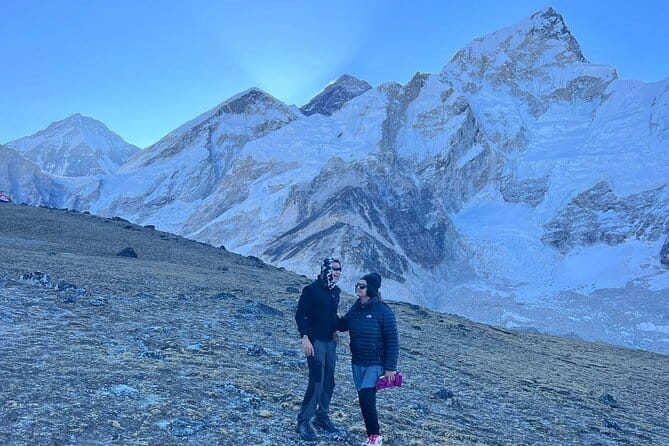
The walk from Phakding to Namche Bazaar takes about six hours. You cross the Dudhkoshi River on suspension bridges and pass through Sherpa villages, with forest and mountain views along the route.
Namche is more than a stopping point. It is the main settlement in this section of the trek, and its location makes it a natural place to slow down. The climb into town can feel demanding because you are gaining altitude while already carrying a full day in your legs.
The guide is especially important here. The company advertises an experienced guide with salary, food, accommodation, and insurance included. Porters are not included, so you need to decide in advance how much you will carry yourself or arrange porter support separately.
More Everest Base Camp treks:
- Everest Base Camp Trek – 14 Days
★ 5.0 · 1,499 reviews - Everest Base Camp Trekking
★ 5.0 · 485 reviews - Everest Base Camp Trekking – 13 Day
★ 5.0 · 365 reviews - Everest Base Camp Trek -14 Days
★ 5.0 · 321 reviews
Day 4: Namche rest day and the Everest View Hotel
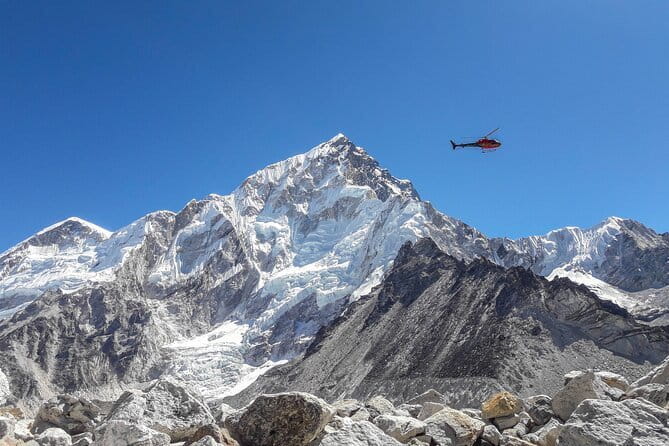
The fourth day is set aside for acclimatization and local sights. You can visit the Sherpa Museum, then hike toward the Everest View Hotel for broad views of Everest and the surrounding peaks. The day is listed at about five hours.
This is one of the smartest parts of the schedule. A rest day does not mean sitting indoors all day. A controlled walk higher than Namche, followed by a return for rest, helps prepare you for the greater altitude ahead. The route also gives you time to see the town rather than treating it as just another bed for the night.
The museum adds useful context to the mountains around you. It helps connect the scenery with Sherpa culture and the history of climbing in the region. You should keep the day measured. The goal is to acclimatize, not to prove how quickly you can reach the viewpoint.
Day 5: Tyangboche and its famous monastery
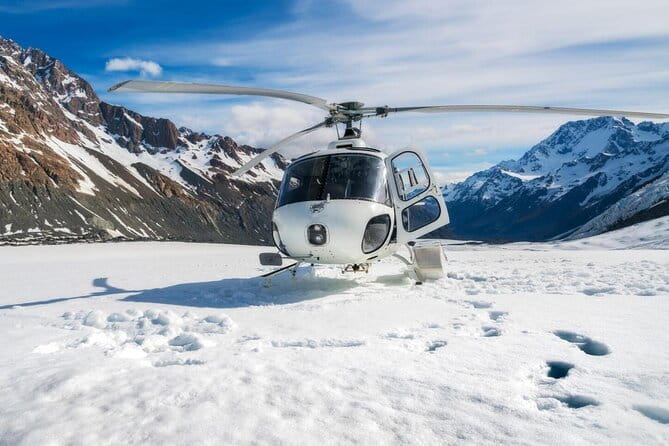
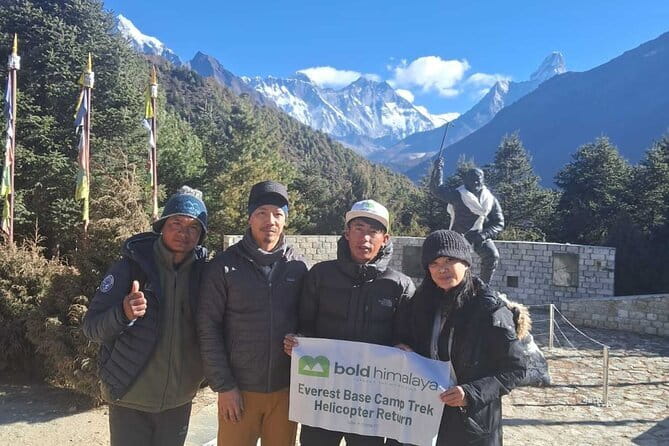
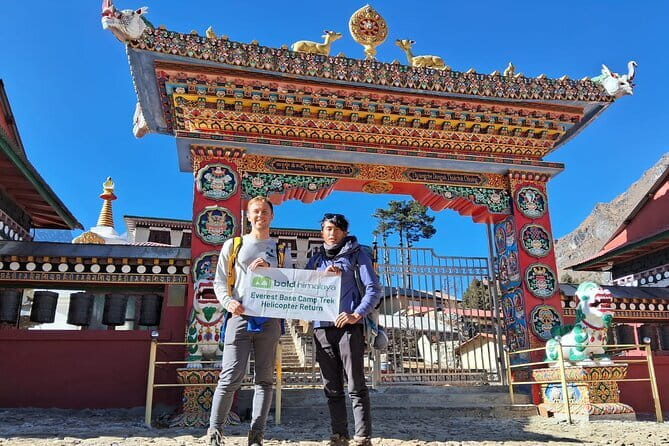
The trail continues to Tyangboche in about six hours. You stop for lunch at Phungi Thanga, then continue through a route known for views of Everest, Lhotse, and nearby peaks.
Tyangboche is one of the cultural highlights of the trip. The monastery gives the day a strong sense of place, and the setting makes the stop feel like more than a standard mountain lodge halt. You get both the physical challenge of the climb and a quieter cultural moment.
At this point, the route is beginning to feel serious. The combination of altitude and uneven trail can make six hours feel longer than the same distance at home. Good pacing is more useful than speed, and your guide should help keep the group moving at a sensible rate.
Day 6: Through Pangboche and Somare to Dingboche
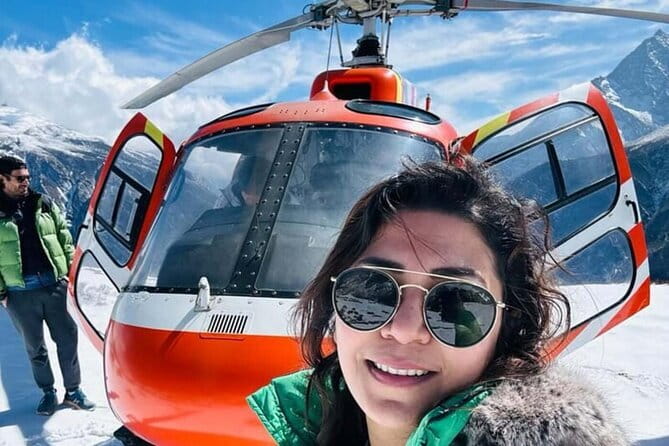
The walk to Dingboche takes about six hours. You cross a suspension bridge over the Imja Khola, then continue through rhododendron forest and settlements including Pangboche and Somare.
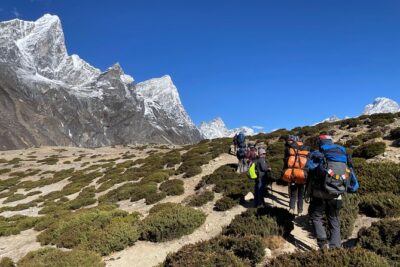
This section shows how the route changes as you gain height. Forest becomes less dominant, villages feel more spread out, and the surrounding peaks take over more of your attention. The walk is not simply a march from one lodge to another. It is a gradual shift into a higher, colder part of the Khumbu.
Dingboche is a key stop because the next day is reserved for acclimatization. That pause is valuable. The route later reaches Lobuche at 4,940 meters, then Gorakshep at 5,170 meters, so you want time for your body to respond before those elevations.
Day 7: Dingboche acclimatization and Nagarjun Peak
The preparation day in Dingboche includes an exploration of the valley and a hike toward Nagarjun Peak. The walk takes about five hours and offers 360-degree mountain views.
This is not wasted time. The trip is designed around the reality that altitude cannot be rushed. You gain height during the day, then return to Dingboche rather than sleeping even higher. That pattern gives you a better chance of handling the next two days.
You should treat this as a proper hiking day, not a casual photo stop. At these elevations, even a moderate climb can feel hard. Move slowly, drink as directed by your guide, and tell the guide promptly if you feel unwell. The provided material only calls for moderate fitness, but the combination of long walks and high altitude still demands preparation.
Day 8: Lobuche, Thukla Pass, and the climbers’ memorials
The trek to Lobuche takes around six hours and reaches 4,940 meters. You pass Thukla Pass, where memorials honor climbers who died on Himalayan expeditions, then continue toward the settlement with views of nearby glaciers.
This is one of the most reflective parts of the route. The memorials make the risks of high-altitude climbing feel real. You are not attempting a summit, but you are walking through the same severe mountain region that has tested serious climbers for decades.
Lobuche is also where the altitude becomes impossible to ignore. The distance may not look dramatic on a map, yet the thin air changes the effort. Keep your pack light, use the trekking poles supplied if helpful, and let the guide set a steady pace.
Day 9: Everest Base Camp and the night at Gorakshep
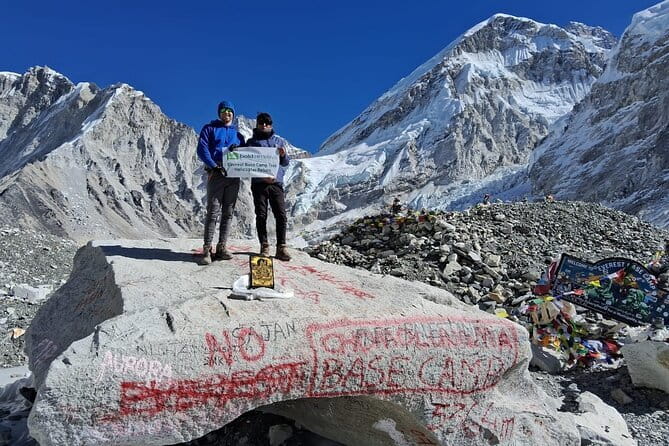
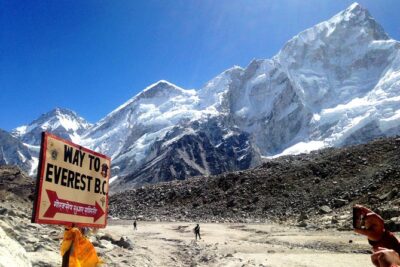
Day nine is the big walking day, with about seven hours on the trail. You trek to Gorakshep at 5,170 meters, leave your gear there, and continue to Everest Base Camp at 5,364 meters. From Base Camp, you get views toward the Khumbu Icefall before returning to Gorakshep for the night.
Leaving your heavier gear behind is a sensible detail. It lets you make the Base Camp walk with a lighter load, though you still need essentials for changing weather and your own comfort. The route at this height can be rough, and the return to Gorakshep is part of the day, not an afterthought.
Everest Base Camp itself is not a summit viewpoint. The appeal is standing at the start point for expeditions and seeing the icefall and surrounding peaks at close range. The following morning at Kala Patthar usually provides the broader mountain panorama, so you get two different high points rather than one crowded climax.
Sleeping at Gorakshep is a demanding part of the schedule. At 5,170 meters, rest may be less comfortable than at lower stops, and the cold can be intense. This is another reason the return by helicopter has real value: after this night and the early Kala Patthar climb, you do not need to walk back through the entire route.
Day 10: Kala Patthar sunrise and the flight back
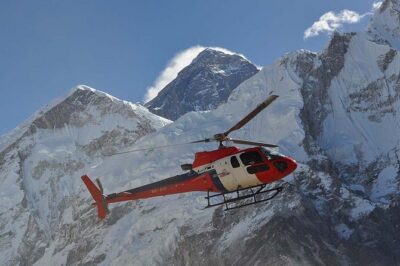
The final morning starts early with the hike to Kala Patthar at 5,550 meters. The reward is a sunrise view across Everest and the surrounding Himalayan peaks. You then return to Gorakshep and board a helicopter for Kathmandu, followed by a transfer to your accommodation.
Kala Patthar is arguably the best viewpoint of the entire trip. Base Camp places you inside the expedition story, while Kala Patthar gives you the wide view that most people picture when they think of Everest. The early start makes the climb harder, but morning light is the reason for the timing.
The helicopter flight is scenic and saves days of walking. Still, read the price carefully. The listed rate of $446.50 does not include the flight from Gorakshep to Kathmandu. That is a major cost rather than a minor add-on, and the final price depends on the current helicopter charge.
What the $446.50 price really covers
At $446.50 per person, the base price can offer solid value for a ten-day private trek, especially because it includes many costs that quickly add up in Nepal:
- Kathmandu airport pickup and private transport
- One Kathmandu hotel night with breakfast
- The Kathmandu to Lukla domestic flight, or the Ramechhap to Lukla flight if that routing applies
- An experienced trekking guide, including guide salary, insurance, food, and accommodation
- Breakfast for nine days, lunch for eight days, and dinner for eight days
- National park, local municipality, and TIMS fees
- Sleeping bag, down jacket, trekking poles, duffle bag, cap, and trip certificate
- Government taxes and service charges
- A cultural show and dinner in Kathmandu
The price looks less generous once you add the helicopter, porter support, international airfare, insurance, tips, desserts, and bar bills. I would treat the advertised rate as the cost of the organized trekking package, not the final cost of reaching Kathmandu and flying home from Gorakshep.
The food arrangement is useful because you do not need to budget separately for the main meals on the trail. Seasonal fruit and dry nuts are also provided. If you want drinks, snacks beyond the supplied items, or bar service, keep extra money available.
Guide support, private groups, and comfort
This is a private activity, so only your group takes part. That gives you more control over walking pace and daily conversation than a large mixed group, though the guide still has to balance individual wishes with safety and the fixed altitude schedule.
The guide’s costs are included, but porters are not. That distinction matters. You may carry your own equipment, or you may need to arrange porter service and pay for it separately. Ask exactly how the duffle bag system works and what your personal carrying responsibilities will be.
The company’s support has also included attention to accommodation and hot water, even during difficult weather conditions, according to the supplied trip feedback. Names connected with past departures include guide Surendra, porter Doma Ghale, and manager Sobit. They are useful names to know when you ask who will handle your particular departure, but you should confirm the actual team assigned to your group.
Who should book this trek?
I would recommend it to a fit adult who wants the classic Base Camp route but does not want to spend the return week walking back. It also suits someone who values a private group, included meals, permits, gear, and airport support.
You should think twice if you want a relaxed holiday. Several days involve five to seven hours of walking, and the route reaches 5,550 meters. Moderate physical fitness is required, and high-altitude trekking always demands patience and attention to your body.
It may also be less suitable if your budget has no room for extras. The helicopter is the key cost to confirm, and insurance is not included. I would buy travel insurance that covers the type of trekking and altitude involved, though the supplied information does not specify a particular policy.
The cancellation policy allows a full refund if you cancel at least 24 hours before the start time. Poor weather can lead to a different date or full refund if the experience is canceled, but weather can still cause disruption, so avoid scheduling an important international connection immediately after the helicopter day.
Should you book this Everest Base Camp experience?
Book it if you want the real trail experience, the two major viewpoints, and a shorter return without giving up the walk through Namche, Tyangboche, Dingboche, and Lobuche. The acclimatization day, included equipment, meals, permits, and private format make the plan practical.
Before committing, get the current Gorakshep to Kathmandu helicopter price in writing. That single figure determines whether $446.50 is a bargain or only the opening number. If the total fits your budget and you are ready for high-altitude walking, this is a smart way to reach Everest Base Camp in ten days.
FAQ
How long does the Everest Base Camp trek with helicopter return last?
The experience lasts approximately 10 days, beginning with airport pickup and a Kathmandu briefing and ending with the Kala Patthar hike, helicopter flight, and transfer after arrival.
Is the helicopter flight from Gorakshep to Kathmandu included?
No. The helicopter flight from Gorakshep to Kathmandu is specifically excluded from the advertised price, so you should confirm its current cost before booking.
What is included in the $446.50 price?
The price includes an experienced trekking guide, the listed domestic flight to Lukla, private transportation, one Kathmandu hotel night with breakfast, meals during the trek, permits, TIMS, some trekking equipment, service charges, and government taxes.
Are porters included?
No. Porters are not included, so you must carry your own belongings or arrange porter support separately.
What level of fitness is needed?
A moderate level of physical fitness is required. The schedule includes walking days of about four to seven hours and reaches Everest Base Camp at 5,364 meters and Kala Patthar at 5,550 meters.
Where does the experience begin?
The starting point is Tribhuvan Airport in Kathmandu, Nepal, where pickup and transfer to the hotel are provided.
What happens if bad weather cancels the experience?
If poor weather causes the experience to be canceled, you will be offered a different date or a full refund. You can also cancel for a full refund if you do so at least 24 hours before the experience starts.
Just added around Everest Region
- Day Tour to Everest Base Camp By Helicopter★ 5.0 · 16 reviews
- Kathmandu To Lukla By Helicopter Flight★ 5.0 · 6 reviews
- Luxury Everest Base Camp Trek – 11 Days★ 5.0 · 9 reviews
- Everest Base Camp Tour & View Point by Helicopter from Katmandu★ 5.0 · 3 reviews
- Everest base camp helicopter tour with Guarenteed Landing★ 4.0 · 7 reviews
- Everest base camp flight over by Helicopter from Kathmandu★ 5.0 · 10 reviews
- Everest Base Camp Helicopter Tour Stop at Hotel Everest View.★ 5.0 · 17 reviews
- Everest Base Camp Helicopter Tour★ 5.0 · 24 reviews
Everest Base Camp Treks, compared.
Everest Base Camp Trek with Helicopter Return from Gorakshep to Lukla
Read our review →Browse the lists this tour appears in