
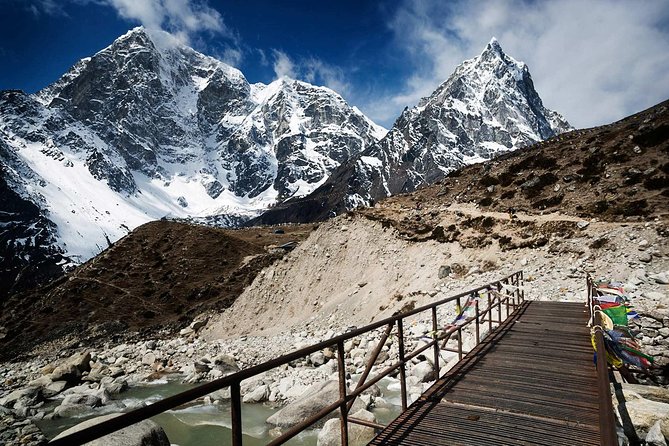
Reviewed · EVEREST BASE CAMP TREKS
Everest Base Camp Trek with Helicopter Return – 10 Days
The clever part of this 10-day Everest Base Camp trek is the return. You walk into the Khumbu Valley village by village, reach Everest Base Camp, climb Kala Patthar for the big mountain view, then trade the long hike back to Lukla for a shared helicopter ride to Kathmandu. That saves several trekking days and gives the trip a dramatic finish.
I like the practical setup: tea-house lodging, meals, permits, porters, flights, and airport transfers are bundled together. I also like the small-group limit of 15, since a compact group is easier to manage on narrow mountain trails and during flight changes. The main caution is the pace. Reaching Base Camp in eight trekking days requires good fitness, and mountain weather can delay the Lukla flight or helicopter return.
Key points to know before you book
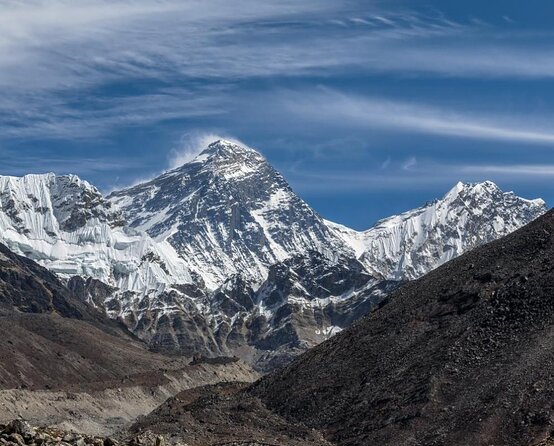
- Kala Patthar is the grand finale: You climb to one of the best viewpoints for Everest before flying back toward Kathmandu.
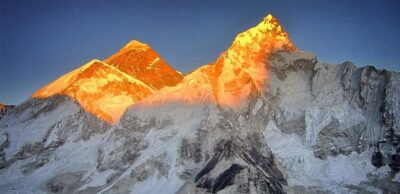
- The route passes four major peaks: Everest, Lhotse, Makalu, and Cho Oyu appear among the Himalayan views along the trek.
- Acclimatization is built in: Day 4 at Namche and the stop at Dingboche help your body adjust to increasing altitude.
- The price covers a lot: At $3,400, you receive lodging, trekking meals, flights, guides, porters, permits, equipment, and transfers.
- The helicopter is shared: The return flight is on a group-sharing basis, not a private charter.
- Weather controls the schedule: Lukla flights and the helicopter require suitable conditions, so flexibility matters.
Why the helicopter return changes the trek
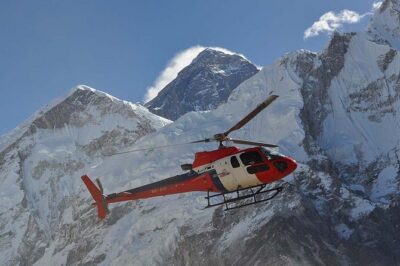
The standard Everest Base Camp route usually requires walking back through the same valley toward Lukla. This trip removes that return hike. After the early climb to Kala Patthar on Day 9, you fly back by group-sharing helicopter, with the schedule subject to weather and operating conditions.
That is more than a flashy add-on. It changes the trip from roughly two weeks or more of walking into a 10-day plan. You still get the essential approach through Sherpa villages, the high mountain scenery, Everest Base Camp, and Kala Patthar. You simply give up the slower return journey.
There is a tradeoff. Walking back would offer more time in the valley and another chance to enjoy the villages and mountain views. The helicopter return favors speed, comfort, and a memorable aerial finish. If you have limited holiday time, that is a strong use of your budget. If you want the fullest possible trekking experience, the shorter schedule is worth thinking about.
The helicopter is not guaranteed in poor weather. If conditions stop the flight, a different date or a full refund may be offered if the experience is canceled. Build a little flexibility into your wider Nepal plans rather than arranging a tight same-day international connection around the return flight.
More Helicopter Tours in the Everest Region
- Everest Base Camp Helicopter Tour landing at Everest View Hotel
★ 5.0 · 668 reviews - Everest Base Camp Helicopter Tour landing at Hotel Everest View
★ 5.0 · 218 reviews - Everest Base Camp Trek with Helicopter Return from Gorakshep to Lukla
★ 5.0 · 161 reviews
Day 1: A soft landing in Kathmandu
Your first day is simple. You are met at the airport and taken to your Kathmandu hotel, with the rest of the day free to rest or explore.
That quiet start matters. You are likely arriving after a long international journey, and the next morning begins early. Use this time to check your gear, exchange money, confirm your flight details, and get some sleep. Breakfast at the Kathmandu hotel is included, but lunch and dinner in the capital are not.
The trip uses a private vehicle for airport transfers. That removes one small but useful task after your flight, especially if this is your first visit to Nepal.
Day 2: Lukla to Phakding and the first mountain walk
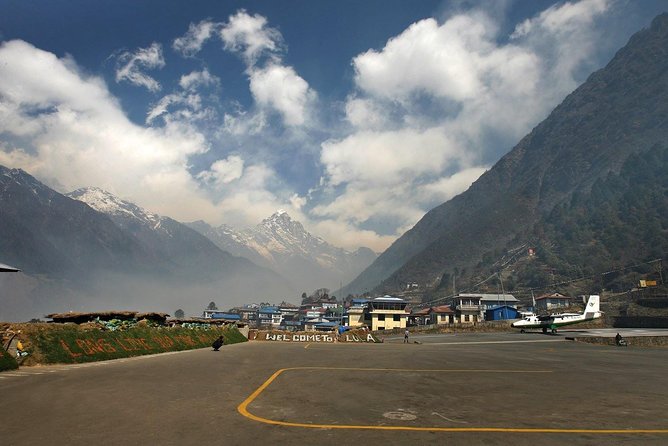
You leave early for the domestic airport and fly to Lukla, the usual entry point for trekking in the Everest region. At Lukla, you meet the trekking crew and begin walking toward Phakding.
The first section brings green scenery, mountain views, and the Kusum Kanguru area. It is a useful introduction to the rhythm of the trek: walk, rest, eat, and repeat. Phakding is much lower than the later stops, so this first walking day is not only scenic but also helps ease you into the route.
Lukla flights are a practical concern. The itinerary depends on both the flight into Lukla and the helicopter out of the high country, and both rely on weather. Keep your schedule as flexible as possible around this trip.
The protected area begins in the Sagarmatha National Park region, a UNESCO World Heritage Site. You are not simply walking to a famous mountain. You are moving through a protected Himalayan setting where rivers, forests, villages, suspension bridges, and high peaks all form part of the experience.
Day 3: The hard climb to Namche Bazaar
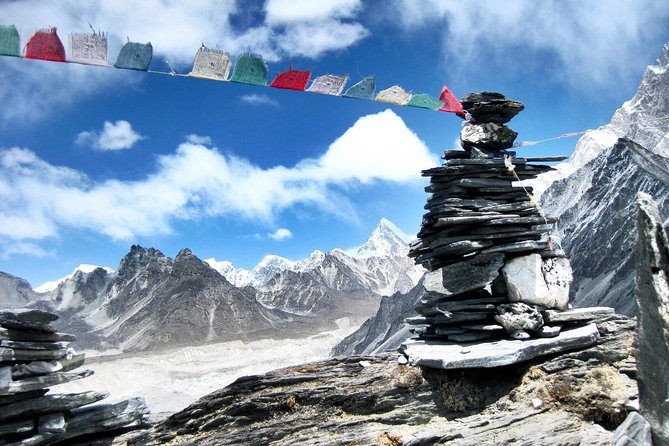
After breakfast, the trail follows the Dudh Koshi River through pine forest and across the Hillary Suspension Bridge. The route then enters Sagarmatha National Park and climbs toward Namche Bazaar.
This is one of the first genuinely demanding days. Namche sits at about 3,440 meters, and the uphill section can feel serious after the lower walk from Lukla. The reward is the arrival in the Sherpa capital, a busy mountain settlement and the main gateway to the Everest region.
You have time for the Sherpa Museum, which focuses on local culture and traditions. Admission is not included, so carry a little local currency for small expenses. Namche is more than a place to sleep. It is where the trip begins to feel properly Himalayan, with higher peaks appearing around the valley and the trail becoming more rugged.
The itinerary lists a long day at Namche, but that should not be read as 12 hours of nonstop walking. Your actual pace depends on the group, weather, trail conditions, and rest stops.
More Everest Base Camp treks:
- Everest Base Camp Trek – 14 Days
★ 5.0 · 1,499 reviews - Everest Base Camp Trekking
★ 5.0 · 485 reviews - Everest Base Camp Trekking – 13 Day
★ 5.0 · 365 reviews - Everest Base Camp Trek -14 Days
★ 5.0 · 321 reviews
Day 4: Acclimatization above Namche
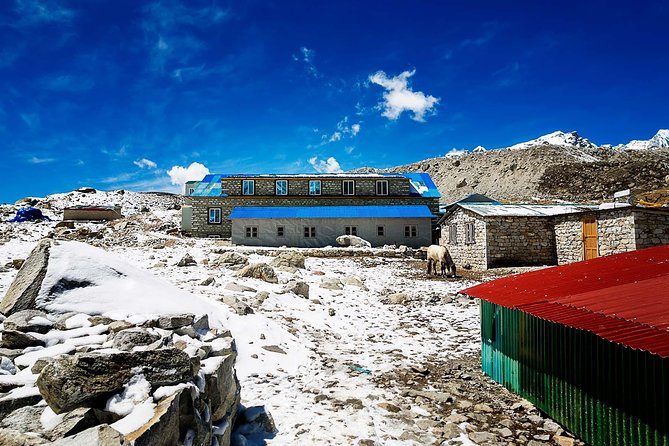
Day 4 is set aside for acclimatization. You hike toward the Everest View Hotel and the Syangboche area, where the route opens to views of Everest and the surrounding peaks.
This is a smart part of the schedule. Rather than simply gaining height every day, you spend extra time near Namche and make a higher day walk before returning to sleep at the lower elevation. You may feel eager to keep moving, but this slower day is valuable for adjusting to the altitude.
The Everest View Hotel stop is about scenery, not luxury. The appeal is the outlook toward Everest and the surrounding Himalayan range. Bring a warm layer, water, and your camera, but keep the day steady. Acclimatization works best when you avoid treating the walk like a race.
Day 5: Tengboche and its famous monastery
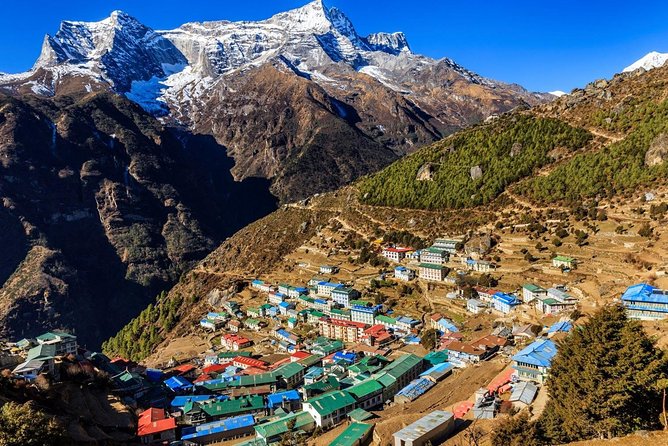
The trail leaves Namche through a mix of smoother sections and steeper rises, passing Kayangjuma and Sanasa. You cross the Dudh Koshi near Punki Tenga, then face a tougher climb to Tengboche.
Tengboche is one of the most memorable stops on the route. It has the largest monastery in the Khumbu region and sits in a setting that brings forest, open mountain views, and high peaks together. The monastery gives the walk a cultural focus that a simple viewpoint cannot provide.
This day is a good example of the trek’s changing character. You begin among trees, follow the river, and then climb into a settlement linked closely to Sherpa Buddhist life. The route is not technically described as a climbing expedition, but it is physically demanding, with repeated uphill sections and increasing altitude.
Day 6: Into the Imja Valley at Dingboche
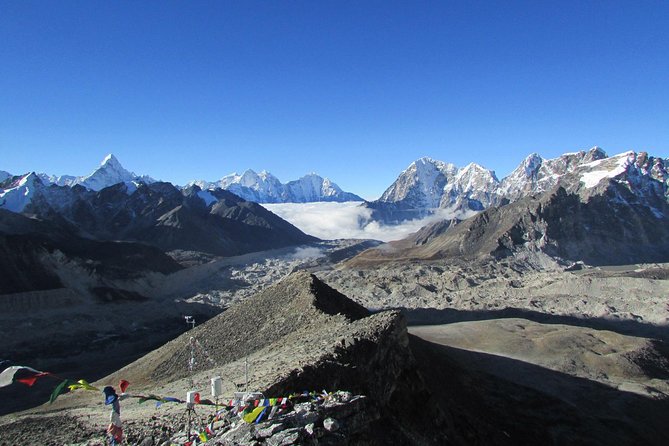
The trail continues along an upper route marked by chortens, mani walls, and small villages. You cross the Imja Khola and pass through Pangboche at about 3,900 meters before entering the Imja Valley and continuing toward Dingboche.
The religious markers and stone walls are important details. They remind you to slow down and respect the local setting, rather than treating every stop as a photo backdrop. Dingboche is a small settlement and another key point for adjusting to altitude.
The schedule places the acclimatization stop at Dingboche, although the itinerary does not give a separate rest day there. That means you should expect the trip to keep moving at a fairly brisk rate. Anyone with a moderate fitness level can consider this trip, but the combination of distance, altitude, and limited time calls for preparation.
Day 7: Duglha, Chola Lake, and the high valley
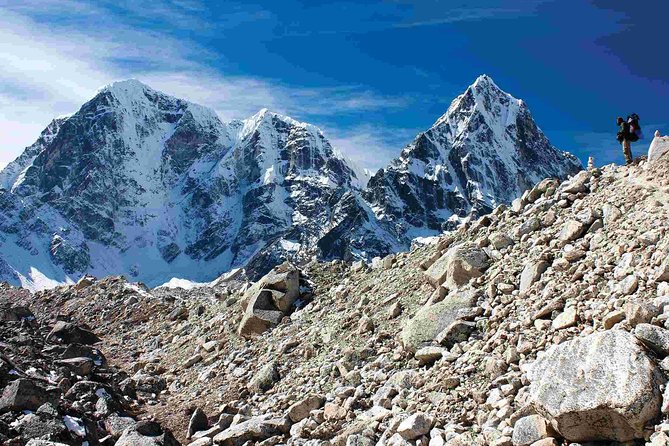
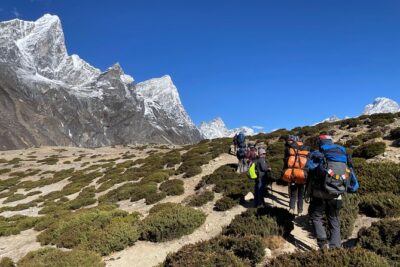
You climb toward Duglha through the Khumbu Khola Valley, passing Dusa and Phulung Karpo before reaching Chola Lake. The route crosses a small bridge and continues upward. Lobuche Peak appears closer to the Khumbu Glacier, with its East and West summits marking the high mountain setting.
By now, the scenery feels more severe. There are fewer trees, more exposed slopes, and a stronger sense that you are approaching the glacier and Everest Base Camp corridor. The walk includes repeated ups and downs, so distance alone does not tell you how tiring the day will be.
The best approach is steady pacing. Your guide and porters are part of the included service, and one porter is assigned for every two trekkers. A duffle bag, down jacket, sleeping bag, and walking pole are also supplied, which reduces the amount of specialist equipment you need to bring yourself.
Day 8: Everest Base Camp from Gorakshep
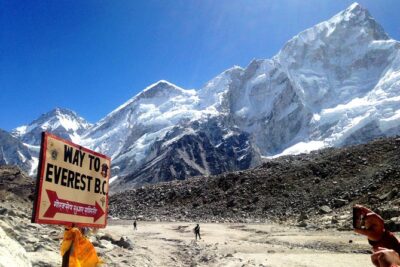
From the high settlement of Gorakshep, you walk toward Everest Base Camp. The route takes about three hours according to the schedule, with many ups and downs along the way.
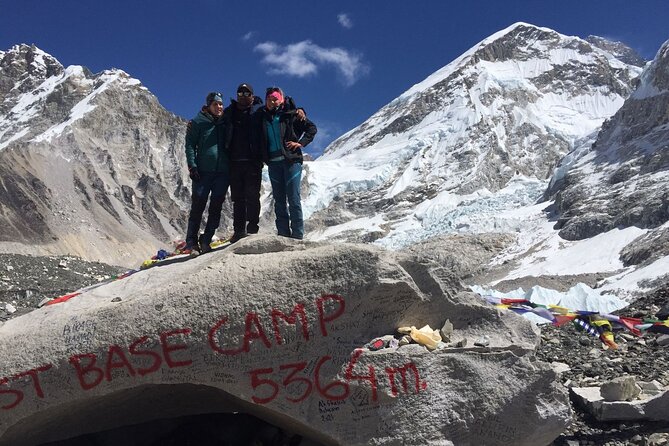
Base Camp itself is not a permanent city or a mountaintop. It is the starting area for expeditions climbing Everest, set beside the Khumbu Glacier and its icefall. The glacier and ice formations give the stop its real force. This is a working high-altitude environment, not simply a signpost for photographs.
You spend time at Everest Base Camp before returning to Gorakshep for the night. That return matters. You still have the Kala Patthar climb ahead, so conserve energy and follow your guide’s advice about pace, food, water, and rest.
The itinerary gives Everest Base Camp admission as included. Meals and guest-house lodging during the trek are also covered, although drinks and personal purchases are extra. Tea, coffee, bottled water, hot chocolate, beer, internet, showers, laundry, and phone calls are not part of the package.
Day 9: Kala Patthar and the helicopter flight
Day 9 is the high point of the trip in more than one sense. You climb Kala Patthar, a popular viewpoint with broad views across the Khumbu mountains, including Everest.
The climb comes after reaching Base Camp, so tired legs and thin air are part of the challenge. The payoff is the panorama. Everest Base Camp lets you stand at the expedition starting point, while Kala Patthar is the better place for looking across the peaks.
After Kala Patthar, the trip changes pace completely. You fly back toward Kathmandu by shared helicopter, described in the inclusions as a group-sharing flight from Gorakshep. The day’s exact flight arrangement may depend on weather and operating conditions, so listen closely to the guide and local staff.
This is the trip’s signature feature, but keep your expectations practical. A shared flight means you are not buying a private helicopter at your personal disposal. The value is the time saved and the aerial finish, not exclusive use of the aircraft.
Day 10: Airport transfer from Kathmandu
After breakfast, you are transferred to the international airport for your flight home or onward journey.
Airport transfer service is included, which makes the final morning easier. Still, avoid scheduling something that depends on a perfectly timed return from the mountains. Weather can affect the helicopter, and the entire route depends on conditions in a high-altitude region.
What the $3,400 price includes
At first glance, $3,400 per person is a major expense. The value becomes clearer when you add up what is bundled into the 10-day plan.
You receive Kathmandu accommodation with breakfast, flights from Kathmandu to Lukla, the shared helicopter return, guest-house lodging during the trek, breakfast, lunch, and dinner while trekking, an English-speaking guide, porters, permits, the TIMS card, airport transfers, government taxes, and office charges.
The supplied gear also helps. A duffle bag, down jacket, sleeping bag, walking pole, map, and trip achievement certificate are included. One porter serves two trekkers, with the operator covering porter transport, food, lodging, salary, equipment, and insurance.
You still need to budget for a Nepal entry visa, meals in Kathmandu, drinks, hot showers, internet, laundry, battery charging, phone calls, bar bills, and tips. Tips are expected but not mandatory. Bring accurate US dollar cash and two passport photographs for a faster visa process, as requested in the trip information.
The strongest value comes from the short route. You are paying for a guided trek to Base Camp without paying with extra vacation days for the return walk. If you already have more time in Nepal and want to reduce cost, a longer walking itinerary may suit you better. If time is tight, the helicopter can justify the premium.
Guides, porters, and group size
The maximum group size is 15, with guides and porters supporting the group on the trail. Names associated with the guiding team include Dipak, Ram, Ramesh Sapkota, assistant guide Rabi, and porters including Ram and Santos. Your specific guide assignment should be confirmed before departure.
The strongest service qualities connected with this operation are clear pre-trip communication, smooth arrangements, and attentive care on the trail. Guide Ramesh, for example, is noted for watching group health and safety, while Dipak and the porters are associated with practical help throughout the route.
A small group does not make the trek easy, but it can make logistics less awkward. Meals, room arrangements, airport transfers, and flight changes are easier to coordinate when the group is limited. You should still expect simple tea-house conditions rather than hotel comfort.
Who should book this trek?
This trip suits you if you want the classic Everest Base Camp route but cannot spend several weeks walking back to Lukla. It is also a good fit if you want the cultural and scenic stops at Namche and Tengboche, plus the major Base Camp and Kala Patthar milestones.
You should have a moderate level of fitness and be comfortable with long uphill walks at altitude. The operator does not present this as a technical climbing trip, but altitude, uneven trails, repeated climbs, and thin air still make it demanding.
I would be cautious if you need a rigid timetable, dislike basic lodge accommodation, or want complete control over your return flight. The weather-dependent helicopter is the trip’s best feature and its main uncertainty.
Cancellation is free up to 24 hours before the start time. Less than 24 hours before departure, the amount paid is not refunded, and last-minute changes are not accepted.
FAQ
How long is the Everest Base Camp trek with helicopter return?
The experience lasts approximately 10 days, including arrival and departure days in Kathmandu.
What is the maximum group size?
The group can include up to 15 travelers.
Is the helicopter flight private?
No. The return from the Everest region to Kathmandu is provided on a group-sharing basis.
What happens if bad weather cancels the helicopter or trip?
If poor weather causes the experience to be canceled, you are offered a different date or a full refund. The same applies if the minimum number of participants is not reached.
Are meals included?
Breakfast, lunch, and dinner are included during the trek. Breakfast is included with the Kathmandu accommodation, but lunch and dinner in Kathmandu are not included.
Is accommodation included?
Yes. You receive Kathmandu accommodation and guest-house or lodge accommodation during the trek.
What trekking equipment is supplied?
The package includes a duffle bag, down jacket, sleeping bag, walking pole, and trekking map. It also includes the Everest trek permit and TIMS card.
Should you book it?
Book this trek if you want Everest Base Camp in a compact schedule and like the idea of replacing the long return walk with a helicopter flight. The combination of Namche, Tengboche, Dingboche, Base Camp, and Kala Patthar gives you the essential route, while the included meals, porters, permits, gear, and transfers remove much of the planning work.
Think twice if you want a relaxed pace or a fully weather-proof itinerary. The schedule is ambitious, and mountain flights can change without warning. For a fit person with limited time, though, the helicopter return makes this a practical and memorable way to reach the world’s highest mountain region.
Just added around Everest Region
- Day Tour to Everest Base Camp By Helicopter★ 5.0 · 16 reviews
- Kathmandu To Lukla By Helicopter Flight★ 5.0 · 6 reviews
- Luxury Everest Base Camp Trek – 11 Days★ 5.0 · 9 reviews
- Everest Base Camp Tour & View Point by Helicopter from Katmandu★ 5.0 · 3 reviews
- Everest base camp helicopter tour with Guarenteed Landing★ 4.0 · 7 reviews
- Everest base camp flight over by Helicopter from Kathmandu★ 5.0 · 10 reviews
- Everest Base Camp Helicopter Tour Stop at Hotel Everest View.★ 5.0 · 17 reviews
- Everest Base Camp Helicopter Tour★ 5.0 · 24 reviews
Everest Base Camp Treks, compared.
Everest Base Camp Trek with Helicopter Return from Gorakshep to Lukla
Read our review →Browse the lists this tour appears in