
Reviewed · EVEREST BASE CAMP TREKS
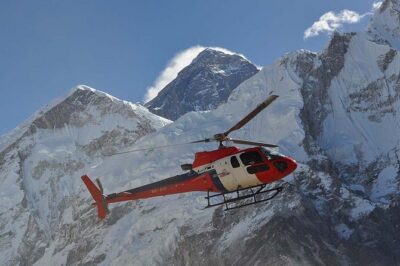
Everest Base Camp Trek with Helicopter Return to Lukla – 10 Days
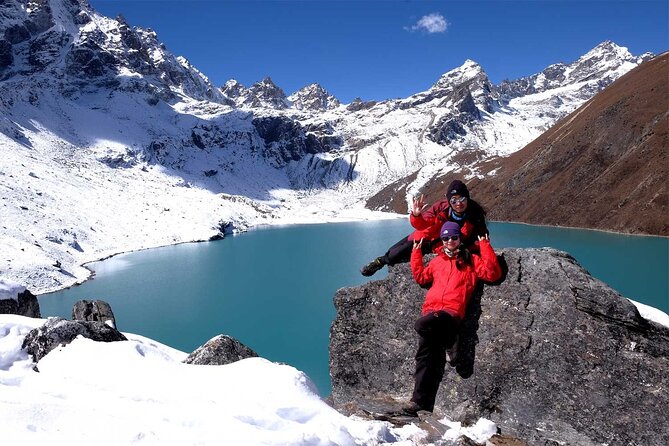
The clever part of this Everest Base Camp trek comes at the end: after walking to Gorakshep, you return to Lukla by helicopter. That saves the long descent and gives you a bird’s-eye view of the valleys, villages, and peaks you crossed on foot.
I like the mix of real mountain travel and practical support. You get standard guesthouses, permits, a licensed guide, a duffel bag, sleeping bag, medical kit, and domestic flights arranged for you. I also like the cultural finish in Kathmandu, with Nepali food and traditional dance. The main catch is the pace: 10 days is short for this altitude, and the price does not include meals during the trek, a porter, insurance, or personal costs.
Key points to know before booking
- Helicopter return from Gorakshep: Skip the long walk down and see the Khumbu from above.
- Kala Patthar sunrise: The high point of the trip is the view toward Everest and the surrounding peaks.
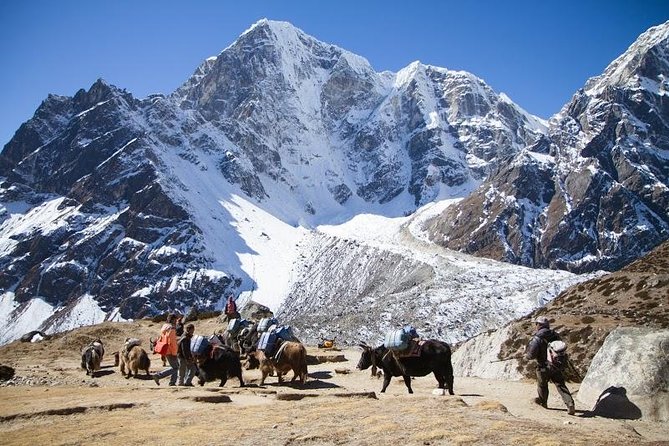
- Sherpa culture along the trail: Namche Bazaar, Tengboche, monasteries, and mountain villages add meaning beyond the scenery.
- Small maximum group: The stated limit is 15 people, which makes guide support more practical.
- Guides with strong personal reputations: Ram, Rupak, Dambar, and other local staff have been praised for patience, organization, and encouragement.
- Good value at $799: Flights, permits, lodging, guide, gear, transfers, and the helicopter are included, but meals and insurance are not.
Why the helicopter return changes the trek
Most Everest Base Camp routes return to Lukla on foot. That descent takes several days, and it can feel harder than the climb because your legs are tired and the scenery is familiar. Here, the helicopter picks you up at Gorakshep, the last settlement used for the Base Camp area, and flies you back to Lukla.
This is more than a fancy shortcut. You see the route from a new angle, with the trail cutting through valleys and the mountains rising on all sides. It also gives you a little breathing room in a tight itinerary. You spend your energy reaching Base Camp and Kala Patthar instead of rushing downhill to catch a later flight.
There is one practical point to understand: the helicopter ride depends on weather. Mountain flights can be delayed or changed when conditions are poor. The stated policy offers a different date or a full refund if the experience is canceled because of bad weather, but you still need flexibility in your wider Nepal plans.
More Helicopter Tours in the Everest Region
- Everest Base Camp Helicopter Tour landing at Everest View Hotel
★ 5.0 · 668 reviews - Everest Base Camp Helicopter Tour landing at Hotel Everest View
★ 5.0 · 218 reviews - Everest Base Camp Trek with Helicopter Return from Gorakshep to Lukla
★ 5.0 · 161 reviews
Kathmandu begins with logistics and a cultural finish
The trip starts with pickup at Tribhuvan International Airport in Kathmandu at 9:00 a.m. A private vehicle takes you to your hotel, and the package includes a three-star Kathmandu hotel with breakfast. That is useful after an international flight, especially when you need to sort clothing, documents, and trekking gear.
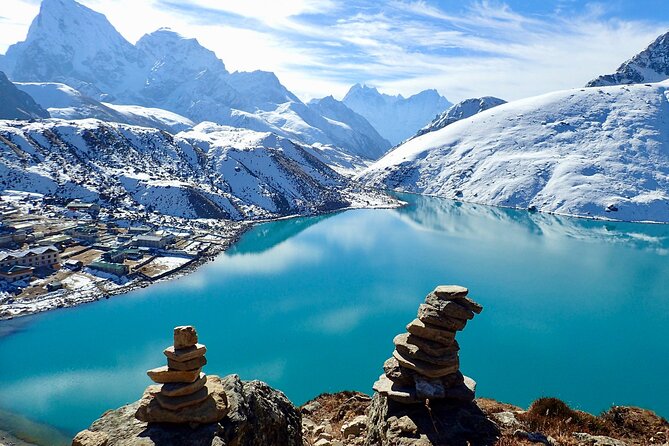
The city is not just a staging point. Kathmandu gives you a first taste of Nepal’s religious and cultural life before the mountain days begin. The schedule includes a farewell dinner at the end, with Nepali cuisine and a traditional cultural show. It is a pleasant way to mark the return to lower altitude and the completion of the trek.
The Kathmandu meals included in the package are limited. Breakfast at the hotel is covered, but lunch and dinner in the city are your responsibility. Bring some spending money for meals, drinks, laundry, snacks, and small purchases.
The flight to Lukla starts the walking adventure
The package includes domestic flights from Kathmandu or Manthali to Lukla and back. The use of Manthali is worth noting because flight arrangements can affect your morning plans and airport transfer. Your operator handles the domestic flight portion, but you should still expect mountain travel to be weather-sensitive.
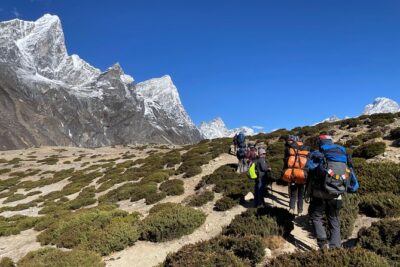
Lukla is the trailhead for the Everest region. From there, the route follows the Dudh Koshi River through Sherpa settlements and forested hills. The first walking days are not simply a warm-up. You are already gaining altitude, and your body begins adjusting to the thinner air.
The trail passes through small villages, suspension bridges, and wooded sections before reaching the larger trading center of Namche Bazaar. You will likely notice that the route changes gradually. Lower sections feel greener and more sheltered, while higher sections open into rockier country with bigger views.
Namche Bazaar is more than a rest stop
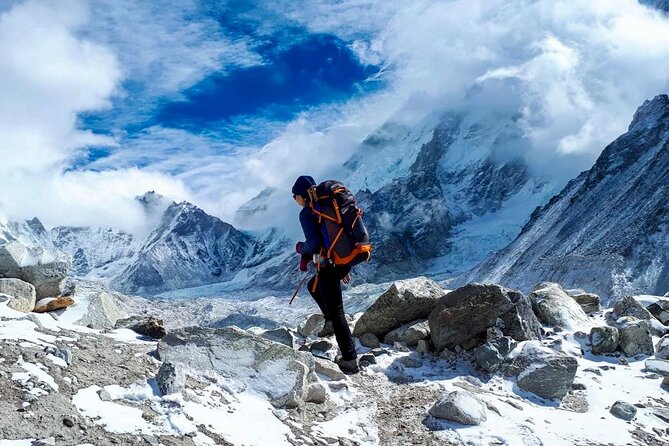
Namche Bazaar is one of the most important places on the route. It serves as a meeting point for people moving through the Khumbu and gives you a chance to slow down before the higher stages. The package specifically includes time to pause in Namche, which matters because altitude adjustment is not something you can rush.
I like this part of the route because it balances mountain scenery with daily life. You are not only staring at peaks. You are walking through a working Sherpa community, seeing lodges, shops, and the practical rhythm of a high mountain town.
The guide’s role becomes especially important here. Ram has been singled out for patience, prompt communication, and the ability to make difficult trekking days feel manageable. Rupak has also been praised for clear English, organization, and keeping a mixed-age group together. The guide assigned to your departure may differ, so ask for the name in advance if that matters to you.
More Everest Base Camp treks:
- Everest Base Camp Trek – 14 Days
★ 5.0 · 1,499 reviews - Everest Base Camp Trekking
★ 5.0 · 485 reviews - Everest Base Camp Trekking – 13 Day
★ 5.0 · 365 reviews - Everest Base Camp Trek -14 Days
★ 5.0 · 321 reviews
Tengboche adds the spiritual heart of the route
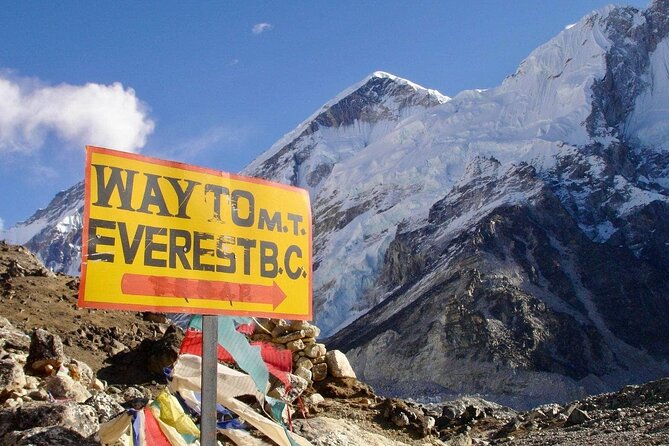
The walk toward Tengboche takes you farther into the Khumbu and brings you to one of the route’s best-known monasteries. The monastery gives the trek a strong cultural layer. You are not simply traveling toward a famous mountain viewpoint; you are moving through a region where Buddhist practice and mountain life are closely linked.
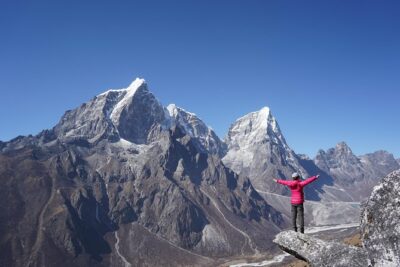
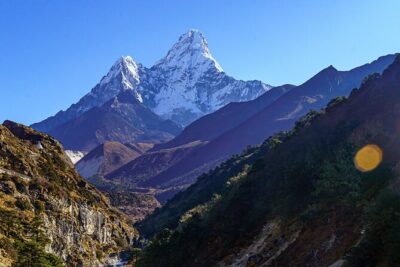
The setting around Tengboche is a major attraction. Forest gives way to wider views, and the scale of the peaks becomes more imposing. The route can also feel more demanding here because the trail keeps rising and the air is thinner.
Your lodging is in standard guesthouses rather than luxury hotels. That means a simple room, shared facilities in some places, and a more basic evening routine. I would choose this package for the route, guide support, and helicopter return, not for polished accommodation.
Dingboche is where altitude becomes serious
Dingboche is included as the acclimatization point before the final push. This is one of the most important stops in the itinerary. The altitude is high enough that you may notice headaches, slower breathing, poor sleep, or a reduced appetite. The program allows you to pause instead of racing straight to Gorakshep.
The guide should watch your condition, not merely count kilometers. Ram has been praised for checking on people’s fitness and adjusting the pace, while other guides and support staff have been described as encouraging and attentive. That kind of support matters more than a fast walking speed at this stage.
You need moderate physical fitness for this activity. You do not need to be a technical climber, but you should be ready for repeated days of uphill walking at high altitude. Training with long walks, hills, and a loaded daypack will make the experience more enjoyable.
Gorakshep and Everest Base Camp are the payoff
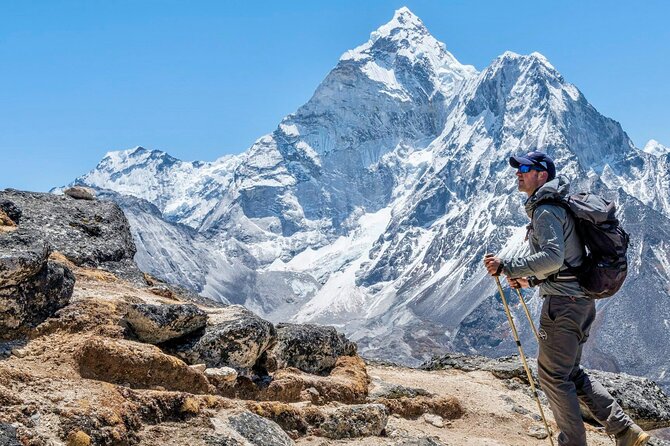
The route continues toward Gorakshep, the staging point for Everest Base Camp and Kala Patthar. At this height, the trail is more exposed and the surroundings feel stark. The simple guesthouse becomes part of the challenge, since comfort and services are more limited than in Kathmandu or Namche.
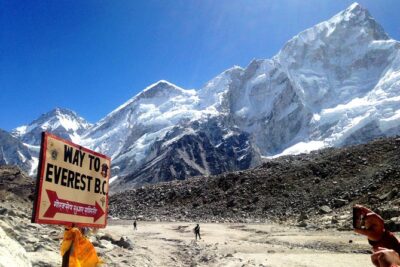
The walk to Everest Base Camp is a major emotional high point. You reach the destination associated with expeditions to the world’s highest mountain and see the rough, glacial setting around it. Do not expect a city-style viewpoint or a single perfect portrait of Everest from Base Camp itself. The value is being there, seeing the route used by mountaineers, and understanding the scale of the Khumbu.
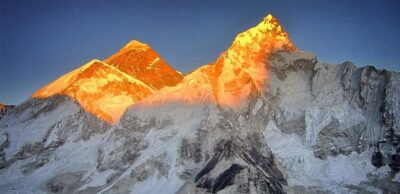
The next major target is Kala Patthar. The early start is designed for sunrise over Everest and the surrounding Himalayan peaks. This is often the clearest viewpoint of the trip, and it is one reason the schedule should not be treated as a casual walk. You will be tired, the air will be thin, and the morning can be very cold.
Kala Patthar earns the early start
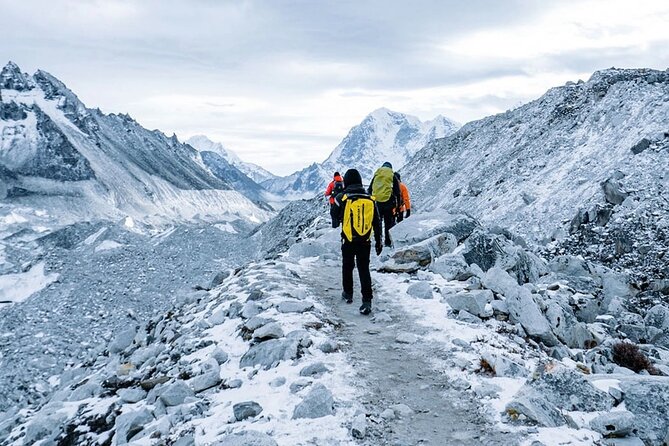
Kala Patthar is a viewpoint rather than a separate mountain expedition, but the climb is still demanding at altitude. The sunrise gives the peaks changing light and makes the long effort feel worthwhile. If clouds block the view, you may not get the postcard morning you hoped for. That is part of mountain travel, not a flaw in the route.
I would keep your expectations focused. The program promises an exceptional Himalayan view, but weather controls visibility. Your guide can help with pace and timing, while your own preparation determines how comfortably you handle the climb.
After Kala Patthar and the Base Camp visit, you return to Gorakshep for the helicopter pickup. This is where the trip shifts from walking adventure to air journey.
The Gorakshep to Lukla helicopter flight
The helicopter ride is the package’s defining feature. From Gorakshep, you fly back to Lukla rather than retracing the entire route. You may see the valleys, river corridors, villages, and folds of the Khumbu in a single sweep.
The flight also changes the value calculation. At $799 per person, the package is not just charging for a guided walk. It includes a helicopter segment, domestic flights, permits, guesthouse lodging, airport transfers, a guide, trekking gear, and a Kathmandu hotel. Those inclusions make the price attractive for someone who wants a managed trip and does not want to arrange each part separately.
Still, check what you will pay on top. All meals during the trek are excluded, as are lunch and dinner in Kathmandu. A porter is optional, though one porter for two people is recommended. Travel insurance must cover medical treatment and high-altitude evacuation, and you will also need money for drinks, snacks, laundry, tips, and personal purchases.
What the included gear and support mean
The operator provides a duffel bag, sleeping bag, T-shirt, map, and a comprehensive first-aid kit. These are useful basics, but you should not read the list as a complete packing list. You remain responsible for suitable clothing, footwear, personal medication, sun protection, and insurance.
Luggage support is mentioned as part of the experience, but porter service is listed as optional. Ask exactly how your bags move between guesthouses and what weight limits apply. If you are not used to carrying gear at altitude, sharing one porter between two people may make the walking far more pleasant.
The maximum group size is 15 people. That is not a private trek, but it is small enough for a guide to keep track of individual pace and condition. If you prefer silence and complete flexibility, a private departure would suit you better. If you like some company and want the cost of support spread across a group, this size is reasonable.
Who should book this 10-day trek?
I would recommend it to an active first-time Himalayan trekker who wants Everest Base Camp without walking back to Lukla. It also suits someone who values organized permits, flights, lodging, a local guide, and a helicopter finish more than a slow, independent route.
You should be comfortable with basic guesthouses and a physically demanding schedule. This is not the trip for someone who wants a relaxed holiday, guaranteed clear views, or hotel-style comfort every night.
The strongest part of the support appears to be the guide team. Ram is associated with patience and careful pacing, while Rupak, Dambar, and other staff have been praised for organization, encouragement, and helping with details in Kathmandu. Ask who will lead your departure and how the company handles altitude concerns before paying.
Booking details and final advice
Confirmation is provided at booking, and free cancellation is available up to 24 hours before the stated start time. Changes or cancellations inside that window are not accepted, and weather can affect the helicopter and domestic flights.
I would book this trek if the helicopter return is important to you and you are prepared for a brisk, high-altitude itinerary. I would choose a longer route if you want more acclimatization time, more rest days, or a gentler schedule.
For $799, the package offers a strong bundle of transport, permits, lodging, guide service, gear, and the helicopter flight. Just budget honestly for food, insurance, porter support, tips, and delays. If you can handle the effort and accept basic lodging, this is a smart way to reach Everest Base Camp and return with one last great view from the sky.
FAQ
How long is the Everest Base Camp trek with helicopter return?
The experience lasts approximately 10 days.
Where does the tour start?
The stated meeting point is Tribhuvan International Airport in Kathmandu, Nepal. The start time is 9:00 a.m., and private arrival and departure transfers are included.
Is the helicopter ride included?
Yes. The package includes a helicopter ride from Gorakshep to Lukla.
Are domestic flights included?
Yes. Domestic flights between Kathmandu or Manthali and Lukla are included as part of the package.
Are meals included during the trek?
No. All meals during the trek are excluded. Breakfast is included with the three-star Kathmandu hotel, but lunch and dinner in Kathmandu are also your responsibility.
Is a porter included?
Porter service is optional and is not included in the stated package. One porter for two people is recommended.
What kind of insurance do I need?
You must arrange insurance that covers medical care and high-altitude evacuation.
Just added around Everest Region
- Day Tour to Everest Base Camp By Helicopter★ 5.0 · 16 reviews
- Kathmandu To Lukla By Helicopter Flight★ 5.0 · 6 reviews
- Luxury Everest Base Camp Trek – 11 Days★ 5.0 · 9 reviews
- Everest Base Camp Tour & View Point by Helicopter from Katmandu★ 5.0 · 3 reviews
- Everest base camp helicopter tour with Guarenteed Landing★ 4.0 · 7 reviews
- Everest base camp flight over by Helicopter from Kathmandu★ 5.0 · 10 reviews
- Everest Base Camp Helicopter Tour Stop at Hotel Everest View.★ 5.0 · 17 reviews
- Everest Base Camp Helicopter Tour★ 5.0 · 24 reviews
Everest Base Camp Treks, compared.
Everest Base Camp Trek with Helicopter Return from Gorakshep to Lukla
Read our review →Browse the lists this tour appears in