
Reviewed · EVEREST BASE CAMP TREKS
Everest Base Camp with Gokyo Lake 17 Days
The big draw here is the two-sided view of Everest country. You do not simply walk to Base Camp and retrace your steps. You approach through Gokyo, climb Gokyo Ri, cross the demanding Cho La Pass, then reach the Everest Base Camp area. I like the sacred Gokyo Lake stop and the chance to see Khumbu’s major monastery at Tengboche. I also like that the price includes a guide, porter support, permits, meals on trek, airport transfers, and lodging.
The catch is real: this is a high-altitude route with long walking days and a pass above 5,400 meters. The published plan also says Day 12 may include either Everest Base Camp or Kala Patthar, so confirm exactly which goal your departure includes. You need moderate fitness, patience with mountain weather, and a willingness to sleep simply.
Key points before you book
- Gokyo Lake and Gokyo Ri: You get a quieter side of the Everest region before heading toward Base Camp.
- Cho La Pass at 5,420 meters: This is the route’s hardest and most weather-sensitive crossing.
- A 17-day Himalayan circuit: The route avoids a simple out-and-back walk and includes Namche, Tengboche, Lobuche, and Gorak Shep.
- Guide and porter support included: One Sherpa porter is provided for every two people, with guide wages, food, lodging, and insurance covered.
- Meals and mountain lodges: Breakfast, lunch, dinner, and tea or coffee are included during the trek, while Kathmandu meals are extra.
- Small maximum group: The stated limit is 18 people, large enough for a social trip but not an intimate private walk.
Why the Gokyo route makes this trek special
The usual appeal of an Everest trek is simple: reach the Base Camp region and look up at the world’s highest mountain. This route adds a second high valley and a major pass, giving you more variety for the extra effort.
Gokyo Lake is the first major reward. The water is sacred, and the village sits at roughly 4,760 meters. From here, the climb to Gokyo Ri gives you a high viewpoint over the surrounding peaks. The exact visibility depends on weather, but this section is designed for broad mountain views rather than a quick photo stop.
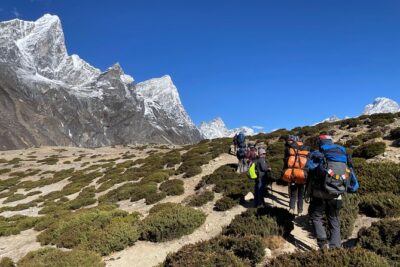
I like this route because the scenery changes often. You start near Lukla with lower valleys and villages, move through Namche Bazaar, then reach the stark, thin-air country around Gokyo, Cho La, Lobuche, and Gorak Shep. The crossing makes the trip feel like a journey through the Khumbu rather than a single road to one famous endpoint.
The price is $1,480 per person. That is a useful value when you count what is covered: airport pickup and departure, transport, a three-star Kathmandu hotel with breakfast, trekking lodge accommodation, a guide, porter service, trekking permits, the TIMS card, full trekking meals, tea and coffee, first-aid supplies, a T-shirt, and a completion certificate. A sleeping bag and down jacket can be supplied if needed.
You still pay for international flights, travel insurance, tips, personal expenses, bar bills, Kathmandu meals beyond breakfast, and entrance fees. Those extras matter. The headline cost covers the core trek, not every rupee you might spend in Nepal.
More Everest Base Camp treks:
- Everest Base Camp Trek – 14 Days
★ 5.0 · 1,499 reviews - Everest Base Camp Trekking
★ 5.0 · 485 reviews - Everest Base Camp Trekking – 13 Day
★ 5.0 · 365 reviews
Days 1 and 2, Kathmandu to Phakding
The trip begins with arrival in Kathmandu and a hotel transfer. The city stay is in a three-star property on a twin-sharing basis, with breakfast included. This gives you a practical start, though the supplied plan does not describe the hotel by name or location.
Day 2 brings the flight to Lukla, followed by the first trek to Phakding at 2,620 meters. This is a useful introduction to the walking rhythm. You receive breakfast, lunch, and dinner on the trekking days where the plan marks B.L.D, along with tea or coffee.
The Lukla flight is an important part of the schedule, but the supplied details do not promise a backup day for weather or flight disruption. Ask the operator how delays are handled before you pay for fixed international connections. Mountain flights and tight schedules do not always make a good pair.
Days 3 and 4, Namche Bazaar and acclimatization
The walk from Phakding to Namche Bazaar reaches about 3,420 meters and takes you into the main Everest trekking corridor. Namche is more than a place to sleep. It is the route’s main high village and the planned acclimatization stop.
Day 4 is set aside for rest, exploration, and adjustment to altitude. Do not treat this as a wasted day. It is one of the most useful parts of the program, since the route rises quickly after Namche.
You may be tempted to walk farther, but the sensible use of this day is gentle exploration and recovery. The itinerary gives you one clear adjustment day before the trek reaches Gokyo and the pass. If you have never trekked at altitude, this built-in pause is a valuable feature.
Days 5 to 7, Dole, Machhermo, and Gokyo Lake
Day 5 goes to Dole at 4,110 meters and takes about six hours. This is a serious increase in height from Namche, so the steady pace matters more than speed. The next day reaches Machhermo at 4,410 meters, with an estimated walking time of three to five hours.
Day 7 brings you to Gokyo at approximately 4,760 meters. This is high enough that even simple walking can feel demanding. The shorter Day 6 helps, but you should still expect the altitude to shape your pace, appetite, and energy.
Gokyo is the emotional center of the first half of the trek. The lake gives the route a different mood from the busier Base Camp approach. The supplied plan calls the water sacred, and the setting is one of the main reasons to choose this itinerary instead of a standard Everest route.
More to do in the Everest Region:
- Everest Base Camp Helicopter Tour landing at Everest View Hotel
★ 5.0 · 668 reviews - Everest Base Camp Trek -14 Days
★ 5.0 · 321 reviews - Everest Base Camp Helicopter Tour landing at Hotel Everest View
★ 5.0 · 218 reviews - Everest Base Camp Trekking – 2025/2026
★ 5.0 · 199 reviews
Day 8, Gokyo Ri and the walk to Thagnak
Day 8 combines a morning hike to Gokyo Ri with a trek to Thagnak at 4,678 meters. This is a full high-altitude day, even though the overnight stop is slightly lower than Gokyo.
Gokyo Ri is not an easy viewpoint reached by vehicle or a short village stroll. The climb asks for a slow start and careful breathing. In return, you get one of the route’s key mountain outlooks. The plan places this climb before the Cho La crossing, so you should expect a demanding sequence rather than several easy days.
The overnight stop at Thagnak positions you for the pass. It also means the itinerary has little room for a casual change of pace at this stage. Your guide’s judgment and your own condition become especially important here.
Day 9, crossing Cho La Pass
Cho La is the trip’s biggest physical hurdle, reaching 5,420 meters. The route then continues to Dzonglha. This is the section to study most closely before booking.
The pass is why this trek is more demanding than a straightforward Everest Base Camp itinerary. At this altitude, cold, wind, snow, and poor visibility can affect the crossing. The supplied material does not promise a specific surface condition or technical equipment, so ask the operator what happens if the pass cannot be crossed as planned.
I would also ask what your guide considers an acceptable pace and how porter loads are managed on this day. The company provides a guide and one porter for every two people, which is helpful, but you still need to carry your daypack and manage your own water, layers, and personal items.
Days 10 and 11, Lobuche and Gorak Shep
After Cho La, Day 10 goes to Lobuche at 4,940 meters. Day 11 continues to Gorak Shep at 5,147 meters. These are high settlements where rest becomes part of the itinerary, not an afterthought.
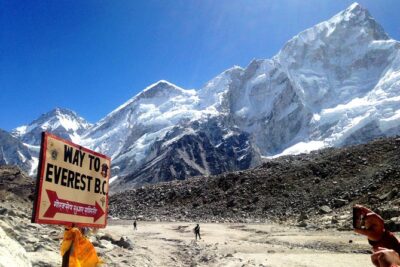
Lobuche places you close to the classic Everest route. Gorak Shep is the final overnight base for the Base Camp or Kala Patthar outing. At this height, small jobs take longer, sleep can be poor, and your body may not respond as it does at home.
The accommodation is in trekking lodges. This is practical rather than luxurious. The tour says sleeping bags and down jackets are available if you need them, but confirm whether they are supplied free or rented, and whether sizes are reserved in advance. One person specifically used a rented sleeping bag at Ama Dablam Base Camp, showing that rental support can be useful for cold nights.
Day 12, Everest Base Camp or Kala Patthar
The published plan gives you a morning hike to either Everest Base Camp at 5,365 meters or Kala Patthar at 5,550 meters, followed by the trek to Pheriche at 3,950 meters. These are not identical goals, so clarify the exact plan before booking.
Everest Base Camp is the famous destination, but the camp itself is seasonal and the surrounding Khumbu scenery is part of the appeal. Kala Patthar is higher and is known in the itinerary as the alternative viewpoint. The choice affects the day’s effort and what you can say you reached afterward.
The walk down to Pheriche is welcome after the morning outing. It also makes Day 12 long and tiring. I would not schedule an important flight immediately after the trek without allowing room for changes, even though the supplied plan has you fly to Kathmandu on Day 16.
Days 13 to 16, Tengboche, Lukla, and Kathmandu
Day 13 reaches Tengboche at 3,860 meters. The village is home to Khumbu’s biggest monastery, one of the tour’s cultural highlights. This stop gives the route a needed change from high passes and mountain viewpoints. You are not only counting altitude gains; you are also seeing a significant religious center in the region.
Day 14 continues to Monjo at 2,635 meters, and Day 15 returns to Lukla at about 2,840 meters. These lower elevations should feel easier after Gorak Shep, though the walking can still be tiring after so many days.
Day 16 is the flight back to Kathmandu, with breakfast and dinner included that day. Day 17 concludes the trip and includes breakfast. The tour provides airport pickup and departure transfers, which makes the first and final transitions simpler.
The overall duration is described as roughly 14 to 19 days, while the detailed schedule runs 17 days. That range likely allows for operational changes, but you should ask what causes the shorter or longer versions. Confirm how extra nights, meals, and transport are handled if the schedule shifts.
Guides, porters, meals, and group size
Guide quality matters more here than a polished hotel. Previous departures have been led by guides named Pemba and Pasang, with Pemba praised for being helpful and friendly and Pasang noted for support on the Everest and Gokyo route. Dawa is also named in connection with another trek from the same company.
That does not guarantee who will lead your departure. Ask for the assigned guide’s name, experience on Cho La, and first-aid training. The tour includes the guide’s salary, accommodation, meals, and insurance, plus porter support for two-person pairs.
All trekking meals are included. Breakfast, lunch, and dinner are served according to the route plan, with tea and coffee included. Kathmandu meals beyond breakfast are extra, so budget separately for city dining and personal purchases.
The maximum group size is 18. That is not a private trek, but it is still limited enough to keep the group manageable. A group of that size can move at different speeds, so ask how the guide handles walkers with different fitness levels.
What the $1,480 price really buys
I see good value in this package if you need a supported trek rather than a fully independent plan. Permits, TIMS registration, transfers, guide costs, porter service, meals, and trekking lodges can become complicated when booked separately.
The included first-aid items, down jacket, sleeping bag option, T-shirt, and achievement certificate are useful extras, but they should not distract from the bigger costs. You still need international airfare, insurance, tips, personal spending, bar bills, Kathmandu lunches and dinners, and entrance fees.
The tour also includes one cultural show and a farewell dinner. Those are pleasant additions, but the real value lies in the route and the logistical support. I would choose this trip for the Gokyo and Cho La combination, not for the city extras.
Who should book this trek
This route suits you if you want more than the standard Everest Base Camp walk and are comfortable with a demanding high-altitude schedule. You should have moderate physical fitness and be ready for six-hour walking days, steep climbs, basic lodges, and the uncertainty that comes with mountain weather.
It is less suitable if you want a relaxed holiday, upscale accommodation, or a fixed timetable with no ambiguity. The Cho La crossing and the possible Base Camp or Kala Patthar choice deserve direct questions before payment.
Free cancellation is available if you cancel at least 24 hours before the start time. Changes or cancellations made inside that window are not accepted for a refund. Since the experience starts in Kathmandu, allow enough time to arrive, recover from your flight, and handle any unexpected delay.
FAQ
Where does the trek start?
The experience starts in Kathmandu, Nepal, with airport pickup and transfer to the hotel.
How long does the trek last?
The detailed itinerary takes 17 days. The overall duration is listed as approximately 14 to 19 days, so confirm the exact schedule for your departure.
Is Everest Base Camp included?
The Day 12 plan includes a morning hike to either Everest Base Camp or Kala Patthar. Ask the operator which destination applies to your booking.
What is the highest point on the route?
Cho La Pass reaches 5,420 meters. Kala Patthar, if included, reaches about 5,550 meters.
Are meals included?
Breakfast, lunch, and dinner are included during the trekking portion, along with tea and coffee. Kathmandu meals other than breakfast and personal expenses are not included.
Is a guide and porter provided?
Yes. The package includes a guide, and one Sherpa porter is provided for every two people. Guide and porter wages, accommodation, meals, and insurance are included.
What is the cancellation policy?
You can receive a full refund by cancelling at least 24 hours before the experience start time. Cancellations or changes made less than 24 hours before the start time are not accepted for a refund.
Should you book the Everest Base Camp and Gokyo trek?
I would book this trip if you want a demanding but well-supported route with Gokyo Lake, Gokyo Ri, Cho La Pass, Tengboche, and the Everest Base Camp area in one itinerary. The combination gives you more variety than a simple out-and-back trek, and the included meals, permits, guide, porter, lodging, and transfers make the $1,480 price reasonable.
Before booking, get clear answers on the exact Day 12 destination, the handling of flight delays, the availability of sleeping bags and down jackets, and the reason for the 14 to 19 day range. If those details suit you, this is a strong choice for a first major Himalayan trek, provided you respect the altitude and prepare for hard days.
Just added around Everest Region
- Day Tour to Everest Base Camp By Helicopter★ 5.0 · 16 reviews
- Kathmandu To Lukla By Helicopter Flight★ 5.0 · 6 reviews
- Luxury Everest Base Camp Trek – 11 Days★ 5.0 · 9 reviews
- Everest Base Camp Tour & View Point by Helicopter from Katmandu★ 5.0 · 3 reviews
- Everest base camp helicopter tour with Guarenteed Landing★ 4.0 · 7 reviews
- Everest base camp flight over by Helicopter from Kathmandu★ 5.0 · 10 reviews
- Everest Base Camp Helicopter Tour Stop at Hotel Everest View.★ 5.0 · 17 reviews
- Everest Base Camp Helicopter Tour★ 5.0 · 24 reviews
Everest Base Camp Treks, compared.
Everest Base Camp Trek with Helicopter Return from Gorakshep to Lukla
Read our review →Browse the lists this tour appears in