
Reviewed · EVEREST BASE CAMP TREKS
From Kathmandu: Private 14-Day Everest Base Camp Trek
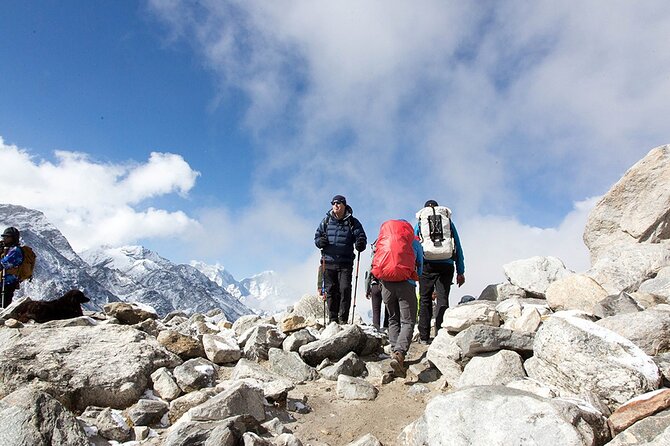
The big draw here is simple: you walk into the Khumbu Valley and reach Everest Base Camp at 5,364 meters, following the same broad route used by climbers and mountaineers. The journey also gives you a sunrise climb to Kala Patthar, where the Everest view is often more rewarding than the view from Base Camp itself.
I like the private format, because your guide can watch your pace and respond to altitude problems without fitting you into a large group. I also like that the $1,650 price includes the Lukla flights, permits, lodging, meals, equipment, and a guide with a Sherpa porter. The main caution is the altitude: this is a serious high-altitude trek, not simply a long holiday walk, and weather can disrupt the flights.
Key points before you book
- Two acclimatization days: You spend extra time in Namche Bazaar and Dingboche rather than racing straight uphill.
- Kala Patthar is included: The 5,545-meter climb gives you one of the strongest Everest viewpoints on the route.
- A private guide and porter: Guide assignments vary, with Prakash, Raj, Pratip, and others associated with the operator.
- Useful equipment is supplied: You receive a down jacket, sleeping bag, and duffle bag for the trek.
- Most major costs are covered: Domestic flights, permits, national park fees, accommodation, and listed meals are included.
- The schedule needs flexibility: Lukla flights depend on good weather, and the written itinerary contains a few route and timing gaps.
Why this Everest trek earns its price
At $1,650 per person, this package is not just a guided walk with a meeting point in Kathmandu. It covers the expensive and useful parts of a Himalayan trip: the Kathmandu to Lukla flight, the return flight, trekking permits, Sagarmatha National Park fees, accommodation, 11 lunches, 12 dinners, and 13 breakfasts.
You also get an experienced trekking guide and a Sherpa porter. That matters more here than it would on an ordinary day hike. Your guide is expected to help with pacing, route decisions, and altitude checks, while the porter carries much of the shared load. The equipment loan also saves you from buying a bulky sleeping bag and a warm down jacket for one trip.
The price does not cover your Nepal visa, travel insurance, personal spending, guide and porter gratuities, unspecified meals, or a solo traveler surcharge. Travel insurance is compulsory, and it should cover high-altitude trekking and emergency arrangements. Before paying, ask the operator exactly how a solo booking is priced and what kind of emergency support your policy must provide.
One detail deserves attention: the experience is described in places as a 15-day classic trek, but the supplied schedule runs from Day 1 through Day 14. Treat it as a 14-day itinerary unless Cordial Trek confirms a different arrival or departure arrangement.
More Everest Base Camp treks:
- Everest Base Camp Trek – 14 Days
★ 5.0 · 1,499 reviews - Everest Base Camp Trekking
★ 5.0 · 485 reviews - Everest Base Camp Trekking – 13 Day
★ 5.0 · 365 reviews
Day 1: Kathmandu arrival and a gentle start
Your trip begins at Tribhuvan International Airport, where a Cordial Trek representative picks you up and takes you to your hotel. The first day is mainly for arrival, check-in, and settling your gear.
That sounds ordinary, but it is useful preparation for a demanding route. You have time to meet the local team, organize the down jacket and sleeping bag, and make sure your duffle bag is ready before the early flight to Lukla. The schedule does not promise a sightseeing program in Kathmandu, so do not assume the first day includes major city attractions.
Day 2: The short flight to Lukla
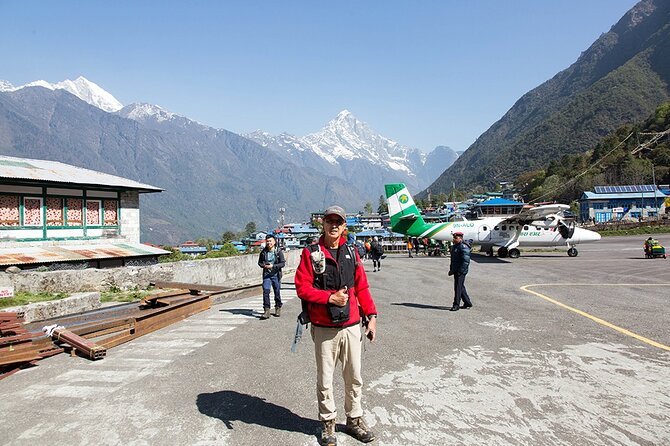
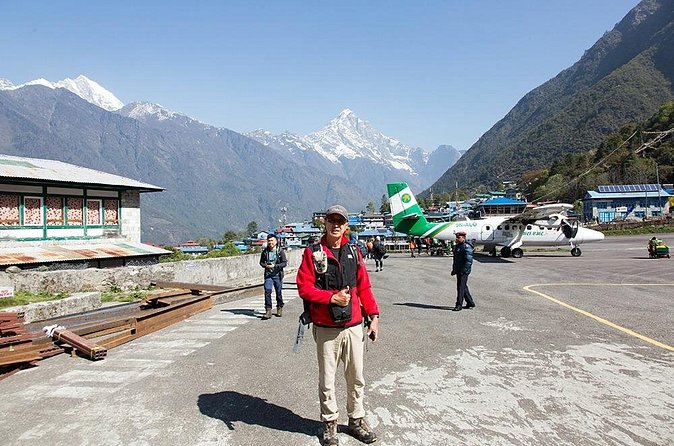
The flight from Kathmandu to Tenzing Hillary Airport in Lukla takes about 30 minutes. Lukla is the gateway to the Khumbu Valley, and landing there immediately changes the feel of the trip. The airport is small and mountain-bound, and your trekking support staff joins you here.
This flight is one of the practical weak points of any Everest Base Camp schedule. It depends on weather, and a delayed or canceled flight can affect the entire trek. The operator has worked hard on some departures to secure direct Kathmandu to Lukla flights, but you should still keep a buffer around the trip if your international flight home is fixed.
From Lukla, the route heads toward Phakding. The schedule gives Day 2 a long 18-hour activity window, which likely reflects the day’s transport and trek rather than 18 hours of walking. Confirm the exact walking plan at the welcome briefing.
Day 3: Phakding to Namche Bazaar
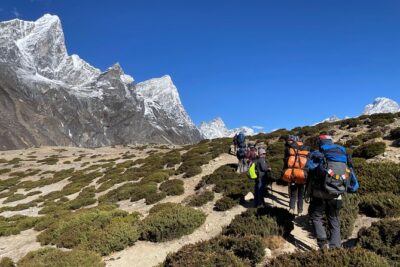
The walk from Phakding to Namche Bazaar takes about six hours and reaches 3,438 meters. You pass through Manjo village and enter the Sagarmatha National Park area, with suspension bridges, river crossings, and the first strong sense that the road network has ended.
Namche is more than an overnight stop. It is the main trading center of the Khumbu Valley and your first real test of altitude. The climb is steady, and you may feel short of breath even if the walking itself seems manageable. Your guide’s pacing is important here. The best approach is slow, regular movement, plenty of water, and no attempt to prove how fast you can walk.
More trekking days out of Everest Region:
- Everest Base Camp Trek -14 Days
★ 5.0 · 321 reviews - Everest Base Camp Trekking – 2025/2026
★ 5.0 · 199 reviews - Everest Base Camp Trek
★ 5.0 · 193 reviews - Everest Base Camp Trek with Helicopter Return from Gorakshep to Lukla
★ 5.0 · 161 reviews
Day 4: Namche Bazaar and the Everest View walk
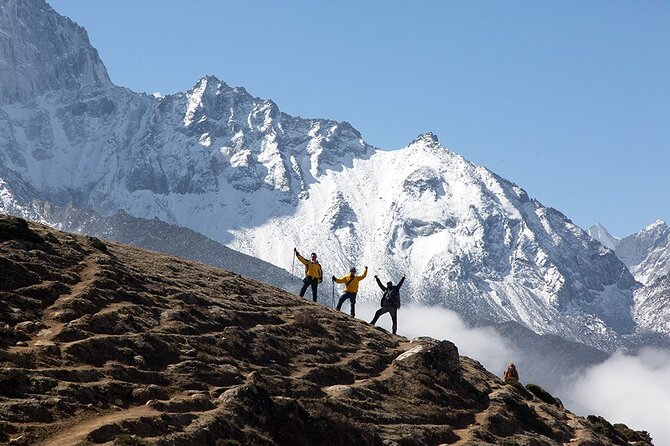
The first acclimatization day is spent around Namche. You take a guided walk toward the Everest View area, including Hotel Everest View, which offers wide mountain views from inside Sagarmatha National Park.
This is a smart pause in the itinerary. You gain altitude during the day and return to Namche to sleep lower, giving your body time to adjust. The point is not to rack up distance. It is to let your guide check how you are handling the thinner air before the route climbs higher.
Namche also gives you a chance to enjoy cafes, local pubs, and the bazaar before the trail becomes quieter and more remote. Personal spending is not included, so budget for drinks, snacks, and any extra items you need.
Day 5: Namche to Deboche
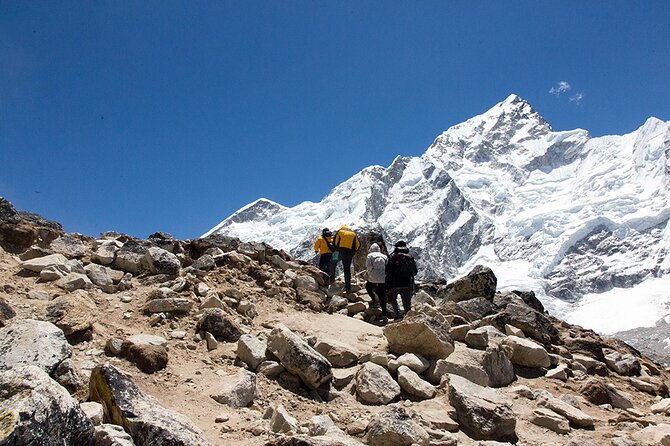
The route continues from Namche to Deboche in about six hours. The day takes you farther into the Khumbu Valley and reaches about 3,820 meters.
The supplied altitude information includes an incorrect feet conversion for this stop, so rely on the metric figure and ask your guide for the day’s exact elevation profile. The route is not just a march uphill. It gives you changing views of the high peaks, monasteries, forests, and villages that make this section feel distinctly Himalayan.
Deboche is quieter than Namche, and the reduced activity makes it a good overnight stop before Dingboche. By this point, your main job is to protect your energy. Eat even if your appetite drops, keep your pace modest, and tell your guide about headaches, nausea, unusual fatigue, or poor sleep.
Day 6: Deboche to Dingboche at 4,360 meters
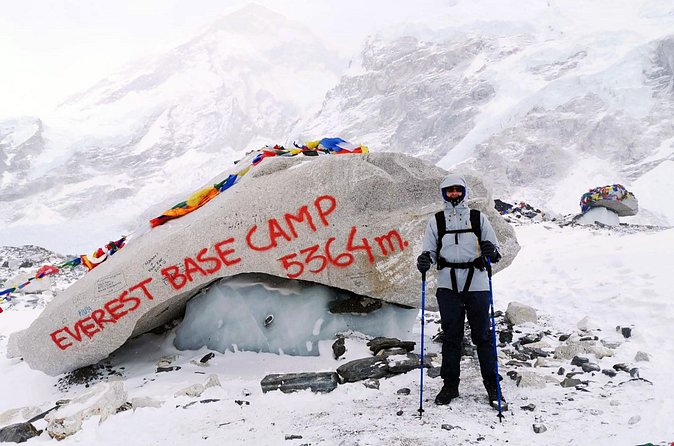
You walk from Deboche to Dingboche in roughly five hours, reaching 4,360 meters. The route passes the Lobuche River and enters a more open, higher section of the valley.
Dingboche is an important staging point for Base Camp. The air is noticeably thinner here, and the next day is reserved for acclimatization rather than immediate progress. I like this design because it avoids stacking too many hard days together.
The schedule lists Dingboche at 4,360 meters, but the surrounding itinerary uses inconsistent elevation conversions in places. That is not a reason to reject the trip, but it is a reason to trust your guide’s current conditions and your own symptoms more than a printed number.
Day 7: A second acclimatization day in Dingboche
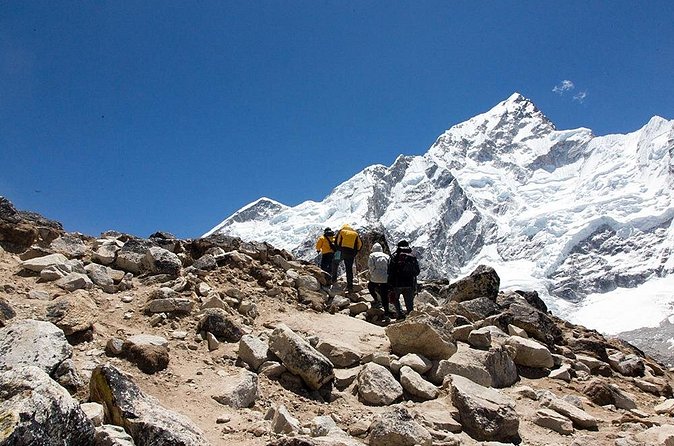
You spend another day in Dingboche, with a guided acclimatization walk. The precise viewpoint or walking route is not specified, so ask your guide what is planned when you arrive.
This day is essential, not wasted time. After Dingboche, the route climbs quickly through Lobuche and Gorakshep toward Base Camp. A rest day gives you a better chance of reaching the goal safely and enjoying it instead of simply enduring it.
The private setup helps here. Guide assignments vary, but the operator has used guides such as Raj Tamang, Prakash Neupane, and Pratip on different trips. Their role is not just to point out the route. It is to assess your condition and recommend whether you should continue, rest, or change the day’s plan.
Day 8: Dingboche to Lobuche
The trek from Dingboche to Lobuche takes about four to five hours and reaches 4,940 meters. This is a shorter day on paper, but the altitude makes every uphill section count.
You are now close to the Khumbu Glacier and the high settlements associated with the Base Camp route. Lobuche feels functional rather than luxurious. Accommodation on this trek is included, but you should expect basic mountain lodging rather than city-hotel comfort.
At this stage, cold, fatigue, and limited sleep can add up. Use the supplied sleeping bag and down jacket, keep your daypack light, and avoid spending energy on unnecessary detours. The guide and porter arrangement is especially helpful on these higher days.
Day 9: Gorakshep and Everest Base Camp
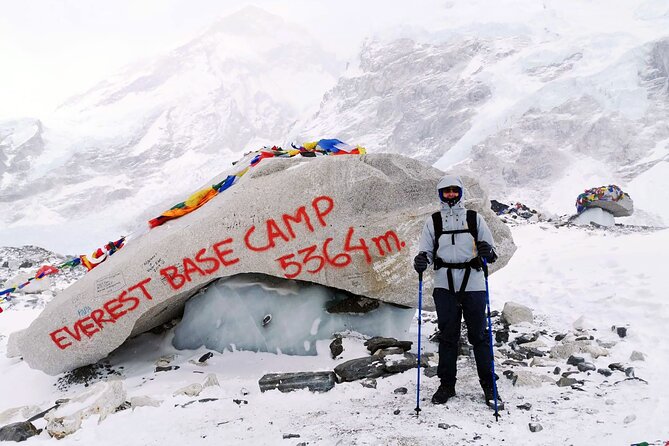
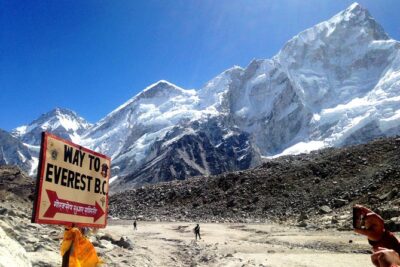
You walk from Lobuche to Gorakshep, a small settlement at 5,164 meters, before continuing to Everest Base Camp at 5,364 meters. This is the emotional high point of the trek, but it is also one of the hardest days.
Base Camp itself is not the summit, and you should not expect to see climbers launching an ascent during every visit. It is a famous mountaineering staging area, reached by a rough route beside the Khumbu Glacier. The satisfaction comes from reaching the marked destination after days of steady climbing.
The itinerary allows about an hour at Base Camp. That is enough for photographs and a short look around, but the walk back to Gorakshep still matters. You need to save energy for the return, since the high altitude does not become easier simply because you have reached the goal.
Day 10: Kala Patthar and the route back
The early morning climb to Kala Patthar takes about three hours round trip from Gorakshep and reaches 5,545 meters. This is the highest point on the itinerary.
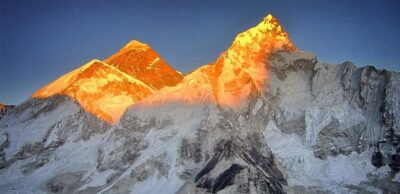
Kala Patthar is one of the best reasons to choose this particular program. Base Camp gives you the destination, but Kala Patthar gives you a stronger view toward Everest and the surrounding peaks. The early start is cold and demanding, yet the timing is designed for mountain views and morning light.
The schedule then shifts toward the return route. It says Day 11 travels from Pheriche to Namche via Tengboche, so the exact Day 10 to Day 11 transition is not fully spelled out. Ask the operator how the night after Kala Patthar is handled and where you sleep before the Namche return.
Day 11: Tengboche, Pheriche, and Namche
The return schedule describes a six to seven-hour trek to Namche, via Tengboche and Pheriche. Tengboche Monastery is one of the cultural highlights of the route, and the stop gives the journey more meaning than a simple out-and-back mountain walk.
The monastery is an important Buddhist site in the Khumbu region. The itinerary does not specify a formal ceremony or guided interior visit, so ask what access is available on your date. Even a short visit adds a valuable cultural layer to the long mountain days.
Back in Namche, you have time for local cafes and pubs. This is a welcome change after the sparse high-altitude settlements. You may also want to use the opportunity to buy snacks or small gifts, since personal expenses are your responsibility.
Day 12: Namche to Lukla
The return trek to Lukla takes about seven to eight hours via Phakding. This is a long final walking day, though the route generally feels easier because you are descending and know the hardest section is behind you.
Lukla gives you one last evening with the local team and a chance to prepare for the flight to Kathmandu. The schedule includes time to explore the bazaar and says there is a farewell gathering in the evening. This is a good moment to settle gratuities for your guide and porter, which are not included in the price.
Day 13 and Day 14: Return to Kathmandu and departure
On Day 13, you fly from Lukla back to Kathmandu and check into your hotel. The evening is free, which gives you a cushion if the flight arrives late or the mountain schedule has been tiring.
Day 14 includes the trip certificate and airport transfer. The stated plan is to drop you at the airport three hours before your final departure. Because Lukla flights can be weather-sensitive, confirm that this timing remains practical if the return flight is delayed.
Guides, porters, and the private format
The strongest part of this package is the human support. The operator has assigned guides including Prakash Neupane, Raj Tamang, and Pratip, along with porters such as Surendra. Manager Ramesh is also associated with trip coordination. Your actual team may differ, so request names before departure.
The private format means only your group participates. That does not guarantee a custom route, but it should make pacing and communication easier. It is especially useful if one person in your group adjusts to altitude faster than another.
The guide’s judgment matters most on the acclimatization days and the push to Gorakshep. A good guide will not treat the itinerary as a race. You should also speak up early about symptoms, because waiting until you are seriously ill makes every decision harder.
Who should book this trek?
This trip suits you if you want a classic Everest Base Camp route with the major stops already organized. It is a good fit for people who value private support, included equipment, and a clear schedule over designing every detail themselves.
You should have a moderate level of physical fitness. The itinerary includes several six to eight-hour walking days, steep altitude gains, and a peak elevation of 5,545 meters. It is not suitable for someone looking for a relaxed sightseeing holiday.
I would also recommend it to first-time high-altitude trekkers who want a guide and porter rather than a fully independent trip. You still need preparation, insurance, and a willingness to accept changes caused by weather.
Booking advice and cancellation terms
Confirmation is received at booking, pickup is offered, and the experience operates as a private activity. It is available every day during the stated operating period, from December 6, 2023, through January 27, 2027.
You can cancel for a full refund up to 24 hours before the local start time. Cancellations or changes made within 24 hours are not refunded or accepted. If poor weather cancels the experience, you are offered another date or a full refund. The same applies if the minimum number of participants is not met.
Should you book it?
I would book this trek if you want the standard Everest Base Camp route and appreciate having the difficult logistics handled for you. The included Lukla flights, permits, lodging, meals, gear, guide, and porter make the $1,650 price reasonable, especially for a private trip.
I would not book it without confirming three points first: the exact 14-day schedule, how weather delays are handled, and the insurance requirements. If those answers are clear, this is a solid choice for a well-supported Himalayan trek with the essential highlights, including Namche, Tengboche, Base Camp, and Kala Patthar.
FAQ
How long is the Everest Base Camp trek?
The scheduled experience lasts 14 days, from airport pickup in Kathmandu through the final airport transfer. The description sometimes refers to it as a 15-day trek, so confirm the exact dates with Cordial Trek before booking.
What is included in the price?
The price includes return domestic flights between Kathmandu and Lukla, accommodation, an experienced trekking guide, a Sherpa porter, trekking permits, national park fees, airport transfers, a down jacket, sleeping bag, duffle bag, trekking map, company T-shirt, trip certificate, and the listed breakfasts, lunches, and dinners.
Is travel insurance included?
No. Travel insurance is not included, and it is compulsory for this experience. Personal expenses, Nepal visa fees, guide and porter gratuities, unspecified meals, and any solo traveler surcharge are also excluded.
What fitness level is required?
The tour requires a moderate level of physical fitness. Walking days range from about four to eight hours, and the route reaches Everest Base Camp at 5,364 meters and Kala Patthar at 5,545 meters.
Are the Kathmandu to Lukla flights included?
Yes. The domestic flight tickets between Kathmandu and Lukla are included in the package. The flights require suitable weather, so delays or cancellations are possible.
Can I cancel for a full refund?
Yes, if you cancel at least 24 hours before the experience start time. Cancellations made less than 24 hours before the start are not refunded. If poor weather or an unmet minimum number of participants causes the operator to cancel, you are offered another date or a full refund.
Just added around Everest Region
- Day Tour to Everest Base Camp By Helicopter★ 5.0 · 16 reviews
- Kathmandu To Lukla By Helicopter Flight★ 5.0 · 6 reviews
- Luxury Everest Base Camp Trek – 11 Days★ 5.0 · 9 reviews
- Everest Base Camp Tour & View Point by Helicopter from Katmandu★ 5.0 · 3 reviews
- Everest base camp helicopter tour with Guarenteed Landing★ 4.0 · 7 reviews
- Everest base camp flight over by Helicopter from Kathmandu★ 5.0 · 10 reviews
- Everest Base Camp Helicopter Tour Stop at Hotel Everest View.★ 5.0 · 17 reviews
- Everest Base Camp Helicopter Tour★ 5.0 · 24 reviews
Everest Base Camp Treks, compared.
Everest Base Camp Trek with Helicopter Return from Gorakshep to Lukla
Read our review →Browse the lists this tour appears in