
Reviewed · EVEREST BASE CAMP TREKS
Gokyo to Everest Base Camp Trek
The best thing about this 17-day Everest Circuit trek is its route. You do not simply walk up and back from Lukla. You reach the quieter Gokyo Lakes, climb Gokyo Ri, cross the 5,330-meter Cho La Pass, then continue to Everest Base Camp and Kala Patthar. I especially like the mix of famous sights and less-used trails, plus the built-in acclimatization day at Namche Bazaar.
I also like that the price includes the Lukla flights, permits, guide, porter, meals on the trail, filtered water, sleeping bag, and down jacket. That makes the $2,200 cost easier to understand. The main concern is the altitude and effort: Cho La, Everest Base Camp, and Kala Patthar come in quick succession, and accommodation near the pass is basic.
Key points at a glance
- Gokyo Lakes before Everest Base Camp: You see the western side of the Everest region before joining the main route.
- 5,330-meter Cho La Pass: The crossing is an early-start, weather-sensitive day with simple lodging at Thangnag.
- Two major viewpoints: Gokyo Ri reaches 5,483 meters, while Kala Patthar reaches 5,555 meters.
- Small-group format: The maximum group size is 15, with one porter for every two clients.
- Practical inclusions: Lukla flights, permits, trail meals, filtered water, a sleeping bag, down jacket, and airport transfers are covered.
- Strong guide support: Guides including Raj Kumar, Nima, Ramesh, Lakpa Sherpa, Ganesh, and others have handled changing weather and route decisions.
Why this route is more rewarding than the standard Everest trek
The Gokyo to Everest Base Camp route gives you two different sides of the Khumbu region. You begin with the Dudh Koshi Valley and the Sherpa town of Namche Bazaar, then turn west toward Gokyo and the Ngozumpa Glacier. After crossing Cho La, you join the better-known trail to Lobuche, Everest Base Camp, and Kala Patthar.
That extra loop matters. Gokyo offers a calmer setting, high mountain lakes, and wide views toward Cho Oyu, Everest, and Makalu. You also get the chance to climb Gokyo Ri, a demanding viewpoint that reaches 5,483 meters.
The trade-off is clear: this is harder than a straightforward Everest Base Camp trek. You cross a high pass, sleep in a basic dormitory at Thangnag, and face several long days above 4,000 meters. You should choose this route because you want a fuller Himalayan trek, not because it looks like a slightly longer sightseeing walk.
More Everest Base Camp treks:
- Everest Base Camp Trek – 14 Days
★ 5.0 · 1,499 reviews - Everest Base Camp Trekking
★ 5.0 · 485 reviews - Everest Base Camp Trekking – 13 Day
★ 5.0 · 365 reviews
Kathmandu arrival and the short flight to Lukla
Your trip begins with an airport pickup at Tribhuvan International Airport. An Ace the Himalaya representative meets you outside the terminal, then transfers you to your Kathmandu hotel. Two nights in a three-star hotel are included, though lunch and dinner in Kathmandu are not.
The next morning starts early with a roughly 35-minute flight to Lukla’s Tenzing and Hillary Airport at 2,804 meters. The flight is short, but it is a key part of the trip. Weather can affect mountain flights, and the provided schedule allows little room for delay before the trekking days begin.
Lukla is where the trail starts in earnest. You meet the guide team, sort your walking gear, and begin toward Phakding. The first trekking day is long by the clock, though the route itself is an introduction to the valley rather than a high-pass challenge.
The package includes the Kathmandu to Lukla and return flights. That is important value, since the airfare is one of the major fixed costs of reaching the Everest region. If poor weather cancels a flight or the activity itself, the provider offers a different date or a full refund, according to the stated policy.
Phakding to Namche Bazaar, your first real test
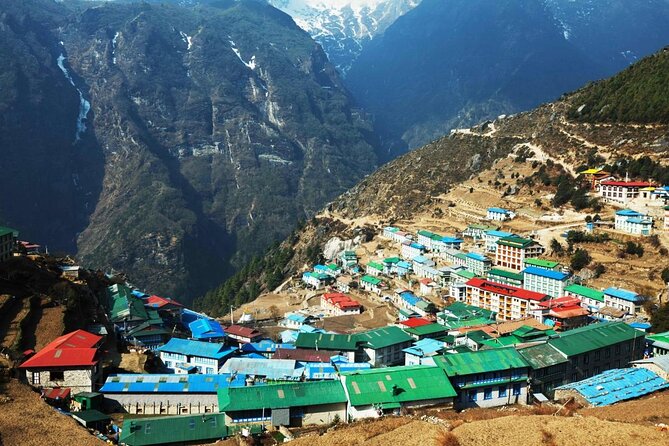
From Phakding, you follow the Dudh Koshi River and cross suspension bridges hung with prayer flags. The trail enters Sagarmatha National Park before climbing toward Namche Bazaar, the main trading and meeting town of the Khumbu.
This is the first day when altitude begins to shape your pace. Namche sits at about 3,440 meters, and the route climbs steadily to reach it. You may feel fine at Phakding and notice the thinner air by the time you arrive in town.
Accommodation is included in twin-sharing guesthouses, with attached toilets listed for Lukla, Phakding, and Namche. Standards become more basic as you move into remote areas, so do not expect the same level of comfort throughout the trip.
Namche is worth more than a quick overnight stop. Shops, bakeries, lodges, and Sherpa cultural sites give the town a lived-in feel. It is also the right place to slow down before the trail climbs higher.
Namche acclimatization and the trail toward Phortse
The planned acclimatization day in Namche is one of the best features of the schedule. You take a shorter walk to a museum focused on Sherpa customs and the local mountain environment, then return to town.
The point is not to treat this as a rest day spent entirely indoors. A short hike at altitude helps your body adjust while keeping the day manageable. Your guide can also watch how you respond before the route moves above 4,000 meters.
From Namche, the trail climbs through rhododendron forest toward Phortse. Juniper and large conifers appear as the elevation increases. In spring, the route can look especially striking, though the higher you go, the more the scenery depends on weather and season.
Phortse provides a less urban stop than Namche. The day is long, and the gain in height begins to accumulate. Keep your pace steady and avoid treating the lower portion of the trek as a race.
More trekking days out of Everest Region:
- Everest Base Camp Trek -14 Days
★ 5.0 · 321 reviews - Everest Base Camp Trekking – 2025/2026
★ 5.0 · 199 reviews - Everest Base Camp Trek
★ 5.0 · 193 reviews - Everest Base Camp Trek with Helicopter Return from Gorakshep to Lukla
★ 5.0 · 161 reviews
Machhermo and Gokyo Lakes
The route continues toward Machhermo, climbing ridges with views back toward Kengtega and ahead toward Cho Oyu. You then reach the area around the Ngozumpa Glacier before continuing to Gokyo.
Machhermo is a useful staging point because the route becomes more remote and the air noticeably thinner. You are no longer simply following a river valley through settled villages. The trail feels more exposed and tied to the glacier and high peaks.
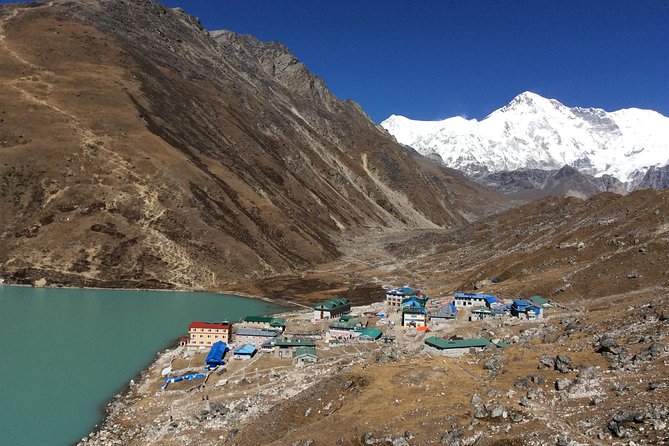
Gokyo, at about 4,790 meters, is one of the trip’s main rewards. You stay for two nights, which gives you time to see the lakes and make the climb to Gokyo Ri without immediately packing up for the next destination.
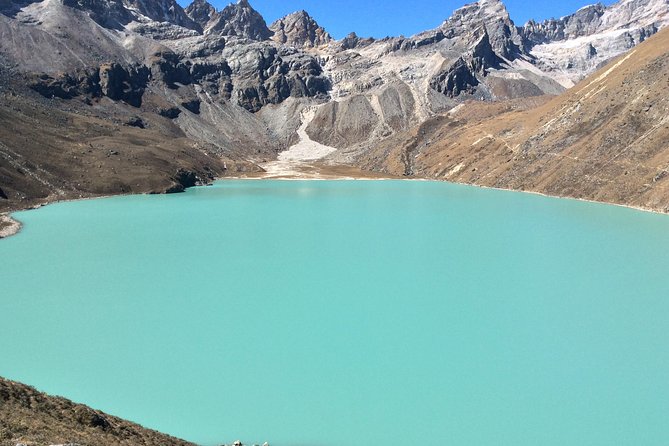
The lakes are the reason many people choose this route instead of the direct Everest Base Camp approach. They add a quieter, more open setting before the demanding crossing of Cho La. You should still remember that Gokyo is high. Even the sightseeing days require care, warm clothing, water, and a slow pace.
Gokyo Ri at 5,483 meters
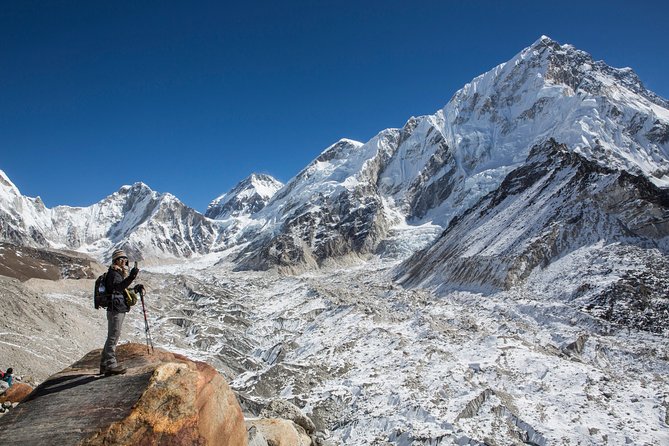
The climb to Gokyo Ri starts early and rises steeply. At 5,483 meters, it is not a casual viewpoint walk. The reward is a broad mountain panorama over the Gokyo Valley, with major peaks including Cho Oyu, Everest, and Makalu visible when conditions are clear.
This is a good example of why acclimatization matters. You climb high from a base already at nearly 4,800 meters, so the effort is real even if the distance is not extreme. Your guide’s judgment about pace and turnaround time matters here.
The scheduled stop is brief in the formal program, but the actual experience is a morning hike with time needed for the ascent and descent. Carry only what you need, keep your layers handy, and do not count on clear skies.
Thangnag and the early Cho La crossing
After Gokyo, you head toward Thangnag, also called Dragnag in some maps and trekking schedules, though the supplied program uses Thangnag. This is the most basic accommodation of the trip. Dormitory-style rooms are expected because of the remote setting.
The next day begins around 4:00 or 5:00 in the morning. The reason is practical: the group aims to cross Cho La by roughly 9:00 to 10:00, before afternoon weather becomes more difficult.
Cho La reaches about 5,330 meters. The crossing is one of the trek’s hardest sections, not only because of the height but also because trail conditions can change. Snow and bad weather have caused guides to adjust plans, timing, and even transport arrangements on some departures.
This is where guide judgment is more important than a fixed timetable. Guides such as Nima and Raj Kumar have been praised for using a safety-first approach and changing plans when snow or weather demanded it. That does not remove the risk, but it gives you the right kind of support.
Do not book this trip if the idea of an early start, basic lodging, and a weather-dependent high pass sounds miserable. For the right trekker, Cho La is the defining achievement of the route.
Lobuche and the walk to Everest Base Camp
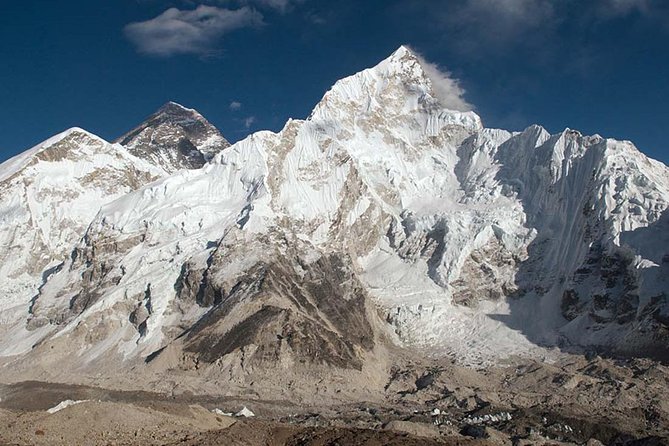
After the pass, the route continues to Lobuche. The scheduled walk is shorter and easier, giving you a chance to recover before the push toward Everest Base Camp.
The following day is long and demanding. You walk along the Khumbu Glacier toward Everest Base Camp at about 5,365 meters. This is the closest point to Mount Everest included in the trek without mountaineering equipment.
Base Camp is not a permanent city, and the look of the site changes with the climbing season. During spring, you may see expedition activity, but the program does not promise a particular camp display or access beyond the trekking viewpoint.
The walk itself is the key experience. The trail can feel slow at this altitude, with uneven ground and little room for hurried progress. Your guide and porter team help with pacing, navigation, and carrying the shared load.
Kala Patthar, the highest viewpoint of the trip
Kala Patthar reaches 5,555 meters and is described as one of the hardest but most rewarding days. The climb is not long in the same way as a low-altitude mountain hike, but every step costs more this high above sea level.
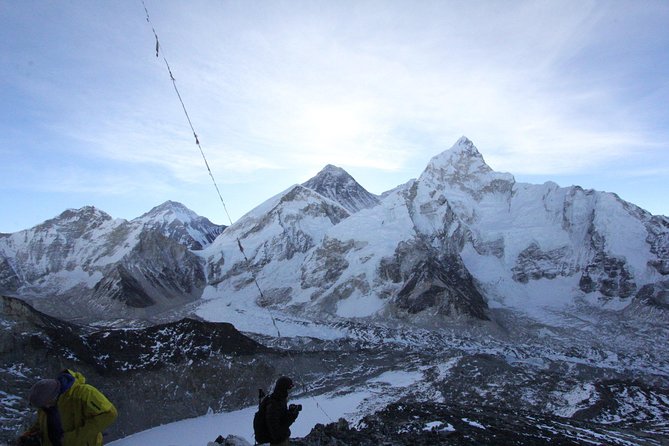
The viewpoint is valued for its close views of Everest and the surrounding peaks. It gives you a different perspective from Base Camp, where the mountain itself is not always presented at the best angle.
You need to treat this as a serious high-altitude morning. The climb may be slow, and cold or cloud can affect what you see. Still, if the weather cooperates, Kala Patthar is likely to be one of the clearest visual highlights of the entire trip.
Returning through Tengboche and Namche
After the high point, the descent passes through Pangboche and Tengboche before returning to Namche. The route feels different on the way down because you can finally notice details that were easy to miss while concentrating on altitude and effort.
Tengboche is known for its Buddhist monastery, one of the region’s important religious sites. The trip also points to monasteries located at very high elevations, so this part of the route adds cultural value rather than mountain views alone.
The return to Namche is still a long day. Descending does not mean effortless walking, especially after Cho La, Base Camp, and Kala Patthar. You may find your knees and feet more tired than your lungs by this stage.
The final trekking day leads back to Lukla. The afternoon is free, giving you time to reflect, rest, and prepare for the flight to Kathmandu.
What the $2,200 price includes
At $2,200 per person, this is not a low-cost independent trek, but the package includes a substantial amount of logistics:
- Airport transfers in Kathmandu
- Two nights in a three-star Kathmandu hotel
- Fourteen nights of guesthouse accommodation
- Lukla flights
- A licensed English-speaking guide
- One porter for every two clients
- Trekking permits and government charges
- Breakfast for 16 days
- Lunch and dinner for 14 days
- Filtered trail water
- Seasonal fruit
- A down jacket and sleeping bag
- A duffel bag and sun hat
The meal coverage is especially useful in a remote region, where buying food separately can quickly become costly. Alcohol, hot and cold drinks, and Kathmandu dinners are extra, as are personal trekking items.
You also need travel insurance that covers emergency high-altitude rescue and evacuation. International flights, the Nepal entry visa, personal equipment, and tips are not included. Tipping is expected for the trekking staff and driver, so add that to your real budget.
The maximum group size is 15. That is large enough to share costs but small enough for a guide to keep track of the group. With one porter for every two clients, you should still pack sensibly and keep your day bag comfortable.
Who should book this trek
I would choose this route if you want Everest Base Camp plus a more demanding circuit through Gokyo and Cho La. It suits people with a moderate fitness level who are ready for long walking days, thin air, early starts, and simple mountain accommodation.
You should be comfortable with uncertainty. Weather can affect Lukla flights and high-pass crossings, and the schedule may need to change. The strongest part of the guide service is its reported flexibility, with guides such as Lakpa Sherpa, Ganesh, Ramesh, and Biroj handling route changes and difficult conditions with care.
I would not choose it for a relaxed Himalayan holiday, a first-time walking trip without preparation, or anyone unwilling to sleep in a basic dormitory. The route is physically demanding even though you do not need mountaineering equipment.
Booking is most sensible if you can commit to proper insurance, steady training, and a flexible attitude. Cancellation is free up to six full days before the start, with a 50 percent refund available between two and six days before departure. Within two days, the payment is not refunded under the stated terms.
Should you book the Gokyo to Everest Base Camp trek?
Yes, if you want the Everest region’s major sights but prefer a fuller route with Gokyo Lakes and Cho La added in. The combination of Gokyo Ri, Everest Base Camp, and Kala Patthar gives you three strong mountain goals, while the Sherpa villages and monasteries keep the trip from becoming a simple checklist of viewpoints.
The main question is not value. With flights, permits, meals, staff, gear, and transfers included, the price is reasonable for a guided 17-day trek. The real question is stamina. If you are ready for altitude, long days, basic lodging, and weather changes, this is a powerful way to experience the Khumbu.
FAQ
How long does the Gokyo to Everest Base Camp trek last?
The full program lasts approximately 17 days, including arrival and departure in Kathmandu, the Lukla flights, and 14 nights of trekking accommodation.
Where does the trek start and finish?
The experience starts at Tribhuvan International Airport in Kathmandu and ends back at the same meeting point after the airport transfer for departure.
How high does the trek go?
The route reaches about 5,483 meters at Gokyo Ri, 5,330 meters at Cho La Pass, 5,365 meters at Everest Base Camp, and 5,555 meters at Kala Patthar.
Is food included?
Breakfast is included for 16 days, while lunch and dinner are included for 14 days. Lunch and dinner in Kathmandu, drinks, and alcoholic beverages are not included.
Is accommodation included?
Yes. The package includes two nights in a three-star Kathmandu hotel and 14 nights in twin-sharing guesthouses. Accommodation near Thangnag is basic and dormitory-based.
What fitness level do I need?
The activity states that you should have a moderate level of physical fitness. You should also be prepared for long walking days, high altitude, an early start for Cho La, and demanding climbs to Gokyo Ri and Kala Patthar.
What happens if bad weather cancels the trip?
The experience requires good weather. If it is canceled because of poor weather, you will be offered another date or a full refund.
Just added around Everest Region
- Day Tour to Everest Base Camp By Helicopter★ 5.0 · 16 reviews
- Kathmandu To Lukla By Helicopter Flight★ 5.0 · 6 reviews
- Luxury Everest Base Camp Trek – 11 Days★ 5.0 · 9 reviews
- Everest Base Camp Tour & View Point by Helicopter from Katmandu★ 5.0 · 3 reviews
- Everest base camp helicopter tour with Guarenteed Landing★ 4.0 · 7 reviews
- Everest base camp flight over by Helicopter from Kathmandu★ 5.0 · 10 reviews
- Everest Base Camp Helicopter Tour Stop at Hotel Everest View.★ 5.0 · 17 reviews
- Everest Base Camp Helicopter Tour★ 5.0 · 24 reviews
Everest Base Camp Treks, compared.
Everest Base Camp Trek with Helicopter Return from Gorakshep to Lukla
Read our review →Browse the lists this tour appears in