
Reviewed · LANGTANG TREKS
Langtang Valley Trek
Langtang Valley gives you a real Himalayan trek without the long flight or extra days needed to reach many other trailheads. The route begins with a local bus from Kathmandu to Syabrubesi, then follows mountain valleys, forests, yak pastures, and Tamang villages beneath snow-covered peaks. Seven nights in basic teahouses keep the trip simple and close to local life.
I like the small maximum group of 15, which should make it easier to walk at a sensible pace and speak with your guide. I also like the practical support: porters, national park and TIMS fees, most meals, and loaner sleeping bags and down jackets are included. The catch is that six to seven hours of hiking each day is still serious work, and the teahouse lodging is basic rather than comfortable by city standards.
Key points for your Langtang decision
- A short route from Kathmandu: You reach the trailhead by local bus to Syaprubesi, rather than spending extra days on domestic flights or long transfers.
- Seven teahouse nights included: Expect simple mountain lodging, shared facilities in some places, and a close-up look at life along the route.
- Six to seven hours of walking daily: This suits active hikers with moderate fitness, not casual sightseers.
- Guide and porter support: A licensed English-speaking guide leads the trek, with one porter assigned for every two trekkers.
- Borrowable cold-weather gear: Sleeping bags, down jackets, and a duffel bag are available on request and must be returned after the trek.
- Strong guide care: Guides connected with the operator include Ram Krishna, Ram, and Lochan Gurung, names associated with attentive support and safe pacing.
Why Langtang works well in eight days
Nepal offers famous treks that can take two weeks or more, with long drives, high passes, and greater altitude concerns. Langtang Valley is a more manageable choice if you have limited time in Kathmandu but still want a proper mountain trek.
You spend roughly eight days on the full trip, including the road journey from Kathmandu to Syaprubesi and the return. The route does not go as high as some of Nepal’s better-known trekking areas, which can make the trip easier to manage. That does not make it effortless. The daily walking schedule remains demanding, and the trail’s mountain terrain requires steady legs and patience.
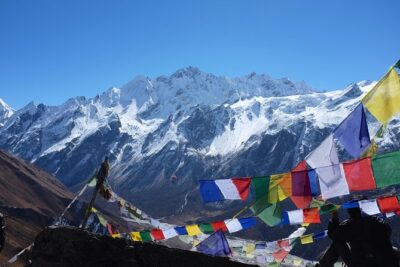
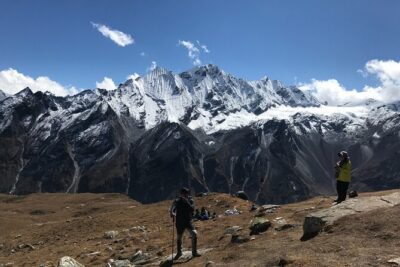
I particularly like the balance here. You get impressive views of the Langtang range, but the trip is not only about taking pictures of peaks. You also pass through communities shaped by Tamang culture, see the practical rhythm of mountain life, and may find yaks grazing in open Himalayan meadows.
More Langtang and Gosaikunda treks:
- Langtang Valley Trek
★ 5.0 · 140 reviews - Private 8 – Day Langtang Trekking
★ 5.0 · 29 reviews - Kathmandu: 6-Day Limitless Langtang Trek
★ 5.0 · 21 reviews
The road from Kathmandu to Syaprubesi
Your first major transfer is by local bus from Kathmandu to Syaprubesi. This is not a polished tourist shuttle, and that is part of the point. You see more of ordinary Nepal on the way, but you should also expect a less predictable and less comfortable ride than a private vehicle.
The transfer matters because Syaprubesi is a relatively accessible trailhead. You avoid the cost and uncertainty of a domestic flight, and you do not need to spend a full extra day reaching the walking route.
Once you arrive, the walking portion begins. The exact daily sequence is not provided, so you should confirm the meeting time, bus departure, and planned overnight stops before setting out. Ask your guide how much walking is expected on the first day and how the group will handle differences in pace.
Walking through the Langtang Valley
The trek itself is built around long walking days of about six to seven hours. That figure includes the time you spend moving through mountain villages and natural scenery, but your actual pace will depend on the group, weather, trail conditions, and rest stops.
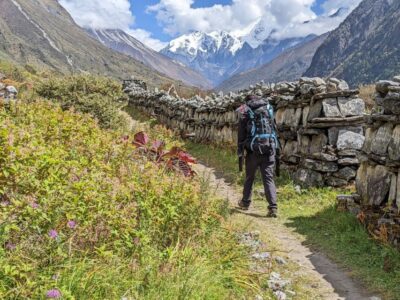
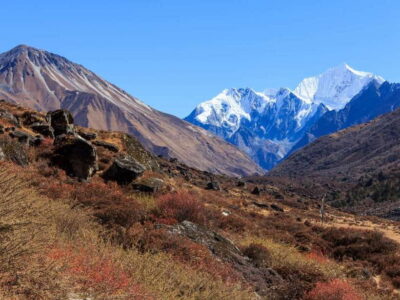
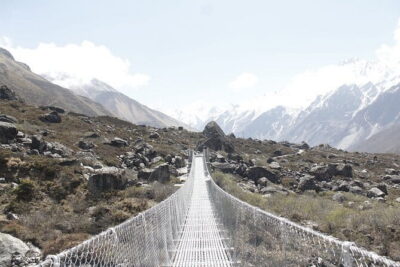
The valley brings together several kinds of scenery. You may walk through forested sections, open valleys, high meadows, and areas with clear views toward snow-capped Himalayan peaks. The appeal is the changing rhythm of the route. One stretch may feel sheltered and wooded, while another opens toward wide mountain views.
You should not judge the trek only by altitude. A route can be lower than Everest or Annapurna circuits and still feel strenuous because of uneven paths, repeated climbs, weather, and long days. Shoes with firm grip and clothes suitable for hiking are essential.
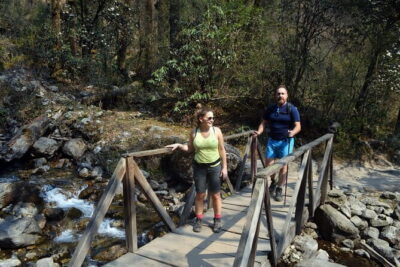
Your guide is especially useful here. The operator provides a licensed English-speaking trekking guide, and the staff handle route support, meals, lodging arrangements, and group coordination. The supplied feedback points to guides who take personal care of hikers, including support for younger or tired members of a group.
Tamang culture along the route
Langtang is not simply a mountain backdrop. The trek gives you contact with Tamang culture and communities whose lives are tied to the valley, livestock, farming, tourism, and the weather.
Your guide can help you understand what you are seeing, from village life to the role of yaks in the high meadows. That local explanation is worth paying for. Without it, you may walk through an interesting community and notice only the views.
The cultural side also makes the route feel more grounded than a trek focused entirely on reaching a famous viewpoint. You have time to notice how homes, lodges, food, and daily work fit together in a high mountain setting. Keep your expectations practical. This is a trekking route, not a formal cultural tour with scheduled performances or museum visits.
More trekking days out of Kathmandu:
- Nagarkot Sunrise View and Day Hiking from Kathmandu
★ 5.0 · 471 reviews - Kathmandu: Nagarkot Sunrise View & Morning Hike with Lunch
★ 4.9 · 188 reviews - Kathmandu: Nagarkot Sunrise and Hike Tour to Changu Narayan
★ 4.7 · 151 reviews - From Kathmandu: Everest View from Nagarkot & hike to Changu
★ 4.8 · 140 reviews
Teahouse nights: useful, simple, and sometimes tough
Seven nights of teahouse accommodation are included. These mountain lodges provide a bed and a place to eat, but you should expect basic conditions. The information supplied does not promise private rooms, private bathrooms, heating, or hotel-style facilities.
That simplicity is part of the experience, but it is also the main comfort trade-off. You will spend evenings in a mountain lodge after a long day on foot, so a warm sleeping bag matters. The operator can provide a sleeping bag and down jacket if you request them. A duffel bag is also available, and all borrowed items must be returned after the trek.
Ask before departure what the teahouses provide and what you need to carry yourself. Bring personal hiking equipment, toiletries, and clothing suited to changing conditions. The supplied gear helps, but it does not replace a proper personal packing list.
Meals during the trek are included according to the itinerary. Breakfast, lunch, and dinner are covered on trekking days, which makes the $700 price easier to judge. You still pay for personal drinks, bottled water, laundry, telephone use, alcoholic beverages, and other personal purchases.
What the guide and porters add
The package includes one porter for every two trekkers, along with the licensed English-speaking guide. That ratio gives you useful help without turning the trip into a large expedition.
A porter can reduce the weight you carry, but you should still pack responsibly. You will need a daypack with the items you want during the day, while the porter carries the agreed luggage. Confirm the baggage limit and daily arrangement with the operator before departure, since those details are not specified here.
The strongest practical advantage is personal support. The supplied accounts describe guides and porters who help when people tire and take care with group members who need extra attention. Ram Krishna, Ram, and Lochan Gurung are names connected with positive guide experiences. Your exact guide is not guaranteed in the details provided, so confirm that before booking if a particular person matters to you.
A good guide also helps with decisions that are hard to make alone: when to rest, how to respond to fatigue, and how to keep the group together. You should still take responsibility for your own health and tell the guide early if you feel unwell.
How much value do you get for $700?
At $700 per person, this is not just a guiding fee. The price includes the Kathmandu to Syaprubesi and return bus transport, seven nights of teahouse lodging, trekking meals, national park fees, TIMS fees, taxes, a licensed guide, porter support, and loaner equipment on request.
That is a solid bundle for an eight-day trek, particularly if you would otherwise need to arrange permits, transport, lodging, food, and porter support separately. The small-group limit also improves the value. A maximum of 15 people is large enough to keep the cost down but smaller than a mass departure.
You need to budget beyond the headline price. Accommodation in Kathmandu is not included, nor are lunch and dinner there. Personal insurance is your responsibility, including medical, accident, and rescue cover. Emergency evacuation costs are excluded, and helicopter rescue can be extremely expensive without suitable insurance.
You also pay for personal drinks, bottled mineral water, laundry, telephone bills, alcoholic beverages, tips, and personal trekking equipment. Tipping to the field staff is not included, so plan for that separately.
Who should book this trek?
I would recommend it to an active visitor who wants a genuine multi-day Himalayan walk but has only about a week. It is also a good fit if you prefer a lower-altitude route, want local guide support, and do not want to arrange permits and porters on your own.
The trip suits people who can manage six to seven hours of walking each day and are comfortable with basic lodging. A moderate fitness level is required, and children must be accompanied by an adult. At least two people are required per booking, while the group can include up to 15 participants.
I would be more cautious if you want private transport, upscale hotels, short walking days, or full control over the schedule. The local bus and basic teahouses are central parts of the deal, not minor details.
Small details to settle before departure
The booking confirmation is issued at the time of reservation. Pickup is offered, and the experience uses a mobile ticket, but you should confirm where pickup takes place and what time you need to be ready.
The operator provides down jackets, sleeping bags, and a duffel bag only upon request. Do not assume these items will be waiting automatically. Request them in advance and ask about the size and condition of each item.
Free cancellation is available if you cancel at least 24 hours before the local start time. Cancellations made inside that period are not refunded, and changes within 24 hours are not accepted.
Should you book the Langtang Valley Trek?
Book this trek if you want strong mountain scenery, Tamang culture, and an organized route that fits into eight days from Kathmandu. The included guide, porter ratio, permits, meals, teahouse nights, and loaner cold-weather gear make the $700 price look reasonable.
Skip it if your idea of Nepal includes soft beds, private bathrooms, short walks, or a tightly scripted luxury schedule. The practical choice is to book only after confirming the exact guide, daily route, teahouse arrangements, luggage allowance, and pickup details. For a fit hiker who accepts basic conditions, Langtang offers a lot of Nepal in a relatively short trip.
FAQ
How long is the Langtang Valley Trek?
The trek lasts about eight days and includes seven nights of teahouse accommodation.
Where does the trek begin?
The trip travels from Kathmandu to Syaprubesi by local bus. Syaprubesi is the trailhead for the walking portion.
How many hours do I hike each day?
You should expect to hike about six to seven hours per day.
How high does the trek go?
The route does not go as high as some other major Nepal treks, but the exact highest point is not stated in the supplied details.
What type of accommodation is included?
Seven nights in basic teahouses are included during the trek.
Are meals included?
Breakfast, lunch, and dinner are included during the trekking portion according to the itinerary. Lunch and dinner in Kathmandu are not included.
Is a guide provided?
Yes. The package includes a licensed English-speaking trekking guide.
Are porters included?
Yes. Porter support is included at a ratio of one porter for every two trekkers.
Can I borrow a sleeping bag or down jacket?
Yes. Sleeping bags, down jackets, and a duffel bag can be provided upon request. Borrowed items must be returned after the trek.
Is travel insurance included?
No. Personal medical, accident, and rescue insurance are not included. Emergency evacuation costs are also excluded.
What is the maximum group size?
The maximum group size is 15 people. A minimum of two people is required per booking.
Can I cancel for a full refund?
Yes, if you cancel at least 24 hours before the experience start time. Cancellations made less than 24 hours in advance are not refunded.
Just added around Kathmandu
- Traditional Momo Making Class★ 5.0 · 10 reviews
- Women Empowerment Project(Nepali cooking class & jewelry workshop★ 5.0 · 15 reviews
- Manthali Airport (Ramechhap) To Kathmandu – Transport Service★ 4.5 · 11 reviews
- Amazing 1 Day Trekking Experience in Kathmandu Nepal★ 5.0 · 24 reviews
- Walking tour of Kathmandu with awesome local guides★ 5.0 · 4 reviews
- Walking tour of real Kathmandu through back streets.★ 5.0 · 3 reviews
- Private Manaslu Circuit Trek at Himalayas★ 5.0 · 3 reviews
- Walking Street Food Tour in Kathmandu★ 5.0 · 111 reviews
Langtang Treks, compared.
Browse the lists this tour appears in