
Reviewed · EVEREST BASE CAMP TREKS
Everest Base Camp Trek – 14 Days
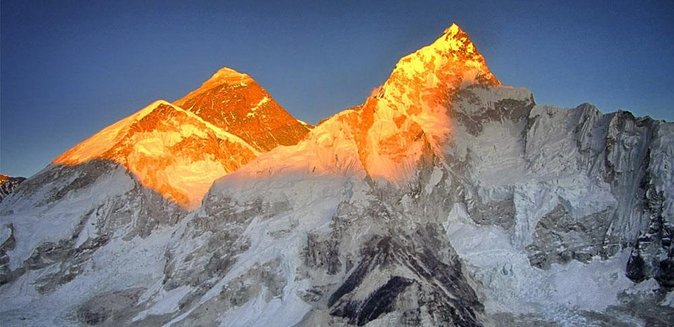
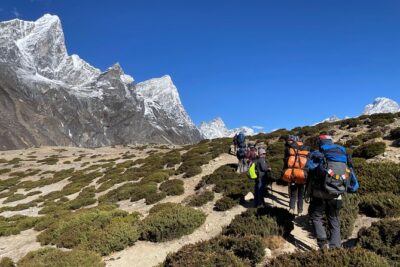
Everest Base Camp is not a quick mountain photo stop. It is a 14-day walk through Sherpa villages, Buddhist monasteries, suspension bridges, and thin high-altitude air, with the reward of reaching 5,365 meters at base camp and 5,555 meters at Kala Patthar. I like that the hardest parts are paced with two acclimatization days, and I like that porters carry the main luggage while you focus on walking.
The small-group format, capped at 14 people, gives you more contact with your guide than a large coach-style tour. Guides named in recent departures include Maddy, Kishor, Chris, and Rajendra Khatry. The main catch is simple: this is a demanding trek, not a sightseeing holiday, and weather can affect the Lukla flights.
Key points to know before booking
- The route reaches 5,365 meters at Everest Base Camp and 5,555 meters at Kala Patthar.
- Two acclimatization days are built in at Namche Bazaar and Dingboche.
- Porter service covers 11 days, with one porter assigned for two people.
- Domestic flights, permits, meals, mountain lodging, and staff costs are included.
- The group has a maximum of 14 people, with a first-aid-trained English-speaking guide.
- Peak-season flights may use Manthali Airport, not Kathmandu’s main airport.
What the $1,800 Everest trek really includes
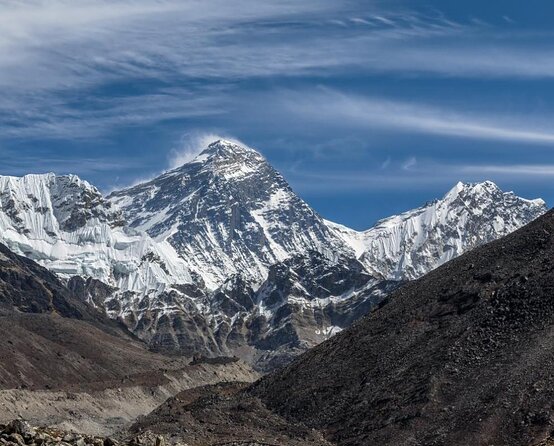
At $1,800 per person, this trek offers solid value for a guided Himalayan trip. You are not only paying for a route and a bed. The price covers Kathmandu airport and hotel transfers, two nights in a three-star Kathmandu hotel, domestic flights between Kathmandu and Lukla, trekking permits, accommodation on the trail, three standard meals each trekking day, porters, guide services, staff insurance, filtered trail water, and emergency medical evacuation arrangements for a worst-case situation.
That package removes much of the planning burden. You still need to buy international flights, travel insurance, a Nepal visa, personal trekking equipment, drinks, and tips. Lunch and dinner in Kathmandu are also separate. Alcohol, hot drinks, cold drinks, and other personal costs can add up in the mountain villages.
I see the greatest value in the combination of porters, acclimatization planning, and emergency preparation. A porter carries the main duffel, while you carry your day pack. The arrangement is one porter for two clients, so pack sensibly and respect the weight limit rather than treating the service as unlimited luggage handling.
The domestic flight allowance is 15 kilograms. That matters because mountain gear gets bulky fast. Keep your day-to-day essentials, medication, documents, and valuables with you, and expect to work within the airline limit for the larger bag.
More Everest Base Camp treks:
- Everest Base Camp Trekking
★ 5.0 · 485 reviews - Everest Base Camp Trekking – 13 Day
★ 5.0 · 365 reviews - Everest Base Camp Trek -14 Days
★ 5.0 · 321 reviews
Day 1: A simple Kathmandu arrival
Your trip begins at Tribhuvan International Airport, where an Ace the Himalaya representative meets you outside the terminal with a signboard. A private tourist vehicle takes you to your hotel.
There is no heavy sightseeing schedule on arrival, which is sensible. You get time to recover from the international flight and prepare for the trek. Kathmandu accommodation is twin-share in a three-star hotel, with breakfast included for the two nights covered by the tour.
Airport pickup is one of those small details that becomes useful after a long flight. You do not need to bargain for a taxi or find the office on your own. Your first contact is also a chance to ask about the next morning’s departure and luggage arrangements.
Day 2: Flying to Lukla and walking to Namche Bazaar
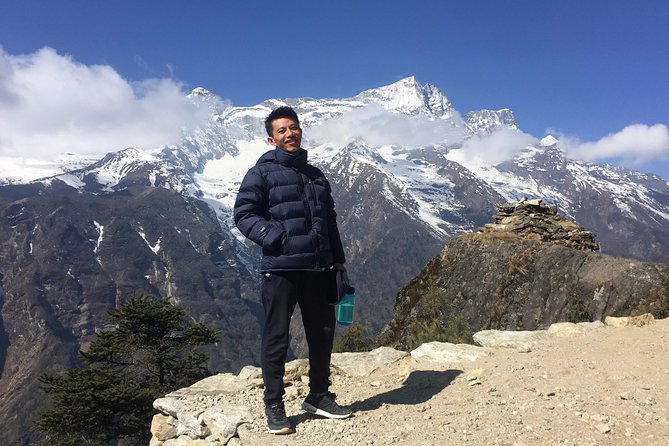
The mountain flight to Tenzing-Hillary Airport in Lukla is short, but the day is not. From Lukla, the trek follows the Dudh Koshi, crossing suspension bridges decorated with prayer flags and entering Sagarmatha National Park.
Namche Bazaar is the main highland trading town on the route and the first major test of your legs. The day is listed as a long one, and the combined flight, transfer, and trek can feel tiring even before altitude becomes the main issue.
The flight details need close attention. During busy trekking periods in March, April, May, October, and November, flights may operate from Manthali Airport in Ramechhap because of congestion at Kathmandu airport. That can mean an early road transfer from Kathmandu, so confirm the departure airport before the trip.
Day 3: Namche Bazaar and the first acclimatization pause
The first full day in Namche is not wasted time. You stay at the same altitude rather than pushing higher, giving your body a chance to adjust to thinner air.
A short walk takes you to the Sherpa Museum, where exhibits cover Sherpa customs and mountain culture. This stop adds useful context to the trek. You are not simply passing through villages on the way to Everest. You are moving through a region shaped by Buddhist practice, trade, mountaineering, and life at high altitude.
Namche is also one of the better places to sort yourself out. Check your layers, water, snacks, and foot care. The route gets more remote from here, and a small problem is easier to handle before you climb higher.
More trekking days out of Everest Region:
- Everest Base Camp Trekking – 2025/2026
★ 5.0 · 199 reviews - Everest Base Camp Trek
★ 5.0 · 193 reviews - Everest Base Camp Trek with Helicopter Return from Gorakshep to Lukla
★ 5.0 · 161 reviews - Everest Base Camp Trekking
★ 5.0 · 146 reviews
Day 4: Tengboche and a memorable monastery stop
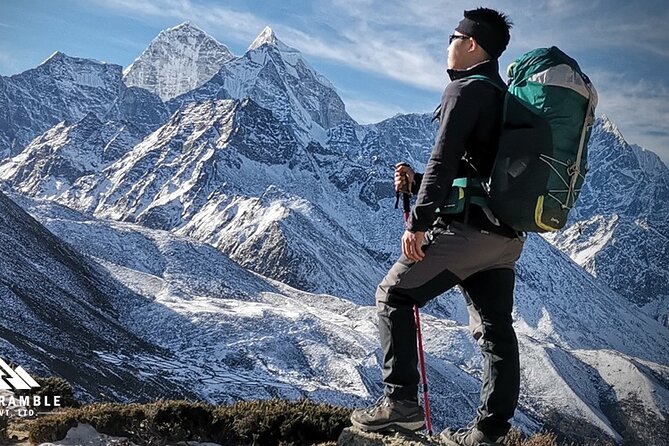
The trail continues beside the Dudh Koshi and rises toward Tengboche at 3,860 meters. You pass through Debuche, cross the Imja Khola, and continue toward Pangboche, with mountain views opening along the way.
Tengboche Gompa is the cultural highlight of this section. Prayer flags, mani stones, and the monastery give the walk a clear sense of place. The value here is not just the view. Your guide can help explain the Buddhist symbols and the role of the monastery in the surrounding Sherpa communities.
This is another long trekking day. The route is beautiful, but beauty does not make an uphill trail easy. You should expect a slow pace, regular stops, and less energy than you had at sea level.
Day 5: Pangboche to Dingboche
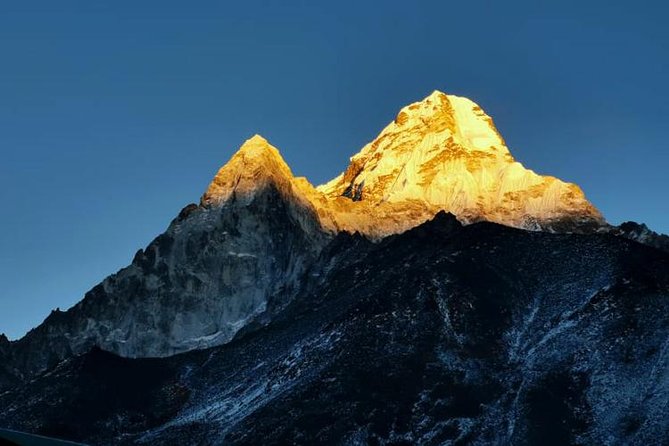
After Tengboche, the trail drops to Debuche, crosses another suspension bridge, and climbs through Pangboche. Mani stones line parts of the route, giving you a visible reminder of local religious practice.
Dingboche sits at a higher altitude and is an important staging point before the final approach to base camp. The walk is demanding because you are gaining height while your body is still adjusting. The value of the guided setup becomes clearer here. A guide can set a reasonable pace and watch for signs that someone needs to stop or descend.
Accommodation in the trekking region is in twin-share guesthouses. Attached toilets are specified in Lukla, Phakding, and Namche, but you should not assume the same arrangement everywhere on the route. Mountain accommodation is practical rather than luxurious.
Day 6: Dingboche and the Nangkartshang climb
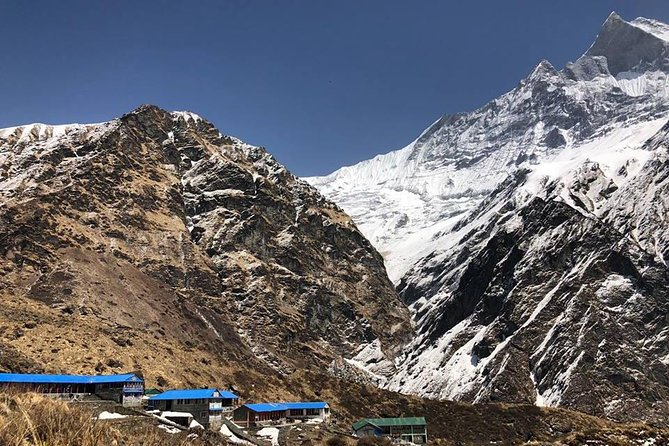
The second acclimatization day is based in Dingboche. Instead of gaining ground toward base camp, you hike toward Nangkartshang peak, a viewpoint above the village.
This is a smart structure for a high-altitude trek. You climb during the day, see how your body responds, and return to sleep at the same altitude. The viewpoint gives you a strong reason to make the effort, with broad mountain views from above Dingboche.
The day can still feel hard. Acclimatization is not a rest day in the usual sense. It is an active pause designed to help you continue safely.
Day 7: Lobuche and the memorial stones
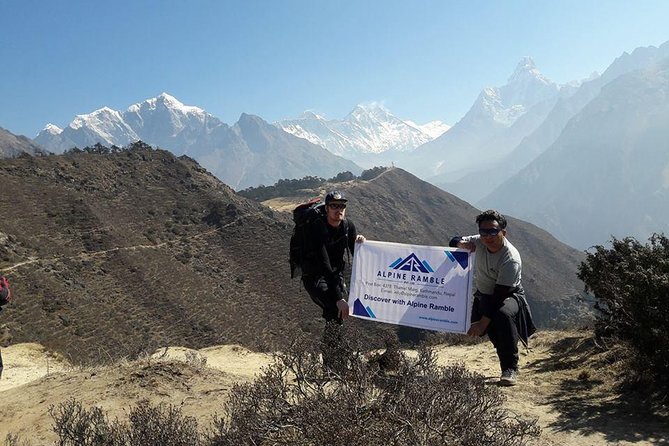
The route follows the lateral moraine of the Khumbu Glacier toward Lobuche. You pass memorial stones dedicated to climbers who died on nearby peaks.
This section changes the mood of the trek. The memorials add a quiet, serious note to what can otherwise feel like a grand mountain adventure. They also make clear that the high Himalayas are not a backdrop for easy walking. Conditions here demand patience and respect.
Lobuche is close to the final approach, but you are not at the finish yet. The altitude can make a moderate distance feel much longer. Walk steadily, drink the filtered water provided on the trail, and avoid racing the group.
Day 8: Everest Base Camp at 5,365 meters
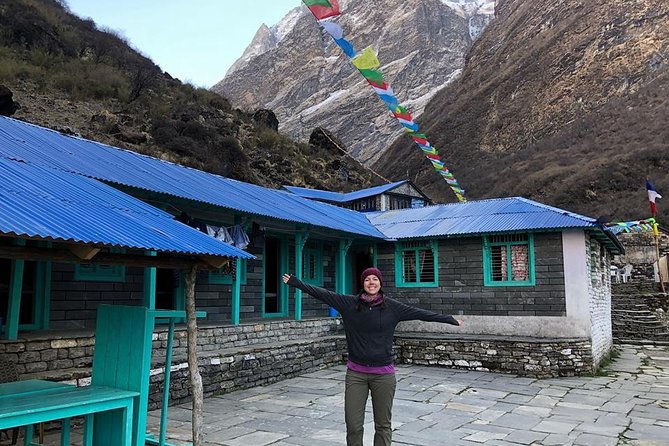
The walk to Everest Base Camp is one of the biggest days of the trip. You follow the Khumbu Glacier and climb to 5,365 meters, the highest point on the route to base camp without mountaineering equipment.
Base camp itself is not a permanent town or a polished attraction. Its character changes with the climbing season, and spring may bring expedition activity. The real reward is reaching the place where climbers prepare for Everest, surrounded by the glacier and high peaks.
The final approach is physically tough. Take the day’s pace seriously, even if the excitement makes you want to hurry. You return after the visit, so your energy reserves matter. The climb is an achievement, but it is not the only important part of the day. Getting back safely is part of the goal.
Day 9: Kala Patthar at 5,555 meters
The Kala Patthar climb is often the most demanding and rewarding day. At 5,555 meters, it is higher than base camp and provides the route’s major mountain viewpoint.
The ascent is steep and the air is thin. You may need frequent pauses, and the exact experience will depend on weather and how your body has adapted. The schedule allows you to focus on this climb without also needing to press farther along the route.
This is where the trek’s two acclimatization days earn their keep. They do not remove the difficulty, but they give you a better chance of handling the high point with care. You should regard Kala Patthar as a serious mountain walk, not a casual sunrise excursion.
Days 10 and 11: Returning through Namche Bazaar
The return journey follows the route back through Pangboche and Tengboche before reaching Namche Bazaar. Descending is usually easier on the lungs, but it can be harder on tired knees and feet.
Arriving back in Namche gives the group a useful morale boost. You have passed the highest points, and the town provides a familiar stopping place before the final return to Lukla. The descent also lets you notice details missed on the way up, since you are no longer concentrating so intensely on altitude.
Your guide and porters remain important on the way down. A trek is not finished when you reach base camp. The group still needs to manage long walking days, changing weather, and the flight schedule at the end.
Day 12: Lukla and the last trekking day
The final trekking day returns you to Lukla. It is a time to look back at the route, from the first suspension bridges to the glacier and the high viewpoint above Dingboche.
This is listed as another long day, so do not assume the final section is effortless. Your legs may be tired after the descent, and the trail can still require concentration.
The small-group format should work well here. You have spent many days with the same guide and companions, and the group has shared the same physical challenge. Recent departures have included groups of eight, even though the maximum is 14, and names such as Maddy, Kishor, Chris, Saman, Sher, and Rajendra Khatry appear in accounts of different trips. Your assigned team will depend on your departure date.
Day 13: The flight back to Kathmandu
The flight from Lukla to Kathmandu takes about 35 minutes when conditions allow. It offers one last look at the mountains before returning to the capital.
Flights in this region are weather-sensitive, so keep some flexibility in your wider Nepal plans. The package includes the domestic airfare and airport departure tax for this sector, but international connections should not be planned too tightly around the scheduled return.
Back in Kathmandu, the operator provides a transfer. The return night gives you a buffer before your international departure the following day.
Day 14: Airport transfer and departure
The trek ends with a private transfer to Tribhuvan International Airport. The airport drop-off is included, and the activity ends at the original meeting point.
You should still allow plenty of time for your international flight. The stated airport transfer duration is about two hours, which signals that the schedule is designed with a generous margin rather than a rushed final ride.
Guides, porters, and safety support
The strongest part of this arrangement is the staff structure. Your guide is a government-licensed, English-speaking trekking leader trained in first aid. Staff costs include food, accommodation, salary, insurance, equipment, and medicine.
The tour also carries a comprehensive first-aid kit and includes arrangements for emergency medical evacuation in the worst situation. That does not replace travel insurance. You must buy insurance that specifically covers high-altitude rescue and evacuation.
Porters carry the main luggage for 11 days, with one porter for two clients. Be considerate about what you bring, and remember that tipping is expected for guides and porters. The tour does not set out a tip amount, so budget for it separately.
Who should book this trek?
I would recommend this trek to you if you want Everest Base Camp with the main logistics handled, but still want a physically serious experience. It suits people who value a small group, a set route, local guides, porter support, and built-in acclimatization.
You need a moderate level of physical fitness. The route includes repeated long days, high altitude, steep sections, suspension bridges, and two difficult high points. It is not suitable if you want a soft adventure with short walks and comfortable sightseeing each day.
The tour is also a good fit for solo bookers who like meeting a group. The listed price is based on two people booking, but it can apply to a solo booking if there is an existing group to share accommodation with. If not, or if you request a private departure, a $250 single surcharge applies on arrival in Nepal.
Practical booking details and cancellation terms
Pickup is offered, the ticket is mobile, and confirmation is provided at booking. The route is near public transportation, although the mountain sections are naturally dependent on foot travel and domestic flights.
Cancel at least six full days before the local start time for a full refund. A cancellation made two to six full days ahead receives a 50 percent refund, while cancellation less than two full days before departure is nonrefundable. Changes follow the same cut-off rules.
Should you book the Everest Base Camp Trek?
Book it if you want a well-supported route with real acclimatization, porters, and a small group, and if $1,800 fits your Nepal budget after adding insurance, gear, drinks, tips, visa costs, and international flights.
Choose carefully if your schedule is tight or you dislike uncertainty around mountain flights. The route is demanding, and the high-altitude days are not softened by the impressive scenery. For a fit person who wants to reach Everest Base Camp without arranging every permit, bed, meal, flight, and porter independently, this is a strong and practical choice.
FAQ
How long is the Everest Base Camp Trek?
The experience lasts approximately 14 days, including arrival in Kathmandu, the trek from Lukla to Everest Base Camp, the return to Kathmandu, and the final airport transfer.
Where does the trek begin?
The activity begins with pickup at Tribhuvan International Airport in Kathmandu. The walking portion begins after the domestic flight to Tenzing-Hillary Airport in Lukla.
Is the domestic flight from Kathmandu to Lukla included?
Yes. Airfare for the Kathmandu to Lukla and Lukla to Kathmandu sectors is included, along with the airport departure tax.
Could the flight depart from Manthali Airport?
Yes. During peak trekking periods, flights may shift to Manthali Airport in Ramechhap because of heavy traffic at Kathmandu airport. Confirm the departure airport for your date.
How large is the group?
The maximum group size is 14 people. The price is based on two people booking, but solo booking is possible if accommodation can be shared with an existing group.
Is a single supplement charged?
A $250 single surcharge applies if there is no existing group to share accommodation with you, or if you request a private solo departure. It is payable upon arrival in Nepal.
Are meals included?
Standard breakfast, lunch, and dinner are included during the trek. Breakfast is included for the two covered nights in Kathmandu. Lunch and dinner in Kathmandu, drinks, and alcoholic beverages are not included.
Is porter service included?
Yes. Porter service is included for 11 days, with one porter for two clients. The domestic flight luggage allowance is 15 kilograms.
Do I need travel insurance?
Yes. Travel insurance covering emergency high-altitude rescue and evacuation is not included and must be arranged separately.
Just added around Everest Region
- Day Tour to Everest Base Camp By Helicopter★ 5.0 · 16 reviews
- Kathmandu To Lukla By Helicopter Flight★ 5.0 · 6 reviews
- Luxury Everest Base Camp Trek – 11 Days★ 5.0 · 9 reviews
- Everest Base Camp Tour & View Point by Helicopter from Katmandu★ 5.0 · 3 reviews
- Everest base camp helicopter tour with Guarenteed Landing★ 4.0 · 7 reviews
- Everest base camp flight over by Helicopter from Kathmandu★ 5.0 · 10 reviews
- Everest Base Camp Helicopter Tour Stop at Hotel Everest View.★ 5.0 · 17 reviews
- Everest Base Camp Helicopter Tour★ 5.0 · 24 reviews
Everest Base Camp Treks, compared.
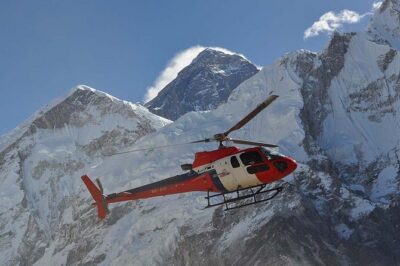
Everest Base Camp Trek with Helicopter Return from Gorakshep to Lukla
Read our review →Browse the lists this tour appears in