
Reviewed · PHOTOGRAPHY SESSIONS
Evening Photography Tour of Kathmandu
Kathmandu’s most powerful photo moments arrive after sunset, when butter lamps glow around Boudhanath and priests perform fire rituals beside the Bagmati River at Pashupatinath. This private evening tour takes you to both sites with a guide who knows where to position yourself and how to understand what you’re seeing.
I like the private format, since your group can spend more time on a scene instead of waiting for strangers. I also like the focus on living religious practice: monks, devotees, prayer, chanting, and aarti, rather than only daytime sightseeing.
The main consideration is that this is a short evening visit, not a full photography workshop. You may also find that some places look familiar if you already toured them during the day, and one past participant felt the promotional image created slightly different expectations.
Key points to know before booking
- Two major religious sites after dark: Photograph Boudhanath Stupa and Pashupatinath Temple during their evening rituals.
- Private transport from central Kathmandu: Your group travels by private vehicle, with transportation included.
- A guide helps with timing and location: Guides such as Bikash and Deepa provide background and help you find worthwhile views.
- Real religious ceremonies, not staged photo stops: Expect butter lamps, circumambulation, chanting, singing, and fire offerings.
- About three to four hours total: Each main stop is planned for roughly one hour, with driving time between them.
- A good fit for serious sightseers with a camera: Admission fees are included, but dinner, drinks, and bottled water are not.
Why Kathmandu after sunset makes a better subject
Daylight shows you the grand shape of Kathmandu’s monuments. Evening shows you how people use them.
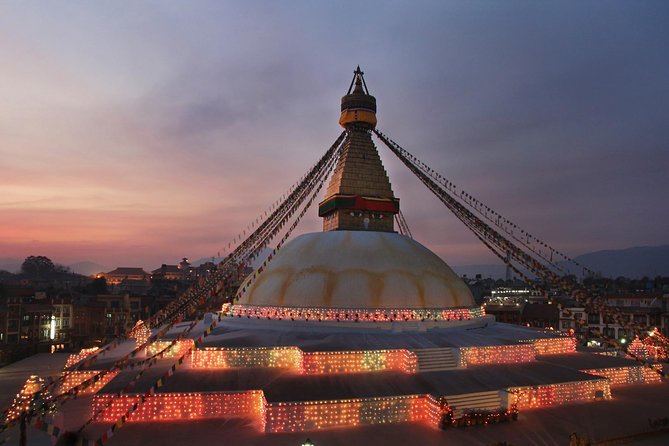
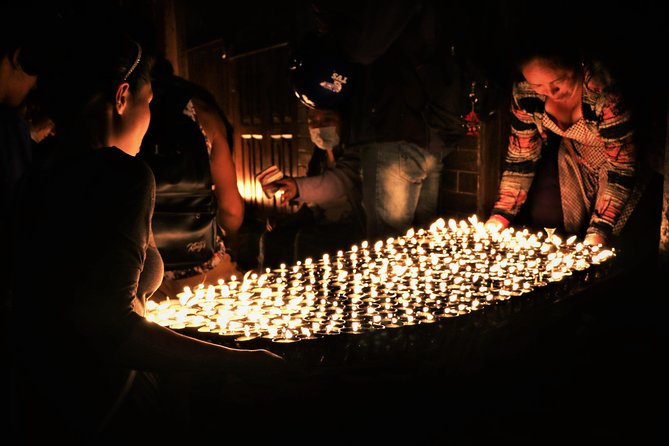
At Boudhanath, the white dome is lit and decorated while Buddhist devotees walk clockwise around the stupa in a practice called parikrama. Monks and worshippers light butter lamps and pray for the well-being of all sentient beings and for world peace. These are small points of light, but they give the scene its meaning and visual focus.
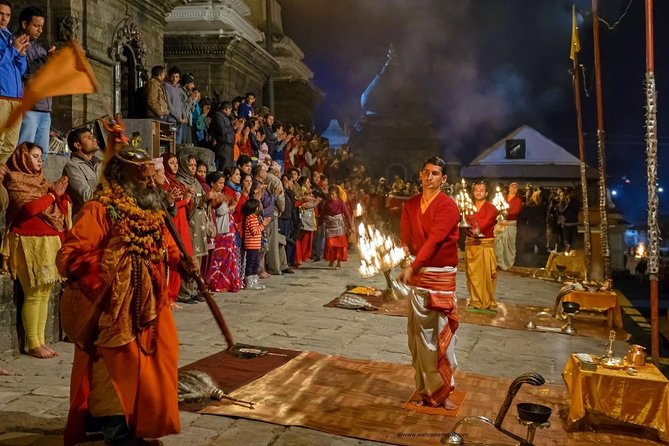
At Pashupatinath, the mood changes. The ancient Hindu temple is dedicated to Lord Shiva, known here as Pashupatinath, or protector of all living beings. During the evening aarti, priests offer flame to the gods while sacred verses and hymns fill the air. Chanting, singing, fire, and movement give you a very different subject from the quiet circular rhythm around Boudhanath.
I like this pairing because the two stops do not feel interchangeable. One centers on the calm repetition of Buddhist devotion. The other brings together music, ritual fire, and Hindu worship beside the sacred Bagmati River.
You should approach both places with respect. The purpose of the ceremony is worship, not performance for photographers. A guide can help you understand where to stand and how to behave, which is especially useful when you are focused on camera settings and composition.
More Evening Tours in Kathmandu
- Kathmandu Sunset Tour by Rickshaw Including Durbar Square Visit
★ 5.0 · 73 reviews - Kathmandu: Pashupatinath Temple Evening Aarati Tour
★ 5.0 · 36 reviews - Kathmandu: Pashupatinath Temple Aarti Night Tour
★ 4.8 · 29 reviews
Boudhanath Stupa and the glow of butter lamps
Boudhanath is the first major stop, with about an hour set aside and admission included. The stupa is one of Kathmandu’s most important pilgrimage centers for Tibetan Buddhists, and its broad white dome gives you a clear subject even when the surrounding light is low.
The most useful visual detail is the movement around the stupa. Devotees make their parikrama, walking around the monument in prayer. Butter lamps add warm points of light, while the illuminated dome and surrounding decoration give you layers to work with.
Your guide’s value here is practical. Rather than simply pointing out the stupa, the guide can help you find settings and moments worth photographing. The tour description does not promise a formal lesson in exposure, lenses, or post-processing, so think of the guide as a local escort with site knowledge, not as a dedicated camera instructor.
You’ll want to arrive ready to shoot. The tour is only around an hour at this stop, and evening rituals do not pause while you change batteries or search through a camera bag. Bring the camera you know how to use. A phone can record the atmosphere, but the low light may be a test for anyone hoping for crisp, technically perfect images.
The strongest reason to visit Boudhanath at night is the contrast between the dark sky, the bright white structure, and the tiny flames carried by worshippers. You may find the best pictures are not the widest views, but the smaller details: a lamp, hands in prayer, or a line of people circling the stupa.
Pashupatinath and the evening aarti ceremony
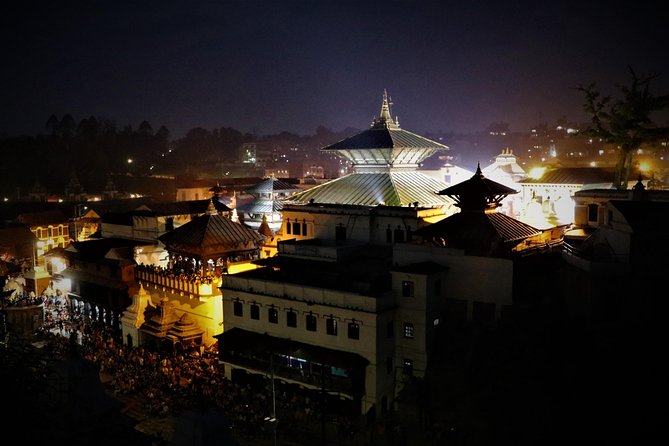
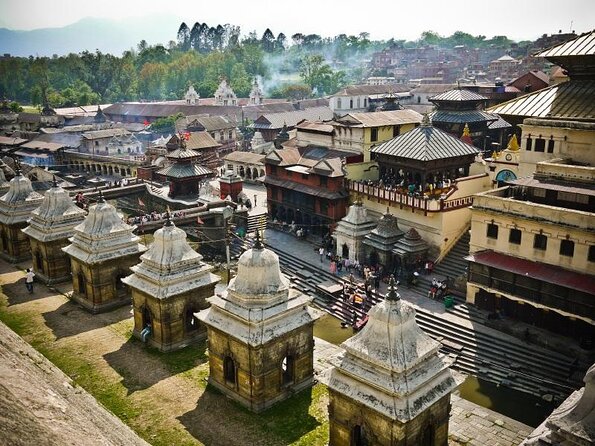
The second stop is Pashupatinath Temple, another major religious site, with about an hour planned here and admission included. This ancient Hindu temple is dedicated to Shiva and is one of the most important Hindu shrines in Nepal.
The evening aarti is the central event. Priests offer light from flames to the gods while Vedic verses and hymns are chanted. Singing and dancing can form part of the ceremony, and the atmosphere becomes more intense than at Boudhanath. The ritual connects with Shiva’s association with the Tandav, a celestial dance.
The setting beside the Bagmati River adds to the sense of place. One person described the experience as seeing a fire devotion to Shiva at night on the riverbank, an encounter they would likely have missed without a guide. That is the key value of this outing: it puts you in the right place at the right time for a ceremony that is easy to overlook when you are exploring on your own.
You should not expect unrestricted access to every part of Pashupatinath Temple. The tour information identifies the temple and the aarti, but it does not promise entry into every interior space. Your guide will take you to the relevant viewing area and explain what is happening.
For photography, this stop offers motion and warmth. Flames move, priests perform set gestures, and the crowd responds to the ceremony. It is a good place to put the camera down for a moment, too. The sound and meaning matter as much as the final image.
The guide can make the short schedule work
This tour depends heavily on the person leading it. The experience includes an English-speaking licensed city guide, and past participants singled out guides named Bikash and Deepa for clear explanations, professionalism, and strong local knowledge.
Bikash was praised for explaining Kathmandu and its heritage sights in detail. Deepa was also associated with a particularly memorable explanation of the nighttime Shiva ceremony. Since guide assignments can vary, you should not assume one specific person will lead your outing, but these names show the kind of guide support the operator has provided.
The drive between sites is not dead time. A guide can explain Kathmandu and Nepal while you travel, helping connect the two religious traditions with the city around them. That background matters because the ceremonies may look beautiful even when you do not yet understand their purpose.
The private setup is another advantage. Only your group participates, so you can ask questions without holding up a large party. If you need a moment to adjust your camera or want to stay with one view a little longer, a private guide has more room to work with your pace.
Still, keep your expectations realistic. This is a private sightseeing tour built around photography, not a specialist workshop. The guide helps you find good places and understand the rituals, but no formal instruction in camera technique is promised.
More Photo Tours in Kathmandu:
- Pokhara: Adventure Paragliding Trip with Photos and Videos
★ 4.6 · 50 reviews - Pokhara: Paragliding Adventure with Photos and Video
★ 4.7 · 44 reviews - Paragliding Tandem Flight from Pokhara with Photos and Video
★ 5.0 · 11 reviews - Pokhara: Paragliding Adventure with Photos and Video
★ 5.0 · 7 reviews
What the $102 price includes
The cost is $102 per person. That is not the cheapest way to see Boudhanath and Pashupatinath, especially if you only want to check both landmarks off your list.
The value improves if you care about the evening timing and want private transport. You are paying for a three to four-hour outing, a private vehicle, a licensed English-speaking guide, entrance fees, and help finding the right setting for two ceremonies. A taxi and self-guided visits might cost less, but they would not provide the same level of explanation or confidence about where to go.
The price also makes more sense for a small group. Group discounts are offered, although the exact discount is not stated. If several people share an interest in photography, the private arrangement can spread the cost while keeping the evening focused.
Nothing is included for dinner, bottled water, or alcoholic drinks. Plan to eat before or after the tour and carry water if you need it. These omissions are easy to manage, but they matter because the activity takes place around the evening meal.
The tour is booked an average of 12 days ahead. That is useful planning information, particularly if your Kathmandu schedule is tight. You do not need to book months out based on the information provided, but waiting until the last minute may not be wise.
Timing, transport, and practical planning
The activity lasts about three to four hours. The two site visits each allow roughly one hour, with the remaining time used for travel and transitions.
Pickup is offered, and private transportation from central Kathmandu is included. The tour is also near public transportation, but the private vehicle is the more useful option at night. It keeps the two sites connected and removes the need to arrange separate rides after the ceremony.
Confirmation is received at booking. The tour requires good weather, and poor conditions can lead to a different date or a full refund. It also requires a minimum number of participants, so a cancellation for that reason brings the same choice of another date or experience, or a full refund.
Most people can participate. The activity is private, so only your group takes part. You should still think about how comfortable you are spending an evening walking around major religious sites while carrying camera equipment, since the supplied details do not promise a completely stationary experience.
Free cancellation is available up to 24 hours before the start time. Changes or cancellations inside that 24-hour window are not accepted for a refund.
Who will get the most from this experience
I would choose this tour if you want more than daytime photographs of famous monuments. It suits you especially well if you are interested in religious practice, low-light scenes, and the challenge of photographing movement and fire.
It is also useful if you are new to Kathmandu. A guide can help you reach two important sites without spending part of the evening working out transport or searching for the ceremony. The explanations during the drive add value for first-time visitors.
You may want something else if you have already visited both places and prefer entirely new sights. One participant found the tour worthwhile despite having seen the sites during the day, but the added value came from seeing them at night and learning more from the guide. If you do not care about evening rituals, the price will be harder to justify.
Photographers should also know what this tour does not provide. There is no mention of a tripod, special equipment, camera rental, meal, bottled water, or a formal photography lesson. Bring only the camera gear you already use comfortably.
How to approach the photography
The best way to handle this tour is to balance photography with observation. At Boudhanath, look for the relationship between the dome, the lamps, and the people walking in prayer. At Pashupatinath, watch the rhythm of the aarti before trying to capture it.
You may find that a few thoughtful images are more rewarding than taking pictures continuously. Low light can produce blur, glare, and uneven exposure. That is part of the setting, not necessarily a flaw. The flames and movement are central to the ceremony.
Ask the guide where photography is appropriate. Religious sites require care, and a local guide can help you avoid stepping into a sensitive area or interrupting worship. The tour’s greatest photographic advantage is not simply access to famous places. It is having someone nearby who understands how the sites function after dark.
Should you book this Kathmandu photo tour?
Book it if you want a private evening with genuine religious ceremonies, included transport, and a guide who can explain what you are seeing. The combination of Boudhanath’s butter lamps and Pashupatinath’s fire-filled aarti gives you two distinct sides of Kathmandu in one compact outing.
Think twice if you want a full photography course, a long visit at each site, or a meal included. The tour is short, the price is fairly high for simple sightseeing, and your results will depend on your comfort with low-light photography.
For first-time visitors, small groups, and photographers who value local guidance, I think the $102 price can be fair. The strongest reason to book is not the checklist of two landmarks. It is the chance to see Kathmandu’s evening worship at the moment it is actually happening.
FAQ
How long does the evening photography tour last?
The tour lasts approximately three to four hours, with about one hour planned at Boudhanath Stupa and one hour at Pashupatinath Temple.
What places does the tour visit?
The tour visits Boudhanath Stupa and Pashupatinath Temple in Kathmandu.
Is transportation included?
Yes. Private transportation from central Kathmandu is included, and pickup is offered.
Are entrance fees included?
Yes. Admission tickets and all fees and taxes are included in the tour price.
Is this a private tour?
Yes. Only your group participates in the activity.
What does the tour price not include?
Dinner, bottled water, and alcoholic beverages are not included.
Just added around Kathmandu
- Traditional Momo Making Class★ 5.0 · 10 reviews
- Women Empowerment Project(Nepali cooking class & jewelry workshop★ 5.0 · 15 reviews
- Manthali Airport (Ramechhap) To Kathmandu – Transport Service★ 4.5 · 11 reviews
- Amazing 1 Day Trekking Experience in Kathmandu Nepal★ 5.0 · 24 reviews
- Walking tour of Kathmandu with awesome local guides★ 5.0 · 4 reviews
- Walking tour of real Kathmandu through back streets.★ 5.0 · 3 reviews
- Private Manaslu Circuit Trek at Himalayas★ 5.0 · 3 reviews
- Walking Street Food Tour in Kathmandu★ 5.0 · 111 reviews
Photography Sessions, compared.
Paragliding Tandem Flight from Pokhara with Photos and Video
Read our review →Browse the lists this tour appears in