
Reviewed · LANGTANG TREKS
7 Days Langtang Valley Trek from Kathmandu
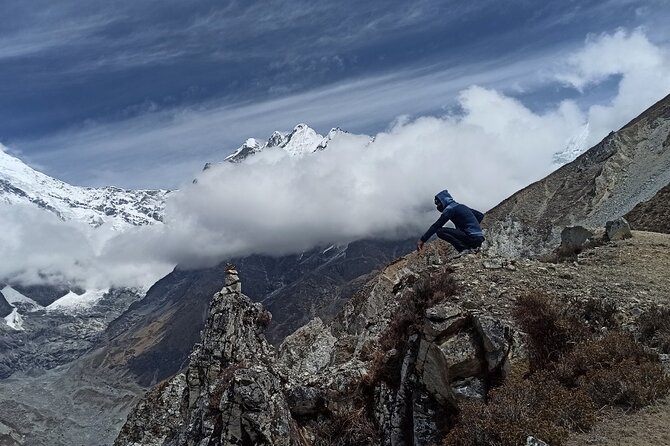
Langtang gives you a true Himalayan trek without burning several days on the approach. After an early drive from Kathmandu, you walk beside the Langtang Khola, pass suspension bridges and Tamang villages, and reach Kyanjin Gompa, where snowy peaks and high alpine scenery take over.
I like two things right away: the route packs a lot into seven days, and the price of $410 per person includes a private trip, guide, guesthouse lodging, transport, permits, and a TIMS Card. The main caution is altitude. Kyanjin sits high, and the early visit to 4,800-meter Kyanjin View Point calls for steady fitness and careful pacing.
- A short route from Kathmandu: You spend more time walking and less time on long approach roads.
- A high point at 4,800 meters: Kyanjin View Point brings sunrise views above the valley.
- Tamang and Tibetan-influenced culture: Villages, chortens, prayer walls, and Kyanjin Gompa add depth to the walk.
- Private service for $410: Your group travels privately, though the road transport uses a shared bus.
- Guide support included: Biru and Amrit have been praised for care, safety, local knowledge, and good spirits.
- Simple mountain lodging: Guesthouses keep costs down, but food and rooms may feel basic.
Why Langtang Works So Well in Seven Days
Langtang is one of Nepal’s more practical Himalayan treks. You begin with pickup at your Kathmandu hotel at 6:30 in the morning, then drive toward Syabrubesi through forested hills and winding roads. The ride takes about seven hours, so this is not a quick transfer, but it is far shorter than the approach required for some other major trekking areas.
That matters because your walking days begin early in the trip. You do not spend several days simply reaching the trailhead. The route also changes character in a satisfying way: lower forest, river crossings, hillside villages, open yak pasture, and high mountain views.
The tour is listed at $410 per person. For that price, you receive hotel pickup and drop-off, a professional English-speaking guide, guesthouse accommodation, shared bus transport to and from the trail, Langtang National Park or conservation permits, a TIMS Card, and a first aid kit carried by the guide. Since the trip is private, only your own group takes part in the trek itself.
That is solid value if you want a guided route without arranging every permit, room, transfer, and trail decision yourself. It is less appealing if you expect polished hotels or restaurant-style meals. The available experience notes describe the accommodation and food as average, which is normal for a simple mountain trek but worth knowing before you book.
Day One: Kathmandu to Syabrubesi by Mountain Road
Your guide or representative meets you at your hotel door in Kathmandu at 6:30 a.m. The drive heads through lush forest and winding hill roads before reaching Syabrubesi, the usual starting area for the Langtang route.
The day is mainly about transport. Expect roughly seven hours on the road, with the scenery doing much of the work. You move from Kathmandu’s urban setting into greener hills and more rural communities.
The overnight stop is listed as Hotel Garden Inn Syabrubesi. This first day is useful because it places you close to the trail, but it can feel long. If you are prone to motion sickness, the winding road is an important practical consideration. The early start also means you should keep the previous evening simple and get your gear ready before bed.
More Langtang and Gosaikunda treks:
- Langtang Valley Trek
★ 5.0 · 140 reviews - Langtang Valley Trek
★ 5.0 · 50 reviews - Private 8 – Day Langtang Trekking
★ 5.0 · 29 reviews
Day Two: River, Forest, and Lama Hotel
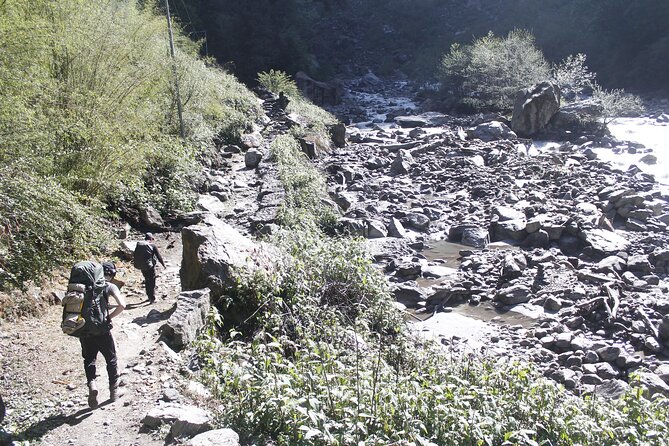
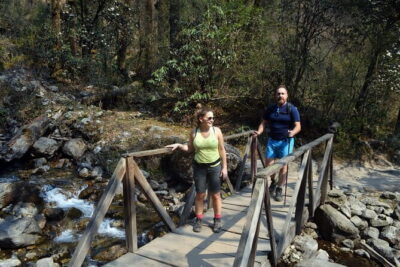
The first walking day follows the Langtang Khola, with about six hours on the trail to Lama Hotel. The route passes through thick woodland, crosses suspension bridges, and moves by small tea houses.
This is a good introduction to Himalayan trekking. You get the sound of the river, shaded paths, and the steady rhythm of walking rather than a sudden push into high alpine country. The trail can look steep in places, but the description presents it as manageable rather than highly technical.
Lama Hotel is less about a single grand sight than about the shift into trail life. You spend the night in a simple guesthouse, eat a basic meal, and prepare for a higher route the next day. Your guide carries a first aid kit, and the included support is useful here because trail conditions and energy levels can change from hour to hour.
Day Three: Langtang Valley and Langtang Lirung Views
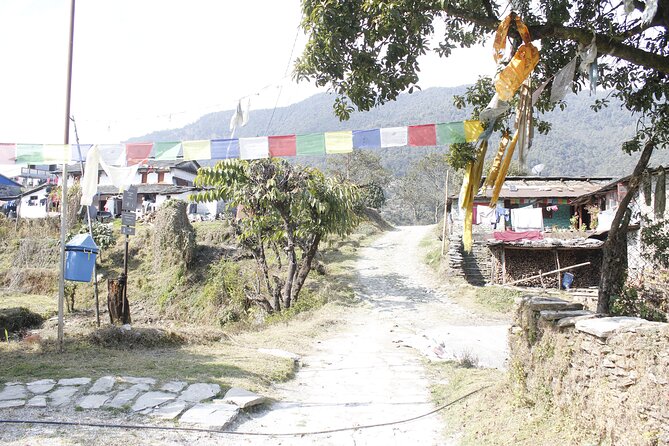
The next six-hour walk continues through woodland and begins to open toward the Langtang Valley. You may see water mills, chortens, and mountain ridges, with Langtang Lirung becoming a major visual landmark.
This section brings more cultural detail into the walk. Chortens are Buddhist monuments, and the route’s prayer features show that this is not only a mountain passage. The villages and religious markers connect the scenery to Tamang and Tibetan-influenced traditions.
The view of Langtang Lirung is one of the route’s strongest rewards. You also begin to feel the valley stretching upward around you. The walking remains active, but the schedule allows about six hours rather than forcing a rushed march. That gives you time to notice the small details: a water mill, a trail-side tea house, or a line of prayer stones.
Day Four: Kyanjin Gompa and the High Valley
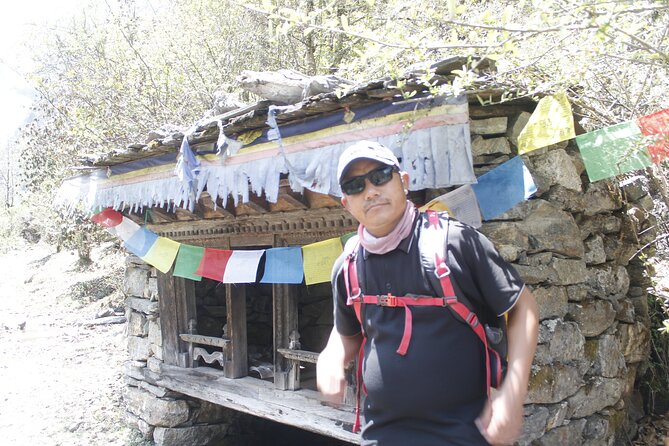
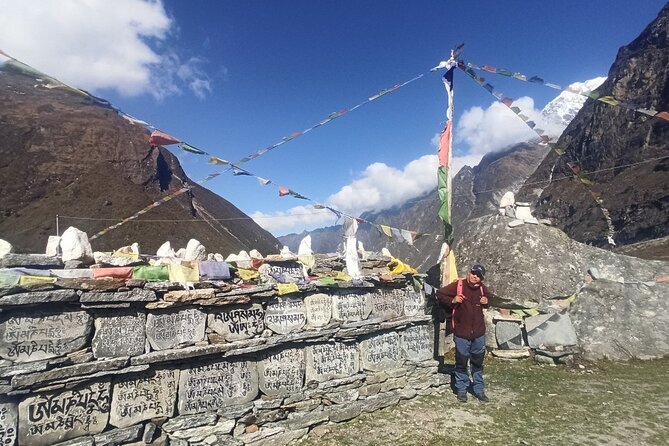
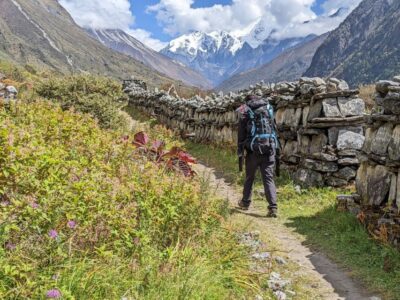
Day four takes about five hours and leads to Kyanjin Gompa. The route leaves the more enclosed village setting and passes yak pastures, wooden bridges, and the largest Mani wall in Nepal.
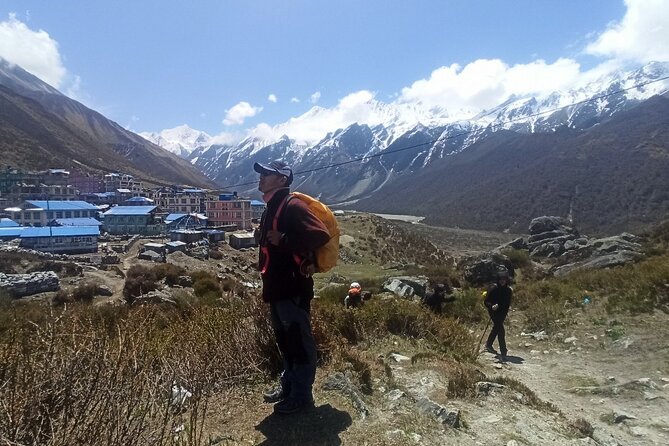
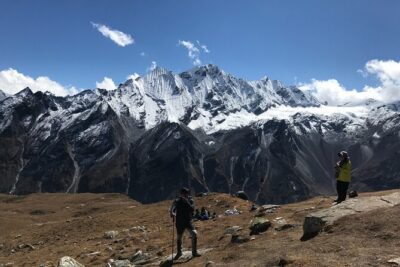
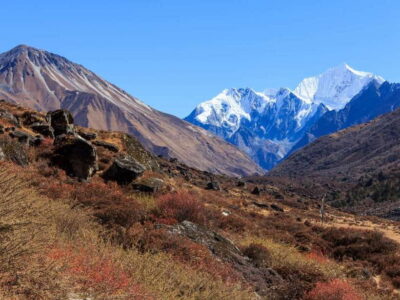
Kyanjin Gompa is the emotional center of the trip. You are now well into the high valley, with snow peaks, glaciers, waterfalls, and alpine terrain forming the main view. Langtang Lirung, Dorje Lakpa, and Yala Peak are among the named mountain sights connected with the trek.
The Mani wall deserves a slow look. It is a long prayer wall made of carved stones, and it gives the route a clear spiritual character. You are not simply walking toward a viewpoint. You are passing through a living cultural setting where Buddhist symbols remain part of daily life.
The altitude also becomes a serious factor. The itinerary notes that you may begin to feel the height as you approach Kyanjin. That is why the five-hour schedule is helpful. You should not treat the day as a race, and you should tell your guide if you feel unwell.
Accommodation remains in a guesthouse. Expect practical rather than luxurious rooms. The simple setup is part of the value of this tour, but anyone seeking private hotel comforts should adjust expectations.
A few more Kathmandu days to weigh up
- 7 days Nepal Motorcycle tour
★ 5.0 · 12 reviews - Kathmandu to Langtang Valley 7-Day Trek
★ 5.0 · 11 reviews - Langtang Trek from Kathmandu 7 Days
★ 5.0 · 5 reviews - Kathmandu: 7 Day Langtang Valley Trek
★ 4.2 · 3 reviews
Day Five: Sunrise at 4,800 Meters, Then Down to Lama Hotel
Day five starts early with a visit to Kyanjin View Point at 4,800 meters, or 16,404 feet. The goal is sunrise, when the surrounding peaks can catch the first light and the high valley feels especially open.
This is the hardest and most memorable part of the schedule for many people. The elevation is substantial, and even a short climb can feel demanding. Your guide’s role matters here. Biru and Amrit have been singled out for safety, support, and local insight, so a guide who pays attention to your pace is a real benefit on this morning.
After breakfast, you walk downhill toward Lama Hotel. The return takes about four to five hours, with the full day listed at around six hours. Going down is usually easier on breathing, but it can still be tiring on knees and thighs.
The itinerary places you back at Lama Hotel rather than adding another high-altitude night. That is a sensible use of the route, allowing you to enjoy Kyanjin and then lose elevation at a steady rate.
Day Six: Five Hours Down to Syabrubesi
The sixth day continues downhill for about five hours to Syabrubesi. The trail returns through lush vegetation, a noticeable contrast with the bare, high country around Kyanjin.
The walk is described as simple downhill terrain, but do not read that as effortless. Long descents can test your legs, especially after the early start and high point the day before. Trekking poles, if you use them, would be useful, though they are not listed as part of the tour.
After reaching Syabrubesi, you stop for lunch. The schedule may leave some spare time, though no specific extra activity is guaranteed. This gives you a chance to rest before the final road transfer.
The return to the lower valley also brings back warmer, greener surroundings. That change is one of the route’s quiet pleasures. Langtang is not only about snow peaks. The forest, river, and village sections make the trek feel varied from start to finish.
Day Seven: Return to Kathmandu
The final day uses a roughly seven-hour drive back to Kathmandu. You are transferred to your hotel in the Thamel area and then have the rest of the day at leisure.
This is another long road day, so you should not plan a tight evening connection or an important appointment immediately after arrival. The included hotel drop-off is useful after a week of walking and shared-road travel.
Ending in Thamel places you back in Kathmandu’s main tourist district, with easy access to hotels, restaurants, and shops. The tour itself ends after the transfer, so any extra sightseeing or additional nights in Kathmandu need separate planning.
Guide Support and the Private Format
The trip includes an English-speaking guide and is described as private, meaning only your group participates. That is a better fit than a large group if you want a flexible pace or prefer to ask questions about village life, chortens, and mountain names as you walk.
Two guides receive especially strong praise in the available feedback: Biru and Amrit. Biru is described as warm, supportive, and deeply familiar with the area. Amrit is noted for attention to safety and comfort. You should confirm your assigned guide before departure, since the tour description does not promise that either person will lead every departure.
The private format does not mean every vehicle is private. Transport to and from the trailhead is by shared bus. That lowers the price, but it also means the road schedule is less tailored to your group.
Food, Guesthouses, and What $410 Really Buys
The price works because this is a practical trekking package. You receive the major administrative and logistical pieces: permits, TIMS Card, transport, guide, guesthouse accommodation, and hotel transfers.
Food and lodging are the weak point if you want comfort. The available feedback describes both as average. In mountain villages, guesthouse rooms and meals are usually simple, and this package should be viewed as a route-and-support service rather than a luxury holiday.
I see the price as fair for someone who values organization and guide support. You avoid arranging permits, finding a guide, and negotiating each transfer yourself. You also get a private group rather than joining a large departure.
Personal expenses are not included, and gratitude for the guide is optional. Keep some extra money for anything outside the package, since the exact personal costs are not specified.
Who Should Book This Trek
This trek suits you if you want:
- A one-week Himalayan route from Kathmandu
- A private trip with an English-speaking guide
- A mix of forest, river, village, monastery, and snow-peak scenery
- A moderate physical challenge with several six-hour walking days
- Simple guesthouses rather than high-end accommodation
- A package that handles permits and trail transport
It may not suit you if you dislike long mountain drives, basic rooms, shared buses, or early mornings. The 4,800-meter viewpoint also makes fitness and altitude awareness important.
The route has a good balance of natural and cultural sights. You see Tamang and Tibetan-influenced villages, Buddhist monuments, yak pasture, waterfalls, glaciers, and major peaks without committing to a much longer expedition.
Practical Details Before You Book
The start time is 6:30 a.m., with pickup from your Kathmandu hotel. Confirmation is provided at booking, and the activity is marked for people with a moderate fitness level.
The tour includes free cancellation if you cancel at least 24 hours before the local start time. Within 24 hours, the amount paid is not refunded, and changes are not accepted. The package also includes a first aid kit carried by the guide, but no separate medical or evacuation service is stated, so read the final booking terms carefully.
Should You Book the Langtang Valley Trek?
I would book this trek if you want a compact, well-organized introduction to Nepal’s high mountains and can accept simple accommodation. The strongest reasons are the short access from Kathmandu, the cultural setting, the Kyanjin sunrise, and the support of a private guide.
I would pause if you need hotel comfort, dislike seven-hour road transfers, or are not ready for a 4,800-meter viewpoint. For a fit person who wants real trail time without a long expedition, the $410 package offers a sensible balance of scenery, support, and cost.
FAQ
How long is the Langtang Valley Trek from Kathmandu?
The experience lasts approximately seven days, including the road journeys from Kathmandu to the trail area and back.
What time does the tour start?
Pickup begins at 6:30 a.m. from your hotel in Kathmandu.
Is this a private tour?
Yes. Only your own group participates in the private tour or activity.
What accommodation is included?
Accommodation during the trek is provided in guesthouses. The package does not describe the lodging as luxury accommodation.
Is transport included?
Yes. Hotel pickup and drop-off are included, along with shared bus transport to and from the starting point.
Are park permits and the TIMS Card included?
Yes. The Langtang National Park or conservation area permit and TIMS Card are included.
What level of fitness do I need?
The tour states that you should have a moderate level of physical fitness. Walking days range from about five to six hours, with a high point at 4,800 meters.
Can I cancel for a full refund?
Yes, if you cancel at least 24 hours before the experience starts. Cancellations within 24 hours are not refunded, and changes made within that period are not accepted.
Just added around Kathmandu
- Traditional Momo Making Class★ 5.0 · 10 reviews
- Women Empowerment Project(Nepali cooking class & jewelry workshop★ 5.0 · 15 reviews
- Manthali Airport (Ramechhap) To Kathmandu – Transport Service★ 4.5 · 11 reviews
- Amazing 1 Day Trekking Experience in Kathmandu Nepal★ 5.0 · 24 reviews
- Walking tour of Kathmandu with awesome local guides★ 5.0 · 4 reviews
- Walking tour of real Kathmandu through back streets.★ 5.0 · 3 reviews
- Private Manaslu Circuit Trek at Himalayas★ 5.0 · 3 reviews
- Walking Street Food Tour in Kathmandu★ 5.0 · 111 reviews
Langtang Treks, compared.
Browse the lists this tour appears in