
Reviewed · WORKSHOPS
Knife Khukuri Making Workshop
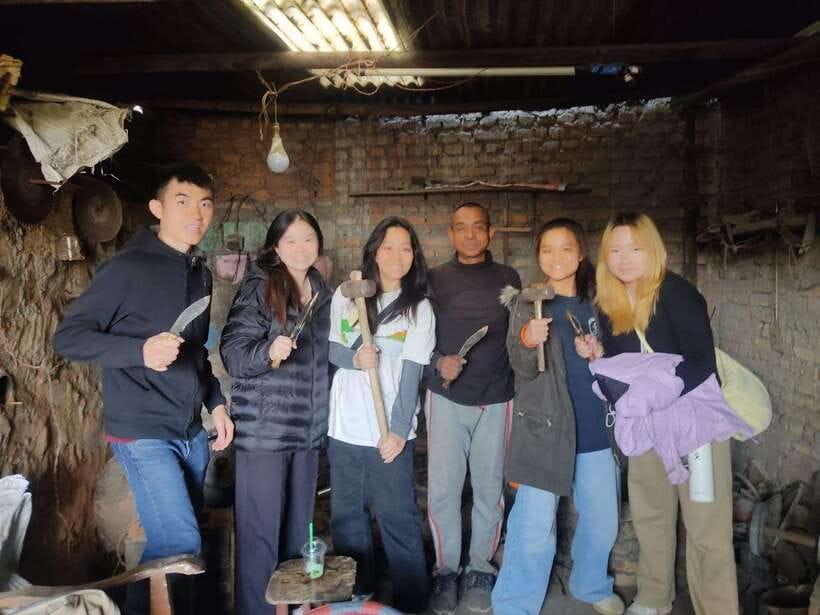
The best part of this experience is that you do not simply buy a khukuri from a shop. You help turn a rough piece of iron into a small, sharp blade under the watch of Indra, a blacksmith with more than 40 years of experience. The work takes place at a local family home in Nepal’s Bagmati Zone, where tea and conversation are part of the welcome.
I like the hands-on work, especially the hammering and first grinding, and I like the personal contact with the guide and blacksmith. Guides such as Namrata, Sajeena, and Swayam help explain the craft and local traditions in English or Hindi. The main consideration is that you will not complete every step yourself. For safety, Indra handles the hardest forming and final sharpening, and you must stay clear of sparks during grinding.
Key points before you book
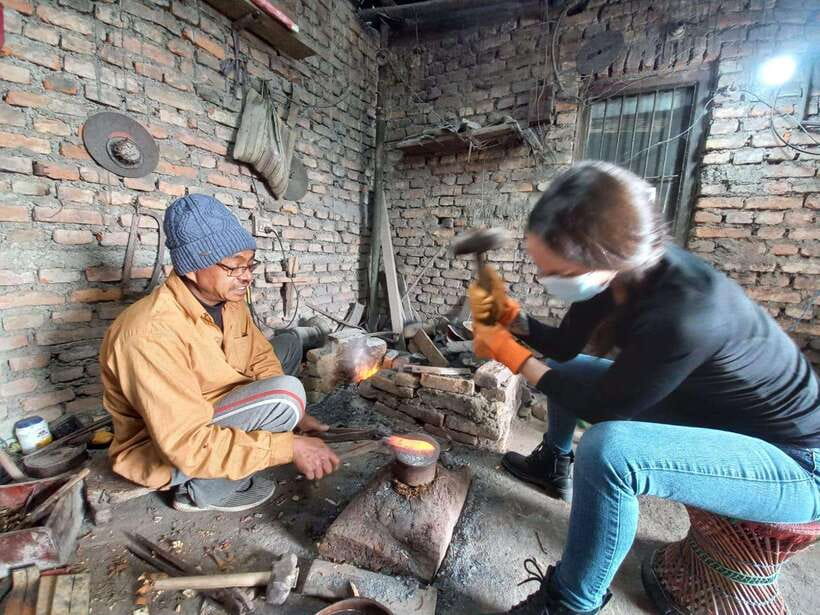
- You help shape a six-inch khukuri: The finished knife is small, practical, and easy to take home as a souvenir.
- Indra handles the skilled work: You hammer the iron and take part in the first grinding, while the blacksmith manages the most dangerous stages.
- The visit takes place in a family home: Tea, water, snacks, and conversation make this feel more personal than a standard workshop.
- The khukuri has a strong cultural role: It is linked with Gurkha loyalty and is used for practical tasks such as cutting wood, meat, and vegetables.
- The group is limited to five people: That matters when you need close help around hot metal and heavy tools.
- The price is $73 per person: Hotel transport, equipment, refreshments, a knife cover, and your completed knife are included.
Meeting a master of the Nepalese khukuri
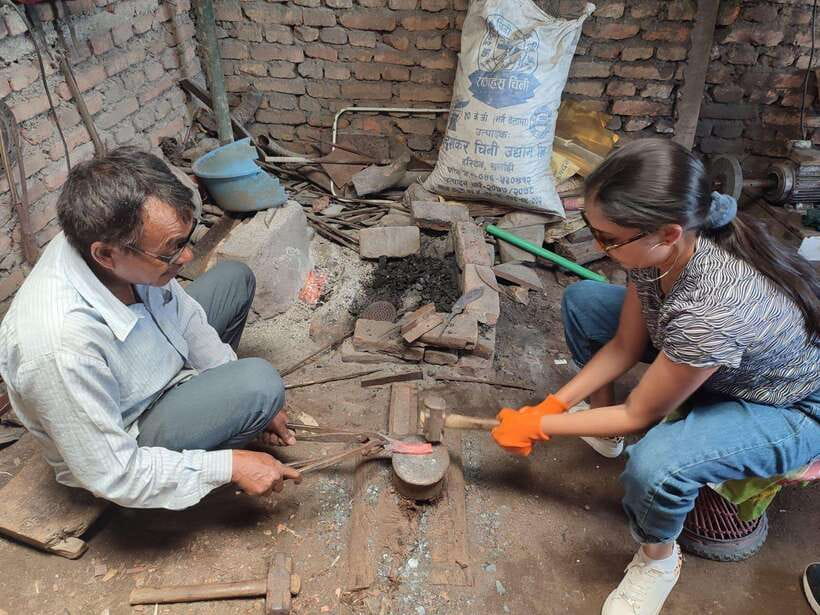
Your visit begins with pickup from your hotel lobby. The workshop lasts about four hours, including transport, explanations, hands-on work, and the time needed to finish your knife. Since the group is capped at five people, you should receive more direct help than you would in a large craft class.
The central figure is Indra, a local blacksmith whose working life spans more than four decades. The activity description gives 42 years of experience, while personal accounts describe him as working for more than 40 years. Either way, this is not a quick demonstration led by someone who recently learned the trade.
Your guide acts as translator, host, and cultural interpreter. Namrata has been praised for her warmth and careful arrangements, while Sajeena is known for clear English and detailed explanations. Swayam has also guided families through the process. The exact guide depends on the date, but English and Hindi are available.
The setting is part of the appeal. You visit a local family home rather than a polished tourist attraction. Tea and snacks are included, and some visits have included guava from the family garden. That small detail tells you what kind of outing this is: personal, modest, and built around meeting the people who make the object.
More classes and workshops in Kathmandu:
- Half day cooking class in Thamel kathmandu
★ 5.0 · 607 reviews - Kathmandu: Local Women-Led Nepali Cooking & Momo Class
★ 4.9 · 360 reviews - Kathmandu: Local Lead Nepali Cooking & Momo-Making Class
★ 5.0 · 212 reviews
Why the khukuri matters in Nepal
Before the hammer comes out, you learn why this knife carries more meaning than its practical use suggests. The khukuri is closely linked with the Gurkha warrior and is treated as a traditional tool among Nepal’s hill communities. It can be used for shaping timber, chopping meat, and preparing vegetables.
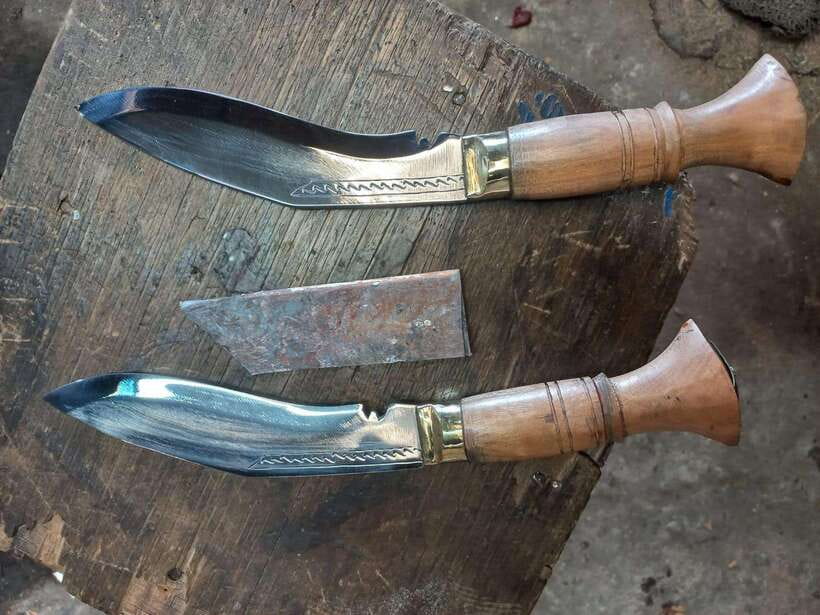
The blade is made from tempered steel and has a slight curve. It is designed to be very sharp. Handles are commonly made from wood or buffalo horn, and the blade usually sits in a wood and leather scabbard.
You may also hear about the small notch near the handle. It helps keep blood from reaching the grip, and it carries a religious meaning tied to Brahma, Vishnu, and Shiva. This is a useful part of the experience because it connects the physical design of the knife with Nepalese beliefs and daily life.
You will be making a small khukuri with a blade of about six inches. That is worth noting before booking. This is not a full-size ceremonial weapon or a large outdoor tool. It is a compact knife, but the finished piece still gives you a clear example of the form, balance, and construction of a khukuri.
From rough iron to a curved blade
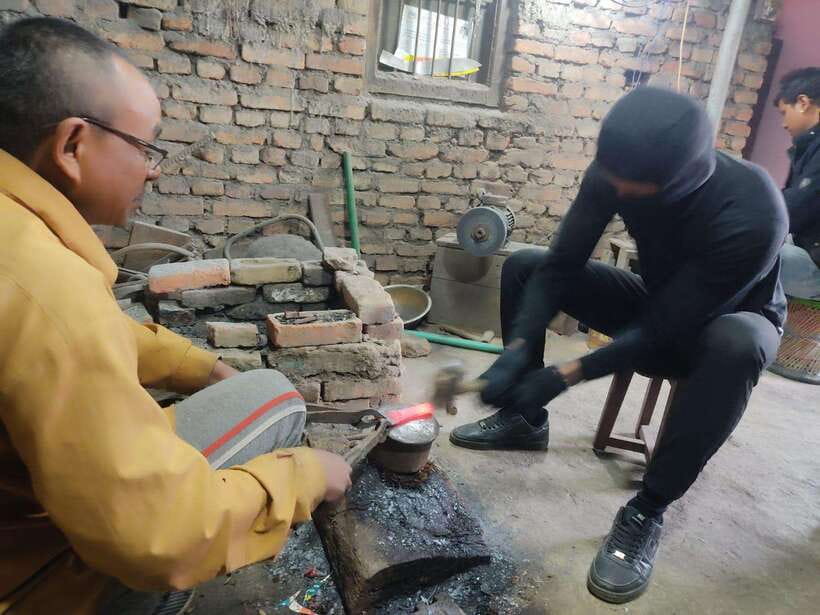
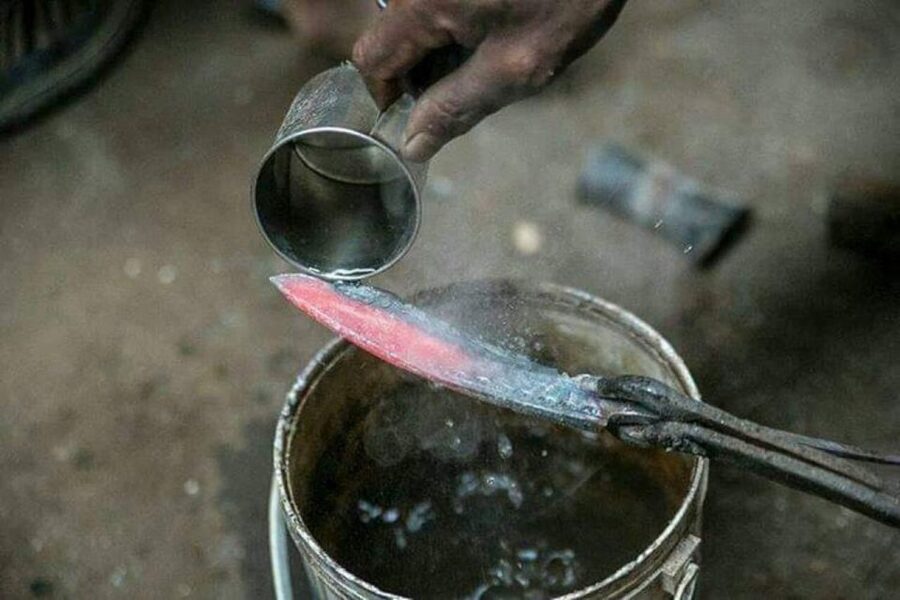
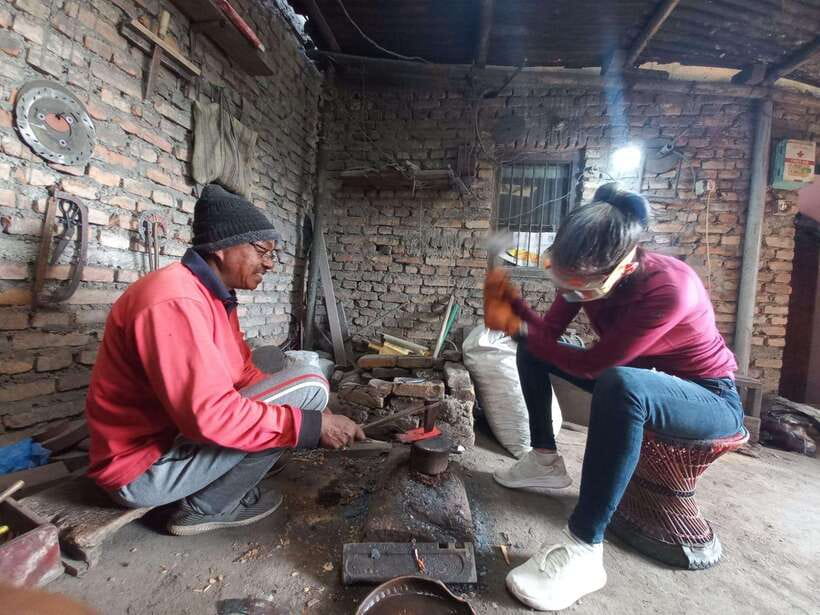
The first physical stage is hammering. You work with a raw piece of iron and help give it the basic shape of a blade. This is the part most people look forward to, and it is also the stage where you feel the force and rhythm of traditional blacksmithing.
Do not expect to master the technique in one afternoon. The khukuri’s curve and proportions require years of practice. Your role is carefully limited, and the blacksmith corrects the shape as the work progresses. That arrangement is a strength, not a weakness. You get real participation without being asked to handle a task that requires professional judgment.
Hammering can be tiring, especially if you are not used to working with metal. Wear long pants, as requested, and choose clothing you do not mind wearing around a working forge. The supplied information does not call for special equipment, since the workshop provides the tools.
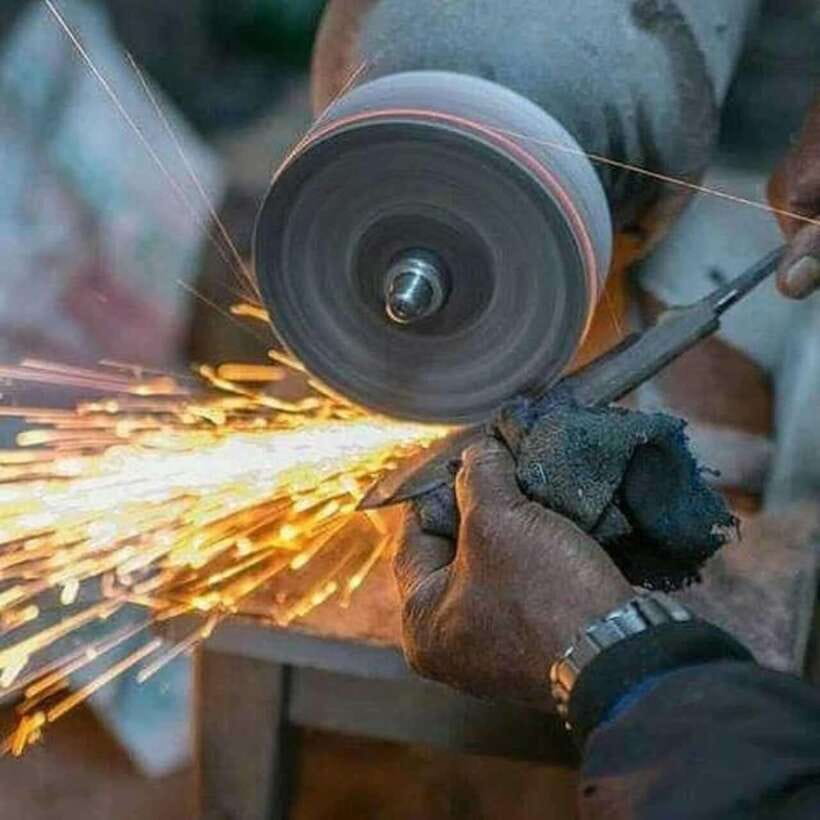
The first grinding follows the hammering. You can take part in this stage, but the host does the blade grinding that creates sparks and the final sharp edge. You should stay well clear while that work is happening and follow the blacksmith’s instructions closely.
This division of labor is important. The workshop gives you the satisfaction of making part of the knife, but it does not pretend that a first-time visitor can safely perform every operation. The finished quality depends on Indra’s skill, and the experience is better for being honest about that.
Watching the expert finish the knife
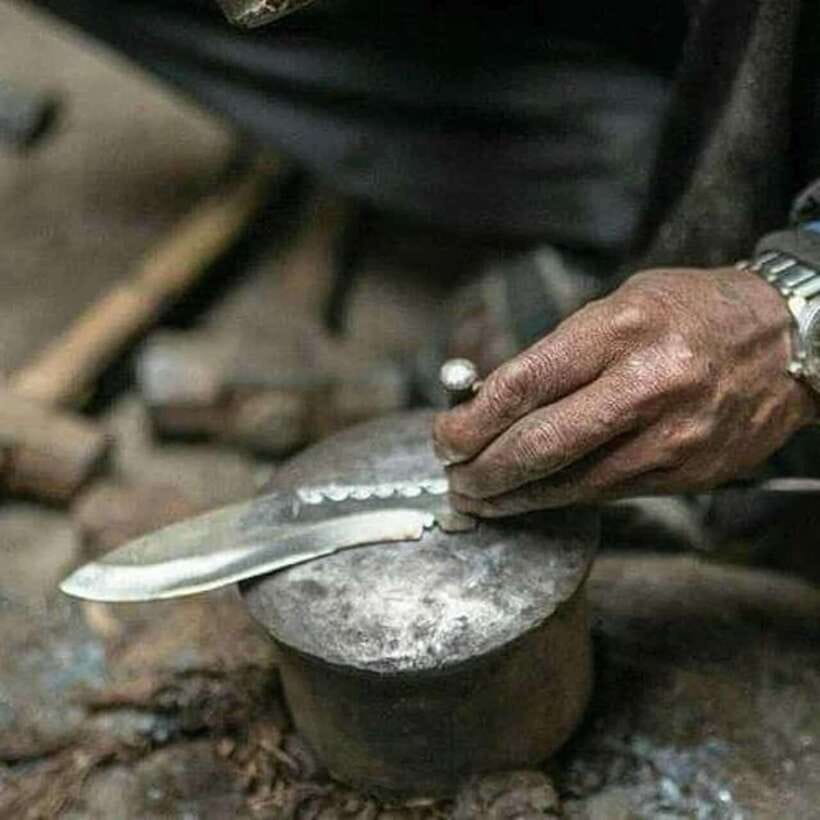
Once the basic blade has been shaped and the early grinding is done, the difficult work belongs to the blacksmith. He forms the distinctive khukuri profile, refines the edge, and handles the dangerous grinding. You watch the transformation from a plain piece of metal into a recognizable Nepalese knife.
This is where patience helps. The advertised duration is four hours, but the knife itself can take less than three hours to transform, depending on the process and the day. Transport, explanations, pauses, and finishing work fill out the visit.
The final result is not a mass-produced market souvenir. Several people have found the completed knives sturdy and well made, and one family chose the workshop because the use of harder steel made the blade more durable than softer versions sold in markets. You should treat that as a description of the workshop’s materials rather than a promise of a particular steel grade, since no technical specification is provided.
The handle is part of the finished knife, and a standard knife cover is included. If you want a horn or bone cover, that can be made for an additional cost. Ask about this before the work is finished if that detail matters to you.
More days out in Kathmandu:
- Private Kathmandu Sightseeing Tour | UNESCO World Heritage sites
★ 5.0 · 756 reviews - Nagarkot Sunrise View and Day Hiking from Kathmandu
★ 5.0 · 471 reviews - Kathmandu: Full Day 7 UNESCO Tour with Lunch – Private/Group
★ 5.0 · 415 reviews - Private Bhaktapur and Nagarkot Day Tour From Kathmandu
★ 5.0 · 305 reviews
Local hospitality is part of the craft lesson
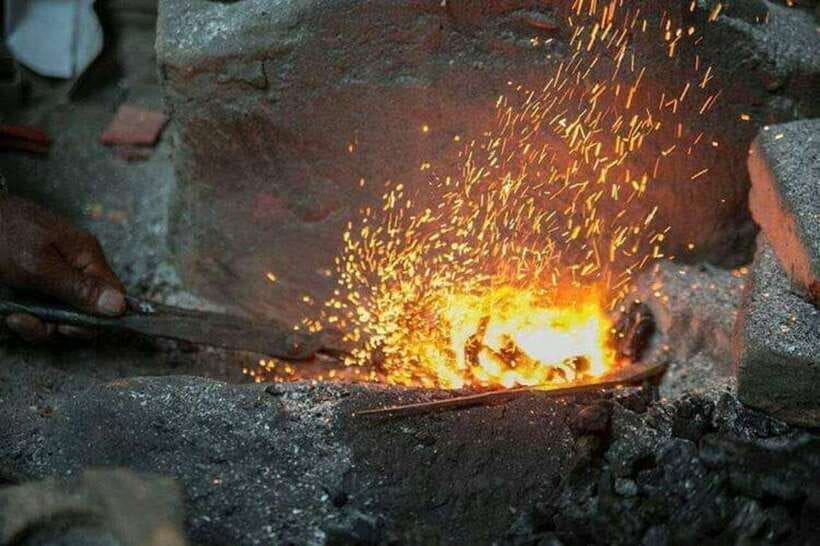
The most valuable part of the afternoon may not be the blade itself. You are welcomed into a working family home and have time to speak with the guide and blacksmith. The guide explains the origin and meaning of the khukuri, while the blacksmith shows how skill changes the raw material.
Tea, water, and snacks are included. The hospitality is simple, but it gives the visit a human scale. You are not just observing a product being made. You are seeing a family craft passed through years of work and listening to the people connected with it.
Families can take part, but children under 10 are not allowed. Older children may be able to join the easier tasks, provided they can follow safety instructions and receive close assistance. The activity is also a good match for anyone who likes tools, traditional crafts, metalwork, or meaningful souvenirs rather than another purchased trinket.
The small group limit helps here. With no more than five participants, you have a better chance to hear the explanations and get a turn at the hammer. If several people in your group want to participate, some waiting may still be necessary, since each knife requires individual attention.
Is $73 good value?
At $73 per person, this is more expensive than buying a khukuri in a market. You are paying for more than the object. The price includes pickup and drop-off, all tools, the knife cover, tea, water, snacks, guide service, and several hours of instruction and personal contact.
The transport has also received strong marks, with 86 percent of ratings giving it a perfect score. That matters in Nepal, where arranging a separate ride to a local workshop can take time and make a short activity less convenient.
The value is strongest if you want a story attached to your souvenir. You will know who helped make it, how the basic form was created, and why the khukuri matters. The price is less compelling if you only want the cheapest knife or if you expect a full professional blacksmithing course where you perform every step.
The included cover is useful, but a horn or bone cover costs extra. Keep that in your budget if you want a more decorative presentation. The finished knife is about six inches, so check that size suits your plans before booking.
What the four hours feel like
The experience has a clear rhythm:
- Hotel pickup brings you to the local workshop and family home.
- Your guide introduces the khukuri and explains its cultural role.
- Indra shows the raw iron and demonstrates the blacksmith’s method.
- You hammer the metal and help with the first grinding.
- The blacksmith handles the advanced shaping, spark-producing grinding, and sharpening.
- You receive the finished knife with its cover, along with refreshments during the visit.
- Your guide returns you to your hotel.
The exact order may vary. The key point is that the visit mixes explanation, participation, observation, and conversation. It is not four straight hours of swinging a hammer.
Bring long pants and wear sensible clothing. You should also be comfortable around heat, metal, tools, and sparks. The host provides the equipment, but safety depends on listening carefully and staying out of the grinding area when told.
Free cancellation is available up to 24 hours before the activity for a full refund. You can also reserve and pay later, which helps if your schedule in Nepal is still changing. Starting times depend on availability.
Who should choose this workshop?
I would choose this activity if you want a small-group experience with a strong local connection. It suits solo visitors, couples, families with older children, and anyone interested in Nepalese culture, handcraft, or the Gurkha tradition.
It is especially good for people who value participation over speed. You will not simply watch Indra work, but you also will not become an independent knife maker in four hours. The balance is sensible: you do the safer tasks and the master completes the work that needs years of practice.
I would think twice if you dislike heat, sparks, physical work, or sharp tools. You may also prefer another activity if you want a large, ornate khukuri, since this workshop produces a small six-inch blade. The horn or bone cover is an optional extra, not part of the base price.
Should you book the khukuri workshop?
Book it if you want a useful souvenir with a real making story behind it. The strongest reasons are the access to Indra’s long experience, the chance to hammer and begin grinding the metal, and the warm contact with a local family through a small group.
The main limitation is clear and fair: the expert must perform the most dangerous and technical work. For me, that makes the workshop safer and more credible. At $73, it is not a bargain knife purchase, but it is a solid value for transport, guidance, refreshments, cultural context, and a finished blade you helped create.
FAQ
Where does the khukuri workshop take place?
The activity takes place in Nepal’s Bagmati Zone, at a local blacksmith’s home and workshop. Hotel pickup and drop-off are included.
How long does the activity last?
The workshop lasts four hours. Starting times depend on availability.
How much does the experience cost?
The price is $73 per person.
How large is the group?
It is a small-group activity limited to five participants.
What parts of the knife-making can I do?
You can hammer the iron and take part in the first grinding. The host handles the more dangerous and technical blade grinding, shaping, and sharpening.
What size knife will I make?
You will make a small khukuri with a blade of about six inches.
Is a knife cover included?
Yes. A standard knife cover is included. A horn or bone cover can be made for an additional cost.
What languages are available?
The host or guide can communicate in English or Hindi. Guides such as Namrata, Sajeena, and Swayam have provided English-language assistance.
What should I bring, and who cannot join?
Bring long pants. Children under 10 are not suitable for this activity. Follow the host’s safety instructions and stay clear of sparks during grinding.
Just added around Kathmandu
- Traditional Momo Making Class★ 5.0 · 10 reviews
- Women Empowerment Project(Nepali cooking class & jewelry workshop★ 5.0 · 15 reviews
- Manthali Airport (Ramechhap) To Kathmandu – Transport Service★ 4.5 · 11 reviews
- Amazing 1 Day Trekking Experience in Kathmandu Nepal★ 5.0 · 24 reviews
- Walking tour of Kathmandu with awesome local guides★ 5.0 · 4 reviews
- Walking tour of real Kathmandu through back streets.★ 5.0 · 3 reviews
- Private Manaslu Circuit Trek at Himalayas★ 5.0 · 3 reviews
- Walking Street Food Tour in Kathmandu★ 5.0 · 111 reviews
Workshops, compared.
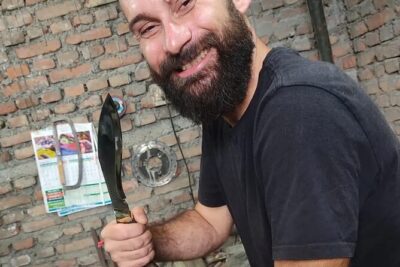
Knife (Khukuri) Making Workshop- Forge of the Gurkhas
Read our review →
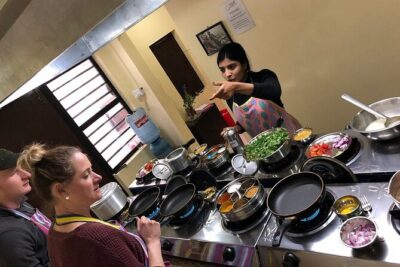
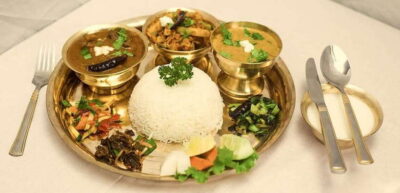
Nepalese Momos or Dal Bhat Cooking Class (Cook with Delight)
Read our review →
The best Private Nepali Cooking Class in Kathmandu
Read our review →
Nepalese Kitchen in Pokhara: Momos or Dal Bhat Cooking Class
Read our review →
Browse the lists this tour appears in