
Reviewed · ANNAPURNA BASE CAMP TREKS
Pokhara: Amazing 7-Day ABC Trek with Natural Hot Spring
The best part of this seven-day ABC trek is the way it packs a big Himalayan journey into a manageable week. You begin in Pokhara, walk through villages and bamboo forests, reach Annapurna Base Camp at 4,130 meters, then descend to Jhinu Dada for a natural hot spring soak.
I like the changing scenery, from Seti River views and paddy fields to rhododendron woods, waterfalls, glaciers, and the great mountain bowl around base camp. I also like the guide support. Guides including Niraj, Jeet, Prakash, and Ghanshyam Silwal have been praised for adjusting the pace, helping with problems, and keeping the mood light with games, music, and conversation.
The main consideration is the altitude and the fairly brisk schedule. You climb from 800 meters in Pokhara to 4,130 meters in four days, then descend quickly. Travel insurance, drinks, porter service, and some personal costs are extra, so the $200 price deserves a close look before you book.
Key points to know before you book
- Annapurna Base Camp at 4,130 meters: The trek ends in a dramatic mountain amphitheater surrounded by high peaks, snow, and glaciers.
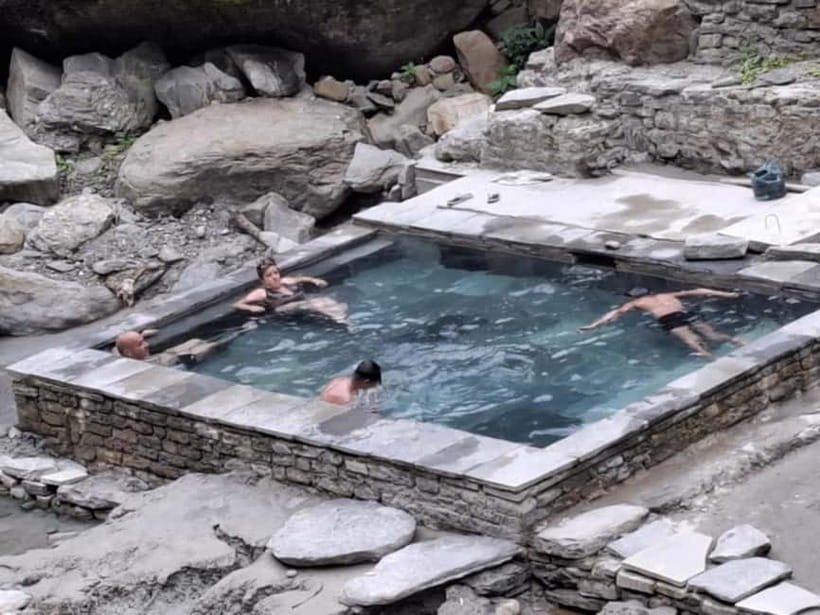
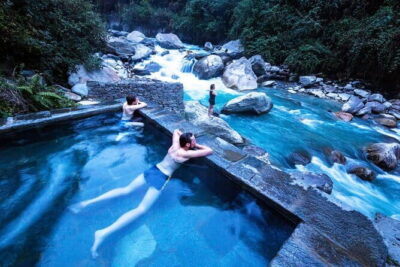
- Jhinu Dada hot spring: You get a welcome recovery stop after the main climb, with time to soak tired legs in natural hot water.
- Private group with an English-speaking guide: Hindi and Nepali are also available, and the guide leads every stage of the route.
- Mixed transport plan: A jeep handles parts of the first and final days, while the main route is on foot.
- Full-package value: Meals, accommodation, permits, guide costs, and deluxe transport are included in the full package, while the non-full option uses shared bus transport and excludes some meals.
- Real mountain effort: Daily walks run from about five to seven hours, with a steep altitude gain before base camp.
Why this Pokhara to ABC route works in seven days
The Annapurna Base Camp trek is popular for good reason. You do not simply walk toward one distant viewpoint. The route keeps changing as you gain height, and the mountains gradually become part of your daily surroundings.
This version begins at Lakeside Pokhara, at about 800 meters. A vehicle takes you through the countryside toward the trailhead, passing views of the Seti River, mountain ridges, and green paddy fields. From there, you walk to Chhomrong, a village at 2,200 meters.
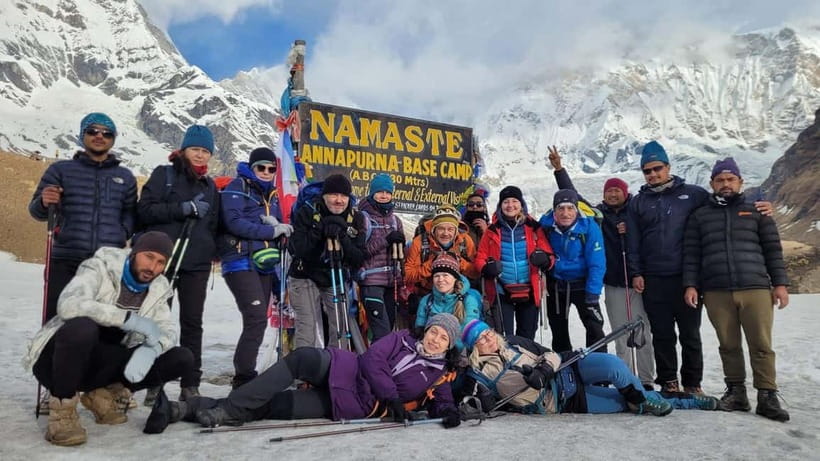
By the fourth day, you reach Annapurna Base Camp at 4,130 meters. That is a serious gain in a short period, but the route also gives you a useful pattern: long walking days, overnight stops, and a steady descent after the high point.
I would choose this trip if you want the full ABC experience but have only a week. I would not choose it if you want a slow schedule with extra acclimatization days or plenty of time in each village.
More Spa & Hot Spring Days in the Annapurna Region
- From Pokhara: 5-Day Annapurna Basecamp Trek with Hot Springs
★ 4.9 · 26 reviews - Pokhara: 7-Day Annapurna Base Camp Trek & Natural Hot Spring
★ 5.0 · 11 reviews - Pkr/Kathmandu: 5-Day Annapurna Base Camp & Hot spring Trek
★ 5.0 · 6 reviews
Day 1: Pokhara to Chhomrong, a road journey followed by a short climb
Your pickup can take place anywhere in Lakeside Pokhara, at Pokhara Airport, or elsewhere in the Pokhara Valley. Pickup from Kathmandu is available for an added fee, but this seven-day plan is built around starting in Pokhara.
The first part is by jeep, lasting about four hours. You pass the Seti River, mountain scenery, and farmland before reaching Matqui, around half an hour beyond Ghandruk. The drive saves your legs for the walking days ahead, though mountain roads can make the journey feel longer than the clock suggests.
From Matqui, you walk for around three hours to Chhomrong. This first hike gives you a gentle introduction to the route, with village life and mountain views appearing as you climb. Chhomrong is not just a sleeping stop. It is an important gateway into the Annapurna Sanctuary area.
At 2,200 meters, Chhomrong also marks the point where altitude becomes a real part of the trip. Keep your first evening simple. Eat, drink water, prepare your daypack, and let your guide know if you feel unusually tired or unwell.
Day 2: Chhomrong to Dovan through forest and river country
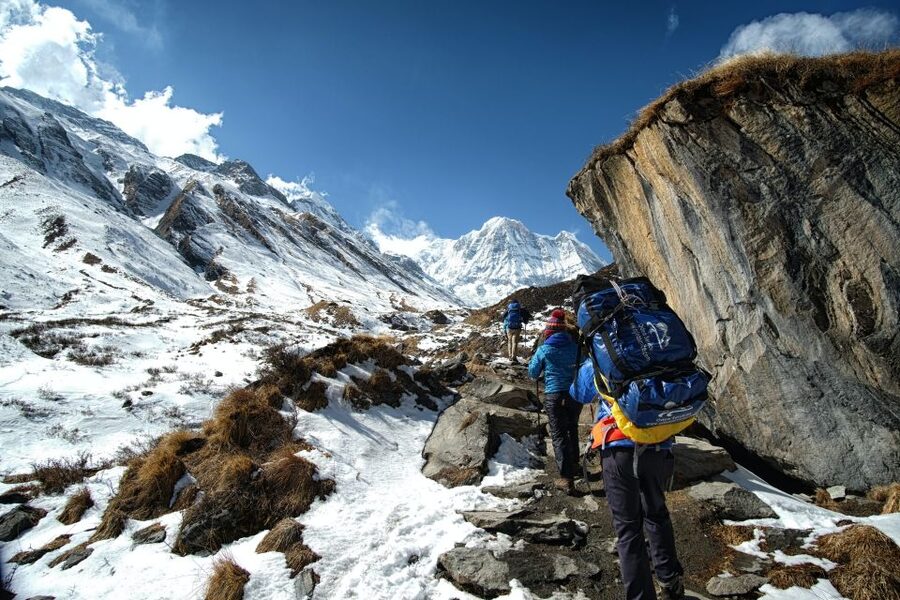
The five to six-hour walk from Chhomrong to Dovan takes you through thick forest and across suspension bridges. The Modi River becomes an important companion, and the views open at points toward Annapurna and Machhapuchhre, the mountain often called Fishtail.
This is the sort of day I like on the ABC route because the scenery has texture. You are not walking through the same forest for hours without change. Bridges, river sounds, village paths, and mountain glimpses break up the climb.
Dovan sits at about 2,400 meters, so the altitude gain is modest compared with the next two days. Still, you are now heading into higher country. Your sleeping bag, warm jacket, and dry layers should be easy to reach rather than buried at the bottom of your bag.
The trek includes available accommodation along the route. Expect the facilities to be practical rather than luxurious. One detailed account described the accommodation as varied but adequate for the location, which is the right way to think about mountain lodging here.
Day 3: Dovan to Deurali, waterfalls and higher forest
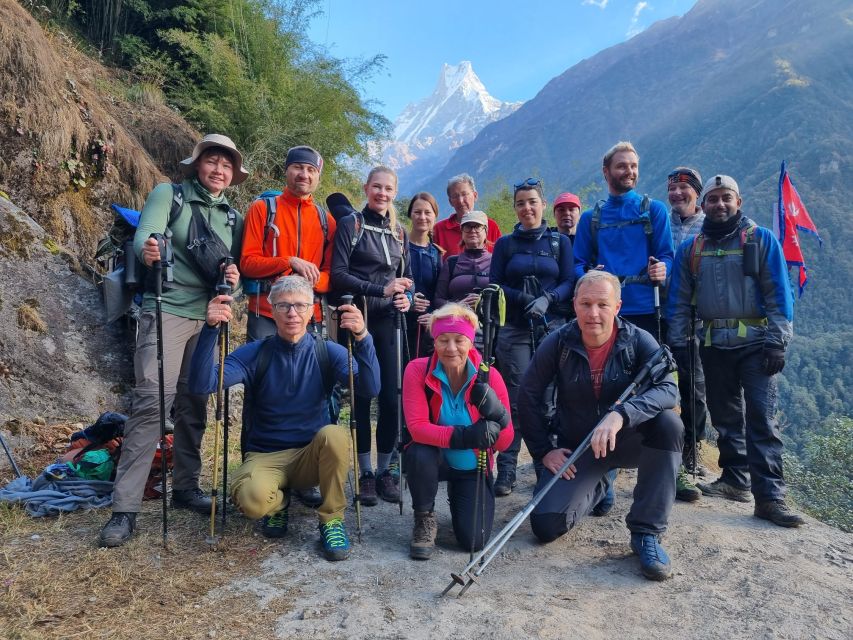
Day three takes about six hours and climbs to Deurali at 3,200 meters. The trail passes through rhododendron and bamboo forests, with waterfalls and mountain scenery adding interest along the way.
This is where the route begins to feel more remote and more alpine. The trees change as you gain height, and the air may feel colder. You should walk at the pace your body can maintain, not the pace of the fastest person in the group.
A strong guide matters on this day. Ghanshyam Silwal, one of the guides used on this trek, was praised for changing the pace to match the group and for helping promptly when a participant felt ill. That is useful support, not just friendly company. Your guide can help you decide when to rest, when to eat, and when a symptom needs attention.
Deurali is a good place to keep the evening quiet. You are already at 3,200 meters, and the next day takes you above 4,000 meters. A hot meal, warm clothing, and an early night are more valuable than trying to squeeze in extra entertainment.
More Annapurna Base Camp treks:
- Annapurna base camp trek 5 Days
★ 5.0 · 252 reviews - Annapurna Base Camp Trek
★ 5.0 · 111 reviews - Kathmandu to Annapurna Base Camp (ABC) 5-Day Trek
★ 5.0 · 102 reviews - Annapurna Base Camp Trek 12 Days
★ 5.0 · 85 reviews
Day 4: Deurali to Annapurna Base Camp at 4,130 meters
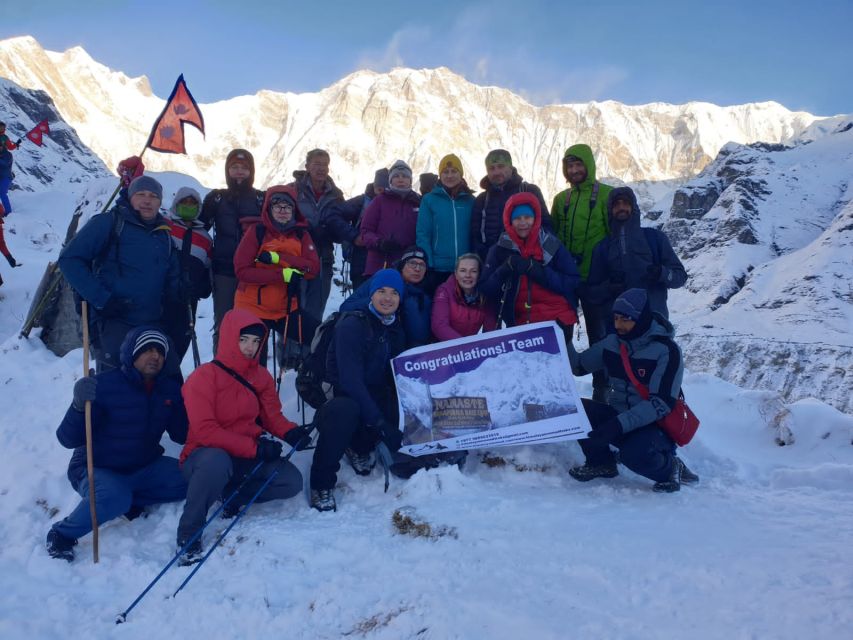
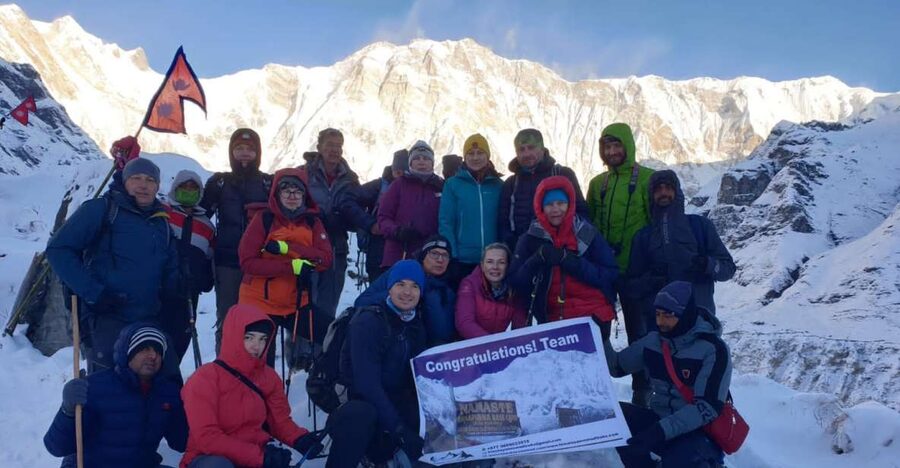
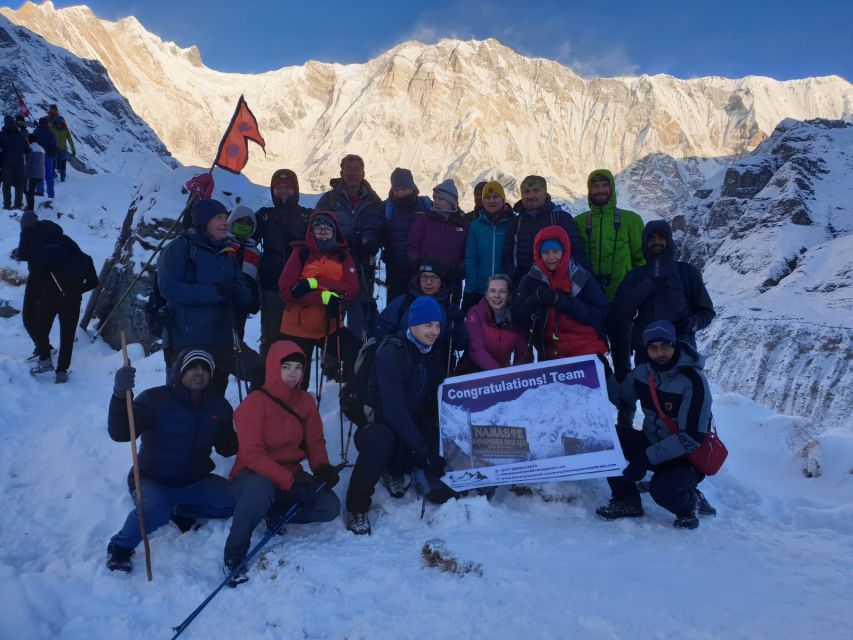
This is the main event. The walk from Deurali to Annapurna Base Camp takes about six hours and brings you into the famous high mountain bowl.
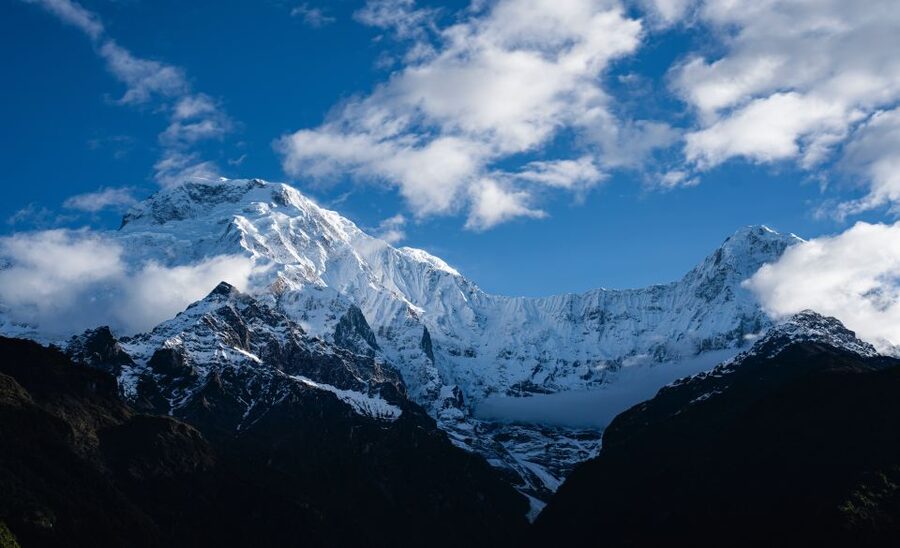
The scenery changes quickly. Forest gives way to open mountain country, and the peaks rise more sharply around you. The final approach reveals the amphitheater of Annapurna, with snow-covered summits, glaciers, and steep ridges surrounding the base camp.
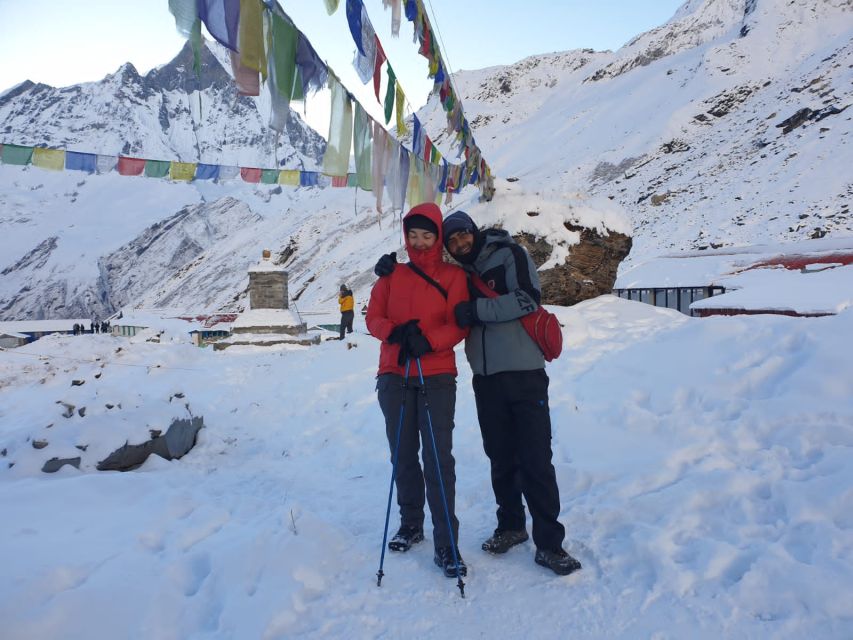
Reaching 4,130 meters is an achievement, but it is not a place to rush. Cold, wind, tired legs, and altitude can all affect how long you want to stay outside. Take time for photographs, but keep your warm layers close and follow your guide’s advice.
This is also the day when the seven-day schedule feels most demanding. You have gained more than 3,000 meters from Pokhara in four days. The exact walking effort depends on the group, trail conditions, and how your body responds, so a private group is helpful here. Your guide can adjust the pace more easily than a large fixed group.
The reward is not one isolated viewpoint. It is the feeling of being enclosed by huge peaks after several days of gradual approach. That sense of arrival is what makes ABC different from a short mountain lookout walk.
Day 5: Base Camp to Sinuwa, a long descent
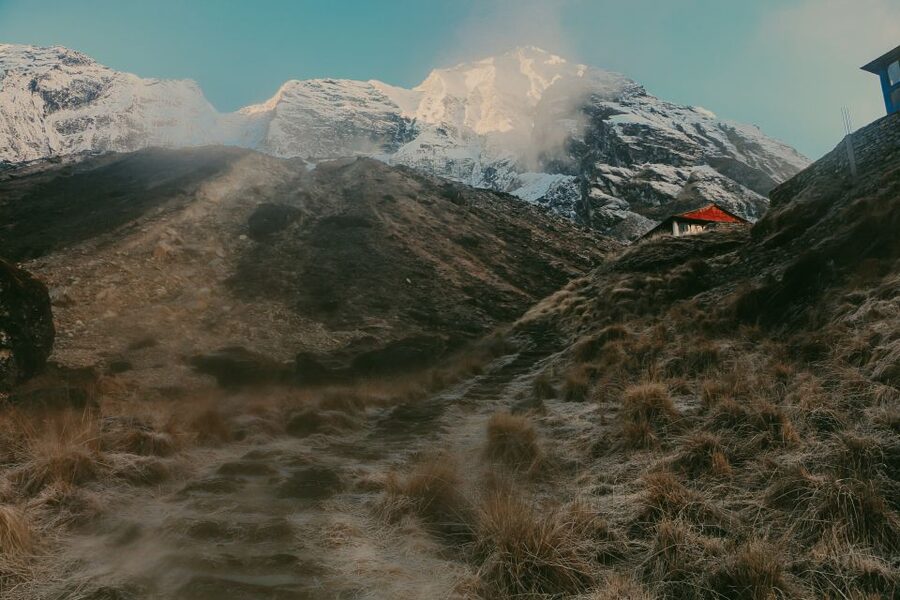
After breakfast, you retrace the route from Annapurna Base Camp to Sinuwa. The walking time is about seven hours, making this one of the longest days of the trip.
Descending is easier on your lungs, but it can be tiring on your knees and feet. Trekking poles are worth bringing if you use them, and good hiking shoes matter more now than they did on the shorter first day.
The return route gives you a different view of places you passed on the way up. You may notice waterfalls, ridges, and forest details that were easy to miss while concentrating on the climb.
Sinuwa is at about 2,200 meters, a substantial drop from base camp. That lower altitude should feel welcome, though you will still want a proper meal and rest. This is not a spare half-day added after the main event. The long descent is a real part of the trek.
Day 6: Sinuwa to Jhinu Dada and its natural hot spring
The five-hour walk from Sinuwa to Jhinu Dada is the most relaxing stage in spirit, even though it remains a proper hike. You descend to about 1,600 meters and finish near the natural hot springs.
The hot spring is a smart final stop. After several days of climbing and descending, soaking in warm natural water gives you a chance to loosen tired muscles before returning to Pokhara.
Keep your expectations practical. This is a mountain hot spring, not a polished spa, and the experience depends on conditions at the site and the number of people using it. Still, the setting and timing make it valuable. You earn the relaxation through the walk.
Jhinu Dada also gives you a different side of the Annapurna region. The high peaks are no longer the only focus. The route returns you to warmer hills, forest, and village surroundings.
Day 7: Jhinu Dada back to Lakeside Pokhara
After breakfast, you walk for about two hours before taking a jeep back to Pokhara. The final transfer returns you to Lakeside, where the trek ends.
This short walk and road transfer are useful because they avoid forcing you into another full day on foot. You can think back over the route, from the first ride beyond Pokhara to the high point at base camp and the hot spring at Jhinu Dada.
The schedule does not include extra nights in Pokhara if you arrive early, leave late, or return early for a reason outside the planned program. I would add a spare night if your wider Nepal plans allow it, especially if you have a fixed international flight.
What the $200 price really covers
At $200 per person, this is an appealing price for a guided seven-day ABC trek, but you need to check which package version you are selecting.
The full package includes accommodation during the trek, all breakfasts, lunches, and dinners during the trek, deluxe transport according to the number of people, permits, paperwork, the Trekkers’ Information Management System fee, government taxes, and the guide’s expenses.
The guide’s cost is not limited to wages. It also covers the guide’s meals, accommodation, salary, equipment, insurance, and transport. A medical kit is included, along with hotel pickup and drop-off.
The non-full package uses shared bus transport and does not include all the same meal and transport benefits. That difference can change the final cost and comfort more than the headline price suggests.
You still pay for drinks, bottled or boiled water, showers, battery charging, laundry, phone calls, bar bills, and personal purchases. Travel and rescue insurance are not included. Porter service is available for purchase, and I would seriously consider it if you are not used to carrying a pack for five to seven hours a day.
Guides, pace, and group style
This is a private group experience, which is a useful feature for a route with long walking days. You are not locked into the rhythm of a large mixed group.
The available guiding languages are English, Hindi, and Nepali. Specific guides associated with the trek include Niraj, Jeet, Prakash, and Ghanshyam Silwal. Their reported strengths include careful pacing, route experience, safety, practical help, and a good sense of humor.
One guide, Prakash, was also credited with explaining the history, geography, and setting of Annapurna and Nepal. That can make the walking more meaningful, since you are not only counting hours until the next lodge.
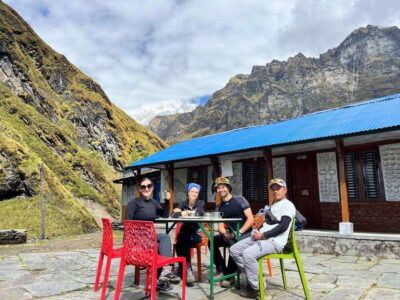
The social side may appeal to you as well. Shared games, dancing, and conversation were part of one particularly lively trip. Do not assume every group will have exactly that mood, but a private arrangement gives you a better chance to shape the atmosphere.
What to pack for the ABC trek
The supplied packing advice is sensible, though it includes both light and cold-weather clothing because conditions change sharply with altitude.
Bring:
- Passport or ID card
- Hiking shoes and trekking gear
- Sleeping bag
- T-shirts, long pants, shorts, and a warm jacket
- Sunglasses and sunscreen
- Towel
- Cash
- Camera
Cash matters because personal costs such as drinks, water, showers, charging, laundry, and extra porter help are not covered. A sleeping bag is specifically recommended, so do not assume every overnight stop will provide everything you need for warmth.
Who should book this trek?
I would recommend it to you if you want a focused Himalayan trek with a clear goal, daily walking of roughly four to seven hours, and the convenience of starting and finishing in Pokhara.
It suits people who enjoy mountain walking, changing scenery, village stays, and a private guide. The hot spring is a real bonus if you like ending an active trip with a simple recovery stop rather than another sightseeing day.
I would hesitate if you have no experience with sustained walking or if you dislike rapid altitude gain. The route reaches 4,130 meters in four days, and the schedule leaves little room for a slow acclimatization plan.
You also need to arrange your own travel and rescue insurance. That is not a minor detail on a high-altitude trek. The included medical kit and guide support are useful, but they do not replace insurance.
Booking advice and final verdict
I would book this trek if the $200 price is confirmed for the full package you want and you understand what remains extra. Ask specifically about meals, transport type, porter cost, accommodation, and the exact guide assigned to your group.
The strongest reasons to choose it are the varied route, the dramatic base camp finish, private guiding, and the hot spring at Jhinu Dada. The main weaknesses are the compressed altitude gain, long descent from base camp, basic mountain accommodation, and uncovered insurance and personal costs.
For a one-week ABC experience from Pokhara, this is a good-value choice for a reasonably fit walker who wants help with permits, transport, meals, and route planning. Give yourself time to walk steadily, pack for cold conditions, and let the guide control the pace. If you can do that, the trip offers a satisfying balance of hard walking, mountain scenery, village life, and well-earned relaxation.
FAQ
How long does the Annapurna Base Camp trek take?
The experience lasts seven days, beginning and ending in Pokhara. The route includes four main uphill walking days, a descent to Sinuwa, a walk to Jhinu Dada, and the return journey to Lakeside Pokhara.
What is the highest point of the trek?
Annapurna Base Camp is the highest point, at 4,130 meters. You reach it on day four after walking from Deurali.
Is the hot spring included?
The route includes a stop at Jhinu Dada on day six, where you can soak in the natural hot spring. Any separate entrance fee is not included in the stated package information.
What transportation is provided?
The plan uses a jeep from Lakeside Pokhara toward Matqui on day one, a jeep from Jhinu Dada toward Pokhara on day seven, and walking between the main overnight stops. The full package includes deluxe transportation according to the number of people, while the non-full package uses shared bus transportation.
Are meals included during the trek?
All breakfast, lunch, and dinner during the trek are included with the full package. Drinks, bottled or boiled water, and meals in Pokhara are not included.
Is a porter included?
A porter is not included, but porter service is available for an additional purchase. You should also bring or arrange a sleeping bag, as it is included on the recommended packing list rather than clearly listed as supplied.
More 7-Day Experiences in Annapurna Region
- Pokhara: 7 Day Annapurna Base Camp Trek
★ 4.9 · 38 reviews - Annapurna Base Camp Trek from Pokhara 7 Days
★ 5.0 · 19 reviews - 7-Day Trek to Annapurna Base Camp from Pokhara
★ 5.0 · 12 reviews - Annapurna Base Camp 7 Days Trek from Pokhara
★ 5.0 · 8 reviews
Just added around Annapurna Region
- 4 Day Mardi Himal Base Camp Trek from Pokhara★ 5.0 · 18 reviews
- 7-Day Trek to Annapurna Base Camp from Pokhara★ 5.0 · 12 reviews
- Private 4 Day Poon Hill Trek from Pokhara★ 5.0 · 16 reviews
- Annapurna Base Camp Trek from Pokhara and Kathmandu★ 5.0 · 7 reviews
- 6 days Annapurna Basecamp Trek★ 5.0 · 16 reviews
- “Exclusive Round-Trip Transfer: Pokhara to Jomsom & Muktinath”★ 5.0 · 11 reviews
- Poon Hill Ghandruk Circuit Trek from Pokhara 4 Days★ 5.0 · 10 reviews
- Pokhara: Poon Hill Ghorepani Short Trek★ 5.0 · 6 reviews
Annapurna Base Camp Treks, compared.
Kathmandu to Annapurna Base Camp (ABC) 5-Day Trek
Read our review →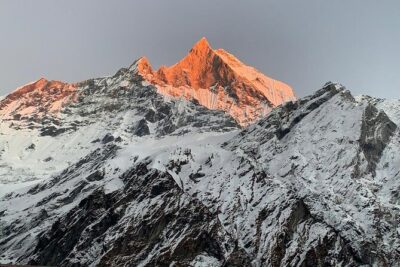
Kathmandu/Pokhara: 5-Day Annapurna Base Camp (ABC) Trek
Read our review →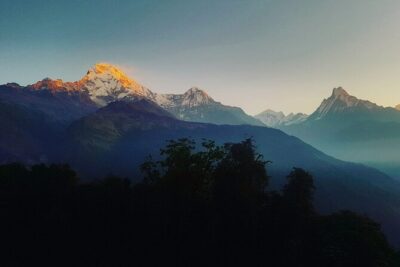
11-Day Hike Tour to Annapurna Base Camp Bliss in Kathmandu
Read our review →Browse the lists this tour appears in