Reviewed · HIKING & TREKKING
Kanchenjunga Circuit Trek 19 Days
Kanchenjunga is the rare Himalayan trek that gives you both North and South Base Camps without the crowds found on Nepal’s better-known routes. You move from jungle and river valleys to glacier country, passing through small villages where tourism still feels young. I like the quiet trail and the range of scenery, from bridges over the Ghunsa Khola to the stark moraines near Pang Pema. I also like that flights, permits, guides, porters, tea houses, and remote jeep transfers are included.
The main catch is the approach and return. Long 4×4 rides connect the trail to the airports, and the food and lodging are basic. This is a serious trek for fit hikers, not a polished lodge holiday. The $2,000 price is fair for the amount of transport and staff included, but you need to budget for snacks, drinks, showers, Wi-Fi, charging, tips, insurance, and possible extra nights.
Key points to know before booking
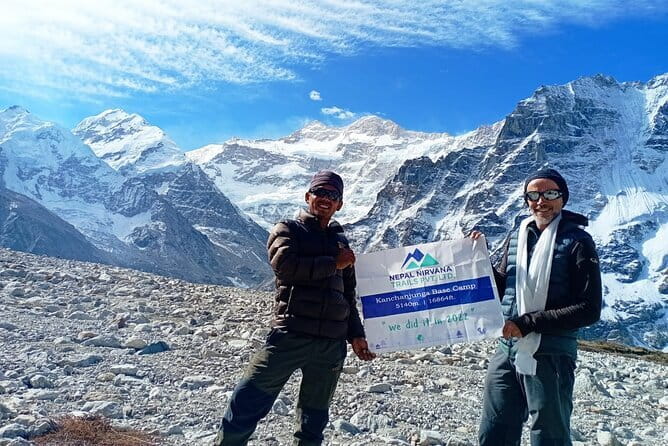
- Two base camps in one trek: Reach Pang Pema, the North Base Camp, then cross high passes toward the South Base Camp area and Yalung Glacier.
- A quiet eastern Nepal route: Villages and tea houses are less developed than on the Annapurna or Everest routes, which means fewer crowds and fewer comforts.
- Remote access is part of the trip: Domestic flights cover Kathmandu to Bhadrapur and back, but long private jeep rides connect Bhadrapur with the trail.
- Small-group format: The maximum group size is eight people, with one porter shared between every two hikers.
- Strong support system: Guides are licensed and first aid trained, with salaries, food, equipment, and insurance included.
- High-altitude demands: The itinerary reaches passes above 4,600 meters and requires a strong level of fitness.
Why Kanchenjunga feels different from Nepal’s famous routes
Kanchenjunga sits in Nepal’s far east, close to the border with Tibet and India. The circuit feels remote from the start. You are not walking through a steady chain of large trekking villages with busy dining rooms and many lodge choices. Instead, the route moves through modest settlements, rough roads, quiet forests, and high valleys.
That remoteness is the point. You get a stronger sense of mountain travel as it once was, when the village itself mattered more than the tourist infrastructure. The trade-off is clear: fewer crowds and more solitude, but also simpler rooms, basic meals, and less flexibility if weather or road conditions change.
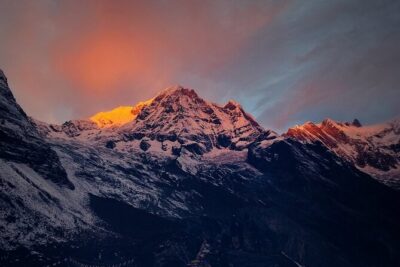
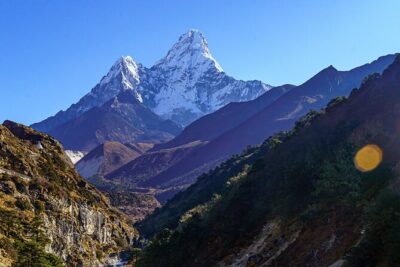
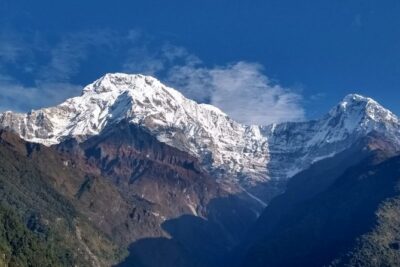
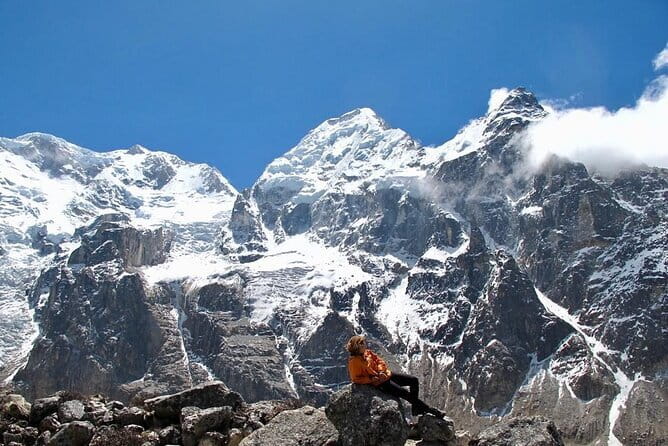
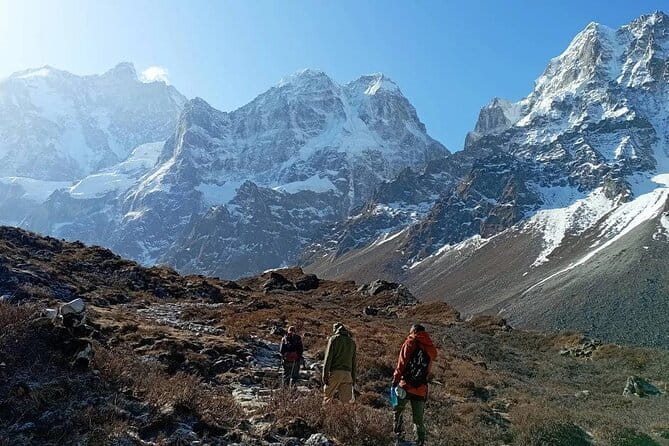
The scenery changes steadily. Lower sections bring dense woodland, rivers, suspension bridges, and Nepali villages. Higher up, pine forest gives way to open slopes, glaciers, stone huts, and huge walls of snow and rock. Kanchenjunga is the fixed star of the trip, but you also see peaks around Rathong, Kabru, and the Yalung Glacier.
More trekking days out of Kathmandu:
- Nagarkot Sunrise View and Day Hiking from Kathmandu
★ 5.0 · 471 reviews - Kathmandu: Nagarkot Sunrise View & Morning Hike with Lunch
★ 4.9 · 188 reviews - Kathmandu: Nagarkot Sunrise and Hike Tour to Changu Narayan
★ 4.7 · 151 reviews
Days 1 and 2: Kathmandu permits and preparation
Your first day begins with an airport pickup in Kathmandu. A representative meets you at Tribhuvan International Airport and takes you to a hotel in Thamel. The hotel stay is included for three nights in total, with breakfast, giving you time to recover from the flight and sort out gear.
Day 2 is practical rather than scenic. The management team collects your original passport around 9 a.m. to prepare the trekking permits. You receive it back later in the day at the company office. This is also the time to check your equipment, confirm the route, and ask about the pace, food, porter arrangements, and altitude plan.
I would use this day carefully. Buy personal snacks and any preferred drinks in Kathmandu, since choices become limited once you leave the city. Travel insurance must include emergency rescue and evacuation, and it is not included in the package.
Days 3 and 4: Bhadrapur, Taplejung, and the rough road to Sekathum
The journey east begins with a domestic flight from Kathmandu to Bhadrapur, also called Chandragadhi Airport. The flight takes about 45 to 50 minutes. From there, a private jeep follows the Mechi Highway through Kanyam toward Taplejung.
Kanyam is known for its tea-growing area, and the road gives you a first look at the greener, lower hills of eastern Nepal. This is not a quick transfer. The driving day can take much of the day, and the roads become rougher as you move toward the trailhead.
On Day 4, another local jeep takes you from Taplejung to Sekathum. Many route plans have hikers walk part of this approach, but this version uses a vehicle to save time and energy for the high country. That is useful, though you should not underestimate the ride. A long jeep trip on mountain roads can be tiring, especially after the flight and previous drive.
The inclusion of a private jeep is one of the package’s strongest practical benefits. Reaching Kanchenjunga without organized ground transport can be awkward and expensive. Here, the transfers are arranged, but you still need patience.
Days 5 to 7: Ghunsa Khola, Amjilosa, Gyabla, and Ghunsa
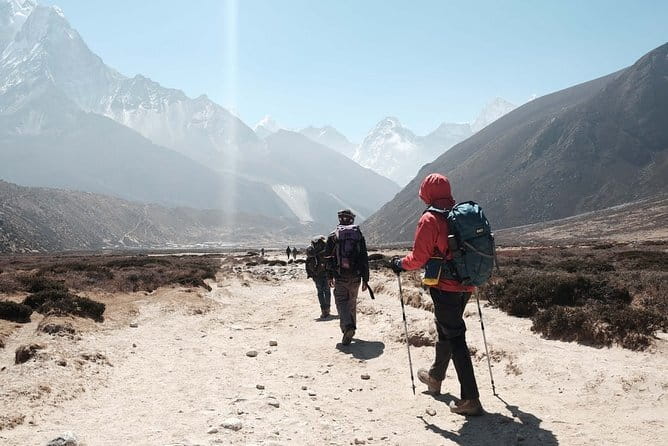
The walking begins at Sekathum. The route rises beside the Ghunsa Khola, crossing bridges and moving through thick forest. This first hiking day introduces the rhythm of the circuit: steady uphill work, narrow paths, river noise, and small settlements separated by long stretches of woodland.
Amjilosa is a simple overnight stop. The facilities are basic, and meal choices are limited. The operator specifically advises choosing vegetarian food on the trek, a sensible approach when kitchens are small and supplies must be carried in from far away.
From Amjilosa, the trail continues to Gyabla, also called Kyapra. You pass through dense forest with no regular human settlement for part of the day. The quiet is a major attraction, but it also means you should keep your water, snacks, and warm layers easy to reach.
Day 7 brings you through Phale village and onward to Ghunsa. Ghunsa is an important stop in the route, both for its size and for acclimatization. It is a place to slow down, eat, and prepare for the higher valley ahead.
This section is ideal for hikers who enjoy changing scenery rather than checking off famous viewpoints every few hours. It is also where the physical effort begins to feel real. You gain altitude over several days, and the trail does not offer the easy comfort of a developed resort area.
More days out in Kathmandu:
- Private Kathmandu Sightseeing Tour | UNESCO World Heritage sites
★ 5.0 · 756 reviews - Half day cooking class in Thamel kathmandu
★ 5.0 · 607 reviews - Kathmandu: Full Day 7 UNESCO Tour with Lunch – Private/Group
★ 5.0 · 415 reviews - Kathmandu: Local Women-Led Nepali Cooking & Momo Class
★ 4.9 · 360 reviews
Days 8 and 9: Khambachen and a needed acclimatization day
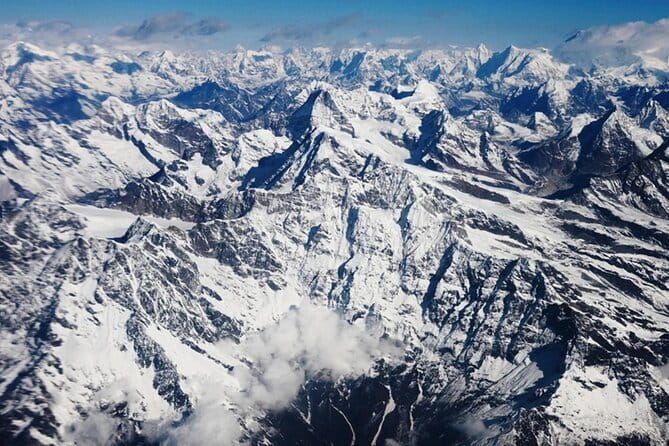
From Ghunsa, the trail climbs through open pine forest toward Khambachen. The route becomes more exposed, and the surrounding peaks begin to dominate the view. Blue sheep may be visible, and there is a chance of spotting signs of snow leopard habitat, though wildlife sightings are never guaranteed.
The path crosses areas prone to landslides. Your guide’s experience matters here, especially when judging the safest line across loose ground. Stay close to the group and follow instructions rather than rushing ahead for photographs.
Khambachen is the base for Day 9, a rest and acclimatization day. You take a short hike toward nearby glaciers, lakes, and viewpoints, then return to the same tea house. This is not a wasted day. At altitude, a gradual schedule gives your body a better chance to adjust and lets you see more without carrying your main pack.
Expect Khambachen to be basic. There may be a sense of a busy meeting point during the main season because groups heading toward North Base Camp pass through. Still, it is far quieter and less built-up than the classic routes near Everest.
Days 10 and 11: Lhonak and the North Base Camp at Pang Pema
The trail from Khambachen follows the Kanchenjunga Glacier toward Lhonak. The terrain becomes more severe, with moraine paths, bare slopes, stone structures, and an increasing amount of ice and rock. The mountain scenery is the reason to accept the long approach and simple lodging.
Lhonak is the final overnight point before the North Base Camp. Conditions here are sparse, and the cold can be sharp. Pack warm clothing where you can reach it quickly, and do not count on a hot shower or reliable charging. Those comforts cost extra when available.
Day 11 is the walk to Pang Pema, Kanchenjunga’s North Base Camp. The trail follows the moraine and climbs gradually toward the base camp area. The reward is a close view of the mountain and its surrounding peaks, with broad, austere scenery in every direction.
This is one of the trip’s defining days, but it is not a casual sightseeing stop. You are walking at high altitude over uneven ground, and the return to Lhonak or the next overnight point depends on the route plan and conditions. Listen to your guide, keep a measured pace, and treat headache, dizziness, or unusual fatigue seriously.
Days 12 to 14: Returning to Ghunsa and crossing the high passes
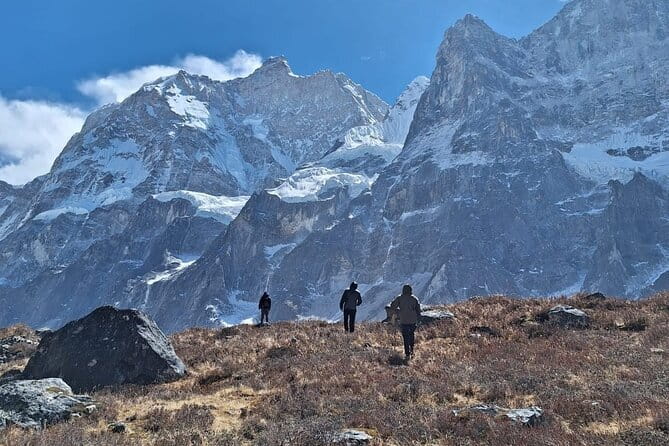
After Pang Pema, you retrace the route through the high valley toward Ghunsa. The return gives you a second look at the glacier country, often from a different angle and in different light. Repeating part of the trail may sound less exciting on paper, but it allows you to appreciate details missed on the way up.
Day 13 turns away from the route to Gyabla and climbs toward Sele Le. The forest is dense, and there are isolated settlements with only a few tea houses. These lodges may operate only during the trekking season, so accommodation is more limited here than in Ghunsa or Kathmandu.
Day 14 is one of the hardest and most scenic days. From Sele Le, you cross Sinion La at 4,440 meters, Mirgin La at 4,480 meters, and Sinelapche Bhanjyang at 4,645 meters. The views open across a wide sweep of high peaks, and the change from forest to pass country is dramatic.
The numbers matter. These are high passes, and the route can feel demanding even for fit hikers. A strong hiking background helps, but altitude affects people differently. You should be prepared for a slow day, changing weather, and a trail with limited shelter.
Days 15 and 16: Yalung Glacier and the southern side of Kanchenjunga
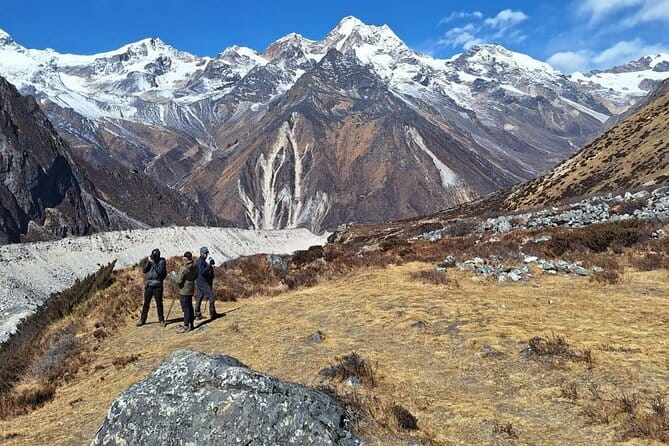
The route now enters the Yalung Glacier area. From the higher trail, you see Rathong at 6,682 meters and Kabru at 7,412 meters. The glacier and surrounding peaks give this part of the circuit a different character from the North Base Camp approach.
The scenery is impressive, but the ground remains rough and the altitude remains serious. You may find the cold, wind, and glare tiring, so sunglasses, sun protection, gloves, and layered clothing are useful personal items to bring.
On Day 16, the trail turns downhill through rhododendron forest and along the Simbuwa Khola toward Tortong. The descent offers relief after the passes, though downhill walking can be hard on knees and thighs. Tortong marks a clear shift back toward thicker vegetation and warmer conditions.
This north-to-south change is what makes the circuit so satisfying. You do not simply walk to one viewpoint and return. You pass through several ecological zones, each with its own trail feel and mountain outlook.
Days 17 to 19: Yamphudin, Kanyam, and the flight back
From Tortong, the route descends toward Amji Khola, passing Lasiya or Lamite Bhanjyang at 3,415 meters and Dhupi Bhanjyang at 2,665 meters. After steep sections, you reach Yamphudin, a village that feels like a return to settled country.
Day 18 follows the Kabeli Khola and leaves the mountain villages behind. A vehicle then takes you toward Kanyam, where tea cultivation provides a pleasant contrast to the glacier valleys. This transition is another long road day, so do not plan a tight international connection immediately afterward.
On the final day, you spend some time around Kanyam’s tea-growing area before the two to three-hour drive to Bhadrapur. The return flight to Kathmandu takes about 45 to 50 minutes. You are dropped at your Kathmandu hotel, but an extra night in Kathmandu is not included if you need one.
What the $2,000 price really covers
At $2,000 per person, this is not a budget walk, but the package includes a lot of costly logistics. You get three nights in a three-star Kathmandu hotel with breakfast, domestic flights, private jeep transport on the remote approach and return, permits, tea-house accommodation, a licensed guide, and one porter for every two hikers.
The guide and porter package includes salary, food, equipment, insurance, and basic first aid support. Breakfast is included for 18 days, lunch for 17, and dinner for 16. That structure matches the route, though you pay separately for meals or hotel nights outside the listed schedule.
The price does not cover international flights, a Nepal visa, rescue or evacuation insurance, drinks, snacks, bottled water, Wi-Fi, battery charging, hot showers, or tips. These extras can add up, particularly on a three-week trip. Still, the combination of flights and private ground transport gives this package solid value for a remote circuit.
The group is capped at eight people, which is a useful balance. You get the support of a team without joining a large procession. Ask in advance who your guide will be. Raj and Jangbu have led this route for the operator, while Abinta has also received strong praise for her care and understanding of the region. Staff assignments can change, so confirm the name rather than assuming.
Food, lodging, and the practical side of the trek
Tea-house rooms are part of the authentic appeal, but they are not hotel rooms. Expect simple accommodation and basic food, especially in the higher and more isolated settlements. Vegetarian meals are recommended, and you should carry favorite snacks from Kathmandu.
Bring cash for personal spending, since the package excludes drinks, water, charging, Wi-Fi, and hot showers. A power bank is useful, though you should not rely on charging access every night.
You need a strong level of physical fitness. The route includes steep ascents, long descents, rough ground, high passes, glacier approaches, and several extended transfer days. Good staff support helps, but it cannot replace preparation.
Free cancellation is available if you cancel at least 24 hours before the scheduled start. Inside that window, the payment is not refunded, and changes are not accepted. Confirm the local start time before making changes.
Should you book the Kanchenjunga Circuit?
Book this trek if you want quiet trails, major mountain scenery, and both sides of Kanchenjunga. It suits fit hikers who accept basic tea houses, long road transfers, limited food choices, and a route that feels less developed than Everest or Annapurna.
Think twice if you want short transfers, polished lodges, flexible meal choices, or a relaxed walking holiday. The North Base Camp, high passes, and Yalung Glacier are worth the effort, but the approach roads and altitude make this a demanding undertaking.
For the right person, the $2,000 package is a sensible way to handle a complicated remote route. Confirm the assigned guide, check exactly what insurance is required, prepare for basic conditions, and arrive ready to walk steadily rather than race. If that sounds appealing, Kanchenjunga offers one of Nepal’s finest long-distance mountain journeys.
FAQ
How long is the Kanchenjunga Circuit Trek?
The trek lasts approximately 19 days, including Kathmandu preparation, domestic flights, jeep transfers, walking days, acclimatization, and the return to Kathmandu.
Does the trek reach both Kanchenjunga Base Camps?
Yes. The itinerary reaches the North Base Camp, also called Pang Pema, and continues through the high passes toward the southern side and Yalung Glacier area.
What is included in the $2,000 price?
The price includes trekking permits, three nights in a three-star Kathmandu hotel with breakfast, tea-house accommodation, a licensed guide, porters, guide and porter costs, private jeep transfers, domestic flights between Kathmandu and Bhadrapur, meals listed in the package, taxes, and basic first aid supplies.
Is the Kathmandu airport pickup included?
Yes. An airport representative meets you at Tribhuvan International Airport and transfers you to the booked hotel in Thamel.
How difficult is this trek?
You need a strong level of physical fitness. The route includes high-altitude walking, glacier and moraine trails, steep sections, and passes reaching 4,645 meters.
Are food and drinks included throughout the trek?
Breakfast, lunch, and dinner are included for the specified number of days, but personal snacks, beer, soft drinks, juice, bottled water, and other personal purchases are not included. Vegetarian food is recommended.
What happens if I need to cancel?
You can receive a full refund if you cancel at least 24 hours before the experience starts. Cancellations or changes made less than 24 hours before the start time are not accepted for a refund.
Just added around Kathmandu
- Traditional Momo Making Class★ 5.0 · 10 reviews
- Women Empowerment Project(Nepali cooking class & jewelry workshop★ 5.0 · 15 reviews
- Manthali Airport (Ramechhap) To Kathmandu – Transport Service★ 4.5 · 11 reviews
- Amazing 1 Day Trekking Experience in Kathmandu Nepal★ 5.0 · 24 reviews
- Walking tour of Kathmandu with awesome local guides★ 5.0 · 4 reviews
- Walking tour of real Kathmandu through back streets.★ 5.0 · 3 reviews
- Private Manaslu Circuit Trek at Himalayas★ 5.0 · 3 reviews
- Walking Street Food Tour in Kathmandu★ 5.0 · 111 reviews
Hiking & Trekking, compared.
Nagarkot Sunrise View and Day Hiking from Kathmandu
Read our review →