
Reviewed · COOKING CLASSES
Cook and Eat: Cooking Class in Kathmandu near Thamel
The best part of this Kathmandu cooking class is that you do not simply watch a chef work. You choose three dishes, visit a local market for ingredients, then prepare and eat the meal yourself. That makes the class a useful introduction to Nepali food, not just a pleasant lunch.
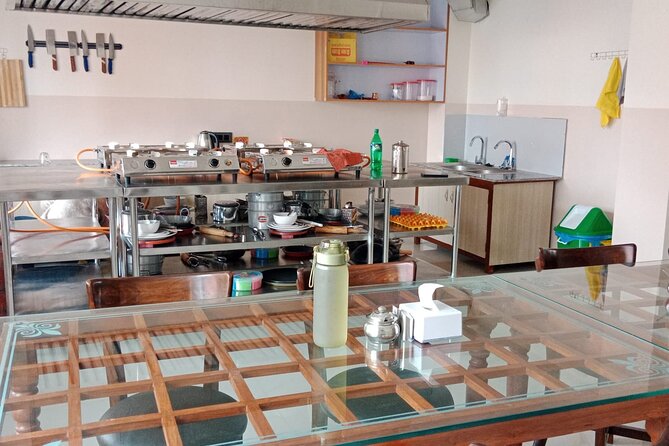
I like the small-group feel, with a maximum of 15 people, and the chance to adjust how hands-on you want to be. I also like the practical teaching: Chef Vikram and Kamal work in a clean kitchen, explain the process in English, and show you recipes you can try at home. The main consideration is that the menu choice and exact class details should be confirmed when you book, since the supplied information does not list every available dish.
Key points at a glance
- Choose three Nepali dishes: Build your own menu instead of cooking a fixed set of recipes.
- Shop before you cook: A guided local-market visit connects the meal with the ingredients behind it.
- Cook in a clean kitchen: The class uses kitchen equipment, ingredients, a chef, and a helper.
- Meet Chef Vikram and Kamal: Their names are associated with the cooking session, with instruction available in English.
- Eat what you prepare: Food made during the class is included, along with tea or coffee at the beginning and end.
- Plan for about three hours: The experience starts and finishes at Shepherd Holidays on Yapikhya Marg, near the Thamel area.
Why this class works well near Thamel
Kathmandu can feel like a lot to take in at once. A cooking class gives you a calmer way to understand the city through food. Instead of only ordering momos or dal bhat in a restaurant, you learn what goes into them, how the ingredients are handled, and how the dishes fit into everyday Nepali cooking.
The meeting point is Shepherd Holidays on Yapikhya Marg, Kathmandu 44600. The activity returns there at the end, so you do not need to arrange a second meeting location. Private pickup and drop-off are available for an extra charge, but they are not part of the basic $24 price.
At this cost, the class offers good value if you want both a meal and an activity. Your fee covers ingredients, equipment, instruction from the chef and helper, and the food prepared during the session. It is not simply a demonstration where you watch someone else cook and then pay again for lunch.
The group can include up to 15 people. That is still a manageable size for a class, though your experience may feel more personal if fewer people attend. One session had only three participants, which allowed plenty of room for individual involvement. If you prefer a quiet, highly personal lesson, ask about the expected group size before booking.
More Cooking Classes in Kathmandu
- Half day cooking class in Thamel kathmandu
★ 5.0 · 607 reviews - Kathmandu: Local Women-Led Nepali Cooking & Momo Class
★ 4.9 · 360 reviews - Kathmandu: Local Lead Nepali Cooking & Momo-Making Class
★ 5.0 · 212 reviews
Starting with tea, introductions, and three choices
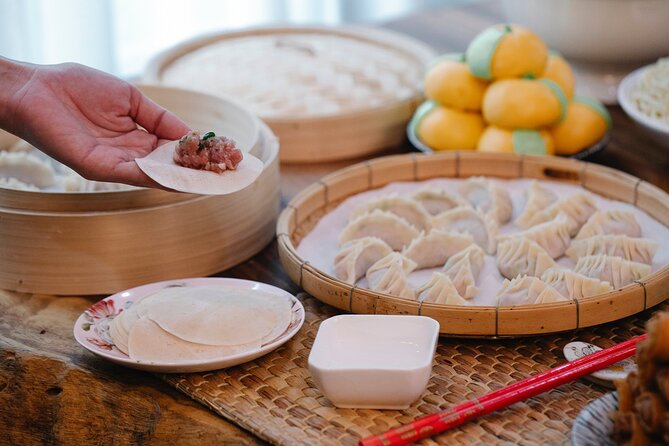
The first stage begins with tea or coffee and an introduction to the staff. This is a useful start because you have time to settle in, meet the people leading the class, and ask questions before handling food.
You then choose three dishes from the menu. This is one of the strongest features of the experience. A fixed menu can be easy for the organizer, but choosing your own food gives you control over the lesson. You might select familiar dishes, or you might use the opportunity to try something you have not yet tasted.
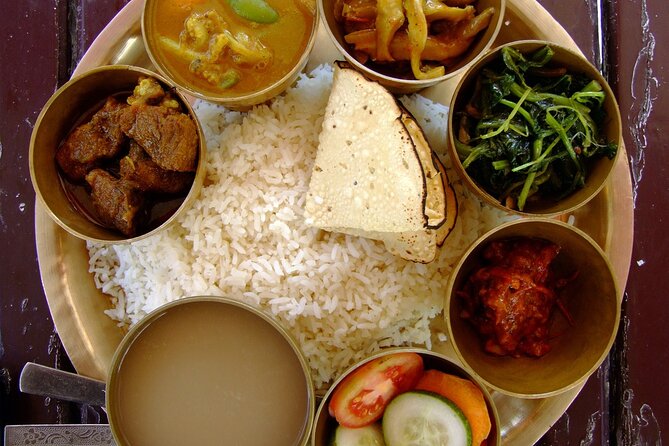
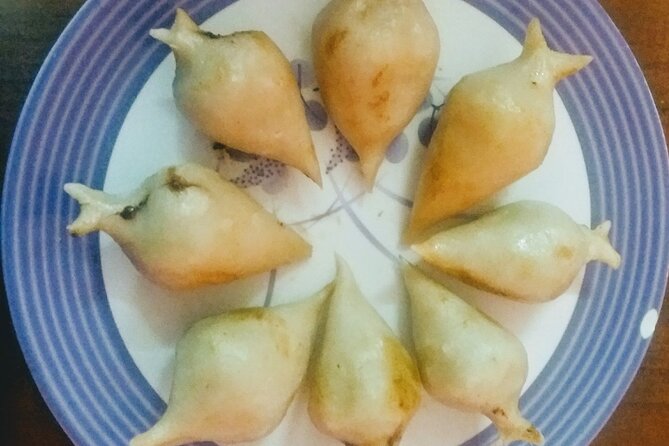
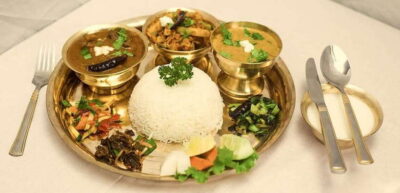
One participant selected thukpa, dal bhat, and yomari. That combination gives you a good spread of Nepali food: noodle soup, the country’s best-known rice-and-lentil meal, and a sweet steamed preparation. Momos are another clear choice if you want to learn a dish that is both popular and practical to recreate at home.
The menu is not reproduced in the available details, so do not assume every dish will be offered every day. If you have a particular goal, such as learning momos or dal bhat, confirm that dish is available when you book.
Visiting the local market for ingredients
Before cooking begins, a guide takes you to a local market to gather ingredients. This short outing gives the class a useful connection to Kathmandu life. You see the food as an ingredient first, rather than as a finished plate arriving at a restaurant table.
The market visit also helps explain why the recipes taste the way they do. Nepali dishes often depend on a mix of fresh produce, spices, lentils, noodles, rice, and other basic foods. Buying the ingredients before preparing them makes the recipe feel less mysterious and more possible to repeat.
Do not expect a long sightseeing tour. The purpose is to collect what you need for the class. Still, this part adds local context that a cooking demonstration in a hotel kitchen would miss.
If you want to take photographs, be respectful and follow the guide’s lead. The supplied details do not promise a set amount of free time at the market, so keep your focus on the class schedule.
Cutting and preparing the food
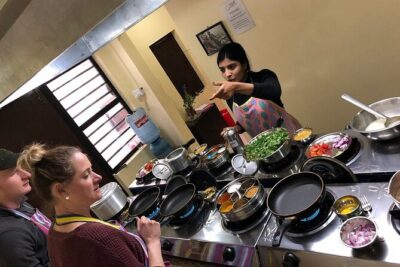
Back in the kitchen, you begin cutting and preparing the ingredients. This is where the class becomes properly hands-on. You learn the order of the work and start to see how several separate ingredients become one dish.
The level of participation can vary. You can take an active role or follow along more casually. I would choose the hands-on option if you have come to learn rather than simply eat. Cutting, shaping, mixing, and assembling are the steps most likely to help you repeat the recipes later.
The kitchen is described as clean and professional, with a chef and helper available during the session. That matters because cooking classes can become confusing when one instructor tries to manage every participant at once. The helper should make it easier to keep the work moving, though the exact division of duties is not specified.
The English instruction is another practical benefit. Chef Vikram is associated with the class, and the teaching is intended to explain the food clearly. You should still feel free to ask for a slower explanation or a repeat demonstration if a step is unfamiliar.
A completely different kind of day, same corner of Nepal:
- Private Kathmandu Sightseeing Tour | UNESCO World Heritage sites
★ 5.0 · 756 reviews - Nagarkot Sunrise View and Day Hiking from Kathmandu
★ 5.0 · 471 reviews - Kathmandu: Full Day 7 UNESCO Tour with Lunch – Private/Group
★ 5.0 · 415 reviews - Private Bhaktapur and Nagarkot Day Tour From Kathmandu
★ 5.0 · 305 reviews
Cooking with Chef Vikram and Kamal
Once the preparation is finished, the cooking begins. The chef leads you through the full process rather than stopping after a single technique. That full sequence is valuable because timing is often the hardest part of cooking Nepali food at home.
A well-run class should help you understand not only what to add, but when to add it and how to tell when the food is ready. The available information does not provide exact cooking times or a detailed recipe sheet, so bring a notebook or use your phone for notes if the instructor allows it.
Chef Vikram and Kamal are the named members of the cooking team. The supplied details do not define each person’s exact role, but both are connected with the class environment. One participant described the setting as professional and the instruction as clear in English.
The strongest practical tip is simple: stay involved. If you stand back, you may enjoy the social side but miss the small details that make the recipe work. Ask about quantities, heat levels, preparation order, and substitutions before the food is served.
Eating the food you prepared
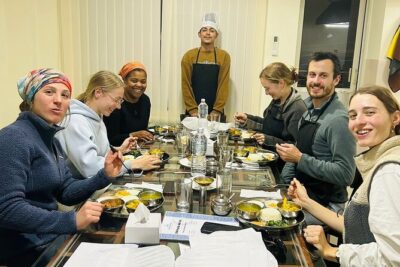
After the cooking is complete, the class serves the dishes and you eat together. This is more satisfying than being handed a meal because you have seen the work from market ingredients to finished food.
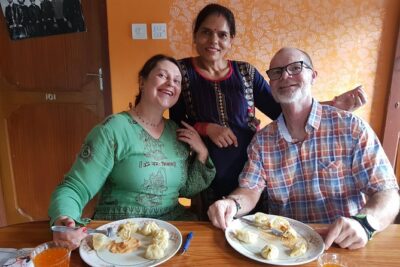
The momos received particular praise for their taste and for being easy enough to repeat at home. That is a good sign for anyone looking for a recipe with value after the holiday. A cooking class earns its price more fully when you leave with a skill, not only a full stomach.
If you choose dal bhat, you will be learning one of Nepal’s most familiar meal combinations. Thukpa gives you a different style of dish, with noodles and broth. Yomari adds a sweet course and a chance to work with a less familiar Nepali specialty.
The included food is the food prepared during the class. Tea or coffee is provided at the welcome and farewell stages. Other beverages are not included, so budget for anything beyond those stated drinks.
A friendly ending with tea or coffee
The final stage includes tea or coffee before you leave. It gives you a few last minutes to ask questions, finish eating, and say goodbye to the cooking team.
The experience ends back at the Yapikhya Marg meeting point. If you need to return to your hotel, arrange your own transport or pay for the optional private transfer. A manager has helped with a hotel return in at least one case, but that should not be treated as a standard inclusion.
The farewell is a small detail, yet it helps the class feel like a complete visit rather than a meal squeezed between sightseeing stops. You arrive, shop, prepare, cook, eat, and leave from the same place.
Is $24 a fair price?
At $24 per person, the class is reasonably priced for a three-hour activity that includes the ingredients, equipment, instruction, and meal. You are also paying for the market visit and the chance to prepare three dishes, which adds more value than a simple restaurant meal.
The value is strongest for people who enjoy learning by doing. If you only want to sample Nepali food, a restaurant may be cheaper and quicker. If you want to understand the cooking and take the method home, the class makes better sense.
Group discounts are available, though the exact discount is not stated. Ask about the reduced rate if you are booking with friends or family. With a maximum of 15 participants, larger groups may share the kitchen with others rather than receiving a private lesson.
Private pickup and drop-off cost extra. Since the class starts and ends at the same central meeting point, many people may prefer to arrange their own transport and keep the total price down.
Who should book this cooking class?
I would recommend this experience to you if you want a practical introduction to Nepali food during a short stay in Kathmandu. It suits first-time visitors who want more context than a restaurant meal can provide, as well as home cooks who enjoy collecting recipes abroad.
It also works for a mixed group. A confident cook can take on more tasks, while someone less comfortable in the kitchen can participate at a slower pace. The class is not presented as an advanced culinary course, so you do not need specialist skills.
Families and friends may like the choose-three format because each person can suggest a dish. Group discounts may help with the price. Couples or solo visitors should ask about the expected group size if they want a quieter class.
You may want to skip it if your schedule is very tight. Three hours is a real block of time, and the market visit, preparation, cooking, and meal all form part of the experience. It is also not the best choice if you want a private class with guaranteed hotel transport included.
Practical booking advice
Confirmation is provided at the time of booking. The experience requires good weather, and if poor weather forces a cancellation, you can choose another date or receive a full refund.
You can cancel for a full refund if you do so at least 24 hours before the start time. Cancellations or changes made less than 24 hours before the experience are not accepted for a refund. The cutoff follows Kathmandu local time, so check the exact start time before making plans.
Because beverages beyond the provided tea or coffee are excluded, carry enough money for personal purchases. Accommodation and personal expenses are also outside the price.
I would book this earlier in a Kathmandu visit if possible. That gives you time to return to a restaurant and recognize dishes you learned to make. It also gives you a chance to choose a different date if weather affects the class.
Should you book it?
Book this class if you want to eat Nepali food with a better understanding of how it is made. The market stop, choice of three dishes, hands-on preparation, and meal together form a well-balanced three-hour plan.
The class is especially appealing if momos are on your must-try list, or if you want to learn a meal such as dal bhat, thukpa, or yomari. Keep your expectations sensible: the group may include as many as 15 people, the full menu is not listed, and private transport costs extra.
For $24, it offers solid value and a useful skill to take home. Confirm your preferred dishes and the group arrangements, then book if you want a social cooking lesson rather than a quick Kathmandu lunch.
FAQ
How long does the cooking class last?
The class lasts approximately three hours.
Where does the activity start?
It starts at Shepherd Holidays on Yapikhya Marg, Kathmandu 44600, Nepal.
Where does the activity end?
The activity ends back at the meeting point on Yapikhya Marg.
How many dishes can I prepare?
You can choose three items from the available menu.
Are ingredients and cooking equipment included?
Yes. The price includes the ingredients and all equipment needed to prepare the food.
Are food and drinks included?
The food prepared during the class is included. Tea or coffee is provided at the beginning and before departure. Other beverages are not included.
Can I cancel for a full refund?
Yes, if you cancel at least 24 hours before the experience start time. Cancellations or changes made less than 24 hours in advance are not accepted for a refund.
More Workshops in Kathmandu
- Knife (Khukuri) Making Workshop- Forge of the Gurkhas
★ 5.0 · 143 reviews - The best Private Nepali Cooking Class in Kathmandu
★ 5.0 · 83 reviews - Kathmandu: Traditional Momo Making Class & Pickup
★ 4.8 · 60 reviews - Traditional Nepali Momo Making Classes
★ 5.0 · 53 reviews
More Food Tours in Kathmandu
- Kathmandu Food and Drink Walking Tour
★ 5.0 · 266 reviews - Kathmandu: Food and Drink Walking Tour
★ 4.9 · 119 reviews - Walking Street Food Tour in Kathmandu
★ 5.0 · 111 reviews - Secret Food Tour – Food Bites and Sights Kathmandu 14+ Testings
★ 5.0 · 82 reviews
Just added around Kathmandu
- Traditional Momo Making Class★ 5.0 · 10 reviews
- Women Empowerment Project(Nepali cooking class & jewelry workshop★ 5.0 · 15 reviews
- Manthali Airport (Ramechhap) To Kathmandu – Transport Service★ 4.5 · 11 reviews
- Amazing 1 Day Trekking Experience in Kathmandu Nepal★ 5.0 · 24 reviews
- Walking tour of Kathmandu with awesome local guides★ 5.0 · 4 reviews
- Walking tour of real Kathmandu through back streets.★ 5.0 · 3 reviews
- Private Manaslu Circuit Trek at Himalayas★ 5.0 · 3 reviews
- Walking Street Food Tour in Kathmandu★ 5.0 · 111 reviews
Cooking Classes, compared.
Nepalese Momos or Dal Bhat Cooking Class (Cook with Delight)
Read our review →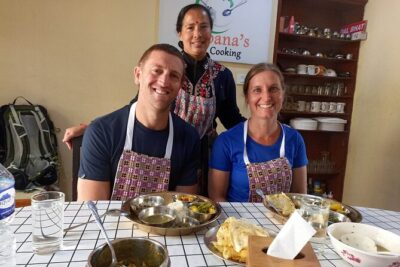
The best Private Nepali Cooking Class in Kathmandu
Read our review →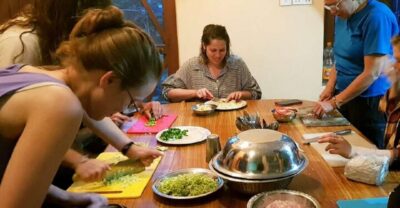
Nepalese Kitchen in Pokhara: Momos or Dal Bhat Cooking Class
Read our review →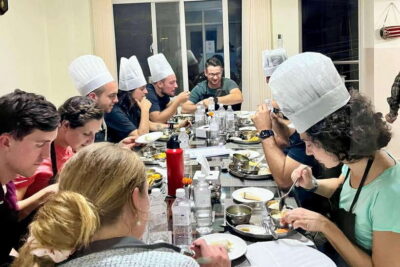
Browse the lists this tour appears in