
Reviewed · MOMO MAKING CLASSES
Kathmandu: Local Lead Nepali Cooking & Momo Making Class
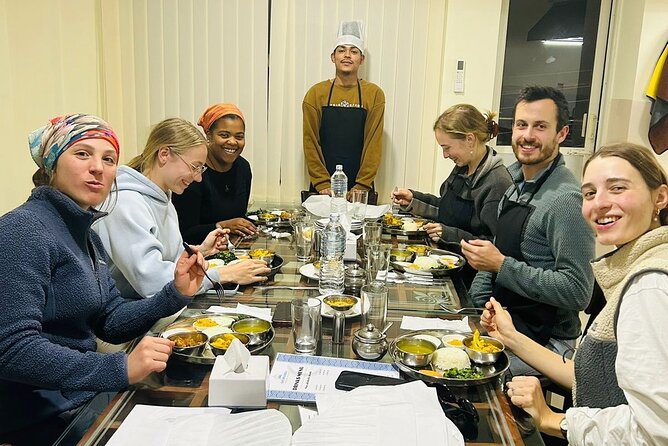
Kathmandu’s best food lesson may begin with a short walk to the market, not a recipe book. You’ll choose fresh ingredients, then return to the Kathmandu Cooking Academy to prepare momo, dal bhat, and other Nepali dishes with an English-speaking chef. I especially like the market stop and the chance to choose additional dishes, rather than being locked into one fixed menu.
I also like the small groups of up to 10 and the patient, practical teaching style. Past classes have included instructors such as Vikram and Niche, with clear help on tricky momo folds and simple steps you can repeat at home. The main caution is that the $4 price is remarkably low, so check the exact booking option, pickup choice, and minimum group requirement before you commit.
Key points at a glance
- Market first, kitchen second: Select fresh ingredients before the cooking begins, giving the meal a useful local context.
- Momo folding takes patience: You get hands-on practice with the pastry, not just a demonstration.
- Two main Nepali dishes: Momo and dal bhat form the core, with extra traditional dishes available.
- Small class, personal help: Groups are limited to 10, and some sessions use a chef plus assistants.
- A full meal at the end: You prepare, cook, and eat the food, with Nepali masala tea included.
- Easy from Thamel: The academy is about a 10 to 15 minute walk from Thamel, with optional hotel pickup.
Why this Kathmandu cooking class works
I like cooking classes that teach you something you can use after the holiday. This one does that with two foods you are likely to encounter all over Nepal: momo and dal bhat.
Momo are Nepali dumplings, usually filled, shaped, and cooked as a group. The folding looks easy until you try to keep the pastry closed and make a neat pattern. That is part of the fun here. You are not simply watching a chef put together a plate. You get to handle the dough and learn the folds yourself.
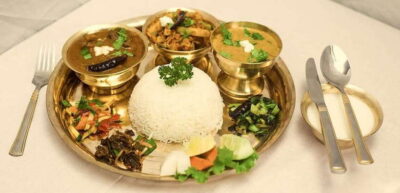
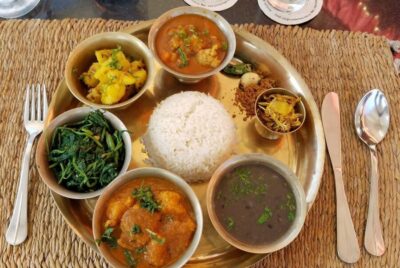
Dal bhat is Nepal’s familiar rice and lentil meal. It is a useful dish to learn because it shows how a simple combination becomes a complete meal through seasoning and side dishes. The class also lets you choose from other traditional options, so the exact menu can change according to the group’s decision and available choices.
The experience lasts about three to four hours, with roughly three hours normally covering the market visit, preparation, cooking, and meal. That is long enough to feel like a real activity, but not so long that it takes over your day in Kathmandu.
More Cooking Classes in Kathmandu
- Half day cooking class in Thamel kathmandu
★ 5.0 · 607 reviews - Kathmandu: Local Women-Led Nepali Cooking & Momo Class
★ 4.9 · 360 reviews - Kathmandu: Local Lead Nepali Cooking & Momo-Making Class
★ 5.0 · 212 reviews
Starting with a local market visit
The class begins at the Kathmandu Cooking Academy, unless you select hotel pickup. From Thamel, the academy is described as a 10 to 15 minute walk, making it easy to reach on foot if you are staying nearby.
Before cooking, you visit a local market or shop with the chef and buy fresh ingredients. This is a small but important part of the class. You see the raw materials before they become a finished Nepali meal, and the chef can explain what you are choosing and how it will be used.
Do not expect a long guided market tour with a separate sightseeing program. The market visit is tied to the cooking, so its purpose is practical. You are there to select ingredients, ask questions, and prepare for the kitchen.
That makes it especially useful if you want food knowledge rather than another quick Kathmandu stop. You can pay attention to the vegetables, herbs, spices, and other ingredients that later appear on your plate. Bring your camera if you want photographs, but keep it out of the way while carrying ingredients or working at the stove.
Inside the Kathmandu Cooking Academy
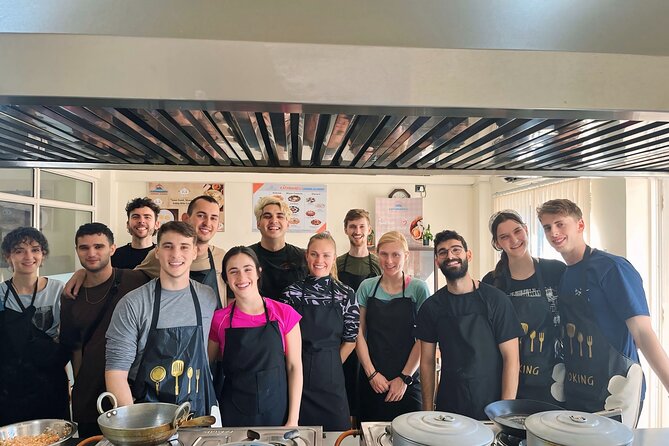
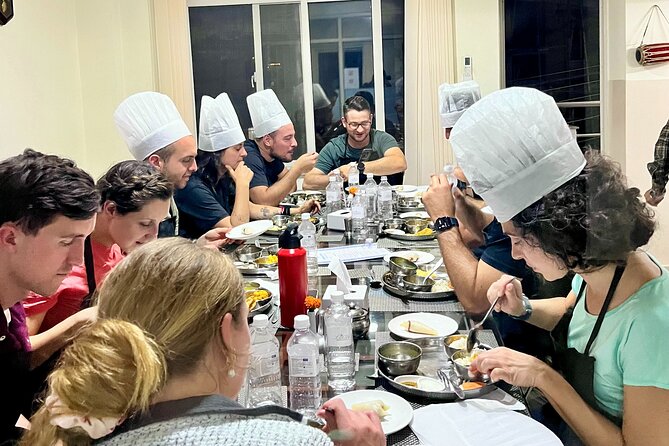
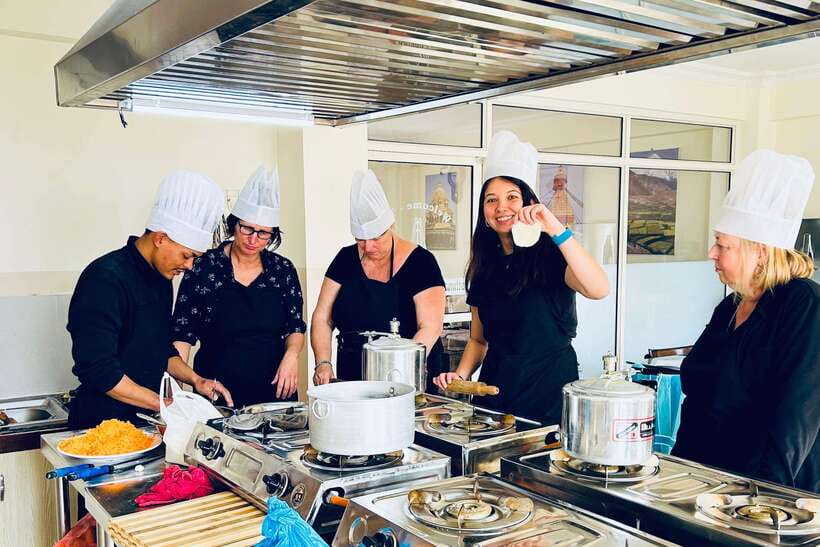
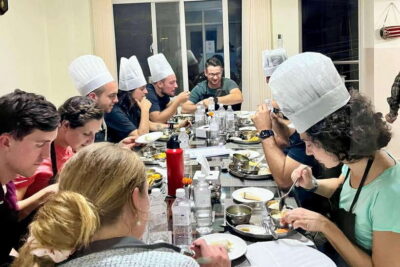
Back at the academy, you receive cooking equipment and accessories and begin preparing the food. The kitchen and dining room have been described as clean and well equipped, which matters when you are spending several hours chopping, shaping, cooking, and eating.
The teaching is step by step. English is the working language, and the class is designed for active participation. If you prefer to watch, you can follow the chef’s demonstration. If you want the full value, take over as much of the preparation as you can.
The best reports about the class focus on patience and clarity. Vikram has been praised for calm explanations and encouragement, while Niche has been described as energetic, funny, and engaging. The instructor you receive can vary, but the useful point is that the class is built around direct help rather than a fast professional kitchen routine.
Some sessions have included a chef with two assistants. That can be helpful in a group of nine or ten, since several people may be chopping, folding, or cooking at the same time. You should still arrive at least 15 minutes early so registration and setup do not cut into the practical portion.
Learning to fold momo
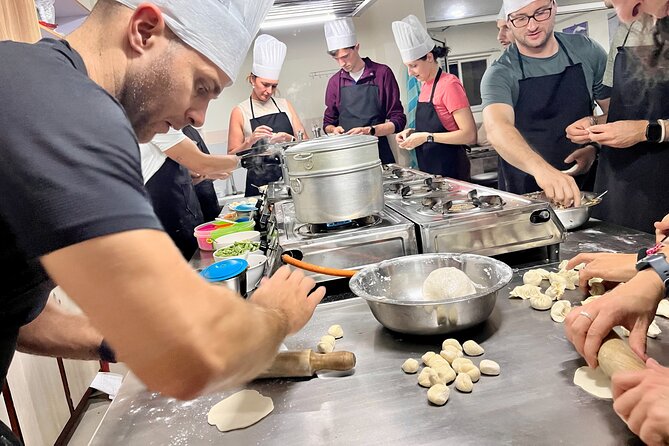
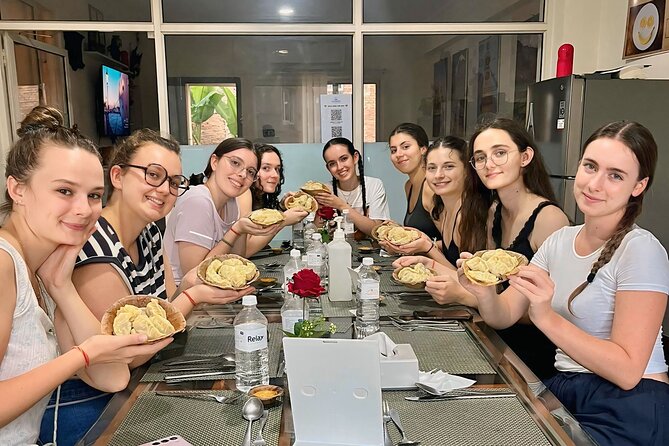
Momo making is the class’s most hands-on moment. You prepare the filling, work with the pastry, and learn how to close each dumpling. The folding pattern can take a few attempts, even when the instructor makes it look simple.
This is where a small group helps. With a limit of 10 participants, you have a better chance of getting the chef’s attention when your momo refuses to stay sealed or looks more like a tiny parcel than a neat dumpling.
Do not worry about producing perfect shapes on your first try. The point is to learn the basic method and understand how the pieces are assembled. The class is suitable for people who have never made momo, as well as home cooks who want to improve their technique.
The meal is also plentiful enough to make the work worthwhile. One useful tip is to arrive hungry. You will be preparing several dishes and then eating them, so this is not a small tasting session.
More Momo Making Classes in Kathmandu
- Kathmandu: Traditional Momo Making Class & Pickup
★ 4.8 · 60 reviews - Traditional Nepali Momo Making Classes
★ 5.0 · 53 reviews - Kathmandu: Local Women-Lead Nepali Cooking & Momo Class
★ 4.9 · 45 reviews - Rainbow Mo:Mo
★ 5.0 · 19 reviews
Dal bhat and the wider menu
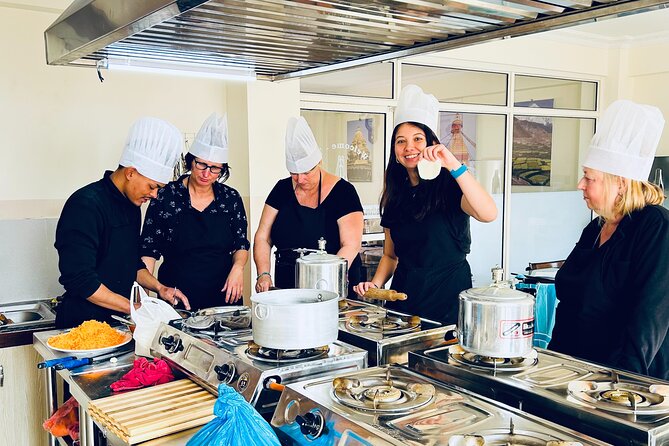
Momo and dal bhat are the main courses, but you may also choose additional Nepali dishes. The choices depend on the class, and the group may decide what to prepare.
This flexibility is a strength. One group may make three dishes such as momo, bara, and yomari, while another may choose a different combination. Bara and yomari give you a chance to try beyond the most familiar Nepali foods, though the exact menu is not fixed.
You should tell the academy about dietary restrictions or food preferences in advance. The class can be adjusted to suit your needs, but the information needs to reach the team before cooking begins.
The variety also makes this activity a good choice for repeat visitors to Kathmandu. If you have already eaten momo several times, learning another local dish gives the class more range. If you are new to Nepali food, the core combination of momo and dal bhat provides a clear starting point.
Sitting down to eat what you made
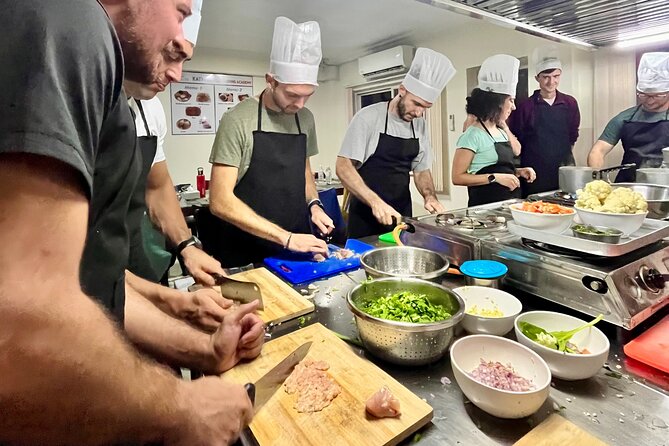
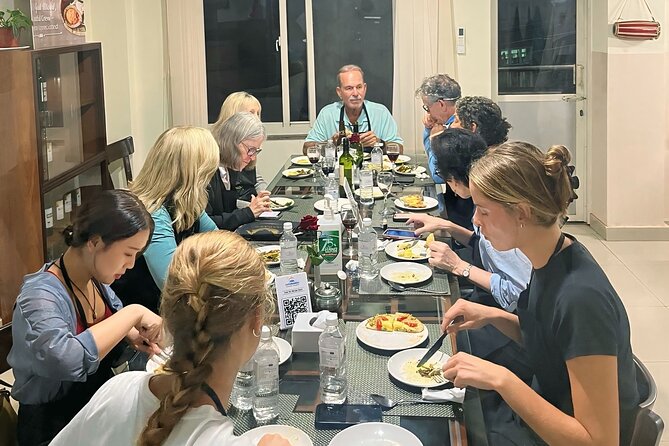
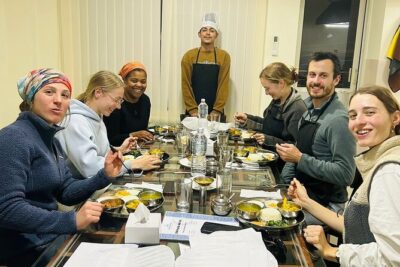
After the cooking, you sit down in the academy’s dining area and eat the dishes you prepared. This final meal is not an extra detail. It is the reward for the chopping, shaping, stirring, and waiting.
You also receive complimentary Nepali masala tea. It gives the session a pleasant finish and adds another small taste of local food culture without requiring you to order a separate drink.
Specialty drinks and alcohol are not included. Professional photographs and videos are also available only for an additional fee. You can bring your own camera, but the core experience is about cooking and eating rather than a formal photo session.
The food may be the most memorable part, but the real value is the confidence you take away. Clear instructions and simple steps can make traditional dishes feel manageable in your own kitchen. Several participants have found they could recreate the recipes at home, which is a good sign if you want more than a one-off meal.
Group size, timing, and pickup
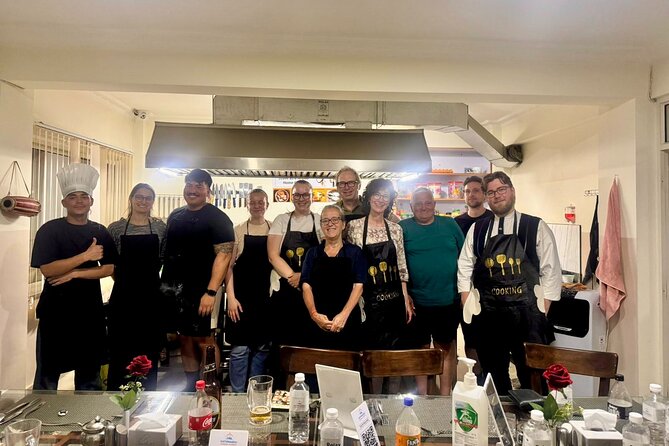
The class normally takes three to four hours, with the main activity lasting around three hours. Allow extra time if you choose hotel pickup and drop-off, since traffic and the distance from your accommodation can affect the day.
Pickup is optional and available from locations within Kathmandu Valley. If you choose it, provide your hotel details when booking. The driver meets you at your specified address and takes you to the academy, with return transport available afterward.
If you are staying in or near Thamel, walking may be simpler. The academy is only about 10 to 15 minutes away on foot. Kathmandu traffic can be slow, so the walk may also give you more control over your arrival time.
The minimum number of participants may be two. If that number is not reached, you are offered another date or a full refund. This is worth checking if you are booking alone or on a tight schedule.
The class is wheelchair accessible, but you should still share any access needs in advance so the staff can prepare appropriately. Children under five and people over 95 are not accepted for this activity.
Is the $4 price good value?
At $4 per person, this is unusually inexpensive for a three to four hour activity that includes instruction, ingredients, equipment, a full tasting session, and masala tea. If that price applies to the option you select, it is excellent value.
You should still inspect the booking details carefully. Hotel pickup may be a separate option, and specialty drinks, alcohol, and professional photos cost extra. The low base price may also explain why it is important to confirm the starting time and whether the minimum group requirement has been met.
For me, the value is strongest if you take part fully. You are paying for access to the chef, the ingredients, the kitchen, and the meal. Standing back while someone else does the work would miss the main reason to book it.
The lesson also has value beyond the day itself. Recipes, techniques, and momo folding skills can stay with you after Nepal. A restaurant meal ends when the plate is cleared. Here, you leave with something you can try again.
Who should book this experience?
I would recommend it to food-focused visitors, first-time cooks, and anyone who wants a slower activity between Kathmandu’s temples and city walks. It works particularly well early in a Nepal trip, since you can recognize the dishes later at restaurants and local eateries.
It also suits people who prefer small groups and direct instruction. The class limit of 10 is not private, but it is small enough for personal help. Couples, friends, solo visitors, and families with older children can all find a reason to book, provided the age rules and dietary needs work for them.
This may not suit you if you dislike group activities, cannot spend several hours standing or working in a kitchen, or want a fixed menu with no group choice. It is also not the right pick if you are looking only for a market tour. The market visit supports the cooking class and is not the main event.
Wear comfortable clothing. You will be actively preparing food, folding momo, and using kitchen equipment, so this is not an activity for your finest sightseeing outfit.
Booking advice and final verdict
You can cancel up to 24 hours before the activity for a full refund, and the reserve-now, pay-later option keeps your plans flexible. Check availability for starting times, arrive 15 minutes early, and send dietary requests ahead of time.
I would book this class if you want a useful, affordable way to meet Nepali food through your own hands. The market visit, patient momo instruction, flexible menu, clean kitchen, and shared meal give it more substance than a simple cooking demonstration.
Book it with realistic expectations. The market stop is short, the menu can vary, and pickup may depend on the option you choose. But if you arrive hungry and ready to work, this is one of the better low-cost ways to turn a Kathmandu meal into a skill you can carry home.
FAQ
Where does the Kathmandu cooking class begin?
The meeting point is the Kathmandu Cooking Academy in Kathmandu. It is about a 10 to 15 minute walk from Thamel.
Is hotel pickup available?
Yes. Hotel pickup and drop-off are available as an optional service from locations within Kathmandu Valley. Provide your accommodation details when booking.
How long does the activity last?
The full experience lasts about three to four hours. The market visit, cooking, and tasting session normally take approximately three hours.
Which dishes will I learn to cook?
Momo and dal bhat are the main dishes. You can also choose from additional traditional Nepali meals, depending on the available menu and the group’s decision.
Is the class taught in English?
Yes. English is the listed language for instruction.
How many people are in each group?
The class is limited to 10 participants. A minimum of two participants may be required for the session to operate.
Are ingredients and cooking equipment included?
Yes. The class includes the market or shop visit for ingredients, cooking equipment and accessories, step-by-step instruction, and tasting of the prepared food.
Is Nepali masala tea included?
Yes. Complimentary Nepali masala tea is included.
Can dietary restrictions be accommodated?
You should inform the academy in advance about dietary restrictions or preferences so the class can be tailored to your needs.
What should I bring and wear?
Bring a camera if you want photographs and wear comfortable clothing suitable for active cooking. You should also arrive at least 15 minutes before the class begins.
More Workshops in Kathmandu
- Knife (Khukuri) Making Workshop- Forge of the Gurkhas
★ 5.0 · 143 reviews - The best Private Nepali Cooking Class in Kathmandu
★ 5.0 · 83 reviews - Knife Khukuri Making Workshop
★ 4.9 · 38 reviews - Best Nepali Cooking Class in Thamel with Local Market Trip
★ 5.0 · 26 reviews
Just added around Kathmandu
- Traditional Momo Making Class★ 5.0 · 10 reviews
- Women Empowerment Project(Nepali cooking class & jewelry workshop★ 5.0 · 15 reviews
- Manthali Airport (Ramechhap) To Kathmandu – Transport Service★ 4.5 · 11 reviews
- Amazing 1 Day Trekking Experience in Kathmandu Nepal★ 5.0 · 24 reviews
- Walking tour of Kathmandu with awesome local guides★ 5.0 · 4 reviews
- Walking tour of real Kathmandu through back streets.★ 5.0 · 3 reviews
- Private Manaslu Circuit Trek at Himalayas★ 5.0 · 3 reviews
- Walking Street Food Tour in Kathmandu★ 5.0 · 111 reviews
Momo Making Classes, compared.
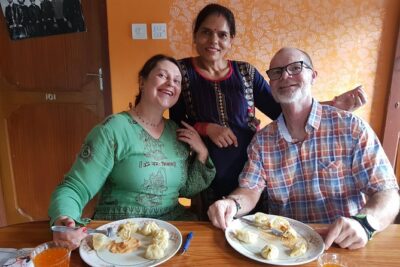
Nepalese Momos or Dal Bhat Cooking Class (Cook with Delight)
Read our review →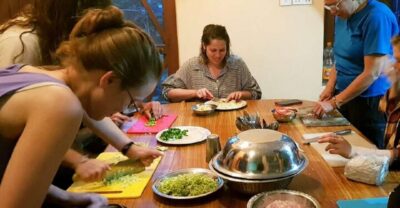
Nepalese Kitchen in Pokhara: Momos or Dal Bhat Cooking Class
Read our review →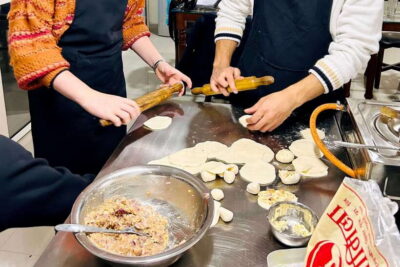
MoMo or Dal Bhat Cooking Class at Aama Kitchen in Pokhara
Read our review →Browse the lists this tour appears in