
Reviewed · MOMO MAKING CLASSES
Kathmandu: Local Women-Lead Nepali Cooking & Momo Class
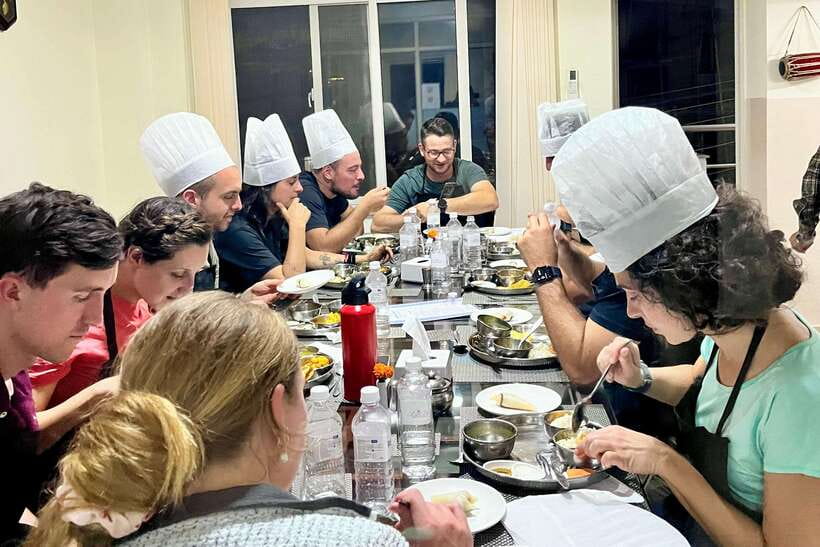
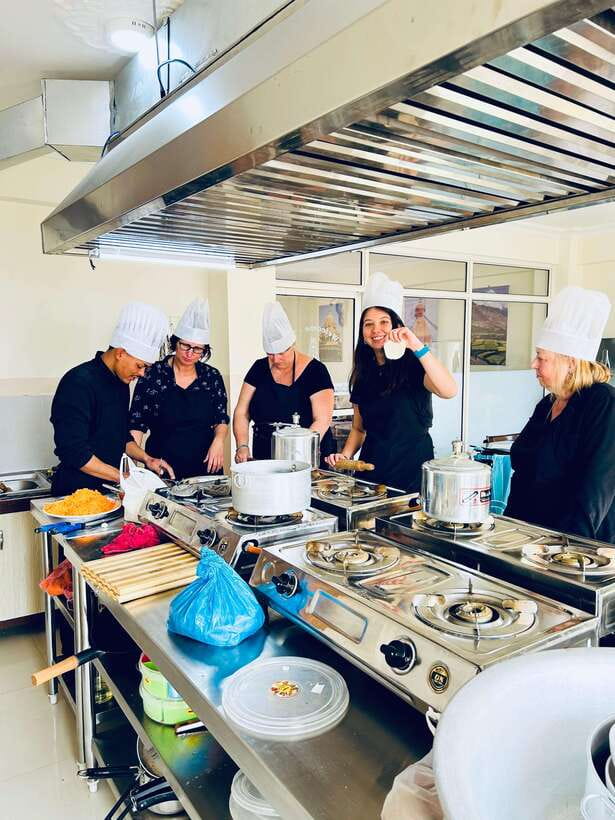
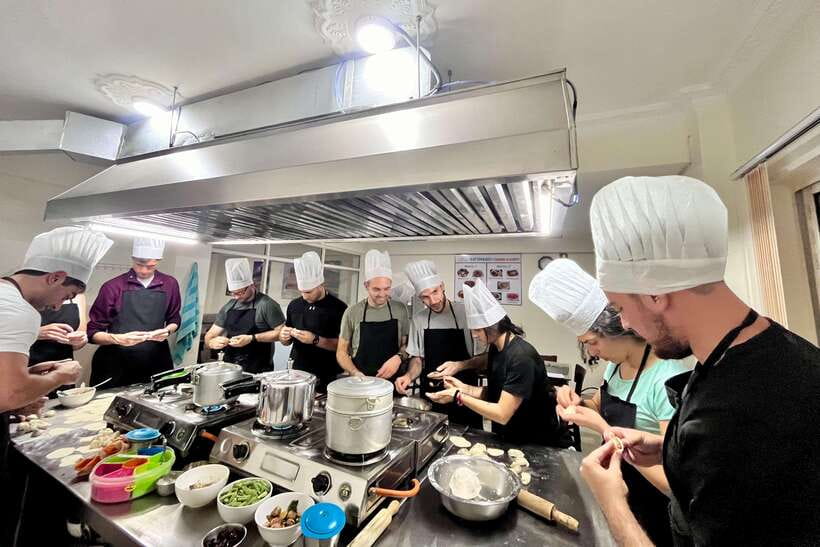
The best part of this Kathmandu class is that you do not simply watch a chef cook. You help choose ingredients at a nearby market, shape momos, prepare dal bhat, and sit down to eat what you made. The small-group format also gives you a better chance to ask questions and work at your own pace.
I like the choice of dishes, since you can usually select a starter, main course, and dessert rather than follow one fixed menu. I also like the practical finish: you eat the meal, receive the recipes as a PDF, and can buy a cookbook for 400 NPR if you want a printed copy.
One thing to check before booking is the menu plan. The group may need to agree on the dishes, so momo is not always automatic. The class can also run close to four hours, and optional pickup may be slowed by Kathmandu traffic.
Key points
- Momo is hands-on: Learn to prepare one of Nepal’s best-known foods, from filling to folding.
- Market visit included: Shop for fresh ingredients close to the cooking school in Thamel.
- More than one dish: The usual format includes a starter, main course, and dessert, with dal bhat and momo among the main choices.
- Patient English instruction: Nish and Nishma are named as friendly, clear teachers, with adjustments for vegetarian diets and spice levels.
- Small groups matter: The class is limited to 10 people, and solo participants may join a small shared group or occasionally receive a private lesson.
- Good value at $5: Equipment, ingredients, tea, cooking, and tasting are included, while specialty and alcoholic drinks cost extra.
A practical way to understand Nepali food
Food is one of the fastest ways to make sense of Nepal. Dal bhat is not just a plate of rice and lentils. Momos are not just dumplings. The cooking reflects everyday meals, local ingredients, spice preferences, and the pleasure of sharing food.
This three to four-hour class at Kathmandu Cooking Academy in Thamel gives you a useful introduction without making you sit through a long demonstration. You work with the chef, choose dishes with the group, and help prepare the meal from the beginning.
The advertised price is $5 per person, which makes this one of the least expensive cooking activities in Kathmandu. At that price, the value is unusually strong if the current rate is still available. Your fee includes the lesson, ingredients, kitchen equipment, market visit, Nepali masala tea, and the food you prepare.
I would still treat the price as something to confirm when booking, since activity prices can change. Specialty drinks and alcohol are not included.
More Cooking Classes in Kathmandu
- Half day cooking class in Thamel kathmandu
★ 5.0 · 607 reviews - Kathmandu: Local Women-Led Nepali Cooking & Momo Class
★ 4.9 · 360 reviews - Kathmandu: Local Lead Nepali Cooking & Momo-Making Class
★ 5.0 · 212 reviews
Starting with a Thamel market visit
The class begins with a short trip to a nearby market or shop to buy important ingredients. This is a small part of the outing, but it gives the food lesson a useful setting. Instead of seeing ingredients laid out without context, you get to take part in choosing what goes into the meal.
The market stop also helps you understand how the class works. You are not expected to arrive with cooking experience. The instructor guides the group through the ingredient list and then brings everything back to the kitchen.
You should arrive at least 15 minutes before the scheduled start. That matters here because the market visit, preparation, and cooking fit into a fairly full schedule. Arriving late could mean missing the first explanations or leaving the group waiting.
Wear clothes that are comfortable for active kitchen work. You do not need to bring cooking tools, since equipment and accessories are supplied. Bring a camera if you want pictures of the market, ingredients, or finished dishes, but keep your hands free while working.
Choosing the menu with your group
The menu is one of the most flexible parts of the experience. You generally choose a starter, a main course, and a dessert from several options. Momo and dal bhat are central choices, but the exact dishes depend on the group and the available menu.
This flexibility is helpful for mixed groups. You might choose chicken momo, while someone else prefers a vegetarian option. Previous classes have included aloo chop, mushroom choila, barra, and other Nepali dishes. Vegetarian preferences and spice levels can be adjusted when you tell the school in advance.
There is one important catch: the group may need to agree on what to cook. If momos are the main reason you booked, say so early. The class can include momo, but you should not assume that every group automatically chooses it.
That small point is worth keeping in mind when comparing cooking schools. A fixed menu gives you certainty. This class gives you a say in the meal, but that means you may need to speak up.
Learning to fold momos
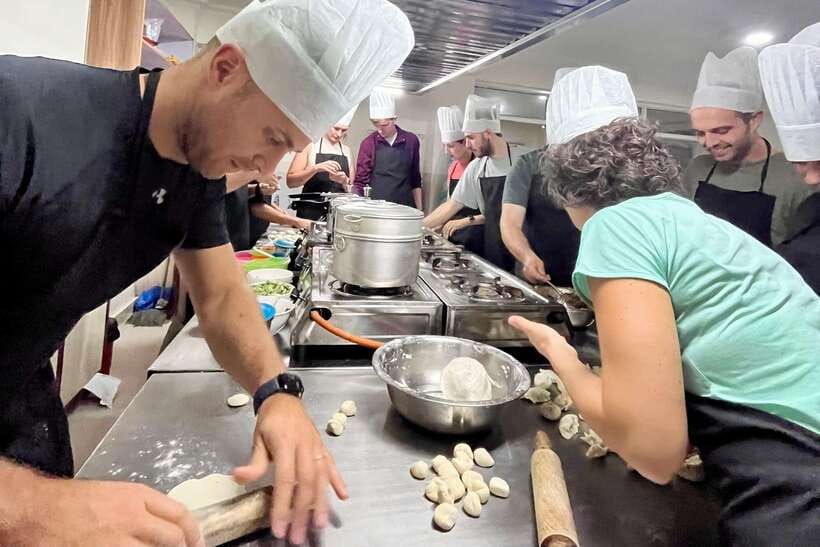
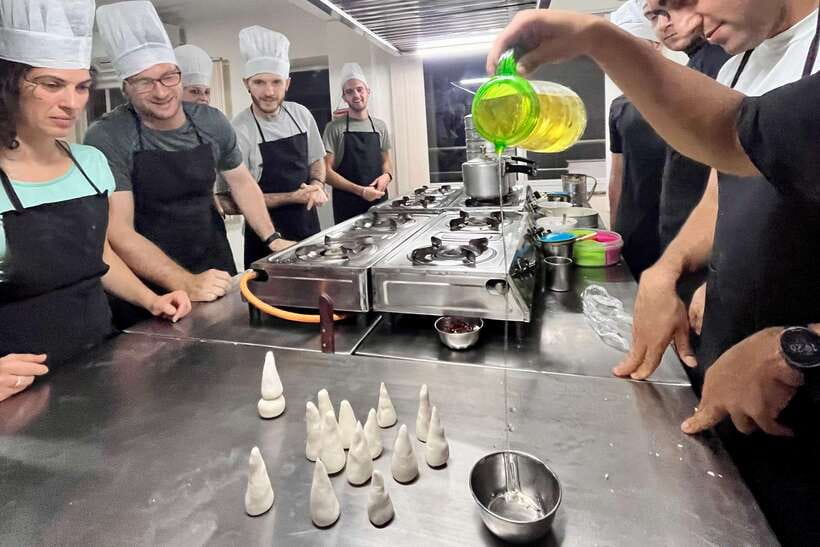
Momo preparation is the part most people look forward to, and it is also where the class becomes properly hands-on. You learn how the filling is prepared, how the dough is handled, and how to fold the dumpling before cooking it.
The supplied feedback repeatedly points to clear explanations and patient instruction. Nish is described as thorough and informative, while Nishma is praised for patience, strong English, and friendly teaching. Other sessions have been led by a chef and guide who explain the food as well as the basic history of dishes and Kathmandu.
Do not worry if your first momo looks uneven. That is part of the fun. The useful thing is that you are shown the process step by step, rather than being expected to copy a finished dumpling without help.
If you are traveling alone, this activity can still work well. Solo participants have joined small groups, and one person received what felt like a private lesson when no other student arrived. A minimum of two participants may be required for the class to operate, but if that number is not reached, an alternative date or full refund is offered.
The group limit is 10 people. That is small enough to keep the lesson personal, though the exact feel will depend on how many people book that session.
More Momo Making Classes in Kathmandu
- Kathmandu: Traditional Momo Making Class & Pickup
★ 4.8 · 60 reviews - Traditional Nepali Momo Making Classes
★ 5.0 · 53 reviews - Kathmandu: Local Lead Nepali Cooking & Momo Making Class
★ 4.9 · 40 reviews - Rainbow Mo:Mo
★ 5.0 · 19 reviews
Preparing dal bhat and a full Nepali meal
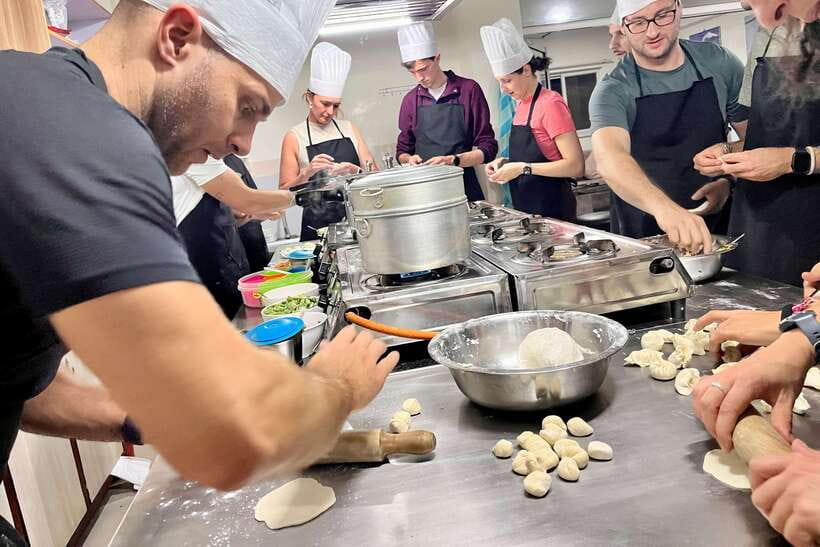
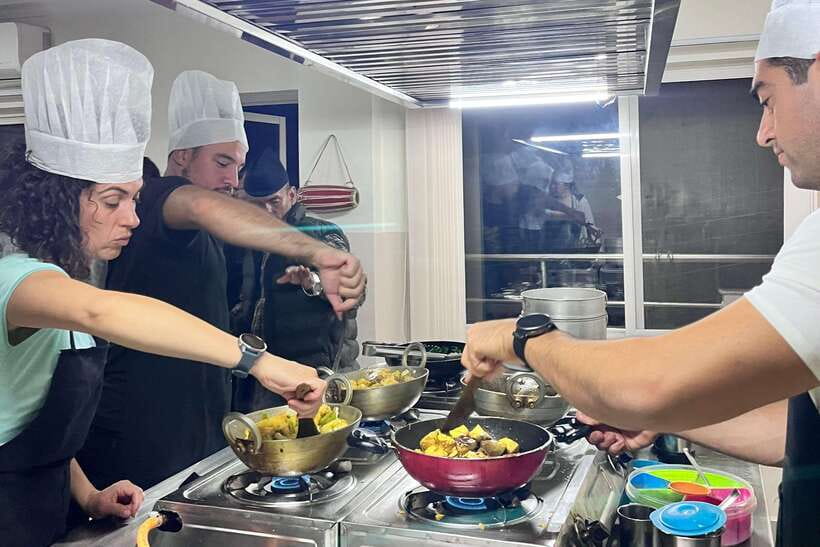
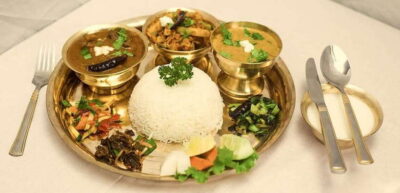
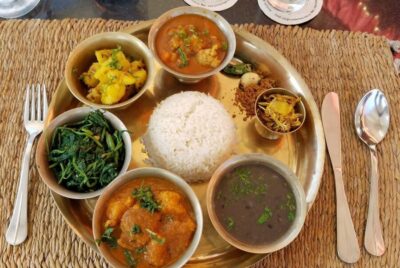
Dal bhat is Nepal’s everyday staple: lentils and rice served with accompanying dishes. Cooking it in class helps place the rest of the menu in context, since it is the meal you are most likely to encounter during a trip through Nepal.
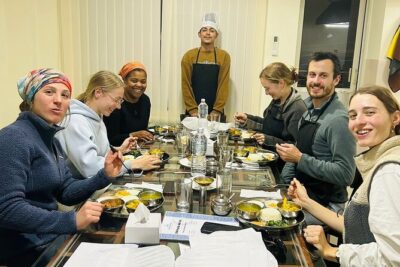
The class is not limited to making one small dish and taking a few bites. The portions can be generous, and you should arrive hungry. At the end, you taste the food prepared by the group, which turns the cooking lesson into a proper meal.
The usual format includes a starter, a main dish, and dessert. That makes the class better value than an activity focused only on momos, especially if you want to sample several Nepali flavors in one sitting.
A masala tea is served during the lesson. It is a modest inclusion, but it gives you a chance to pause between preparation tasks and adds another familiar Nepali flavor to the afternoon.
The instructors and teaching style
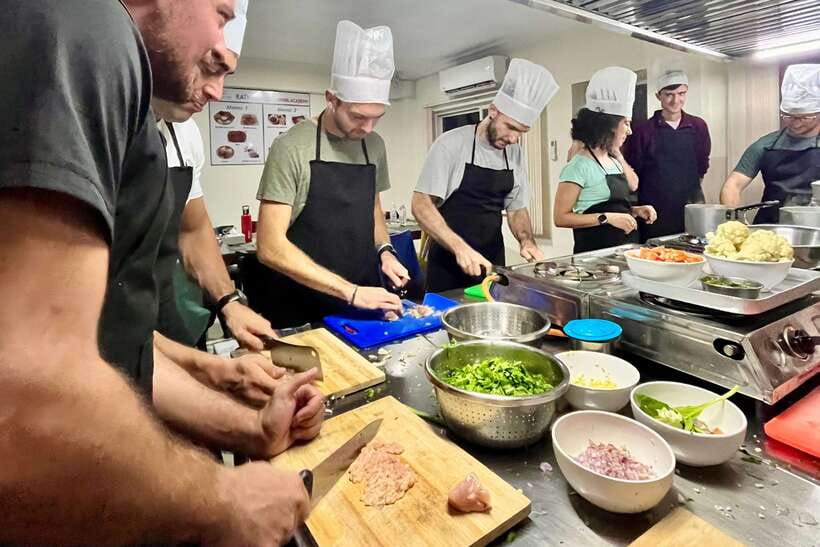
The instructors are the heart of this experience. Names noted from the classes include Nish and Nishma, and the teaching style is described as patient, clear, and good-humored.
English is the teaching language. The available information does not promise a private chef for every booking, but the small group format gives you a reasonable chance to ask for help with knife work, dough, spice levels, or folding technique.
The lesson also includes cultural context. You learn about the food and hear some explanation of Kathmandu and Nepali cooking, rather than simply following a recipe in silence.
The tone appears friendly and informal. That is good for beginners and families, though it may feel less polished than a luxury culinary school. If you want a formal, restaurant-style demonstration, this is not the right match. If you want to get your hands busy and learn recipes you can repeat at home, it fits better.
What solo visitors and families should know
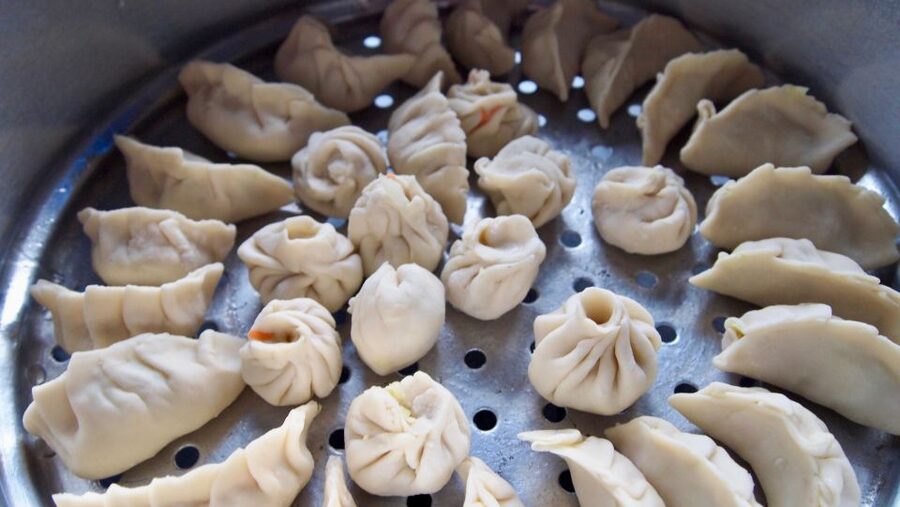
This class suits solo visitors, couples, families, and small friend groups. Solo participants can be placed with other students, and the limited group size makes it easier to meet people without committing to a large food tour.
Children over seven can participate with adult supervision. The activity is not suitable for children under five, and people over 95 are excluded by the stated conditions. The school is wheelchair accessible, which is useful for anyone checking access before booking.
For families, the hands-on format can be more engaging than a standard sightseeing stop. The main challenge is the length. Three to four hours is a long time for a young child, especially if the market visit and preparation take place before the meal.
Dietary needs should be shared in advance. Vegetarian adjustments and changes to spice levels have been handled, but you should not wait until the kitchen is already preparing the food.
Pickup, drop-off, and timing in Kathmandu
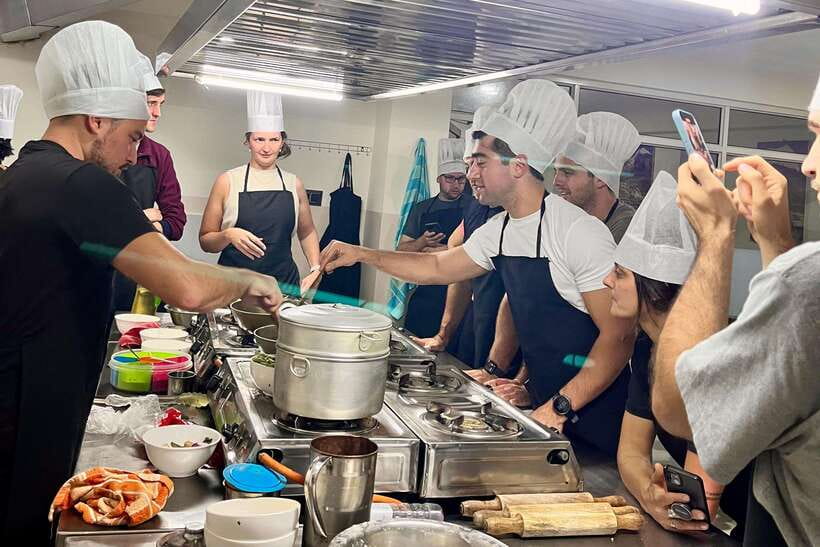
Hotel pickup and drop-off are optional and available from locations within Kathmandu Valley if selected during booking. If you do not choose that option, you need to make your own way to Kathmandu Cooking Academy in Thamel.
Thamel is a practical area for this activity, especially if you are already staying nearby. The meeting point can be found by searching Kathmandu Cooking Academy on Google Maps. Allow extra time if you are crossing Kathmandu by car.
Pickup is convenient, but it is not always the fastest choice. Traffic can make both pickup and return late. If you have a flight, long-distance bus, fixed appointment, or another timed activity afterward, leave a generous gap.
The class itself is usually about three hours, though the advertised duration is three to four hours. The variation likely comes from the market stop, group size, and the number of dishes chosen.
Recipe value after the class
A cooking class is more useful when you can repeat what you learned. This one sends a PDF with the recipes prepared during the session. That is particularly helpful if the group makes several dishes, since it is hard to remember quantities and steps after a long afternoon.
A printed cookbook is also available for 400 NPR, according to the information provided. I would consider buying it if you want a paper reference at home or are cooking for friends after your trip.
The recipes are the main souvenir here. You also leave with a better sense of which ingredients matter, how spicy the food should be, and how the dishes fit together as a Nepali meal.
Value at $5 per person
At $5, the class is excellent value if the advertised rate applies to your booking. You receive instruction from a local chef, a market visit, ingredients, kitchen use, tea, and a full tasting session.
The price is especially attractive for anyone who wants an activity beyond sightseeing. You spend several hours learning a skill, eating a substantial meal, and taking recipes home. That is more useful than a short tasting stop, though it also requires more time.
The main extras are specialty drinks and alcohol. They are not part of the included package, so budget separately if you want something beyond the food and masala tea.
Should you book the Kathmandu cooking class?
You should book this class if you want a friendly, practical introduction to Nepali food and like the idea of cooking rather than watching. It is a particularly good fit for first-time visitors, solo participants, families with older children, and anyone who wants to make momos at home.
Choose it with care if your schedule is tight. Pickup can be delayed by traffic, the session may last close to four hours, and momo depends on the group’s menu choice. Tell the school about dietary needs early, arrive 15 minutes ahead, and speak up about the dishes you most want to make.
For $5, the combination of market shopping, cooking, tea, a full meal, and take-home recipes is hard to beat. If momos and dal bhat are on your Kathmandu must-do list, this is a sensible way to meet both goals in one afternoon.
FAQ
How long does the cooking class last?
The class lasts about three hours, while the stated duration is three to four hours. This includes the market visit, preparation, cooking, and tasting.
Where does the class take place?
The class takes place at Kathmandu Cooking Academy in Thamel. You can find the meeting point by searching the academy on Google Maps.
Is hotel pickup included?
Pickup and drop-off are available only if you select that option during booking. Pickup is offered from locations within Kathmandu Valley.
What dishes will I cook?
The class focuses on momo and dal bhat, and you can usually choose a starter, main course, and dessert. The exact dishes are chosen with the group.
Can vegetarians join?
Yes. Vegetarian preferences and spice levels can be accommodated, but you should tell the school about your needs in advance.
Is the class taught in English?
Yes. English is the stated teaching language.
Can children participate?
Children over seven may participate with adult supervision. The activity is not suitable for children under five.
What happens if the minimum group size is not reached?
A minimum of two participants may be required. If the class cannot operate, you will be offered another date or a full refund.
More Workshops in Kathmandu
- Knife (Khukuri) Making Workshop- Forge of the Gurkhas
★ 5.0 · 143 reviews - The best Private Nepali Cooking Class in Kathmandu
★ 5.0 · 83 reviews - Knife Khukuri Making Workshop
★ 4.9 · 38 reviews - Best Nepali Cooking Class in Thamel with Local Market Trip
★ 5.0 · 26 reviews
Just added around Kathmandu
- Traditional Momo Making Class★ 5.0 · 10 reviews
- Women Empowerment Project(Nepali cooking class & jewelry workshop★ 5.0 · 15 reviews
- Manthali Airport (Ramechhap) To Kathmandu – Transport Service★ 4.5 · 11 reviews
- Amazing 1 Day Trekking Experience in Kathmandu Nepal★ 5.0 · 24 reviews
- Walking tour of Kathmandu with awesome local guides★ 5.0 · 4 reviews
- Walking tour of real Kathmandu through back streets.★ 5.0 · 3 reviews
- Private Manaslu Circuit Trek at Himalayas★ 5.0 · 3 reviews
- Walking Street Food Tour in Kathmandu★ 5.0 · 111 reviews
Momo Making Classes, compared.
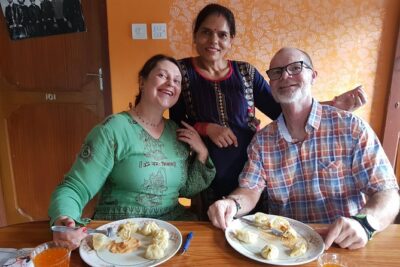
Nepalese Momos or Dal Bhat Cooking Class (Cook with Delight)
Read our review →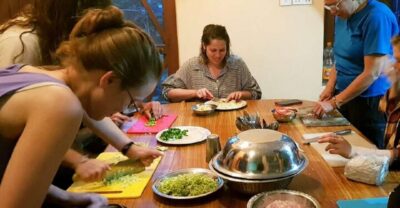
Nepalese Kitchen in Pokhara: Momos or Dal Bhat Cooking Class
Read our review →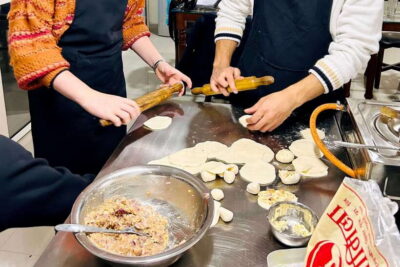
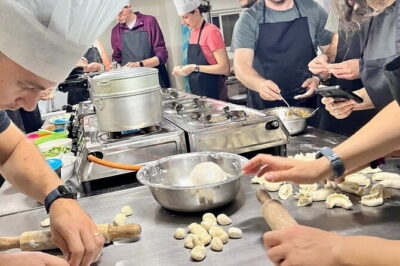
MoMo or Dal Bhat Cooking Class at Aama Kitchen in Pokhara
Read our review →Browse the lists this tour appears in